Comparisons
How to choose a fiber supplement: powder, capsules or gummies?
Start with your goal, then pick the fiber type, the form and the label details that matter. Here is a practical checklist.
VitaBrief editorial · Last reviewed November 2026 · Sources listed below
Reader-supported. This page may contain affiliate links. If you buy through one, we may earn a commission at no extra cost to you. It never changes what we write. Affiliate disclosure
Fiber supplements come in powders, capsules, chewables and gummies, made from different fibers and sold with very different claims. Choosing one is easier once you know that the type of fiber matters more than the packaging, and that a few label details tell you most of what you need to know.
This guide walks through how to choose a fiber supplement step by step: your goal, the fiber type, the form, the label and safety. It uses generic ingredient names rather than brands, and draws on MedlinePlus, the FDA and published research. It is general information, not medical advice.
How to choose a fiber supplement: the short answer
How to choose a fiber supplement: match the fiber type to your goal, compare powder vs. capsules vs. gummies, check sugar and fiber per serving, and special notes for women, adults over 50 and people on medicines.
Step 1: decide whether you need one
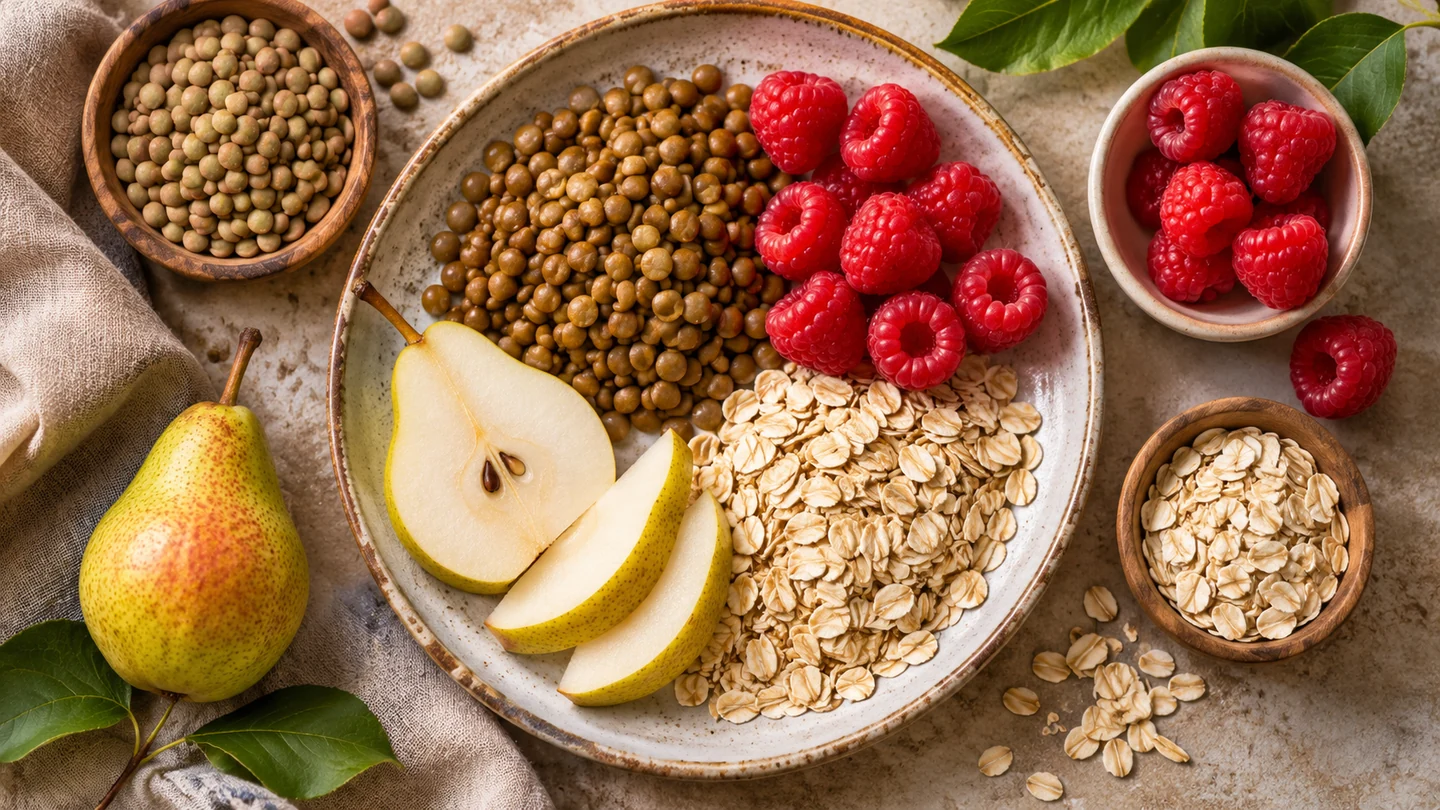
Most adults in the US eat far less fiber than recommended. A review by McRorie 2015 cites targets of about 25 grams a day for women and 38 grams for men, and reports that about 90% of people fall short, averaging about 15 grams. The Dietary Guidelines for Americans also note that most Americans do not get enough fiber, and fiber-rich foods such as whole grains, beans, vegetables, fruit, nuts and seeds are the natural place to start.
Food comes first because most of the evidence linking fiber to long-term health comes from fiber-rich diets (Reynolds 2019). A supplement makes sense when you cannot close the gap with food, or when you have a specific goal, such as regularity or LDL cholesterol, for which a supplement has trial evidence. See how much fiber per day for practical food swaps.
Step 2: match the fiber type to your goal
Fiber supplements are not interchangeable. A review by McRorie 2017 explains that viscous, gel-forming fibers such as psyllium showed cholesterol and blood sugar benefits, while non-viscous fibers such as inulin and wheat dextrin did not, and that these fermentable fibers lack a laxative effect.
| Your goal | Fiber with the strongest evidence | Key source |
|---|---|---|
| Lower LDL cholesterol | Psyllium (gel-forming soluble fiber) | Jovanovski 2018; FDA health claim |
| Relieve constipation | Psyllium, ideally over 10 g/day for 4+ weeks | van der Schoot 2022 |
| IBS symptoms | Soluble fiber such as psyllium, not bran | Moayyedi 2014, Black 2020 |
| Blood sugar in type 2 diabetes | Psyllium before meals | Gibb 2015 |
| Weight | Psyllium before meals; effects modest | Gibb 2023, Xiao 2020 |
| General fiber top-up | Any well-tolerated fiber, after food | McRorie 2015 |
Psyllium appears in most rows because it has the broadest evidence among fiber supplements. The FDA allows a health claim that soluble fiber from psyllium husk, as part of a diet low in saturated fat and cholesterol, may reduce the risk of heart disease (21 CFR 101.81). Some of the psyllium research, including Gibb 2015, Gibb 2023 and McRorie 2015, was authored by employees of a psyllium manufacturer. For a fuller comparison, see types of fiber supplements.
Step 3: choose a form
The same fiber can come in several forms. Each has trade-offs.
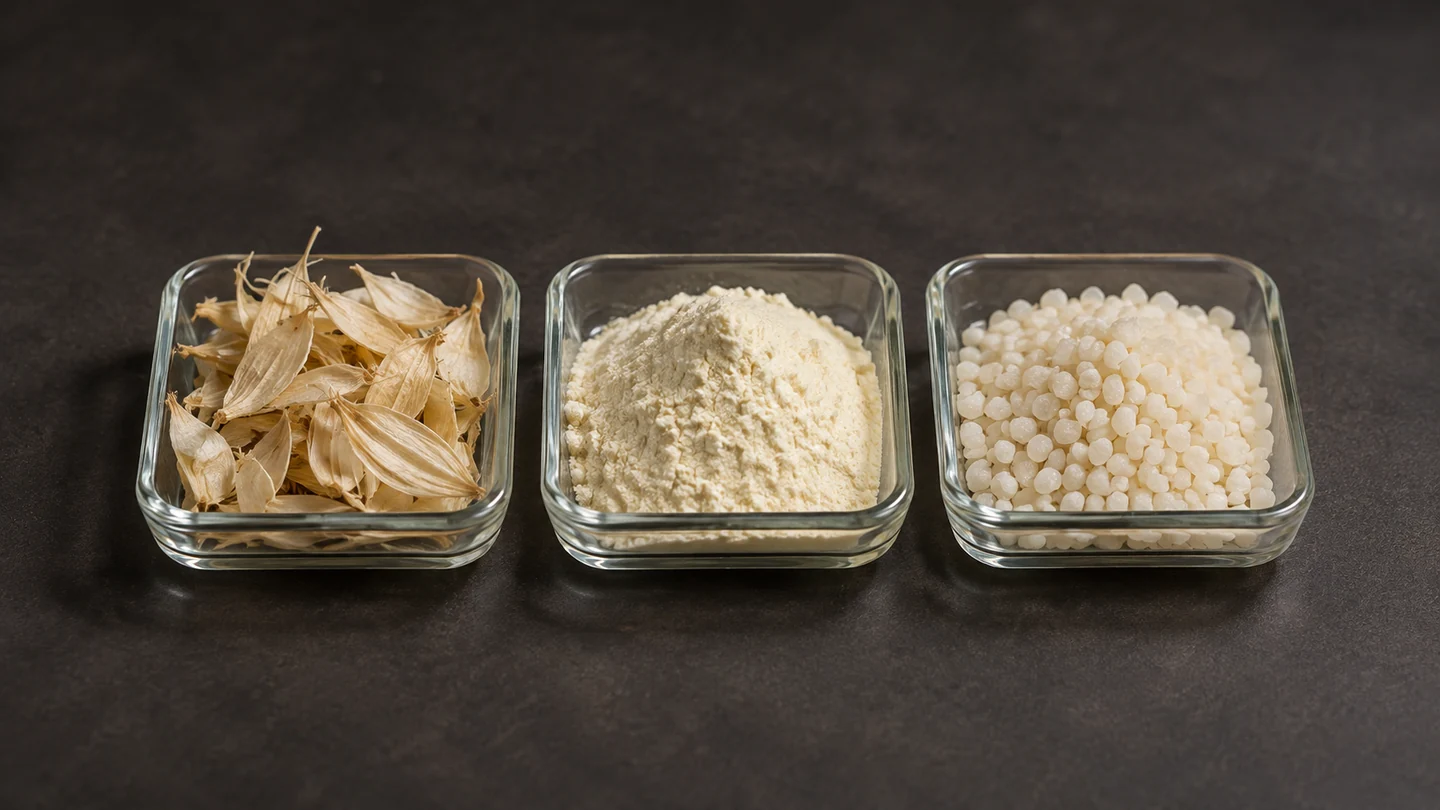
- Powder. Usually the most fiber per serving and the easiest way to reach the doses used in trials, such as around 10 grams of psyllium a day. You mix it into water or another drink and drink it promptly before it thickens. Plain, unflavored powders avoid added sugar and sweeteners.
- Capsules. Convenient and tasteless, but each capsule holds only a small amount of fiber, so reaching trial doses can mean swallowing many capsules a day. Each dose still needs a full glass of fluid.
- Gummies and chewables. Pleasant to take, but they often contain only a few grams of fiber per serving, and many contain added sugar. The fiber in gummies is often a non-viscous type such as inulin, which lacks the gel-forming benefits described above.
- Fiber-fortified foods. MedlinePlus notes psyllium is also found in cereals, breads and snack bars. These can help, but check fiber grams and added sugar.
If your goal is cholesterol, constipation or blood sugar, a psyllium powder is the form closest to what was studied. If you only want a modest top-up and dislike powders, capsules may suit you better. See psyllium dosage for amounts by form.
Step 4: read the label
- Fiber type. Look for the specific fiber named in the ingredients, such as psyllium husk, inulin or wheat dextrin, rather than vague terms.
- Grams of fiber per serving. Compare this with your goal and count how many servings you would need.
- Added sugar and sweeteners. Flavored powders and gummies may contain sugar or sweeteners. MedlinePlus notes that some psyllium products are sweetened with aspartame and should be avoided by people with phenylketonuria.
- Other ingredients. Check for added herbs, laxatives or unnecessary blends that make it harder to know what is helping.
- Heart health claim. A label may carry the FDA-authorized soluble fiber and heart disease claim only if the product meets the conditions in the regulation. Separately, MedlinePlus says you must eat at least 7 grams of psyllium husk daily to reduce the risk of heart disease.
- Quality. Supplements are not approved by the FDA before sale. Choosing products that have been tested by an independent organization can add some assurance about content and purity.
The FDA explains which fibers count as dietary fiber on Nutrition Facts labels.
Step 5: consider your situation
Women. There is no separate fiber supplement women need. The target of about 25 grams a day is lower than for men, and the same choices apply. MedlinePlus says psyllium is likely safe when taken appropriately during pregnancy and breastfeeding, but check with your clinician first. Women taking iron should note MedlinePlus advice to take iron one hour before or four hours after psyllium.
Adults over 50. Older adults may be more likely to take several medicines and to have swallowing difficulties, both of which matter for fiber supplements. A reported case of esophageal blockage involved a 76-year-old man with Parkinson’s disease (Shin 2022). MedlinePlus also notes psyllium seems less effective for cholesterol in older people. Powder well mixed in plenty of fluid may be safer than many capsules for people who find swallowing difficult, but anyone with swallowing problems should avoid bulk fiber unless a doctor advises it.
People on GLP-1 medicines. Fiber is not a substitute for these drugs. Fiber can add to fullness, nausea and bloating, and constipation is common on these medicines, so ask your prescriber before adding a supplement. See fiber and GLP-1.
People taking medicines. MedlinePlus advises taking psyllium 30 to 60 minutes after oral medicines, with specific cautions for drugs such as lithium, digoxin, carbamazepine and metformin. Ask a pharmacist to help you plan timing; see when to take psyllium.
Step 6: start low and use it safely
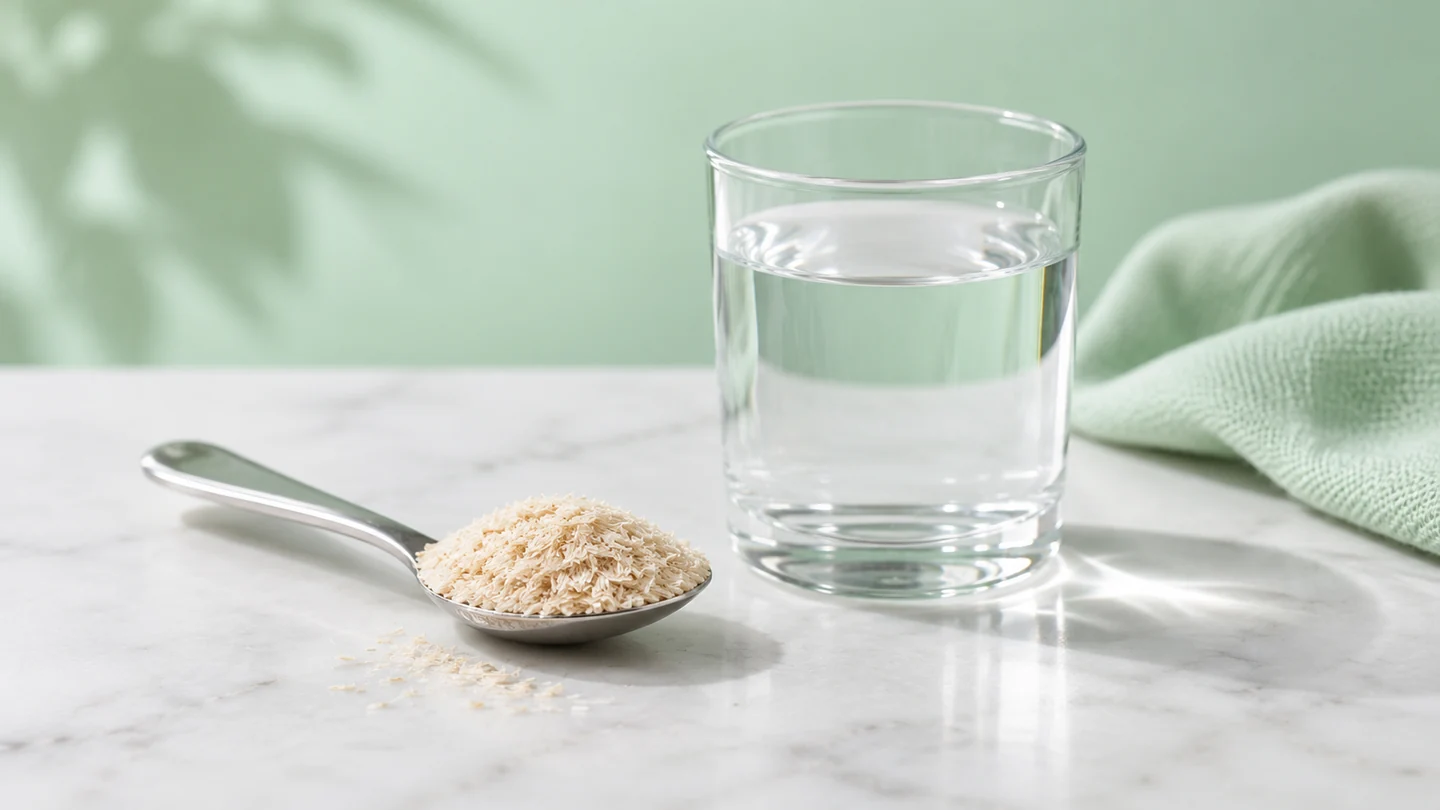
Whatever you choose, start with a small dose and increase it slowly over one to two weeks. Gas and bloating are common at first; in van der Schoot 2022, flatulence was more frequent with fiber than with control. MedlinePlus advises at least 8 ounces of fluid for every 3 to 5 grams of psyllium husk and warns that taking it without enough fluid might cause choking or block the gut, as described in case reports (Hefny 2018).
Do not use bulk fiber if you have bowel narrowing or obstruction. See a doctor for sudden changes in bowel habits, blood in the stool, severe abdominal pain or unexplained weight loss. A supplement should not delay a medical check. Read more in psyllium side effects.
Frequently asked questions
What is the best type of fiber supplement?
It depends on your goal, but psyllium has the broadest evidence among fiber supplements, covering LDL cholesterol, constipation, IBS and blood sugar.
Are fiber gummies as good as powder?
Usually not for specific goals. Gummies tend to provide less fiber per serving, often contain added sugar, and often use non-viscous fibers that did not show the benefits seen with psyllium.
Are capsules or powder better?
Powder makes it easier to reach doses used in studies. Capsules are convenient for smaller amounts. Both need a full glass of fluid with each dose.
What is the best fiber supplement for women over 50?
The same principles apply: choose by goal, start low, drink plenty of fluid, and check timing with any medicines. Talk with your doctor if you have swallowing or bowel problems.
Should I choose a sugar-free fiber supplement?
Plain, unflavored products avoid added sugar. If you choose a sweetened product, check which sweetener it uses, especially if you have phenylketonuria.
Sources
- MedlinePlus. Blond psyllium.
- Dietary Guidelines for Americans. DietaryGuidelines.gov.
- FDA. Questions and answers on dietary fiber.
- eCFR. 21 CFR 101.81: soluble fiber and risk of coronary heart disease.
- McRorie. Evidence-based approach to fiber supplements, part 2. Nutr Today. 2015.
- McRorie, et al. Understanding the physics of functional fibers in the gastrointestinal tract. J Acad Nutr Diet. 2017.
- Reynolds, et al. Carbohydrate quality and human health. Lancet. 2019.
- Jovanovski, et al. Effect of psyllium fiber on LDL cholesterol. Am J Clin Nutr. 2018.
- van der Schoot, et al. Effect of fiber supplementation on chronic constipation in adults. Am J Clin Nutr. 2022.
- Moayyedi, et al. Effect of fiber supplementation on irritable bowel syndrome. Am J Gastroenterol. 2014.
- Black, et al. Efficacy of soluble fibre, antispasmodic drugs and gut-brain neuromodulators in IBS. Lancet Gastroenterol Hepatol. 2020.
- Gibb, et al. Psyllium fiber improves glycemic control. Am J Clin Nutr. 2015.
- Gibb, et al. Psyllium is a natural nonfermented gel-forming fiber that is effective for weight loss. J Am Assoc Nurse Pract. 2023.
- Xiao, et al. Effect of psyllium on weight, BMI, lipids and glucose in diabetic patients. Phytother Res. 2020.
- Shin, et al. Acute esophageal obstruction after ingestion of psyllium seed husk powder. World J Clin Cases. 2022.
- Hefny, et al. Intestinal obstruction caused by a laxative drug (psyllium). Int J Surg Case Rep. 2018.
Last reviewed November 2026. VitaBrief is educational and is not medical advice. Talk with a doctor, registered dietitian or pharmacist before starting a supplement, especially if you are pregnant, take medication or have kidney disease.
Not medical advice. This guide is for general education. Talk to your doctor or pharmacist before taking a supplement, especially if you are pregnant or breastfeeding, take medication or have a health condition. Medical disclaimer