Home / Supplement library / Performance

Supplement library

Performance

Evidence-based guides to supplements for strength, training, hydration and recovery: creatine, protein and electrolytes. What each does, how much to take, timing, safety, and what they mean for men, women, older adults and weight loss.

Creatine, explained

Protein, explained

Electrolytes, explained

Collagen, explained

Explore

Browse every topic.

Browse magnesium, vitamin D, vitamin B12 and more in the Supplement Library.

Explore Supplement Library →

About these guides

Performance supplements: what these guides cover

Performance supplements are the products people take to train harder, recover better and stay hydrated. This hub covers the three with the most research behind them: creatine, protein powder and electrolytes. Each guide explains what the supplement does, how much to take, when to take it, what the research shows for men, women and older adults, and when to be careful.

None of these replace the basics. Training, enough food and sleep do most of the work, and a supplement helps most when it fills a specific gap.

In brief

What the evidence says, in brief

Creatine: creatine monohydrate, 3 to 5 grams a day, is a well-studied and inexpensive way to improve strength and muscle gains from resistance training, and it may help older adults hold on to muscle. Brain benefits are promising but not settled.

Protein: protein powder is a convenient way to reach your daily protein target. Most active adults do well with 1.4 to 2.0 grams of protein per kilogram of body weight a day, spread over meals. Older adults generally need about 1.0 to 1.2 grams per kilogram a day, or more with illness or exercise.

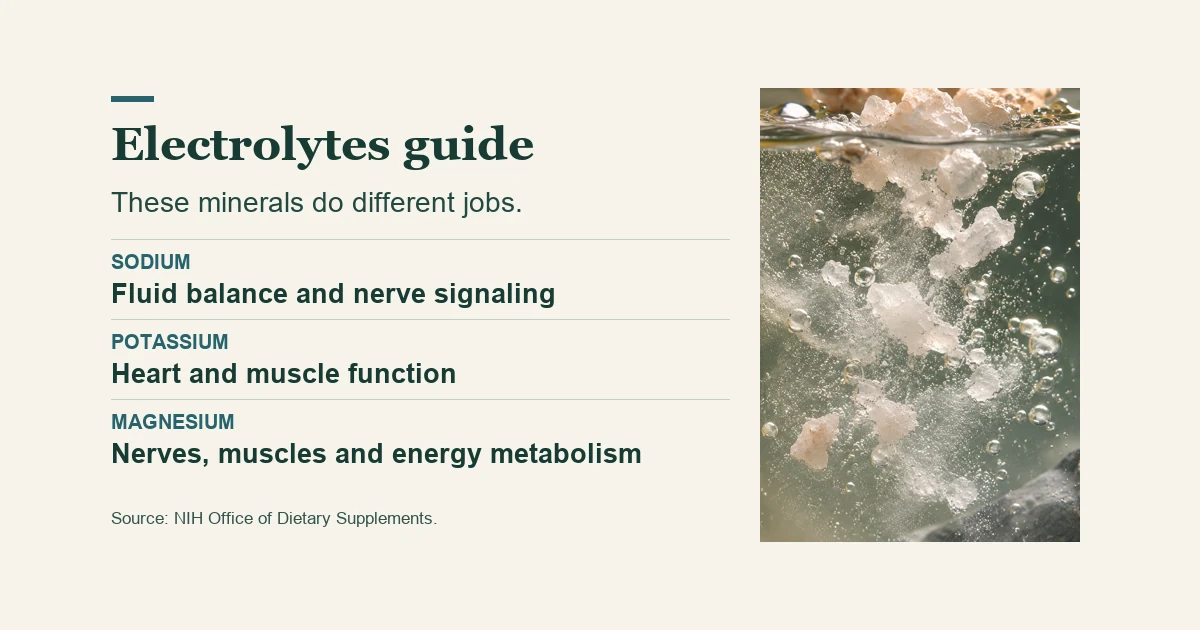
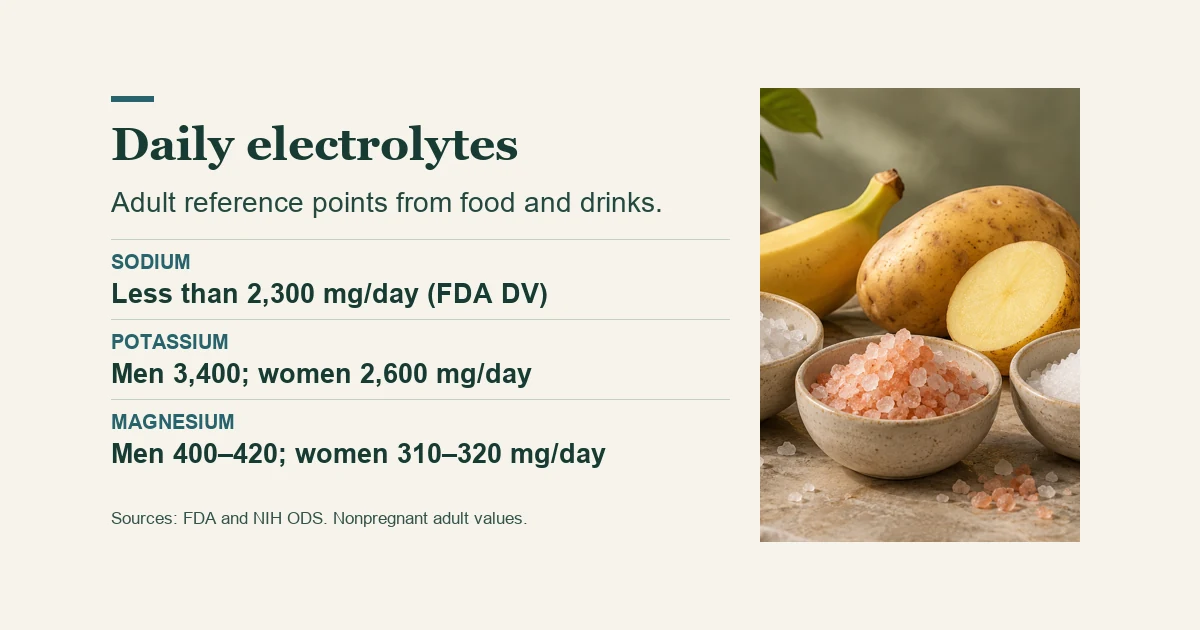
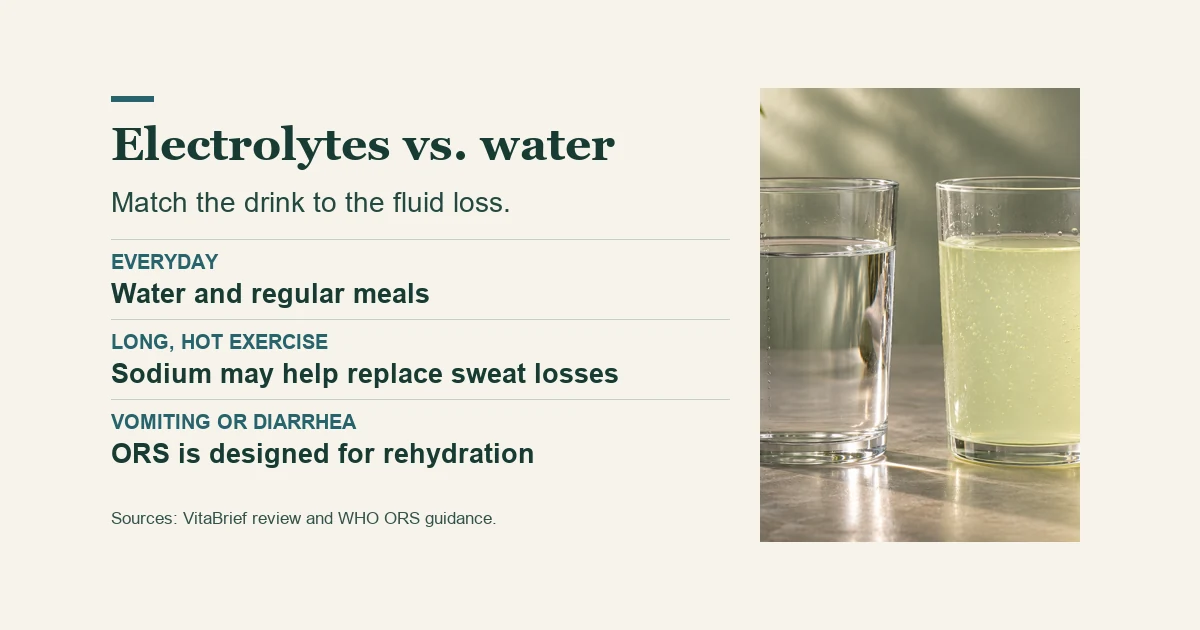
Electrolytes: water is enough for most workouts under an hour. For long, intense or hot sessions, a drink with sodium and carbohydrate helps, and overdrinking during long events is a real risk.

FAQ

Frequently asked questions about performance supplements

When should I take creatine?

The best time is the time you will remember every day. Taking it around your workout with a meal or protein shake may give a small edge and is easier on the stomach. Timing matters much less than taking 3 to 5 grams consistently, including on rest days.

Is creatine safe for the kidneys?

In healthy people, creatine at standard doses has not been shown to harm the kidneys. It does raise blood creatinine, which can make a routine kidney test look worse than it is, so tell your doctor you take it. People with kidney disease, diabetes, high blood pressure or medicines that affect the kidneys should talk with a clinician first.

What are the side effects of creatine?

Mostly minor: early water weight, and stomach upset with large doses. Splitting doses, skipping loading and taking it with food prevent most problems.

Is protein powder bad for your kidneys?

For people with healthy kidneys, protein powder used to reach normal protein targets has not been shown to harm kidney function. People with chronic kidney disease should ask their doctor how much protein is right for them.

Do I need an electrolyte drink?

Most days, water is still the right choice. If you sweat heavily or train for long sessions in the heat, choose a product whose sodium and sugar match that purpose, and prefer third-party tested products.

For an official overview, see the NIH Office of Dietary Supplements fact sheet on dietary supplements for exercise and athletic performance.