Comparisons
Electrolytes vs. water: do you need more than water?
When plain water is enough, when electrolytes hydrate better, what the beverage hydration research shows, and the risk of drinking too much water.
VitaBrief editorial · Last reviewed November 2026 · Sources listed below
Reader-supported. This page may contain affiliate links. If you buy through one, we may earn a commission at no extra cost to you. It never changes what we write. Affiliate disclosure
Electrolytes vs Water: the short answer
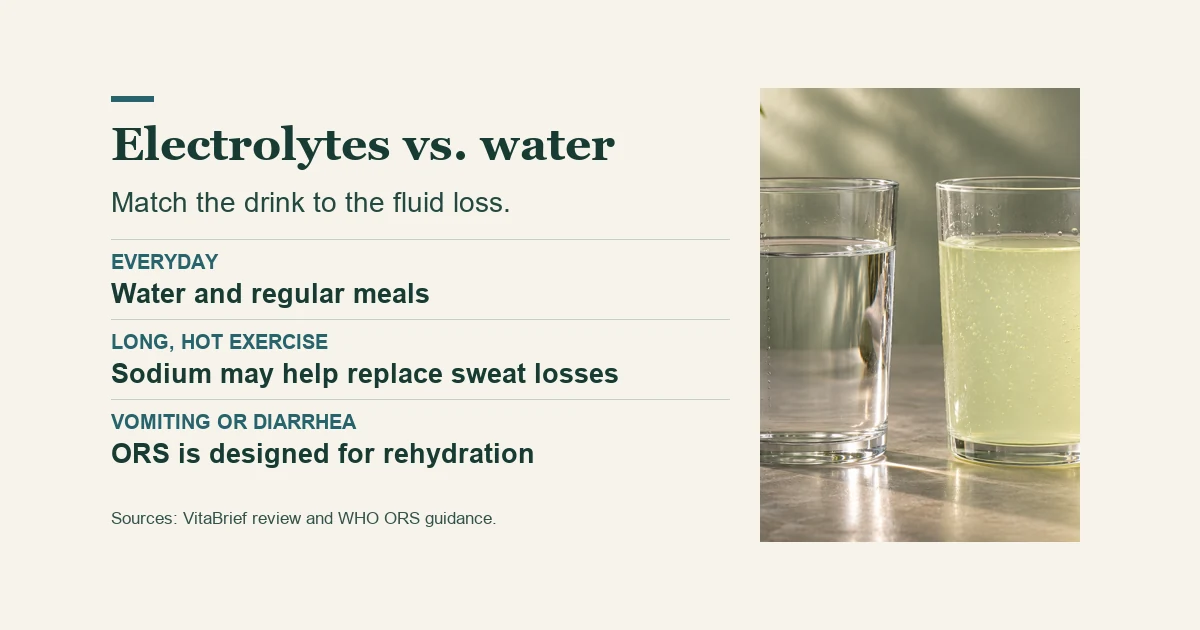
Water is enough for everyday hydration and most workouts, especially when you eat regular meals. Electrolytes help when you lose a lot of sweat or fluid quickly, and drinks with sodium are retained better than plain water. Do not force large amounts of any drink; drink to thirst, and use electrolytes for long, hot or sick days.
“Electrolytes vs. water” and “do electrolytes hydrate you?” are common searches, fueled by marketing that suggests plain water is not enough. For most people most of the time, water is all you need. Electrolytes become useful when you lose a lot of fluid and salt quickly, or when you need to hold on to fluid you drink. This guide explains how hydration works, what research comparing drinks shows and how to decide what to drink. It draws on MedlinePlus, a study comparing the hydrating effect of different beverages (Maughan 2016) and sports hydration guidelines.
How hydration works
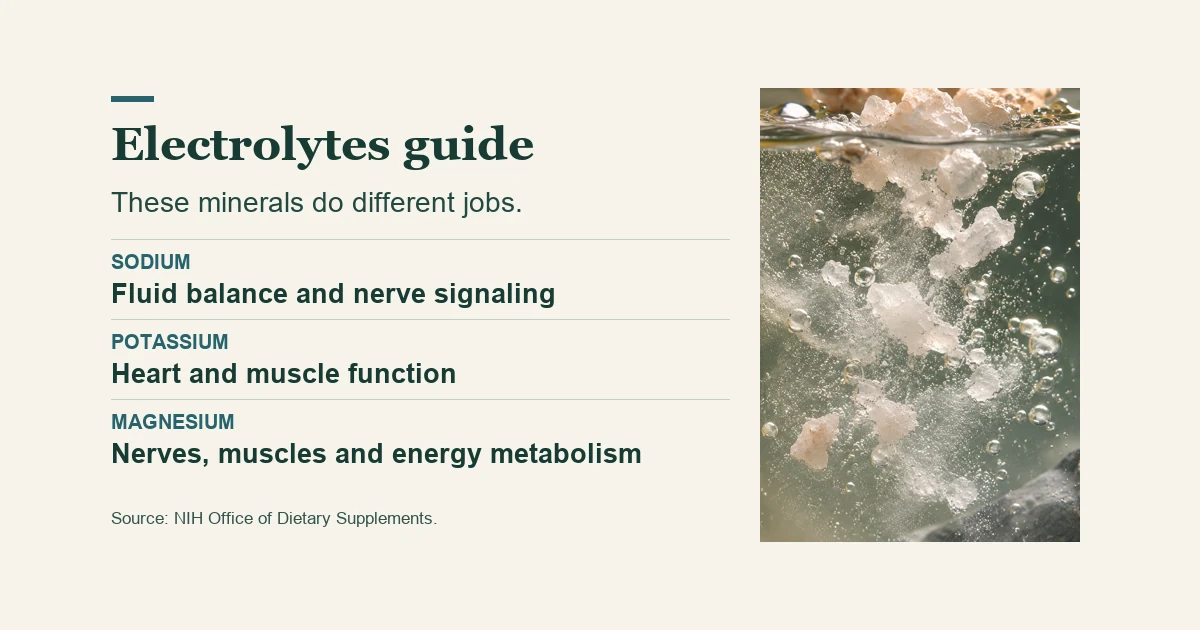
Water moves between the blood and cells following electrolytes, especially sodium. When you drink plain water, it is absorbed and dilutes the blood slightly. The kidneys respond by producing more urine to keep sodium levels stable. When a drink also contains sodium, the body tends to retain more of the fluid instead of passing it as urine. That is why salty foods make you thirsty and why oral rehydration solutions work during illness.
Your body is good at regulating this balance. Thirst, kidney function and hormones keep blood sodium within a narrow range in healthy people, even when intake varies a lot from day to day (MedlinePlus).
What the beverage hydration study found
Researchers gave healthy men one liter of different drinks and measured how much urine they produced over the next four hours. Drinks that were retained better than water were said to have a higher “beverage hydration index” (Maughan 2016).
| Drink | Retained compared with water |
|---|---|
| Oral rehydration solution | Better |
| Full-fat milk | Better |
| Skim milk | Better |
| Orange juice | Better |
| Sports drink | Similar to water |
| Coffee, tea, cola, lager | Similar to water at the amounts tested |
Two lessons stand out. Drinks with more sodium, potassium, protein or energy were retained longer, and a typical sports drink was no better than water at rest. Milk and oral rehydration solutions did better than both. This study was done at rest in healthy men, so it says little about exercise or illness, but it shows that “hydration” claims depend on what is in the drink.
When water is enough
- Normal daily life and office work
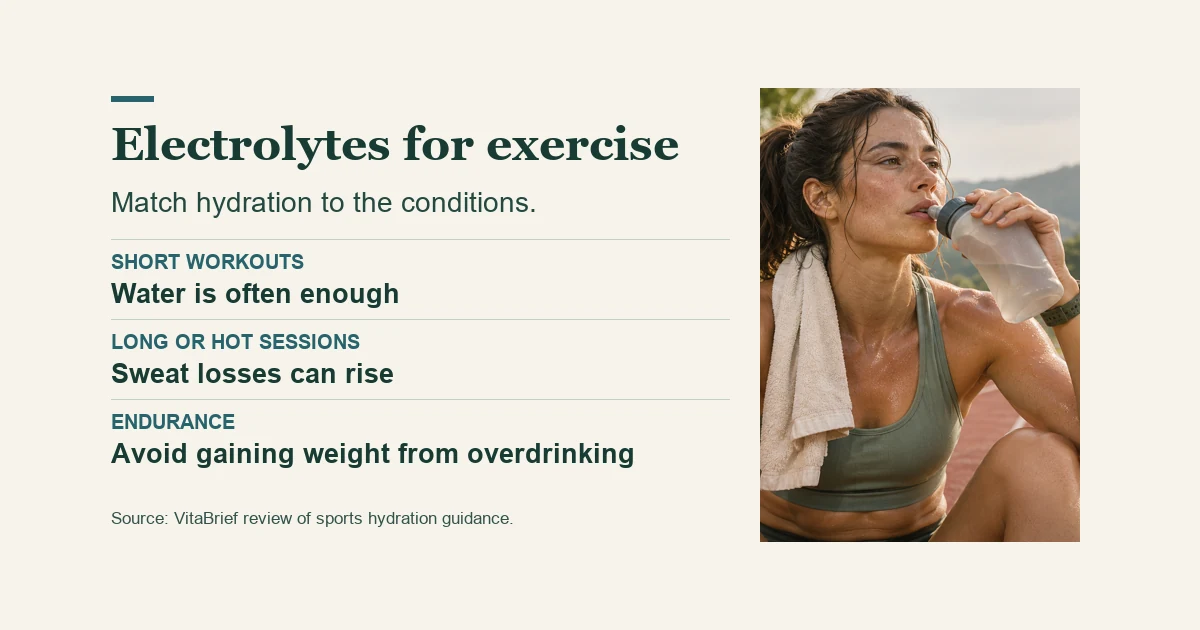
- Exercise lasting less than about an hour in mild conditions
- Light walking, yoga or strength training
- Any time you are also eating regular meals, which supply sodium and potassium
For these situations, the American College of Sports Medicine and the National Athletic Trainers’ Association agree that water is appropriate (Sawka 2007, McDermott 2017).
When electrolytes help
| Situation | Why electrolytes help |
|---|---|
| Exercise longer than 1–2 hours, or heavy sweating | Replace sodium lost in sweat; help retain fluid |
| Work or exercise in heat | Sweat losses are higher |
| Vomiting or diarrhea | Large, rapid losses of water and electrolytes |
| Rehydrating quickly after heavy sweating | Sodium helps the body keep the fluid |
| Salty sweaters (white salt marks on clothes) | Higher sodium losses than average |
The risk of too much water
Drinking far more water than you lose can dilute blood sodium, a condition called hyponatremia. Symptoms include nausea, headache, confusion, swelling and, in severe cases, seizures (MedlinePlus). In endurance events, the main cause is overdrinking, not failing to take electrolytes. An international consensus recommends drinking according to thirst rather than forcing large volumes (Hew-Butler 2015). Sports drinks contain far less sodium than blood, so they do not fully prevent hyponatremia if you overdrink them.
How much water do you need?
Needs vary with body size, activity, climate and diet. Food provides roughly a fifth of daily water. Rather than following a fixed number of glasses, most healthy adults can use thirst and urine color as guides: pale yellow urine generally means you are well hydrated. Older adults are an exception because thirst becomes less reliable with age. See electrolytes for older adults.
Coffee, tea and other drinks count
Coffee and tea in moderate amounts hydrate about as well as water (Maughan 2016). Milk is particularly good after exercise because it provides fluid, sodium, potassium, carbohydrate and protein. Sugary drinks hydrate but add calories. Alcohol in larger amounts increases urine output.
Practical guide
- Default: water with meals and when thirsty.
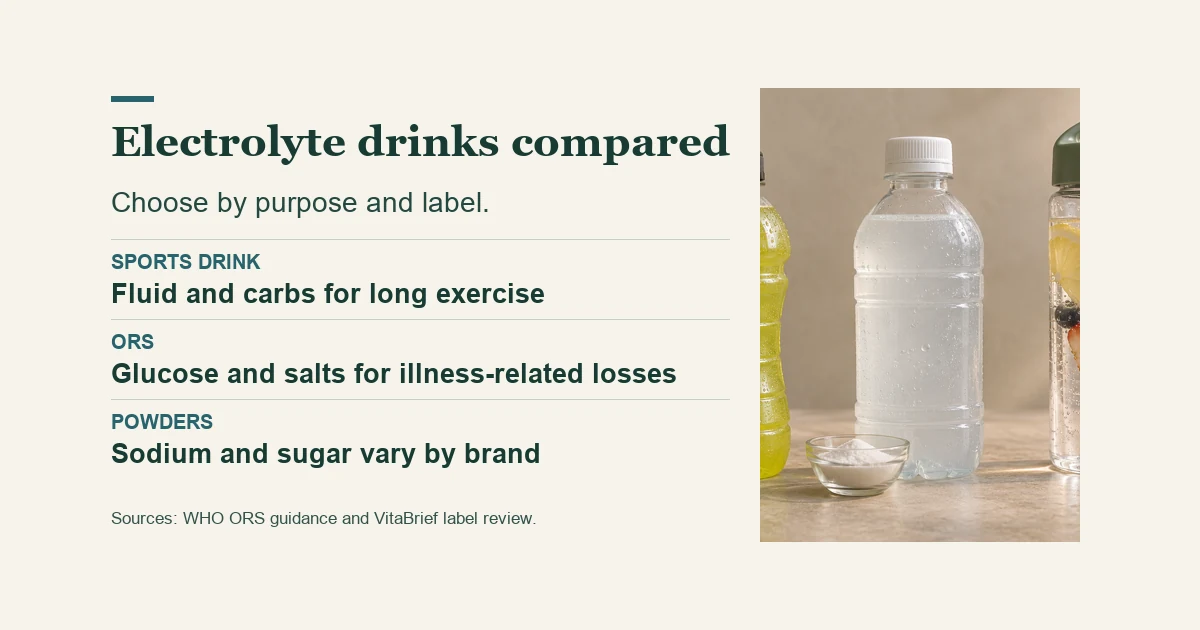
- Long or hot workouts: add an electrolyte drink with sodium. See electrolytes for exercise.
- Sick with vomiting or diarrhea: use an oral rehydration solution. See electrolytes when sick.
- Daily electrolyte packets: not needed for most people; watch sodium if you have high blood pressure.
Signs you are well hydrated
- Urine is pale yellow most of the day
- You urinate regularly, every few hours
- You rarely feel strongly thirsty
- No headaches or dizziness on standing
- Body weight is stable from day to day
These simple checks work for most healthy adults. Some vitamins, especially B vitamins, can make urine bright yellow regardless of hydration. Older adults, people with kidney or heart disease and those on diuretics should use their clinician’s guidance instead.
If plain water is hard to drink
Infused water with citrus, cucumber or mint, sparkling water, herbal tea and water-rich foods such as fruit, vegetables and soup all count toward hydration. Zero-sugar electrolyte tablets can add flavor, but check sodium if you use them every day.
Special cases
Some people should not follow general “drink more water” advice. People with heart failure or advanced kidney disease may have fluid limits. People taking thiazide diuretics or certain antidepressants are more prone to low sodium if they drink very large amounts of water. Endurance athletes in long events should drink to thirst rather than on a fixed schedule (Hew-Butler 2015). Infants under six months should not be given plain water unless a pediatrician advises it.
If any of these apply to you, ask your clinician for a personal fluid and electrolyte plan.
Does drink temperature matter?
Cool drinks are often more pleasant during exercise and in hot weather, which can encourage people to drink more. Cold drinks may also help lower body temperature slightly during exercise in heat. There is no evidence that room-temperature water hydrates better or worse than cold water. Choose the temperature that makes it easiest to drink enough.
Similarly, water from the tap, a filter or a bottle hydrates the same way. Choose what is safe, convenient and affordable for you.
The bottom line
Water is enough for everyday hydration and most workouts, especially when you eat regular meals. Electrolytes help when you lose a lot of sweat or fluid quickly, and drinks with sodium are retained better than plain water. Do not force large amounts of any drink; drink to thirst, and use electrolytes for long, hot or sick days.
Frequently asked questions
Do electrolytes hydrate you better than water?
Drinks with enough sodium are retained better, but at rest a typical sports drink is no better than water. The difference matters most after heavy fluid loss.
Is electrolyte water worth it?
Many bottled electrolyte waters contain only small amounts of electrolytes, mostly for taste. They hydrate like water.
Can I drink only electrolyte drinks instead of water?
It is unnecessary and can add excess sodium or sugar. Use them when needed and water the rest of the time.
Do electrolytes make you pee more?
Sodium tends to help you retain fluid, so you may urinate less than after the same amount of plain water.
Is it bad to drink a gallon of water a day?
For some people it is more than needed. Spread intake through the day, drink to thirst and include food. Very large amounts in a short time can be risky.
Does sparkling water hydrate as well as still water?
Yes. Carbonation does not reduce hydration.
Is it better to sip or gulp water?
Sipping through the day is easier on the stomach and avoids large swings. During exercise, drink to thirst.
Can I drink too many electrolytes?
In healthy people the kidneys excrete extras, but regular high sodium adds up and raises blood pressure over time.
Sources
- Maughan RJ, et al. A randomized trial to assess the potential of different beverages to affect hydration status: development of a beverage hydration index. Am J Clin Nutr. 2016;103(3):717-23.
- MedlinePlus. Fluid and Electrolyte Balance.
- MedlinePlus. Low blood sodium.
- Sawka MN, et al. American College of Sports Medicine position stand. Exercise and fluid replacement. Med Sci Sports Exerc. 2007;39(2):377-90.
- McDermott BP, et al. National Athletic Trainers’ Association position statement: fluid replacement for the physically active. J Athl Train. 2017;52(9):877-95.
- Hew-Butler T, et al. Statement of the Third International Exercise-Associated Hyponatremia Consensus Development Conference, Carlsbad, California, 2015. Clin J Sport Med. 2015;25(4):303-20.
- Baker LB. Sweating rate and sweat sodium concentration in athletes: a review of methodology and intra/interindividual variability. Sports Med. 2017;47(Suppl 1):111-28.
Last reviewed November 2026. VitaBrief is educational and is not medical advice. Talk with a doctor, registered dietitian or pharmacist before starting a supplement, especially if you are pregnant, take medication or have kidney disease.
Not medical advice. This guide is for general education. Talk to your doctor or pharmacist before taking a supplement, especially if you are pregnant or breastfeeding, take medication or have a health condition. Medical disclaimer