Ingredient guides
Electrolytes for exercise: what you actually need
How much you sweat, when sodium matters, how to drink before, during and after exercise, and how to avoid both dehydration and overdrinking.
VitaBrief editorial · Last reviewed November 2026 · Sources listed below
Reader-supported. This page may contain affiliate links. If you buy through one, we may earn a commission at no extra cost to you. It never changes what we write. Affiliate disclosure
Electrolytes for Exercise: the short answer
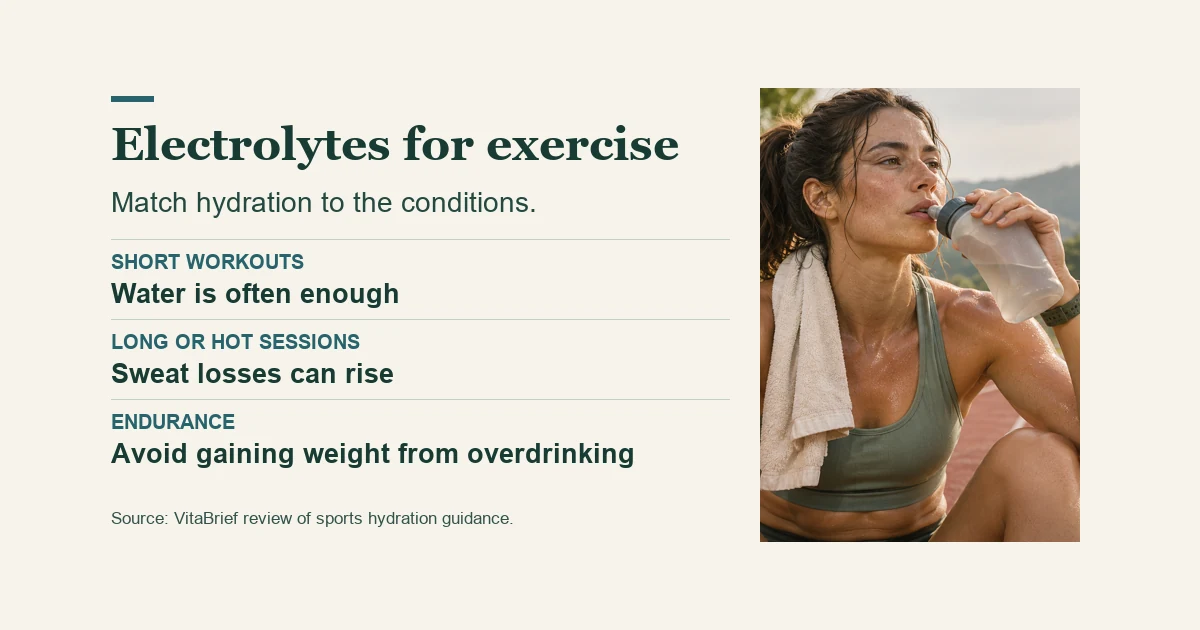
Water is enough for most workouts under an hour. For long, intense or hot sessions, use a drink with sodium and carbohydrate, aiming to limit body weight loss to about 2% without gaining weight. Drink to thirst, learn your sweat rate, and replace losses with fluid and salty food afterward. Overdrinking during long events is a real risk, so more is not always better.
Exercise is the main reason most people buy electrolyte products. Sweat carries away water and sodium, and losing too much of either can hurt performance and, in extreme cases, health. But many workouts do not need anything beyond water, and drinking too much during long events carries its own risk. This guide explains what research and sports medicine organizations recommend, drawing on the American College of Sports Medicine (ACSM) position stand (Sawka 2007), the National Athletic Trainers’ Association (NATA) (McDermott 2017), sweat research (Baker 2017) and the international hyponatremia consensus (Hew-Butler 2015).
How much you sweat
Sweat rates vary enormously between people and conditions, from about 0.5 to more than 2 liters an hour. Sweat sodium also varies, roughly 20 to 80 mmol per liter (about 460 to 1,840 mg), and some people are “salty sweaters” who leave white marks on clothing (Baker 2017). Heat, humidity, intensity, body size, fitness and acclimatization all change these numbers.
Measure your own sweat rate
- Weigh yourself before exercise, after using the bathroom, in minimal clothing.
- Exercise for one hour, noting how much you drink.
- Towel off and weigh yourself again.
- Sweat lost (liters) ≈ weight lost (kg) + fluid drunk (liters). One pound lost is about 16 oz of sweat.
Repeat in different conditions to learn your range.
What guidelines recommend
| Phase | Recommendation |
|---|---|
| Before | Start well hydrated; drink about 5–7 mL/kg (roughly 1.5–2 cups) about 4 hours before if needed; pale urine is a good sign |
| During | Drink to limit body weight loss to less than about 2%, without gaining weight; individualize to sweat rate |
| During, longer than 1–2 hours | Include sodium (about 20–30 mEq/L, 460–690 mg/L) and potassium (2–5 mEq/L); carbohydrate 5–10% for fuel |
| After | Replace about 1.25–1.5 L of fluid for each kg lost, with sodium from food or drinks |
What to drink by workout type
| Workout | What to drink |
|---|---|
| Strength training, yoga, under 60 minutes | Water |
| Moderate cardio under 60 minutes, cool conditions | Water |
| High-intensity or hot sessions of 60–90 minutes | Water; electrolyte drink if you sweat heavily |
| Endurance events over 2 hours | Sports drink or electrolyte mix plus carbohydrate |
| Multiple sessions per day, tournaments, hot climates | Electrolyte drinks between sessions and salty meals |
| Outdoor work in heat | Regular fluids with electrolytes and scheduled breaks |
Effects of dehydration
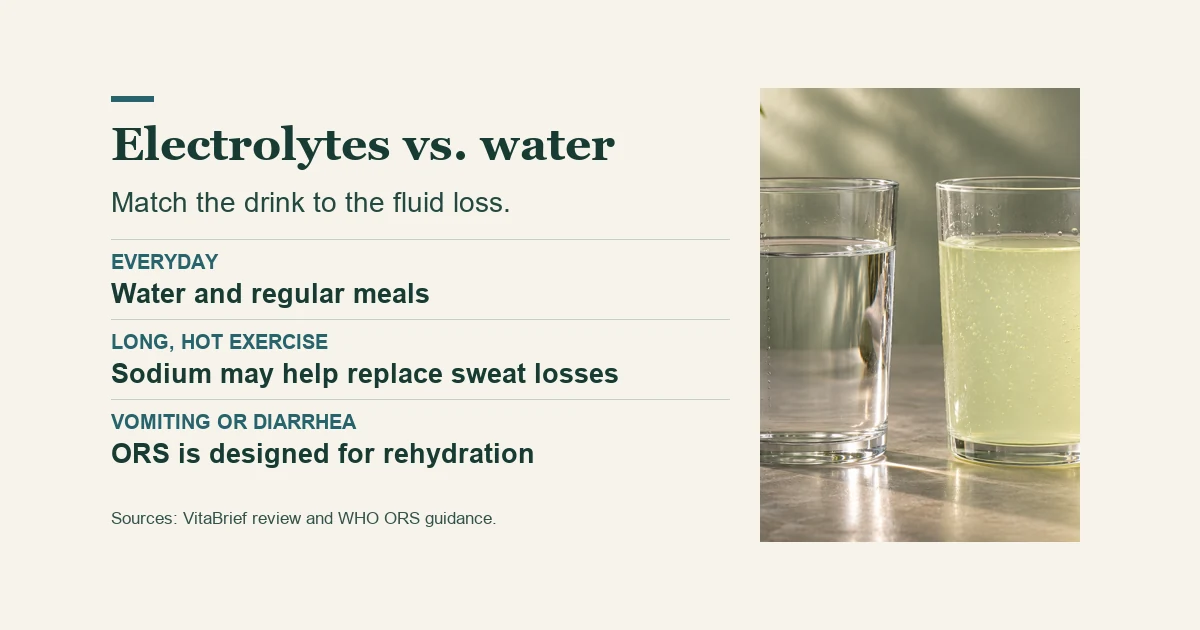
Losing more than about 2% of body weight through sweat can impair endurance performance, raise heart rate and body temperature and increase perceived effort, especially in heat (Sawka 2007). Severe dehydration contributes to heat illness. Warning signs include dizziness, headache, nausea, dark urine and stopping sweating in the heat, which is a medical emergency.
The overdrinking risk
Exercise-associated hyponatremia occurs when blood sodium falls too low, usually because people drink more than they sweat during long events. Slower athletes and those who drink at every aid station are at higher risk. Symptoms include nausea, headache, bloating, swelling, confusion and, in severe cases, seizures. The international consensus recommends drinking according to thirst and notes that sports drinks do not prevent hyponatremia if consumed in excess, because they contain far less sodium than blood (Hew-Butler 2015). Gaining weight during an event is a red flag.
Cramps
Exercise cramps have more than one cause. In people who sweat heavily and lose a lot of sodium, especially in heat, cramps may relate to sodium and fluid loss, and extra salt can help. Many other cramps are linked to muscle fatigue and overexertion rather than electrolytes. Stretching the cramping muscle usually provides quick relief.
Recovery
After exercise, the aim is to replace what was lost. Drinking somewhat more than you lost, about 1.25 to 1.5 liters per kilogram, accounts for continued urine losses (McDermott 2017). Sodium helps the body keep this fluid, which can come from a salty meal or a drink. Milk is an excellent option: it was retained better than water in a beverage hydration study and supplies protein for muscle repair (Maughan 2016). See our protein powder guide.
Training in heat
Heat increases sweat rate and sodium losses, especially before you are acclimatized. It takes roughly one to two weeks of gradual heat exposure for the body to adapt, during which sweat becomes less salty. Schedule hard sessions in cooler parts of the day, pre-hydrate, use electrolyte drinks for longer sessions and watch for signs of heat illness.
Choosing a drink
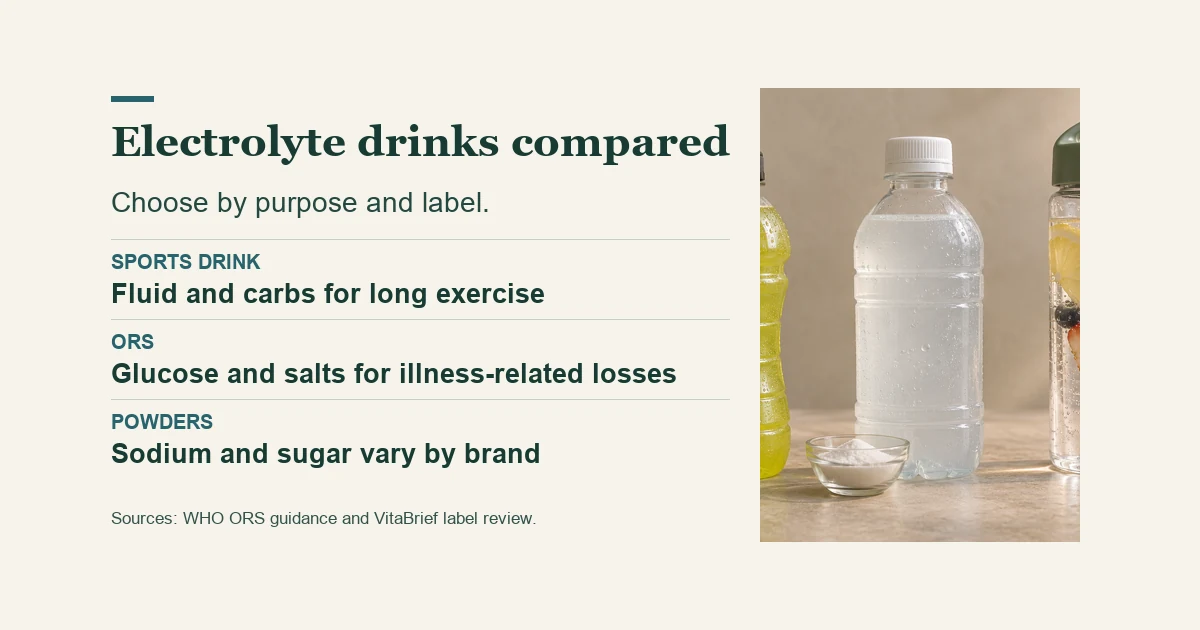
- Sports drinks combine modest sodium with carbohydrate, useful for fuel in long events.
- Higher-sodium mixes suit heavy, salty sweaters in heat.
- Zero-sugar tablets suit people who want electrolytes without calories, but provide no fuel.
- Salt capsules are an option for ultra-endurance athletes but are easy to overuse.
See electrolyte drinks compared and how to choose an electrolyte powder.
A simple hydration plan
| Session | Before | During | After |
|---|---|---|---|
| Gym or run under 60 min | Normal meal and water | Water as thirsty | Water and a meal |
| 60–120 min, warm | Water with a salty snack | Water or electrolyte drink | Fluid plus salty meal or milk |
| Over 2 hours or hot | Pre-hydrate with sodium | Sports drink or electrolytes plus carbs, drink to thirst | Replace 1.25–1.5 L per kg lost with sodium |
Practice your plan in training, never for the first time on race day, and adjust it as you learn your sweat rate and how your stomach handles drinks.
Team sports and youth athletes
Team sports with multiple games or practices a day, especially in summer, carry high sweat losses. Coaches can schedule regular drink breaks, provide cold water and sports drinks for long sessions, and watch for heat illness. Young athletes need the same attention to hydration and heat safety, with extra caution because they may not recognize early warning signs (McDermott 2017).
Are you a salty sweater?
Signs that you lose more sodium than average include white, crusty residue on clothes or skin after exercise, sweat that stings your eyes, a strong craving for salty foods after training and cramping during long sessions in heat. Salty sweaters often benefit from higher-sodium drinks or salty snacks during long events. Test changes in training, and increase sodium gradually.
The bottom line
Water is enough for most workouts under an hour. For long, intense or hot sessions, use a drink with sodium and carbohydrate, aiming to limit body weight loss to about 2% without gaining weight. Drink to thirst, learn your sweat rate, and replace losses with fluid and salty food afterward. Overdrinking during long events is a real risk, so more is not always better.
Frequently asked questions
Should I drink electrolytes before a workout?
Before long sessions in heat, a drink with sodium can help you start hydrated. For short workouts, water and a normal meal are enough.
Do I need electrolytes for weightlifting?
Usually not. Strength sessions rarely cause large sweat losses.
How much sodium per hour during endurance exercise?
Guidelines suggest drinks with about 460–690 mg per liter; heavy, salty sweaters may need more. Test in training first.
Do electrolytes improve performance?
They help by preventing excessive dehydration and sodium loss during long efforts. They do not boost short workouts.
Can I take electrolytes with creatine?
Yes. They can be mixed in the same drink. See when to take creatine.
Is a sweat test worth it?
Commercial sweat tests can estimate sweat sodium, which helps very heavy or salty sweaters plan. Most people can start with general guidelines.
What should I drink during a marathon?
Drink to thirst, use a sports drink or electrolytes with carbohydrate, and avoid gaining weight during the race.
Should I take salt tablets?
They can help some ultra-endurance athletes with high sweat sodium losses, but they are easy to overuse. Most people do better with drinks and salty food.
Is coconut water good after exercise?
It provides fluid and potassium but little sodium, so pair it with salty food after heavy sweating.
Do I need electrolytes for hot yoga?
Long, very sweaty classes can justify an electrolyte drink, especially if you sweat heavily.
Sources
- Sawka MN, et al. American College of Sports Medicine position stand. Exercise and fluid replacement. Med Sci Sports Exerc. 2007;39(2):377-90.
- McDermott BP, et al. National Athletic Trainers’ Association position statement: fluid replacement for the physically active. J Athl Train. 2017;52(9):877-95.
- Baker LB. Sweating rate and sweat sodium concentration in athletes: a review of methodology and intra/interindividual variability. Sports Med. 2017;47(Suppl 1):111-28.
- Hew-Butler T, et al. Statement of the Third International Exercise-Associated Hyponatremia Consensus Development Conference, Carlsbad, California, 2015. Clin J Sport Med. 2015;25(4):303-20.
- Maughan RJ, et al. A randomized trial to assess the potential of different beverages to affect hydration status: development of a beverage hydration index. Am J Clin Nutr. 2016;103(3):717-23.
- MedlinePlus. Dehydration.
Last reviewed November 2026. VitaBrief is educational and is not medical advice. Talk with a doctor, registered dietitian or pharmacist before starting a supplement, especially if you are pregnant, take medication or have kidney disease.
Not medical advice. This guide is for general education. Talk to your doctor or pharmacist before taking a supplement, especially if you are pregnant or breastfeeding, take medication or have a health condition. Medical disclaimer