Supplement basics
How to choose an electrolyte powder
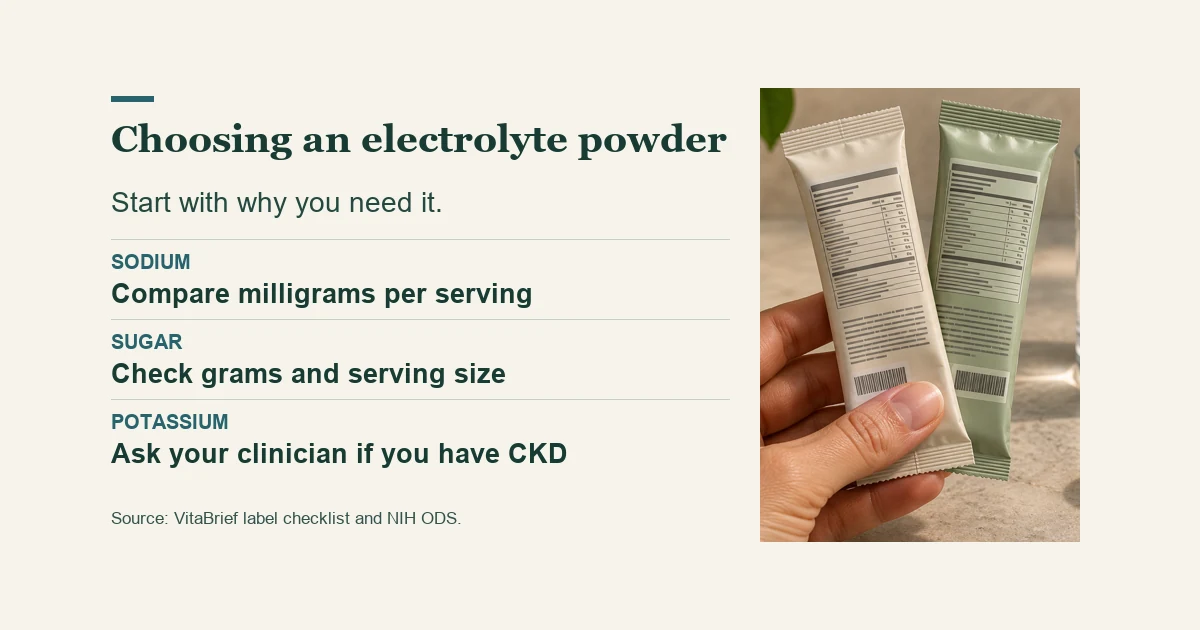
A practical checklist: match sodium to your sweat, decide on sugar, check potassium and magnesium, avoid unnecessary extras and compare cost per serving.
VitaBrief editorial · Last reviewed November 2026 · Sources listed below
Reader-supported. This page may contain affiliate links. If you buy through one, we may earn a commission at no extra cost to you. It never changes what we write. Affiliate disclosure
How to Choose an Electrolyte Powder: the short answer
Start with why you need electrolytes, then match sodium and sugar to that purpose: higher sodium for heavy sweating, an oral rehydration solution for illness, zero sugar for everyday or keto use. Check potassium and magnesium if you have kidney concerns, skip caffeine, herbs and megadose vitamins, and prefer third-party tested products. Most days, water is still the right choice.
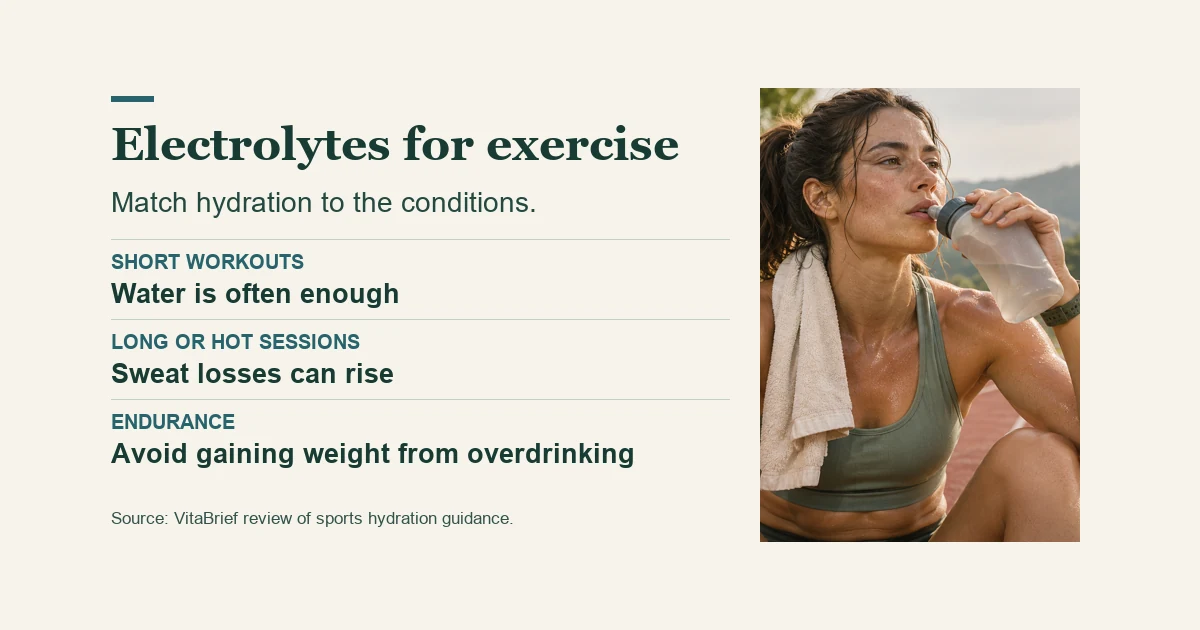
“Best electrolyte powder” searches cover everyday use, no sugar, when sick, for kidneys and for dehydration. There is no single best powder because the right choice depends on why you are using it. A marathon runner, someone with a stomach bug, a person on a keto diet and someone with high blood pressure need very different products. This checklist helps you read labels and choose, drawing on sports hydration guidelines (Sawka 2007), oral rehydration research (Hahn 2002), the NIH Office of Dietary Supplements (ODS) and the FDA.
The quick checklist
| Check | What to look for |
|---|---|
| 1. Purpose | Exercise, heat, illness, low-carb diet or everyday flavor |
| 2. Sodium per serving | Matched to your losses: about 200–500 mg light, 500–1,000 mg heavy sweat or heat |
| 3. Sugar | Some for long exercise and illness; zero for everyday sipping or keto |
| 4. Potassium | Helpful for most; caution with kidney disease or potassium-raising medicines |
| 5. Magnesium | Modest amounts; stay under 350 mg from all supplements |
| 6. Extras | Avoid unneeded caffeine, herbs and megadose vitamins |
| 7. Sweeteners | Watch sugar alcohols if your stomach is sensitive |
| 8. Testing | NSF Certified for Sport, USP or Informed Sport |
| 9. Cost | Price per serving at the dose you actually need |
Step 1: Know your purpose
| Purpose | Look for |
|---|---|
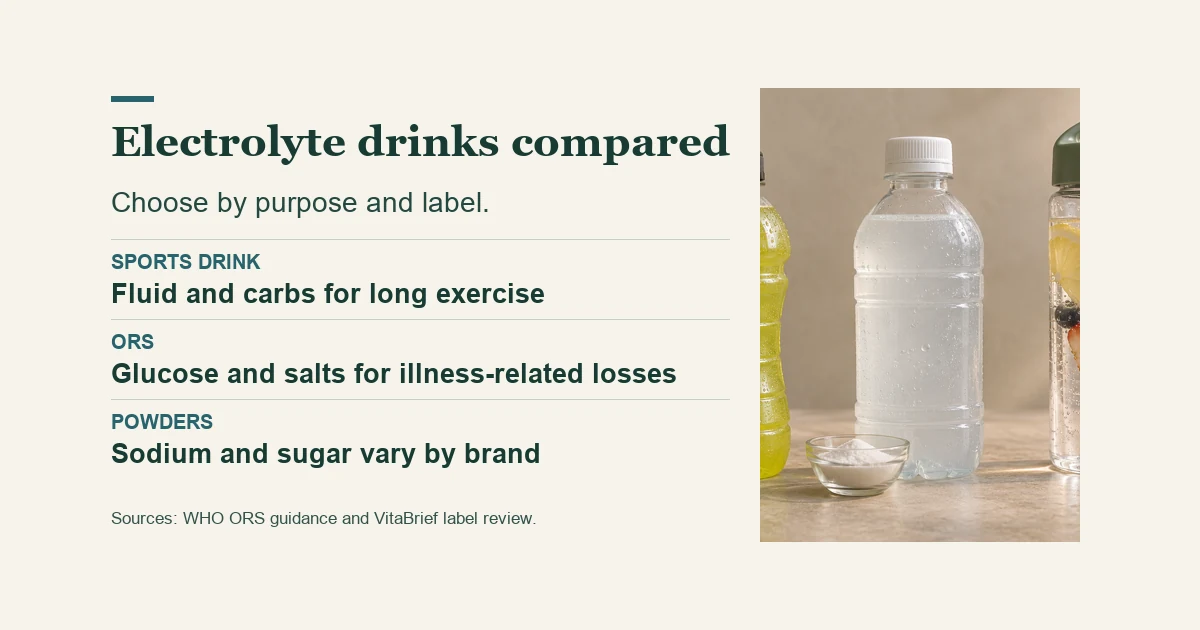
| Endurance exercise over 2 hours | Sodium plus carbohydrate (sports-drink style), or powder plus separate fuel |
| Heavy sweating or hot work | Higher sodium (500–1,000 mg per serving) |
| Vomiting or diarrhea | Oral rehydration solution with a precise sodium-glucose ratio |
| Keto or fasting | Zero sugar, moderate to high sodium |
| Everyday taste in water | Low sodium, zero sugar, or just plain water |
| High blood pressure, kidney or heart disease | Ask your clinician first |
Step 2: Check sodium
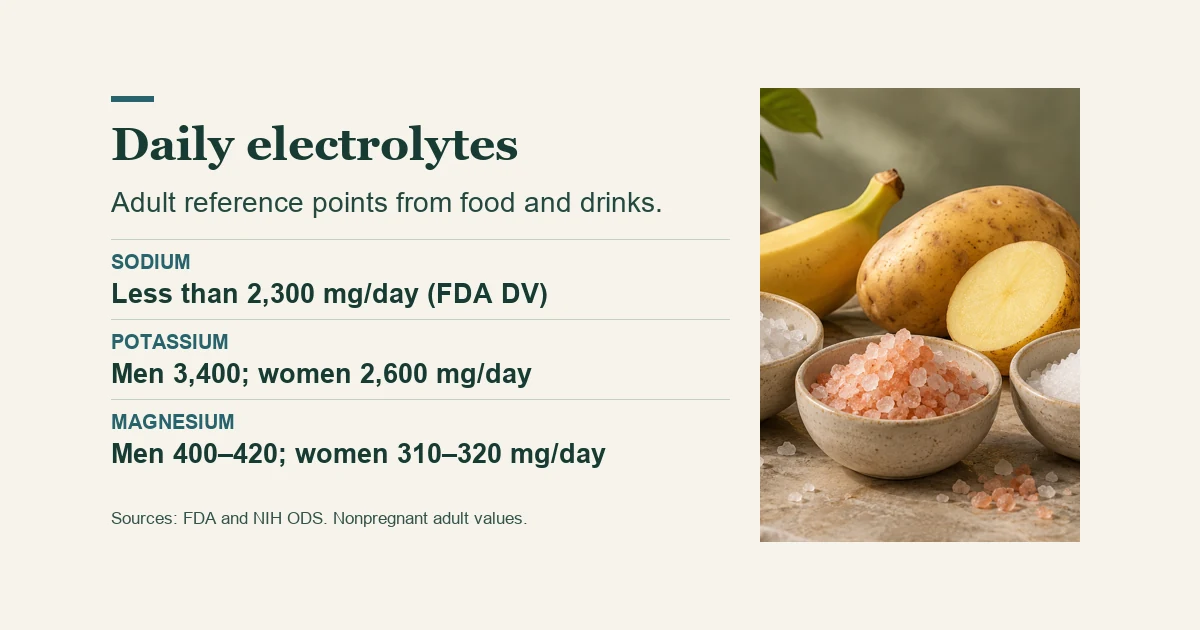
Sodium is the electrolyte lost in the largest amount in sweat and the key ingredient for rehydration. Sweat sodium varies widely, from roughly 460 to 1,840 mg per liter of sweat (Baker 2017). The American College of Sports Medicine suggests drinks with about 460 to 690 mg of sodium per liter during prolonged exercise (Sawka 2007); heavy, salty sweaters may need more. For everyday use, remember that most Americans already exceed the recommended 2,300 mg a day (FDA). A powder with 1,000 mg per stick is a lot for someone sitting at a desk.
Step 3: Decide on sugar
A little sugar is not always bad. Glucose helps the gut absorb sodium and water, which is why oral rehydration solutions contain it (Hahn 2002), and carbohydrate fuels long exercise. For everyday sipping, weight management, diabetes or keto, zero-sugar products make more sense. Check whether the label lists “added sugars” and how many grams per serving.
Step 4: Potassium and magnesium
Most powders include potassium, usually 100 to 400 mg per serving. That is fine for healthy people, many of whom fall short of potassium targets (ODS). People with kidney disease or taking ACE inhibitors, ARBs or spironolactone should ask a clinician first. Magnesium in electrolyte products adds to any other supplements; keep total supplemental magnesium under 350 mg a day to avoid diarrhea (ODS). See electrolytes and kidneys.
Step 5: Skip unnecessary extras
- Caffeine: “energy” hydration products may contain as much as a cup of coffee.
- Megadose vitamins: some sticks provide many times the daily value of vitamin C, B vitamins or zinc.
- Herbs and “adaptogens”: usually little evidence and more potential for interactions.
- Proprietary blends: hide how much of each ingredient you get.
Step 6: Sweeteners and stomach comfort
Zero-sugar products use sweeteners such as stevia, monk fruit, sucralose or sugar alcohols (erythritol, xylitol). Sugar alcohols can cause gas, bloating or loose stools in some people. If a product upsets your stomach, try one with a different sweetener or unflavored salt-based electrolytes.
Step 7: Look for testing
Electrolyte powders sold as dietary supplements do not need FDA approval before sale (ODS). Third-party certification confirms label accuracy and screens for contaminants and, for sports programs, banned substances. This matters most for competitive athletes.
Formats
| Format | Pros | Cons |
|---|---|---|
| Stick packs | Portable, pre-measured | Higher cost; fixed dose |
| Tubs of powder | Cheaper per serving; adjustable | Needs measuring |
| Effervescent tablets | Compact, usually zero sugar | Lower sodium in many brands |
| Capsules or salt tabs | Precise sodium for ultra-endurance | Easy to overuse; take with fluid |
| Gummies | Tasty | Low electrolytes per piece; added sugar |
Step 8: Compare cost
Divide the price by the number of servings at the dose you actually use. If you only need half a stick on light days, a tub may be far cheaper. For many everyday situations, water and a salty snack cost almost nothing.
Comparing two labels
| Everyday zero-sugar stick | High-sodium hydration stick | |
|---|---|---|
| Sodium | About 200–300 mg | About 500–1,000 mg |
| Potassium | About 100–200 mg | About 200–400 mg |
| Sugar | 0 g | About 0–11 g |
| Calories | 0–10 | About 0–45 |
| Best for | Flavor, light activity, keto | Heavy sweat, heat, travel |
If you are unsure, start with the lower-sodium option for everyday use and keep a higher-sodium product for long, hot days.
Mixing and timing
Follow the label for water volume; mixing a stick in less water makes a saltier, more concentrated drink that can upset the stomach. Sip during activity rather than drinking it all at once. On illness days, small frequent sips work best. Avoid mixing two products together, which can double sodium unexpectedly.
Red flags
Be cautious with products that claim to cure fatigue, “flush toxins,” boost immunity or replace medical treatment. Supplements are not allowed to claim they treat disease. Very high doses of multiple vitamins, unlisted amounts in proprietary blends, and stimulants hidden under names like guarana or green tea extract are other warning signs. A good electrolyte product makes it easy to see sodium, potassium, sugar and any additives per serving.
If you take medicines for blood pressure, heart or kidney conditions, show the label to your pharmacist before using a new product regularly.
Storage and shelf life
Keep powders and tablets sealed in a cool, dry place. Humidity can cause clumping and make effervescent tablets lose their fizz. Once mixed, drink within a day and refrigerate if you are not drinking it right away. Check expiry dates, especially on products kept for sick days, and replace them every year or two.
Keep electrolyte products, especially those that look like candy, out of reach of children.
The bottom line
Start with why you need electrolytes, then match sodium and sugar to that purpose: higher sodium for heavy sweating, an oral rehydration solution for illness, zero sugar for everyday or keto use. Check potassium and magnesium if you have kidney concerns, skip caffeine, herbs and megadose vitamins, and prefer third-party tested products. Most days, water is still the right choice.
Frequently asked questions
What is the best electrolyte powder for everyday use?
If you want one, choose a zero-sugar product with modest sodium. Many people do not need any on ordinary days.
What is the best electrolyte drink when sick?
An oral rehydration solution. See electrolytes when sick.
Are electrolyte gummies effective?
Most contain little sodium per piece. They are more of a snack than a rehydration tool.
Is it OK to use half a packet?
Yes. Adjust to your sweat and taste, and mix with enough water.
Can kids use adult electrolyte powders?
For illness, use pediatric oral rehydration solutions. Adult high-sodium powders are not designed for children.
Do I need electrolytes with creatine or protein?
No. They do different jobs, but you can mix creatine into an electrolyte drink. See creatine guide.
Can electrolyte powders expire?
Yes. Powders can clump with moisture and flavor fades. Store sealed and dry.
Is unflavored electrolyte powder better?
It avoids sweeteners and flavors and is easy to add to other drinks, but it can taste salty.
Are electrolyte powders vegan?
Most are, but check for gelatin, honey or animal-derived additives.
Should I pick a powder with added zinc?
Only if you need it. Regular high-dose zinc can interfere with copper absorption.
Sources
- Sawka MN, et al. American College of Sports Medicine position stand. Exercise and fluid replacement. Med Sci Sports Exerc. 2007;39(2):377-90.
- Hahn S, et al. Reduced osmolarity oral rehydration solution for treating dehydration caused by acute diarrhoea in children. Cochrane Database Syst Rev. 2002;(1):CD002847.
- Baker LB. Sweating rate and sweat sodium concentration in athletes: a review of methodology and intra/interindividual variability. Sports Med. 2017;47(Suppl 1):111-28.
- US Food and Drug Administration. Sodium in Your Diet.
- NIH Office of Dietary Supplements. Potassium: Fact Sheet for Health Professionals.
- NIH Office of Dietary Supplements. Magnesium: Fact Sheet for Health Professionals.
- NIH Office of Dietary Supplements. Dietary Supplements: What You Need to Know.
Last reviewed November 2026. VitaBrief is educational and is not medical advice. Talk with a doctor, registered dietitian or pharmacist before starting a supplement, especially if you are pregnant, take medication or have kidney disease.
Not medical advice. This guide is for general education. Talk to your doctor or pharmacist before taking a supplement, especially if you are pregnant or breastfeeding, take medication or have a health condition. Medical disclaimer