Ingredient guides
Electrolytes: a practical guide
What electrolytes do, how much you need, when drinks and powders help, and when plain water and food are enough.
VitaBrief editorial · Last reviewed November 2026 · Sources listed below
Reader-supported. This page may contain affiliate links. If you buy through one, we may earn a commission at no extra cost to you. It never changes what we write. Affiliate disclosure
Electrolytes Guide: the short answer
Electrolytes are essential minerals that control fluid balance, nerves and muscles. Most people get enough from food and water. Electrolyte drinks help during long or sweaty exercise, in heat, and during vomiting or diarrhea. Daily high-sodium products are unnecessary for most people and can be a problem for those with high blood pressure, heart or kidney disease.
Electrolyte drinks, powders and packets have moved from the sports aisle to the checkout counter, and US searches for electrolytes have risen by about 60% in five years. Marketing suggests everyone needs them every day for energy, focus and “better hydration.” The reality is more nuanced. Electrolytes are essential, but most people get enough from food. Supplements help in specific situations: long or sweaty exercise, heat, vomiting or diarrhea, and some diets or medical conditions. This guide explains what electrolytes do, how much you need and when a drink or powder makes sense. It draws on MedlinePlus, the NIH Office of Dietary Supplements (ODS), the American College of Sports Medicine (ACSM) (Sawka 2007) and research on hydration.
What electrolytes are
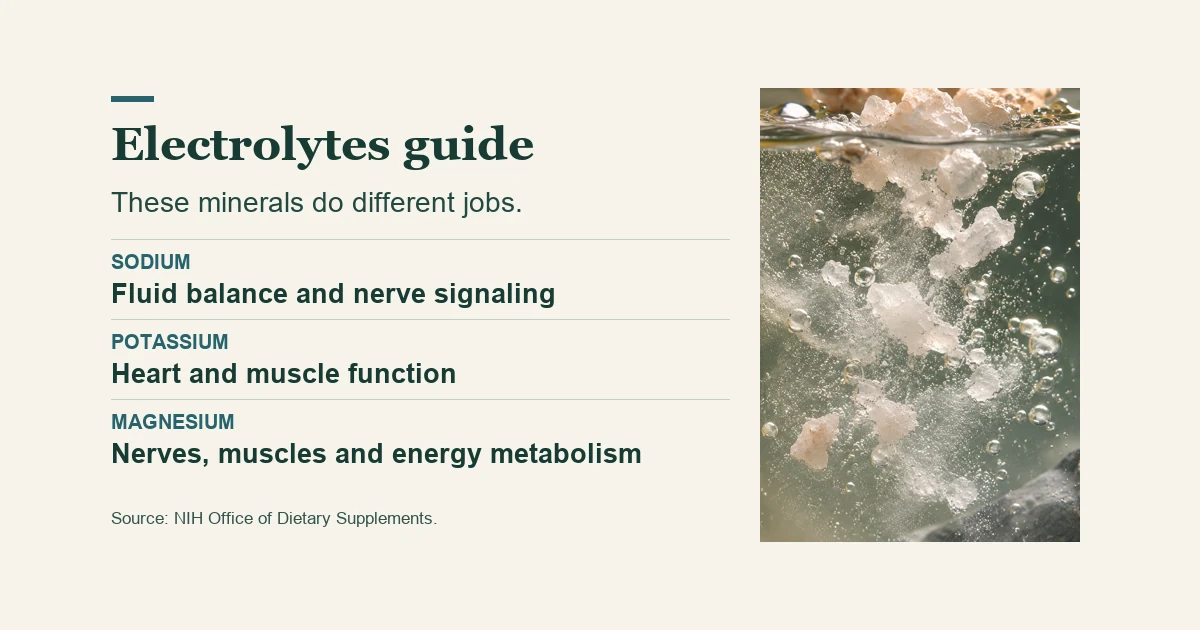
Electrolytes are minerals that carry an electric charge when dissolved in body fluids such as blood, sweat and urine. That charge lets them move water between cells, keep the heart beating regularly, carry nerve signals and make muscles contract. The kidneys keep blood levels in a narrow range by holding on to or getting rid of electrolytes and water as needed (MedlinePlus).
| Electrolyte | Main jobs | Good food sources |
|---|---|---|
| Sodium | Fluid balance, blood pressure, nerve and muscle function | Salt, bread, cheese, processed foods |
| Potassium | Heart rhythm, muscle contraction, offsets sodium’s effect on blood pressure | Potatoes, beans, bananas, leafy greens, yogurt |
| Chloride | Fluid balance, stomach acid | Salt (sodium chloride) |
| Magnesium | Muscle and nerve function, energy production | Nuts, seeds, whole grains, beans |
| Calcium | Muscle contraction, nerve signals, bones | Dairy, fortified plant milks, tofu |
| Bicarbonate and phosphate | Acid-base balance, energy | Made by the body; phosphate in protein foods |
How the body keeps balance
Most healthy people do not need to think about electrolytes. When you eat salty food, you get thirsty and your kidneys excrete the extra sodium. When you sweat, thirst and hormones prompt you to drink and conserve sodium. Problems arise when losses are large and fast, such as heavy sweating for hours, vomiting or diarrhea, or when the systems that regulate balance are affected by illness, medicines or age (MedlinePlus).
When electrolyte drinks help
| Situation | Do electrolytes help? | What to use |
|---|---|---|
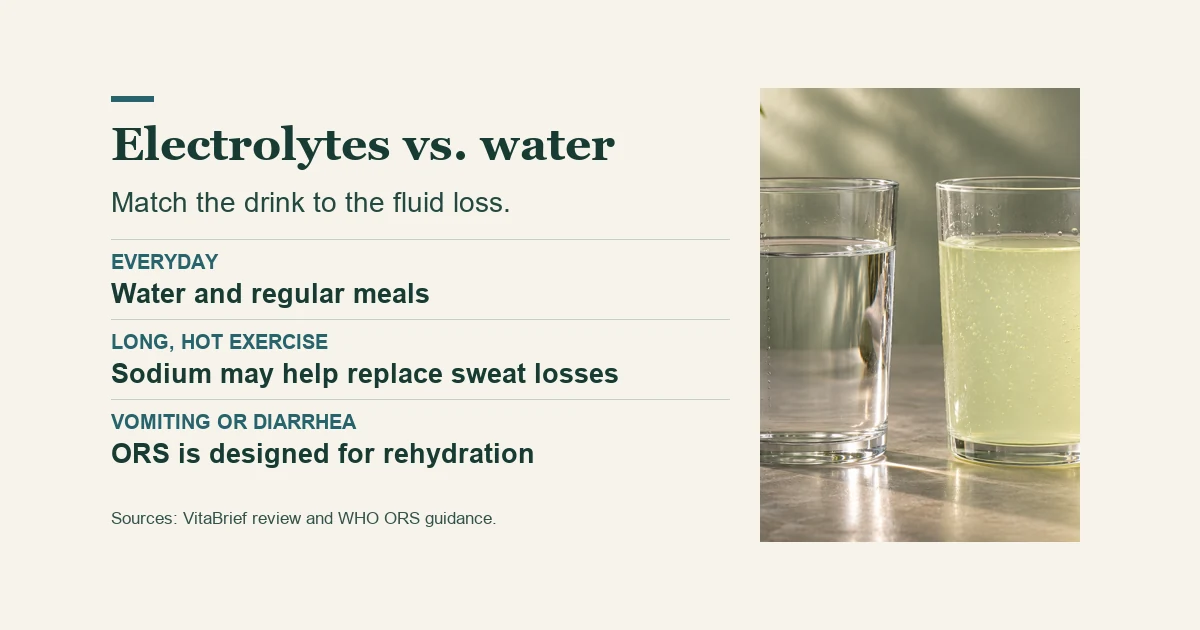
| Everyday hydration, desk work | Usually not needed | Water and normal meals |
| Exercise under an hour | Usually not needed | Water |
| Exercise over 1–2 hours, heavy sweating or heat | Yes | Sports drink or electrolyte mix with sodium |
| Vomiting or diarrhea | Yes | Oral rehydration solution |
| Starting a very low-carb diet | Sometimes | Extra salt or broth; ask if you have health conditions |
| Heart failure, kidney disease | Only with medical advice | Follow your care team |
Exercise and sweat
Sweat contains mostly water plus sodium, with smaller amounts of chloride and potassium. How much people sweat, and how salty their sweat is, varies widely. Sweat sodium typically ranges from roughly 20 to 80 mmol per liter, and sweat rates from about half a liter to more than two liters an hour (Baker 2017). The ACSM advises preventing excessive dehydration during exercise and including sodium in drinks during prolonged exercise (Sawka 2007). Drinking far more than you sweat, especially plain water, can dilute blood sodium and cause hyponatremia (Hew-Butler 2015). See electrolytes for exercise.
Illness
Vomiting and diarrhea cause rapid loss of water and electrolytes, which can quickly lead to dehydration, especially in young children and older adults. Oral rehydration solutions, with a specific balance of sodium and glucose, are the recommended first treatment for mild to moderate dehydration. Reduced-osmolarity formulas lowered the need for IV fluids in children compared with older formulas (Hahn 2002). See electrolytes when sick.
How much you need
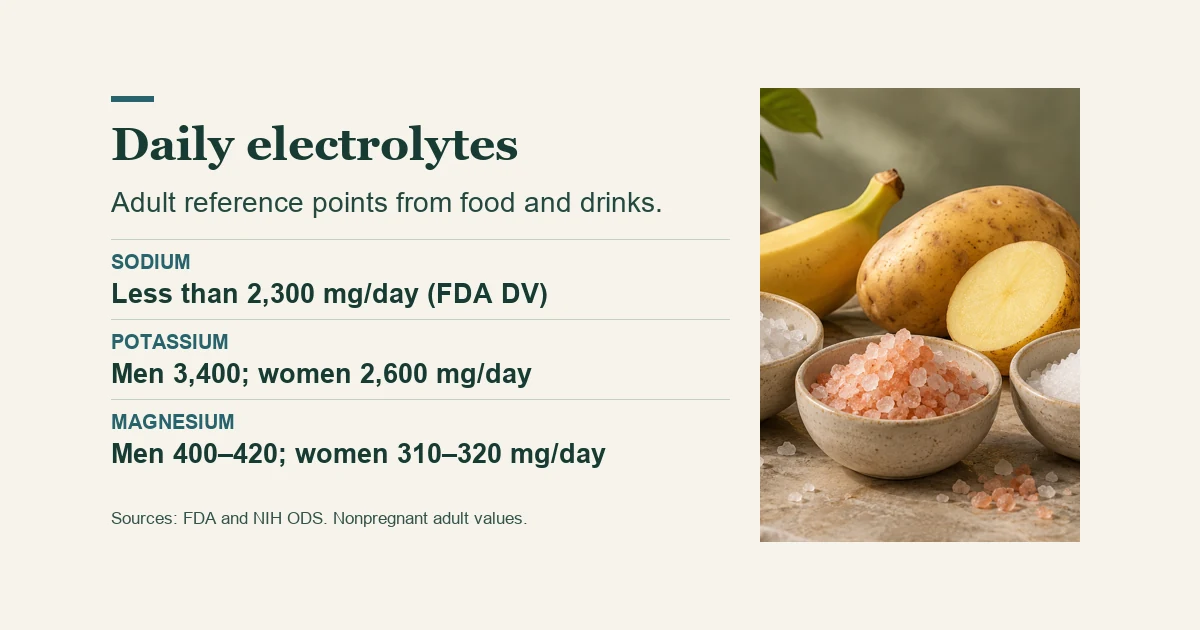
Daily needs come mainly from food. Most Americans already get more sodium than recommended and less potassium. The FDA notes that average sodium intake is about 3,400 mg a day, well above the recommended limit of 2,300 mg (FDA). See how much electrolytes per day.
Signs of imbalance
Electrolyte imbalances can cause fatigue, muscle cramps or weakness, headache, nausea, confusion and irregular heartbeat. Severe imbalances are medical emergencies. Low blood sodium (hyponatremia) and high or low potassium are among the most important (MedlinePlus). See electrolyte imbalance symptoms.
Drinks, powders and tablets
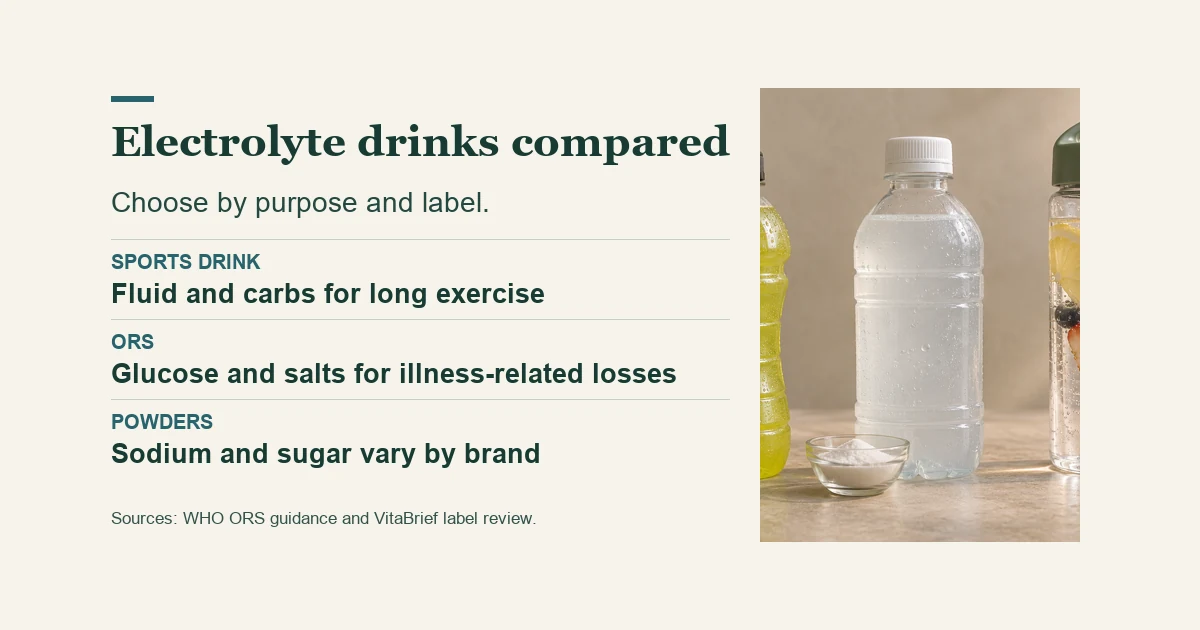
Electrolyte products differ widely. Sports drinks combine modest sodium with sugar for fuel. Oral rehydration solutions have more sodium and a precise sugar ratio for illness. “Hydration multiplier” powders often have high sodium and some sugar. Zero-sugar tablets and powders suit people who want electrolytes without calories. Coconut water is high in potassium but low in sodium. See electrolyte drinks compared and how to choose an electrolyte powder.
Safety
For most healthy people, an occasional electrolyte drink is harmless. Daily high-sodium powders can add up, though, and too much sodium raises blood pressure over time (He 2013). People who should check with a clinician before using electrolyte products regularly include those with:
- High blood pressure or heart failure
- Kidney disease, which can make potassium and sodium dangerous (see electrolytes and kidneys)
- Medicines that affect potassium or sodium, such as some blood pressure drugs, diuretics and potassium-sparing medicines
- Pregnancy with high blood pressure or preeclampsia (see electrolytes during pregnancy)
Food first
A balanced diet supplies electrolytes for most days. Fruits, vegetables, beans, dairy and whole grains provide potassium, magnesium and calcium. Sodium is plentiful in most diets. After a long sweaty session, a salty meal and water often restore balance as well as a drink. Milk is an excellent recovery drink, providing fluid, sodium, potassium and protein; in one study it hydrated better than water over several hours (Maughan 2016).
Common electrolyte myths
| Myth | Reality |
|---|---|
| Everyone needs electrolyte drinks daily | Most people get enough from food and water |
| Electrolytes give you energy | They contain no calories; feeling better comes from fixing dehydration |
| More sodium means better hydration | Only up to a point; excess raises blood pressure over time |
| Clear urine is the goal | Pale yellow is fine; completely clear may mean overdrinking |
| Sports drinks prevent hyponatremia | Not if you overdrink them; they contain much less sodium than blood |
The bottom line
Electrolytes are essential minerals that control fluid balance, nerves and muscles. Most people get enough from food and water. Electrolyte drinks help during long or sweaty exercise, in heat, and during vomiting or diarrhea. Daily high-sodium products are unnecessary for most people and can be a problem for those with high blood pressure, heart or kidney disease. Choose products to match the situation, and get advice if you have medical conditions.
Frequently asked questions
Are electrolytes good for you?
Electrolytes themselves are essential. Electrolyte supplements are useful in specific situations but not necessary every day for most people.
Are electrolytes just salt?
Sodium chloride (salt) is the main electrolyte lost in sweat, so it is the key ingredient. Products usually add potassium and sometimes magnesium and calcium.
Do electrolytes give you energy?
Electrolytes contain no calories. If you are dehydrated, correcting it can make you feel better. Drinks with sugar also provide fuel.
Can you drink electrolytes every day?
Healthy people can, but watch total sodium and sugar. Daily use is rarely needed unless you sweat heavily.
Do electrolytes help hangovers?
Alcohol increases urine output and can cause mild dehydration. Fluids and electrolytes may help you feel better, but they do not speed alcohol clearance or prevent hangovers.
Are electrolytes safe for kids?
For illness, pediatric oral rehydration solutions are appropriate. For everyday use, water and milk are better than sports drinks for most children.
Do electrolytes help headaches?
If a headache comes from dehydration, fluids and electrolytes can help. Most headaches have other causes.
Sources
- MedlinePlus. Fluid and Electrolyte Balance.
- MedlinePlus. Electrolytes.
- MedlinePlus. Low blood sodium.
- NIH Office of Dietary Supplements. Potassium: Fact Sheet for Health Professionals.
- US Food and Drug Administration. Sodium in Your Diet.
- Sawka MN, et al. American College of Sports Medicine position stand. Exercise and fluid replacement. Med Sci Sports Exerc. 2007;39(2):377-90.
- Baker LB. Sweating rate and sweat sodium concentration in athletes: a review of methodology and intra/interindividual variability. Sports Med. 2017;47(Suppl 1):111-28.
- Hew-Butler T, et al. Statement of the Third International Exercise-Associated Hyponatremia Consensus Development Conference, Carlsbad, California, 2015. Clin J Sport Med. 2015;25(4):303-20.
- Hahn S, et al. Reduced osmolarity oral rehydration solution for treating dehydration caused by acute diarrhoea in children. Cochrane Database Syst Rev. 2002;(1):CD002847.
- Maughan RJ, et al. A randomized trial to assess the potential of different beverages to affect hydration status: development of a beverage hydration index. Am J Clin Nutr. 2016;103(3):717-23.
- He FJ, et al. Effect of longer term modest salt reduction on blood pressure: Cochrane systematic review and meta-analysis of randomised trials. BMJ. 2013;346:f1325.
Last reviewed November 2026. VitaBrief is educational and is not medical advice. Talk with a doctor, registered dietitian or pharmacist before starting a supplement, especially if you are pregnant, take medication or have kidney disease.
Not medical advice. This guide is for general education. Talk to your doctor or pharmacist before taking a supplement, especially if you are pregnant or breastfeeding, take medication or have a health condition. Medical disclaimer