Supplement basics
Electrolyte imbalance: symptoms and causes
Signs of low and high sodium, potassium, magnesium and calcium, common causes, how imbalances are tested, and when to get urgent care.
VitaBrief editorial · Last reviewed November 2026 · Sources listed below
Reader-supported. This page may contain affiliate links. If you buy through one, we may earn a commission at no extra cost to you. It never changes what we write. Affiliate disclosure
Electrolyte Imbalance Symptoms: the short answer
Electrolyte imbalances cause fatigue, cramps, nausea, confusion and heart rhythm problems. Common causes are vomiting, diarrhea, heavy sweating, medicines, overdrinking and kidney, heart or liver disease. A blood test confirms the problem. Mild illness-related losses respond to oral rehydration solutions, but confusion, seizures, chest pain or an irregular heartbeat need emergency care.
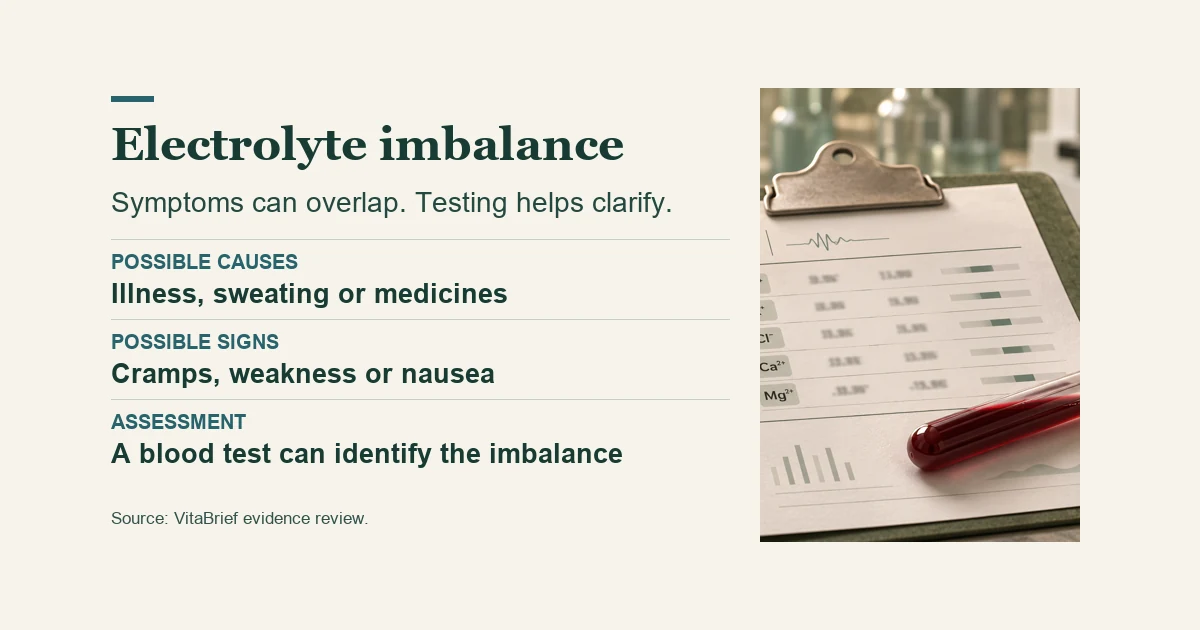
“Electrolyte imbalance symptoms” is one of the top electrolyte searches on Google. An imbalance means one or more electrolytes in your blood is too high or too low. Mild imbalances are common during illness and usually correct themselves. Severe ones can affect the heart and brain and need urgent care. Symptoms overlap with many other problems, so a blood test is the only way to know. This guide covers the main imbalances, their causes and warning signs, using MedlinePlus, the NIH Office of Dietary Supplements (ODS) and clinical consensus statements.
This article is educational. If you have chest pain, an irregular heartbeat, confusion, seizures, fainting or severe weakness, seek emergency care.
Common symptoms
Because electrolytes control nerves, muscles and fluid balance, imbalances tend to cause symptoms in those systems (MedlinePlus):
- Fatigue, weakness or lethargy
- Muscle cramps, twitching or spasms
- Headache, nausea or vomiting
- Confusion, irritability or trouble concentrating
- Irregular, fast or pounding heartbeat
- Numbness or tingling
- Seizures in severe cases
Imbalances by electrolyte
| Imbalance | Common causes | Typical symptoms |
|---|---|---|
| Low sodium (hyponatremia) | Overdrinking water, diuretics, heart or liver failure, some antidepressants, vomiting | Headache, nausea, confusion, swelling, seizures |
| High sodium (hypernatremia) | Dehydration, not drinking enough (often in frail older adults), heavy fluid loss | Intense thirst, confusion, restlessness |
| Low potassium (hypokalemia) | Vomiting, diarrhea, diuretics, laxative overuse | Weakness, cramps, constipation, irregular heartbeat |
| High potassium (hyperkalemia) | Kidney disease, some blood pressure drugs, potassium supplements or salt substitutes | Often none until severe; weakness, dangerous heart rhythms |
| Low magnesium | Alcohol use, diarrhea, some medicines (such as long-term acid reducers), diabetes | Cramps, tremor, irregular heartbeat |
| Low or high calcium | Parathyroid problems, vitamin D deficiency, kidney disease, some cancers | Tingling and cramps (low); fatigue, constipation, confusion (high) |
Low sodium (hyponatremia)
Hyponatremia is the most common electrolyte disorder seen in hospitals and the one most relevant to drinking habits. It happens when there is too much water relative to sodium, often because of overdrinking, certain medicines or conditions that cause the body to hold water (MedlinePlus). In endurance sports, drinking far more than you sweat is the main cause, and experts recommend drinking to thirst (Hew-Butler 2015). Severe or rapidly developing hyponatremia can cause brain swelling and is an emergency. Correcting it too fast is also dangerous, so it must be treated by medical professionals.
Potassium problems
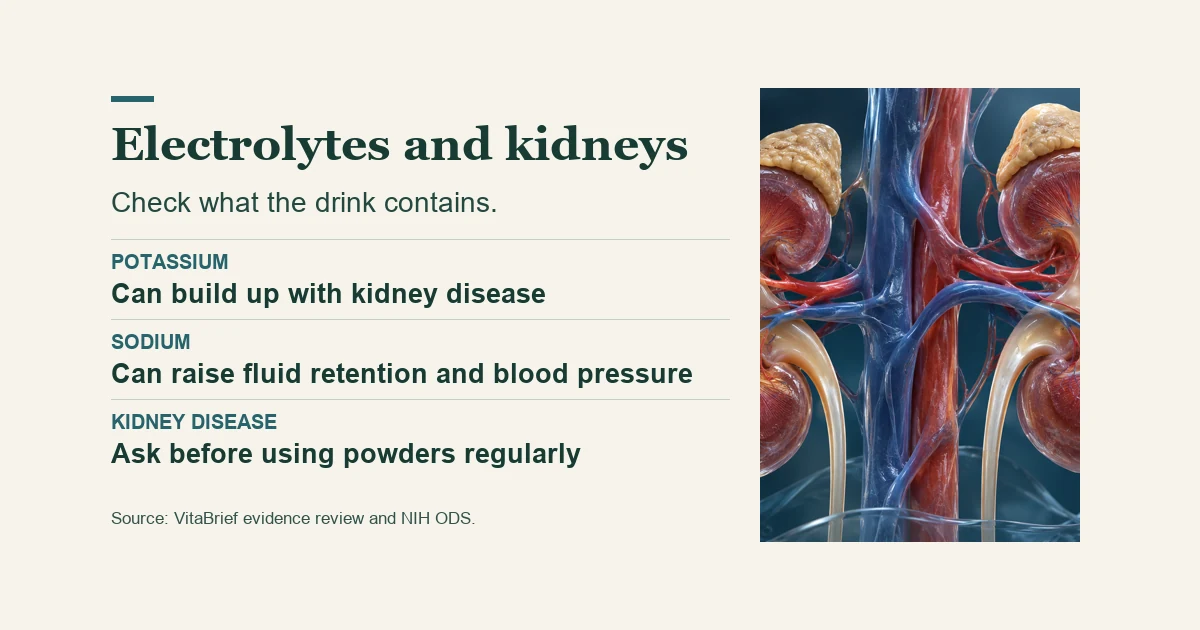
Potassium has a narrow safe range, and both low and high levels can disturb heart rhythm. Low potassium is common with diuretics, vomiting and diarrhea. High potassium is most often seen with kidney disease and medicines such as ACE inhibitors, ARBs and potassium-sparing diuretics (ODS). People in these groups should not use potassium supplements or high-potassium electrolyte products without medical advice. See electrolytes and kidneys.
Common causes overall
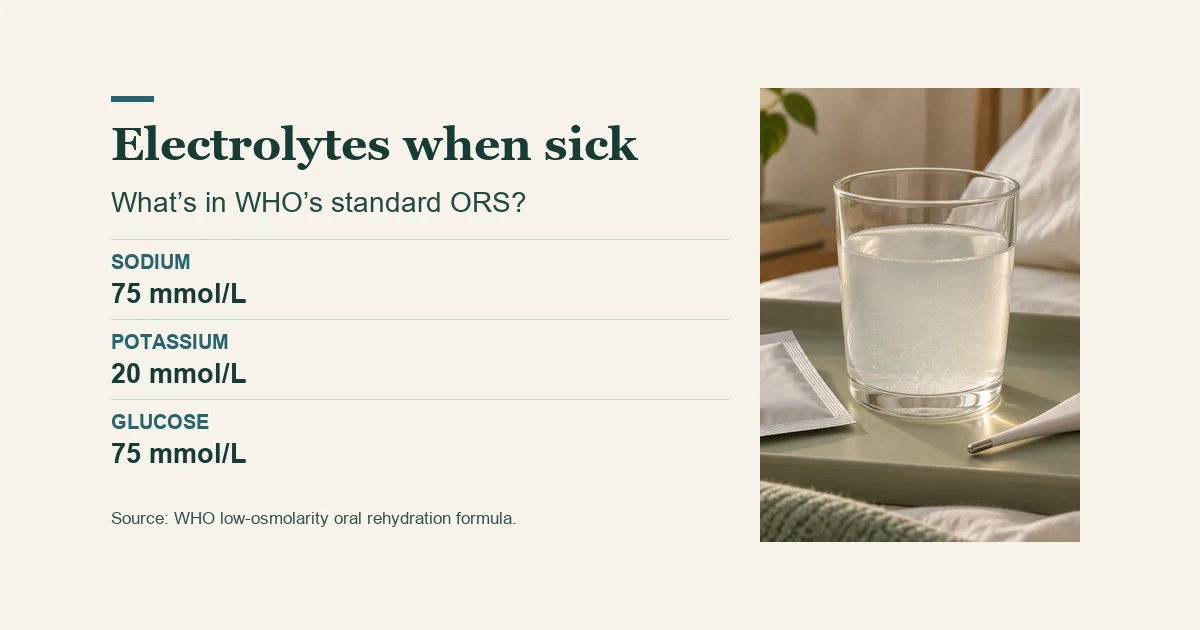
- Fluid loss: vomiting, diarrhea, heavy sweating, burns. See electrolytes when sick.
- Medicines: diuretics, some blood pressure drugs, laxatives, some antidepressants and anti-seizure drugs.
- Kidney, heart or liver disease.
- Hormone problems: thyroid, adrenal and parathyroid disorders.
- Drinking patterns: very high water intake, or not drinking enough, especially in older adults. See electrolytes for older adults.
- Eating disorders and severe dieting.
- Alcohol use disorder, which often lowers magnesium and potassium.
How imbalances are tested
A basic metabolic panel, a routine blood test, measures sodium, potassium, chloride, bicarbonate, calcium, glucose and kidney function. Magnesium and phosphate are tested separately when needed. An electrocardiogram (ECG) may be done if potassium or calcium is abnormal. Urine tests can show whether the kidneys are losing or holding electrolytes (MedlinePlus).
Treatment
Treatment depends on the cause and severity. Mild dehydration from illness usually responds to an oral rehydration solution. Moderate or severe imbalances may need IV fluids, specific electrolyte replacement, changes to medicines or treatment of the underlying condition. Self-treating with electrolyte powders is reasonable for mild sweat or illness losses but not for diagnosed imbalances, which can be made worse by the wrong product.
When to seek urgent care
| Seek emergency care for | See a doctor soon for |
|---|---|
| Confusion, seizures, fainting | Ongoing fatigue or weakness |
| Chest pain or irregular heartbeat | Frequent muscle cramps |
| Severe weakness or inability to walk | Vomiting or diarrhea lasting more than 1–2 days |
| Signs of severe dehydration: no urine for 8+ hours, sunken eyes, very dry mouth | Taking diuretics or blood pressure medicines and feeling unwell |
| A child or older adult who cannot keep fluids down | Abnormal electrolytes on a recent test |
Are muscle cramps an electrolyte problem?
Sometimes. Cramps during long exercise in heat are often linked to sweat and sodium losses, but many exercise cramps are related to muscle fatigue rather than electrolytes. Night cramps in older adults usually have other causes. Magnesium supplements have not been shown to help most night cramps in older adults. If cramps are frequent or come with weakness, ask your doctor to check your electrolytes and medicines.
Prevention
- Drink to thirst, more in heat, without forcing large volumes.
- Use an oral rehydration solution early during vomiting or diarrhea.
- Include potassium- and magnesium-rich foods daily.
- Ask your doctor how often to check blood tests if you take diuretics or blood pressure drugs.
- Use sodium-containing drinks during long, sweaty exercise.
Who is most at risk
| Group | Why |
|---|---|
| Older adults | Weaker thirst, more medicines, kidney changes |
| Infants and young children | Small body size; dehydrate quickly with illness |
| Endurance athletes | Large sweat losses; risk of overdrinking |
| People taking diuretics or certain blood pressure drugs | Directly affect sodium and potassium |
| People with kidney, heart or liver disease | Reduced ability to regulate fluids and electrolytes |
| People with eating disorders or heavy alcohol use | Poor intake and abnormal losses |
If you are in one of these groups, ask your doctor how often you should have electrolytes checked and what symptoms should prompt a call.
What to tell your doctor
Bring a list of all medicines and supplements, including electrolyte powders, salt substitutes, magnesium and potassium. Mention recent vomiting, diarrhea, heavy sweating, changes in how much you drink, and any new diet such as keto or fasting. This helps your clinician interpret test results and find the cause quickly.
Everyday prevention for healthy people
For most healthy adults, preventing imbalances is simple: eat a varied diet with fruits, vegetables, beans, dairy and whole grains; drink when thirsty and more in hot weather; use an electrolyte drink during long, sweaty exercise; and start an oral rehydration solution early during a stomach bug. Avoid drinking very large amounts of water in a short time, and avoid potassium or magnesium supplements unless a clinician has recommended them. These habits keep most people well within the normal range without any special products.
If you notice recurring symptoms such as cramps, palpitations or fatigue without an obvious reason, ask for a basic metabolic panel rather than guessing with supplements.
The bottom line
Electrolyte imbalances cause fatigue, cramps, nausea, confusion and heart rhythm problems. Common causes are vomiting, diarrhea, heavy sweating, medicines, overdrinking and kidney, heart or liver disease. A blood test confirms the problem. Mild illness-related losses respond to oral rehydration solutions, but confusion, seizures, chest pain or an irregular heartbeat need emergency care.
Frequently asked questions
How do I know if I need electrolytes?
After heavy sweating or illness with vomiting or diarrhea, electrolytes help. For ongoing symptoms without a clear cause, see a doctor for a blood test.
Can anxiety feel like an electrolyte imbalance?
Symptoms such as palpitations, tingling and fatigue overlap. A blood test can tell them apart.
How long does it take to fix an imbalance?
Mild dehydration often improves within hours. Medical imbalances are corrected over hours to days, sometimes deliberately slowly for safety.
Can drinking electrolytes cause an imbalance?
In healthy people it is unlikely. People with kidney disease or on certain medicines can develop high potassium from potassium-rich products.
Are headaches a sign of low electrolytes?
Dehydration and low sodium can cause headaches, but so can many other things.
Can a low-carb diet cause an imbalance?
Starting a very low-carb diet increases sodium and water losses, which can cause symptoms. See electrolytes for fasting and keto.
Is low potassium dangerous?
Mild low potassium causes weakness and cramps; severe low potassium can affect heart rhythm and needs medical treatment.
Can dehydration show up as normal blood tests?
Mild dehydration may not change electrolytes much. Clinicians also look at kidney markers, blood pressure and symptoms.
Sources
- MedlinePlus. Fluid and Electrolyte Balance.
- MedlinePlus. Electrolytes.
- MedlinePlus. Low blood sodium.
- MedlinePlus. Dehydration.
- NIH Office of Dietary Supplements. Potassium: Fact Sheet for Health Professionals.
- NIH Office of Dietary Supplements. Magnesium: Fact Sheet for Health Professionals.
- Hew-Butler T, et al. Statement of the Third International Exercise-Associated Hyponatremia Consensus Development Conference, Carlsbad, California, 2015. Clin J Sport Med. 2015;25(4):303-20.
Last reviewed November 2026. VitaBrief is educational and is not medical advice. Talk with a doctor, registered dietitian or pharmacist before starting a supplement, especially if you are pregnant, take medication or have kidney disease.
Not medical advice. This guide is for general education. Talk to your doctor or pharmacist before taking a supplement, especially if you are pregnant or breastfeeding, take medication or have a health condition. Medical disclaimer