Ingredient guides
Choline in pregnancy: how much you need and where to get it
Choline supports a baby’s developing brain, most diets fall short, and many prenatal vitamins contain little or none. Here is what the evidence shows.
VitaBrief editorial · Last reviewed November 2026 · Sources listed below
Reader-supported. This page may contain affiliate links. If you buy through one, we may earn a commission at no extra cost to you. It never changes what we write. Affiliate disclosure
Choline is a nutrient that gets far less attention than folic acid or iron, yet it plays a large part in pregnancy. The body uses it to build cell membranes, to make the messenger chemical acetylcholine, and to move methyl groups around in the same one-carbon pathway that folate uses. During pregnancy, a great deal of choline moves across the placenta to the growing baby, whose brain and spinal cord are developing quickly.
Interest in choline has grown sharply, and for a good reason: surveys suggest most pregnant people eat less than the recommended amount, and many prenatal vitamins contain little or none. This guide covers how much you need, where to find it, what the research does and does not show, and how to read a prenatal label for choline. It draws on the NIH Office of Dietary Supplements (ODS) choline fact sheet and published reviews. It is general information, not a substitute for prenatal care.
Choline in pregnancy: the short answer
Choline in pregnancy explained: the recommended intake, why most people fall short, food sources, what trials show about benefits, how much prenatal vitamins contain, and safety limits.
How much choline do you need in pregnancy?
There is not enough data to set a formal Recommended Dietary Allowance for choline, so the U.S. National Academies set an Adequate Intake (AI) instead. An AI is the amount assumed to be adequate for nearly everyone. The pregnancy figure is a little higher than for other adults, and the breastfeeding figure is higher again, because choline is secreted into breast milk.
| Life stage | Adequate Intake (AI) per day | Upper limit per day |
|---|---|---|
| Women 19 and older, not pregnant | 425 mg | 3,500 mg |
| Pregnancy (19 and older) | 450 mg | 3,500 mg |
| Breastfeeding (19 and older) | 550 mg | 3,500 mg |
Your liver can make some choline, but not enough to meet needs on its own, which is why it has to come from the diet. Needs may vary between people because of genetic differences in how choline and folate are processed, so the AI is a reasonable target rather than a precise individual requirement.
Why choline matters for a developing baby
Choline and folate work in overlapping pathways, and both are involved in early neural development. Animal research, along with a growing body of human studies, suggests that choline supply during pregnancy may influence how parts of the baby’s brain involved in memory and attention develop. Choline is also used to make phosphatidylcholine, a major part of cell membranes, which the placenta and the fetus need in large amounts.
A review by Korsmo et al. summarizes this science and notes that most pregnant people in the United States do not reach the AI. That gap is the main reason choline is now discussed alongside folic acid, iodine and iron in prenatal nutrition. For the folate side of the story, see our folic acid in pregnancy guide.
What the research shows, and its limits
The most cited human trial is a small, tightly controlled feeding study by Caudill et al.. Women in their third trimester ate all their meals under supervision and received either 930 mg or 480 mg of choline a day. Infants born to the higher-intake group showed faster information processing speed on tests given between 4 and 13 months of age.
That is an interesting signal, but it needs careful framing:
- The trial was small, so chance findings are possible.
- It measured a specific infant test, not long-term learning or school outcomes.
- The lower group already received roughly the AI, so it compared “enough” with “about double”, not deficiency with adequacy.
- Larger trials with longer follow-up are still needed before anyone can say how much benefit, if any, extra choline above the AI provides.
The fair summary is that reaching the AI is a sensible goal with good biological reasons behind it, while the case for going well above the AI rests on limited evidence so far. No government body currently recommends a choline supplement for everyone who is pregnant.
Food sources of choline
Food is the main way most people get choline, and some foods are much richer than others. According to ODS, animal foods tend to be the most concentrated sources.
| Food group | Examples | Notes |
|---|---|---|
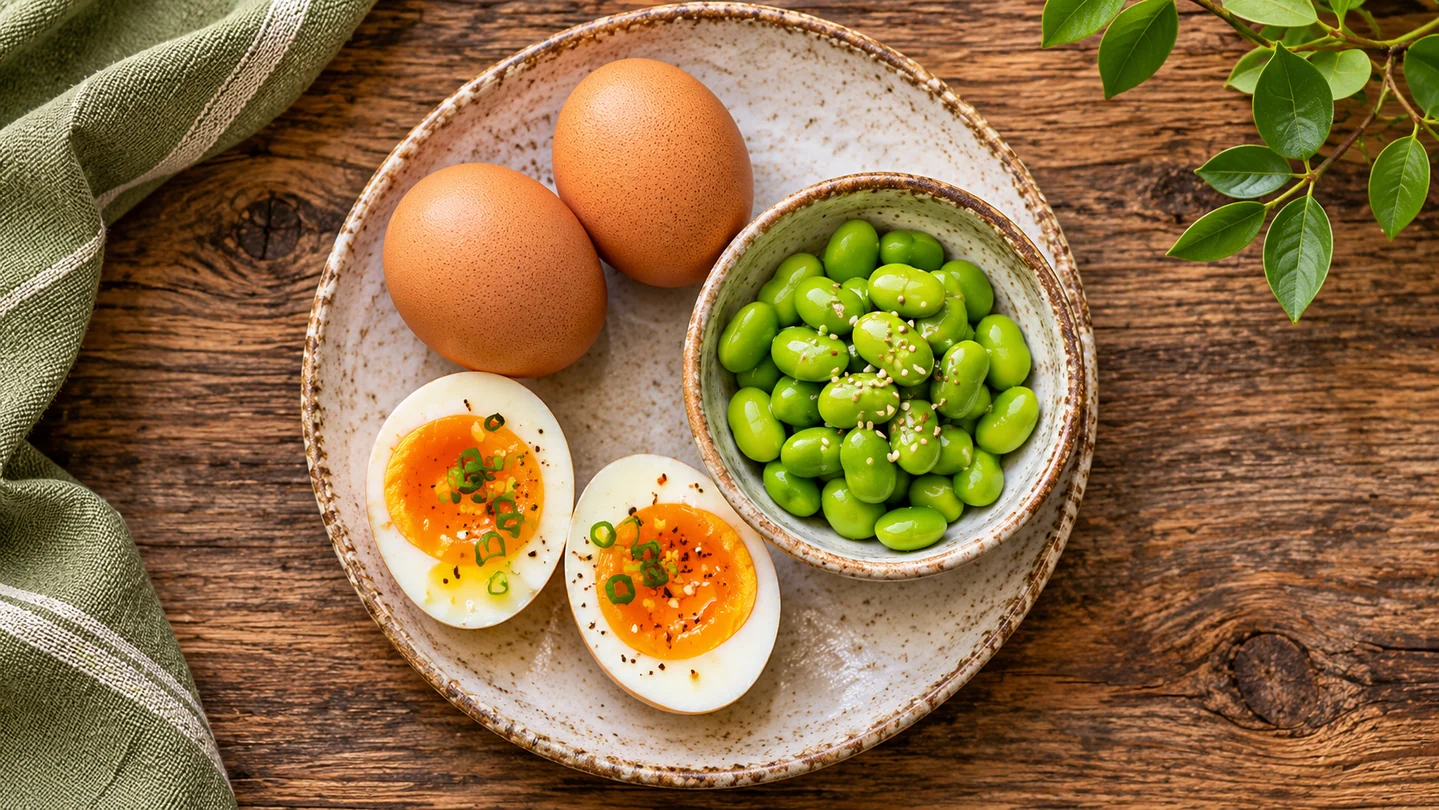
| Eggs | Whole eggs (the choline is in the yolk) | One of the richest everyday sources; cook eggs fully in pregnancy |
| Meat and poultry | Beef, chicken, turkey | Beef liver is very high in choline but also very high in preformed vitamin A |
| Fish | Salmon, cod and other fish | Choose lower-mercury fish |
| Dairy | Milk, yogurt | Moderate amounts that add up |
| Plant foods | Soybeans, beans, cruciferous vegetables, potatoes, some whole grains | Lower per serving; important for vegetarian and vegan diets |
Liver deserves a specific caution. It is rich in choline, but it also contains large amounts of preformed vitamin A, and too much preformed vitamin A in pregnancy is linked to birth defects. Our vitamin A in pregnancy guide explains the limits. People who eat no eggs or animal foods are the most likely to fall short and may want to discuss choline with a clinician or dietitian.
Do prenatal vitamins contain choline?
Often not much. Choline is bulky, so a full day’s AI rarely fits in a standard tablet, and many prenatal products include none at all. Products that do list it often contain only a modest fraction of the AI. An observational study by Borgelt et al. measured the content of selected nutrients, including choline and iodine, in prenatal multivitamin products and compared it with what labels claimed; it found that actual contents and label claims do not always line up.
Practical steps when reading a label:
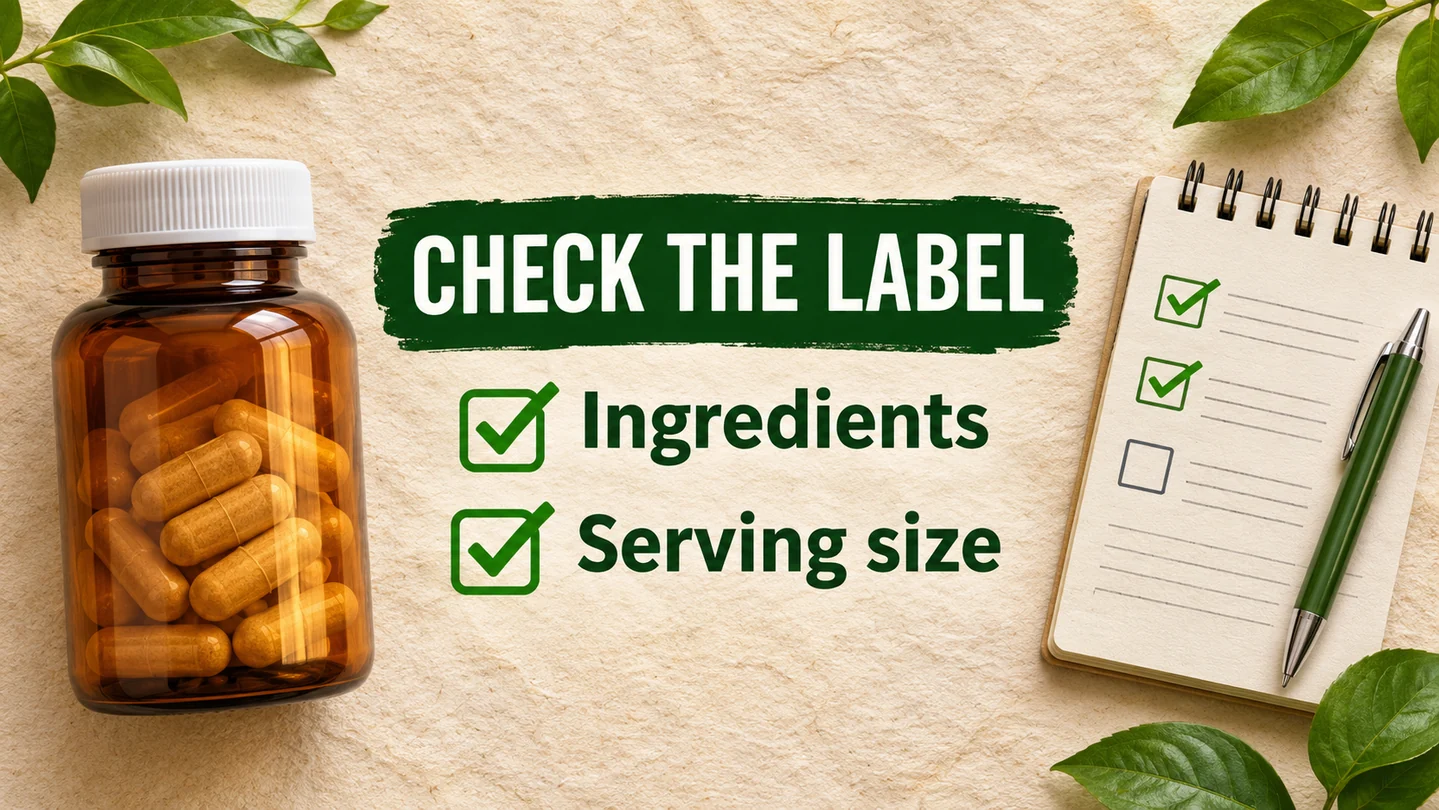
- Check whether choline appears on the Supplement Facts panel at all.
- Compare the listed amount with the 450 mg pregnancy AI. A product with a small amount is a top-up, not a full supply.
- Look at the form (for example choline bitartrate or choline chloride); the amount listed should be choline itself.
- Remember that food still needs to provide most of your intake.
Our guide to what to look for in a prenatal vitamin covers the full label checklist, including iodine and iron.
Should you take a separate choline supplement?
For many people, an honest answer is “maybe, after looking at your diet first”. A rough self-check is to think about how often you eat eggs, meat, fish and dairy. Someone who eats these regularly may already be close to the AI. Someone who avoids them, or whose nausea has narrowed the diet to a few foods, is much more likely to fall short.
If you and your clinician decide a separate choline product makes sense, a few points apply:
- Aim to reach the AI from food and supplements combined, not to stack large doses.
- Stay well below the 3,500 mg upper limit set by the National Academies, as reported by ODS.
- Check whether your prenatal already contains some, to avoid doubling up.
- Dietary supplements are not approved by the FDA for safety and effectiveness before sale, so quality varies between products.
Safety and side effects
Choline from food is safe. At very high supplemental intakes, well above what most people would take, choline can cause a fishy body odor, sweating, digestive upset and a drop in blood pressure, according to ODS. These effects are the reason for the upper limit.
As with any supplement, a prenatal vitamin or choline product supports a varied diet; it does not replace it. Regular prenatal care matters far more than any single nutrient. The prenatal vitamins guide puts choline in context with the other nutrients that matter in pregnancy.
When to talk to a clinician
Talk to your obstetric provider, midwife or a registered dietitian about choline if any of these apply:
- You follow a vegan or vegetarian diet, or avoid eggs.
- Severe nausea and vomiting (hyperemesis) is limiting what you can eat.
- You have had bariatric surgery or take medicines, such as GLP-1 drugs, that reduce appetite.
- You have liver disease or another condition that affects how nutrients are processed.
- You are considering a high-dose choline product, or several supplements at once.
Folic acid remains the one prenatal supplement with strong evidence for everyone who could become pregnant, so choline is an addition to that foundation, not a replacement. See when to start prenatal vitamins for timing.
Frequently asked questions
How much choline should I get while pregnant?
The Adequate Intake is 450 mg a day during pregnancy and 550 mg a day while breastfeeding for adults, from food and supplements combined, according to ODS.
Is choline more important than folic acid?
No. Folic acid has much stronger evidence, because it reduces the risk of neural tube defects. Choline is an important nutrient to get enough of, but the evidence for supplementing above the AI is still limited.
Do eggs give enough choline?
Eggs are one of the richest common sources, and eating them regularly goes a long way toward the AI. Most people still get the rest from a mix of meat, fish, dairy and plant foods.
Why does my prenatal vitamin have so little choline?
Choline takes up a lot of space, so a full daily amount does not fit easily in a standard pill. Many products include none or only a small portion of the AI.
Can you take too much choline?
Yes, at very high doses. The adult upper limit is 3,500 mg a day. Above that, fishy body odor, sweating, digestive upset and low blood pressure become more likely.
Sources
- NIH Office of Dietary Supplements. Choline: Fact Sheet for Health Professionals.
- Korsmo et al. Choline: exploring the growing science on its benefits for moms and babies. Nutrients. 2019.
- Caudill et al. Maternal choline supplementation during the third trimester of pregnancy improves infant information processing speed: a randomized, double-blind, controlled feeding study. FASEB J. 2018.
- Borgelt et al. Content of selected nutrients and heavy metals in prenatal multivitamins and minerals: an observational study. Am J Clin Nutr. 2025.
- Office on Women’s Health. Staying healthy and safe during pregnancy.
- U.S. Food and Drug Administration. Dietary supplements.
Last reviewed November 2026. VitaBrief is educational and is not medical advice. Talk with a doctor, registered dietitian or pharmacist before starting a supplement, especially if you are pregnant, take medication or have kidney disease.
Not medical advice. This guide is for general education. Talk to your doctor or pharmacist before taking a supplement, especially if you are pregnant or breastfeeding, take medication or have a health condition. Medical disclaimer