Ingredient guides
Magnesium and Blood Sugar
The link with insulin and type 2 diabetes.
VitaBrief editorial · Last reviewed November 2026 · Sources listed below
Reader-supported. This page may contain affiliate links. If you buy through one, we may earn a commission at no extra cost to you. It never changes what we write. Affiliate disclosure

From VitaBrief
Compare before you choose.
See common magnesium forms side by side, with what to check on the label.
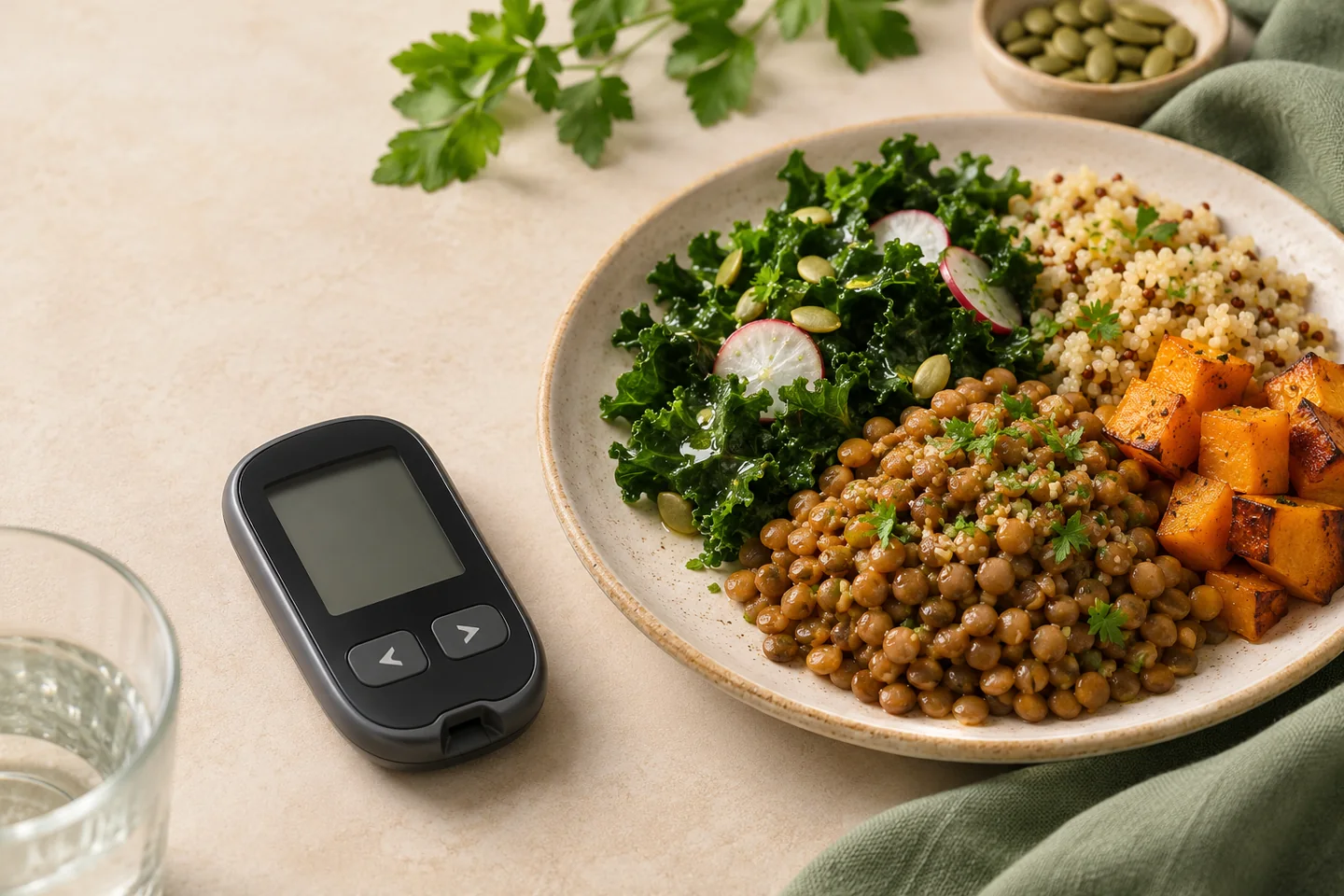
Magnesium and blood sugar: the short answer
Magnesium and blood sugar are connected: magnesium helps the body handle glucose and insulin, and people with type 2 diabetes are more likely to have low magnesium. Higher magnesium intake is linked to lower diabetes risk, but supplements show only modest effects on blood sugar and are not a substitute for diabetes care.
Magnesium is involved in how the body handles glucose and insulin, and people with type 2 diabetes are more likely to have low magnesium. Large population studies link higher magnesium intake to lower diabetes risk. But whether supplements improve blood sugar control is much less certain. This guide sets out what the cohort studies, clinical trials and professional guidance say.
Why magnesium matters for glucose
Magnesium is a cofactor in more than 300 enzyme systems, including those involved in blood glucose control, according to the NIH Office of Dietary Supplements. The ODS notes that low magnesium might worsen insulin resistance, or might be a consequence of it. Diabetes also increases urinary magnesium loss, and that shortfall might impair insulin secretion and action, creating a cycle.
What population studies show
| Analysis | People | Follow-up | Finding |
|---|---|---|---|
| Meta-analysis of 8 cohorts (summarized by ODS) | 271,869 | 4–18 years | 23% lower risk with highest vs lowest intake |
| Dong 2011, Diabetes Care | 536,318 (24,516 cases), 13 cohorts | 4–20 years | 22% lower risk overall (RR 0.78); 14% lower risk per 100 mg/day |
In the Dong meta-analysis, the association was significant in people who were overweight (BMI 25 or more) but not in normal-weight individuals, although the test for interaction was not significant. The ODS cautions that observational studies can be confounded by other dietary and lifestyle factors linked to magnesium intake.
What clinical trials show
Trials testing supplements directly are fewer, smaller and less consistent.
| Study | Who | Intervention | Result |
|---|---|---|---|
| Brazilian trial (ODS) | 128 people with poorly controlled diabetes | 300 or 600 mg/day elemental (as oxide), 30 days | Higher dose raised magnesium and improved glycemic control |
| Rodríguez-Morán 2003 (Mexico) | People with type 2 diabetes and low magnesium | 300 mg/day as magnesium chloride solution, 16 weeks | Fasting glucose 8.0 vs 10.3 mmol/L; HbA1c 8.0% vs 10.1%; insulin resistance lower |
| Insulin-treated trial (ODS) | 50 people with type 2 diabetes on insulin | 369 mg/day as aspartate, 3 months | No effect on glycemic control |
| Veronese 2016 meta-analysis | 18 double-blind trials (12 diabetes, 6 high-risk) | Varied | Modestly lower fasting glucose in diabetes; better 2-hour glucose in high-risk groups; results varied widely |
A pattern emerges: benefits are clearest in people who start with low magnesium. In the 2003 trial, supplementation restored serum magnesium from 0.65 to 0.74 mmol/L alongside the improvements in glucose control.
What diabetes guidance says
The ODS reports that the American Diabetes Association finds insufficient evidence to support routine use of magnesium to improve glycemic control. The ADA also notes there is no clear evidence that vitamin or mineral supplements benefit people with diabetes who do not have underlying deficiencies.
| Question | Answer from the evidence |
|---|---|
| Is higher magnesium intake linked to lower diabetes risk? | Yes, consistently in large cohorts (association) |
| Do supplements improve control in people with diabetes? | Sometimes, mainly in people with low magnesium; results conflict |
| Should everyone with diabetes take magnesium? | No; the ADA does not recommend routine use |
| Should people with diabetes have magnesium checked? | Reasonable to discuss, given higher urinary losses |
A practical approach
- Food first. Whole grains, beans, nuts, seeds and leafy greens provide magnesium along with fiber, which supports blood sugar control.
- Ask about your level. People with diabetes lose more magnesium in urine (ODS). If you also take diuretics or long-term acid reducers, testing is worth discussing.
- Supplement only with guidance. If your clinician recommends magnesium, follow the dose they set and keep monitoring your glucose.
- Never change diabetes medicine on your own.
| Food | Magnesium | % DV |
|---|---|---|
| Pumpkin seeds, roasted, 1 oz | 156 mg | 37% |
| Chia seeds, 1 oz | 111 mg | 26% |
| Almonds, dry roasted, 1 oz | 80 mg | 19% |
| Spinach, boiled, ½ cup | 78 mg | 19% |
| Cashews, dry roasted, 1 oz | 74 mg | 18% |
| Black beans, cooked, ½ cup | 60 mg | 14% |
| Brown rice, cooked, ½ cup | 42 mg | 10% |
Safety with diabetes
- People with diabetes-related kidney disease should not take magnesium supplements without medical advice, because reduced kidney function raises toxicity risk (ODS, MedlinePlus).
- Higher doses can cause diarrhea, which can upset glucose control and hydration.
- Check interactions with other medicines in Magnesium cautions.
| Age | Upper limit per day |
|---|---|
| 1–3 years | 65 mg |
| 4–8 years | 110 mg |
| 9 years and older, including pregnancy and lactation | 350 mg |
Frequently asked questions
Which form did the positive trials use?
The 2003 Mexican trial used magnesium chloride solution, and the Brazilian trial used magnesium oxide. Our sources contain no head-to-head comparison of forms for glucose control. Generally, chloride and citrate are better absorbed than oxide (ODS). See Magnesium forms compared.
Can magnesium prevent type 2 diabetes?
Cohort studies link higher intake with lower risk, but no trial in our sources shows that supplements prevent diabetes. A magnesium-rich diet is a sensible part of prevention.
Does magnesium help with prediabetes?
The Veronese meta-analysis found improved 2-hour glucose in people at high risk of diabetes, based on three studies. That is encouraging but limited.
| Type of evidence | What exists for this topic | What it can tell us |
|---|---|---|
| Cohort meta-analyses | Yes: Dong 2011 and an 8-cohort analysis (ODS) | Strong, consistent associations; cannot prove cause |
| Randomized trials | Small and conflicting (ODS); Veronese 2016 pooled 18 | Modest benefit, clearest when magnesium is low |
| Professional guidance | American Diabetes Association (via ODS) | Insufficient evidence for routine use |
Key terms explained
| Term | Meaning |
|---|---|
| Insulin resistance | When the body responds poorly to insulin |
| HbA1c | A blood test reflecting average glucose over about three months |
| Fasting glucose | Blood glucose after not eating overnight |
| HOMA-IR | An estimate of insulin resistance from fasting glucose and insulin |
| Relative risk (RR) | Risk in one group compared with another; 0.78 means 22% lower |
Reading the cohort numbers
In the Dong meta-analysis, each additional 100 mg of magnesium a day was linked to a 14% lower risk of type 2 diabetes. That is roughly the amount in an ounce of almonds plus half a cup of brown rice, using ODS food values. Because people who eat these foods also eat more fiber and whole foods overall, the link cannot be credited to magnesium alone.
| Age | Men | Women | Pregnancy |
|---|---|---|---|
| 14–18 years | 410 mg | 360 mg | 400 mg |
| 19–30 years | 400 mg | 310 mg | 350 mg |
| 31–50 years | 420 mg | 320 mg | 360 mg |
| 51+ years | 420 mg | 320 mg |
What we still don’t know
- Whether supplements help people with diabetes who have normal magnesium levels.
- Whether supplements can prevent type 2 diabetes.
- Which form and dose work best for glucose control.
- Long-term effects beyond the few months most trials lasted.
Food swaps that add magnesium and fiber
| Instead of | Try | Extra magnesium |
|---|---|---|
| White rice, ½ cup (10 mg) | Brown rice, ½ cup (42 mg) | +32 mg |
| Refined snack crackers | 1 oz pumpkin seeds (156 mg) | +150 mg or more |
| Broccoli, ½ cup (12 mg) | Spinach, ½ cup boiled (78 mg) | +66 mg |
| Milk, 1 cup (27 mg) | Soymilk, 1 cup (61 mg) | +34 mg |
These swaps also tend to add fiber and plant protein. Work with your diabetes care team or a registered dietitian to fit them into your meal plan and carbohydrate targets.
Medicines common in diabetes care
People with diabetes often take several medicines. Diuretics for blood pressure and long-term acid reducers can lower magnesium (ODS), which adds to the urinary losses caused by diabetes itself. A pharmacist can review your full list.
If you test your glucose at home, note any changes after starting or stopping magnesium and share them with your care team.
Finally, remember that blood sugar control rests on many factors: medicines, meals, activity, sleep and stress. Magnesium is at most a small part of that picture. Related reading: Magnesium and blood pressure and Magnesium deficiency.
Sources
- NIH Office of Dietary Supplements. Magnesium: Fact Sheet for Health Professionals. Updated January 6, 2026.
- Dong JY, et al. Magnesium intake and risk of type 2 diabetes. Diabetes Care. 2011;34(9):2116-22.
- Rodríguez-Morán M, Guerrero-Romero F. Oral magnesium supplementation improves insulin sensitivity and metabolic control in type 2 diabetic subjects. Diabetes Care. 2003;26(4):1147-52.
- Veronese N, et al. Effect of magnesium supplementation on glucose metabolism. Eur J Clin Nutr. 2016;70(12):1354-1359.
- MedlinePlus. Magnesium in diet.
Last reviewed November 2026. VitaBrief is educational and is not medical advice. Talk with a doctor, registered dietitian or pharmacist before starting a supplement, especially if you are pregnant, take medication or have kidney disease.
Not medical advice. This guide is for general education. Talk to your doctor or pharmacist before taking a supplement, especially if you are pregnant or breastfeeding, take medication or have a health condition. Medical disclaimer