Comparisons
Lion's mane vs. reishi vs. cordyceps: how the evidence compares
Three popular functional mushrooms, three very different research stories. Here is what the human studies actually show for each.
VitaBrief editorial · Last reviewed November 2026 · Sources listed below
Reader-supported. This page may contain affiliate links. If you buy through one, we may earn a commission at no extra cost to you. It never changes what we write. Affiliate disclosure

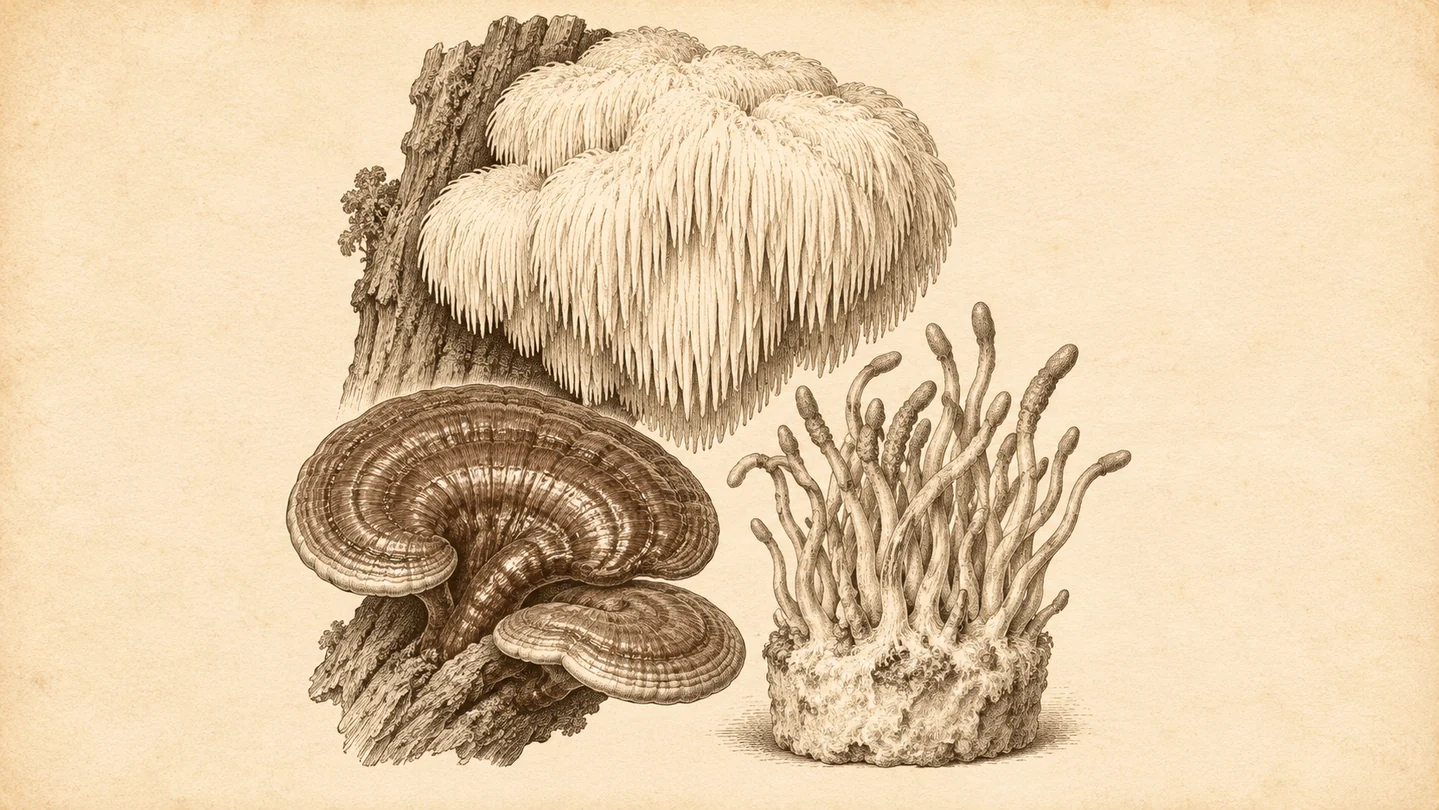
Lion’s mane, reishi and cordyceps are the three names you see most often on mushroom capsules, powders and coffee blends. The usual shorthand, lion’s mane for the brain, reishi for calm and cordyceps for energy, is mostly marketing. Each has only a few human studies, which asked different questions in different people.
This comparison sets the three side by side, using published trials, the National Cancer Institute (NCI) summary on medicinal mushrooms and the U.S. Food and Drug Administration (FDA). For all three, human evidence is limited, mostly small and short trials with mixed results.
At a glance
| Feature | Lion’s mane | Reishi | Cordyceps |
|---|---|---|---|
| Main research question | Cognition and mood | Cancer treatment trials | Exercise performance |
| Key human studies | Mori 2009 (30 older adults with mild cognitive impairment); Docherty 2023 (41 young adults); Surendran 2025 (18 young adults) | Jin 2016 Cochrane review of five trials in people with cancer | Chen 2010 (20 older adults); Hirsch 2017 (28 young adults) |
| Headline result | Mixed: some improved scores, some null results | Insufficient evidence to justify first-line cancer treatment | Some improved exercise measures in small trials |
| FDA approval to treat a condition | No | No (per NCI) | No |
| Notable safety signal in sources | None reported in Mori lab tests | Rare liver injury case reports | None reported in the sources reviewed |
Lion’s mane: small cognition trials with mixed results
Lion’s mane has only a handful of small cognition trials. The best known is Mori 2009, a double-blind, placebo-controlled trial in Japanese adults aged 50 to 80 with mild cognitive impairment. Thirty people were split into two groups of 15. The lion’s mane group took four 250 mg tablets containing 96% dry lion’s mane powder three times a day for 16 weeks. At weeks 8, 12 and 16, their scores on a cognitive function scale were significantly higher than placebo. Four weeks after they stopped, the scores fell significantly.
Research in healthy young adults is less clear. Docherty 2023, a pilot study in 41 people aged 18 to 45, used 1.8 g of lion’s mane. One hour after a single dose, participants were quicker on one task, and after 28 days there was a trend toward lower subjective stress (p = 0.051), a trend that did not reach statistical significance. The authors noted null and some negative findings and a small sample. Surendran 2025 gave 18 healthy adults a single 3 g dose of a 10:1 fruiting body extract and found no significant improvement in overall cognition or mood, with a better result on only one individual test.
For a deeper look, see lion’s mane for memory and focus and lion’s mane benefits. None of these studies show that lion’s mane treats dementia, ADHD, anxiety or depression.
Reishi: mostly studied in cancer care, with weak evidence
Reishi is sold for sleep, stress and “immune support,” but the best human evidence comes from people with cancer. A Cochrane review by Jin 2016 found five randomized trials. The authors judged trial quality generally unsatisfying and concluded there was not sufficient evidence to justify reishi as a first-line cancer treatment. It remains uncertain whether reishi helps people with cancer live longer. It was generally well tolerated in those trials.
NCI states that the FDA has not approved the use of reishi as a treatment for cancer or any other medical condition. Claims about cortisol, sleep or immunity in healthy adults are not established. Our reishi mushroom guide covers the details.
Reishi is also the mushroom with the clearest safety flag of the three. Two case reports, Guedikian 2023 and Wanmuang 2007, describe liver injury in people taking reishi powder, one of them fatal. These are rare single cases and do not prove cause or show how often it happens.
Cordyceps: two small exercise trials
Cordyceps is marketed for energy and endurance, and the human research does focus on exercise. Chen 2010 was a pilot trial in 20 healthy adults aged 50 to 75 who took 333 mg of a Cs-4 (Cordyceps sinensis) preparation or placebo three times a day for 12 weeks. In the Cs-4 group, the metabolic threshold rose by 10.5% and the ventilatory threshold by 8.5%, while the placebo group did not show significant changes. Maximal oxygen uptake (VO2max) did not change in either group.
Hirsch 2017 tested 4 g a day of a mushroom blend containing Cordyceps militaris in 28 young adults. After one week, there were no significant differences in the main exercise measures compared with placebo. Ten volunteers continued for two more weeks; after three weeks, VO2max improved significantly (p = 0.042) in the mushroom group but not placebo. A confidence interval analysis also showed longer time to exhaustion after one and three weeks. Because this was a blend, the result cannot be pinned on cordyceps alone.
These small trials did not test energy, kidney, lung or sexual health claims. See the full cordyceps guide. If your goal is exercise performance, creatine has a much larger research base.
Which one fits which goal?
Keep expectations modest.
- Memory and focus: lion’s mane is the only one of the three with cognition trials in our sources. The positive trial was in older adults with mild cognitive impairment; results in healthy young adults were mostly null.
- Exercise: cordyceps has two small trials suggesting some improvement in exercise measures, one in older adults and one using a blend in young adults.
- Stress or sleep: none of the three has strong human evidence for this. Reishi is often marketed for calm, but the sources reviewed here do not support that as fact. For stress, you may want to compare the research on ashwagandha.
- Cancer: no mushroom treats, cures or prevents cancer. Talk to your oncology team before any supplement.
Can you take lion’s mane, reishi and cordyceps together?
Many products combine all three. No study in the sources reviewed here tested lion’s mane, reishi and cordyceps together, so there is no evidence on whether a combination works better, worse or the same as each mushroom alone. The one blend trial, Hirsch 2017, used a mixture containing Cordyceps militaris and looked only at exercise.
Labels using a “proprietary blend” may not say how much of each mushroom you get. Because the trials used specific amounts, such as four 250 mg tablets three times a day in Mori 2009 or 333 mg of Cs-4 three times a day in Chen 2010 (about 3 g and 1 g a day by our arithmetic), a blend with a fraction of those amounts may not resemble anything that was tested. See mushroom supplement dosage.
Safety and regulation for all three
The FDA explains that supplement manufacturers and distributors are responsible for evaluating the safety and labeling of their products before marketing, and that the FDA can take action against adulterated or misbranded products after they reach the market. NCI notes that, unlike drugs, dietary supplements do not require premarket evaluation and approval by the FDA unless specific disease prevention or treatment claims are made.
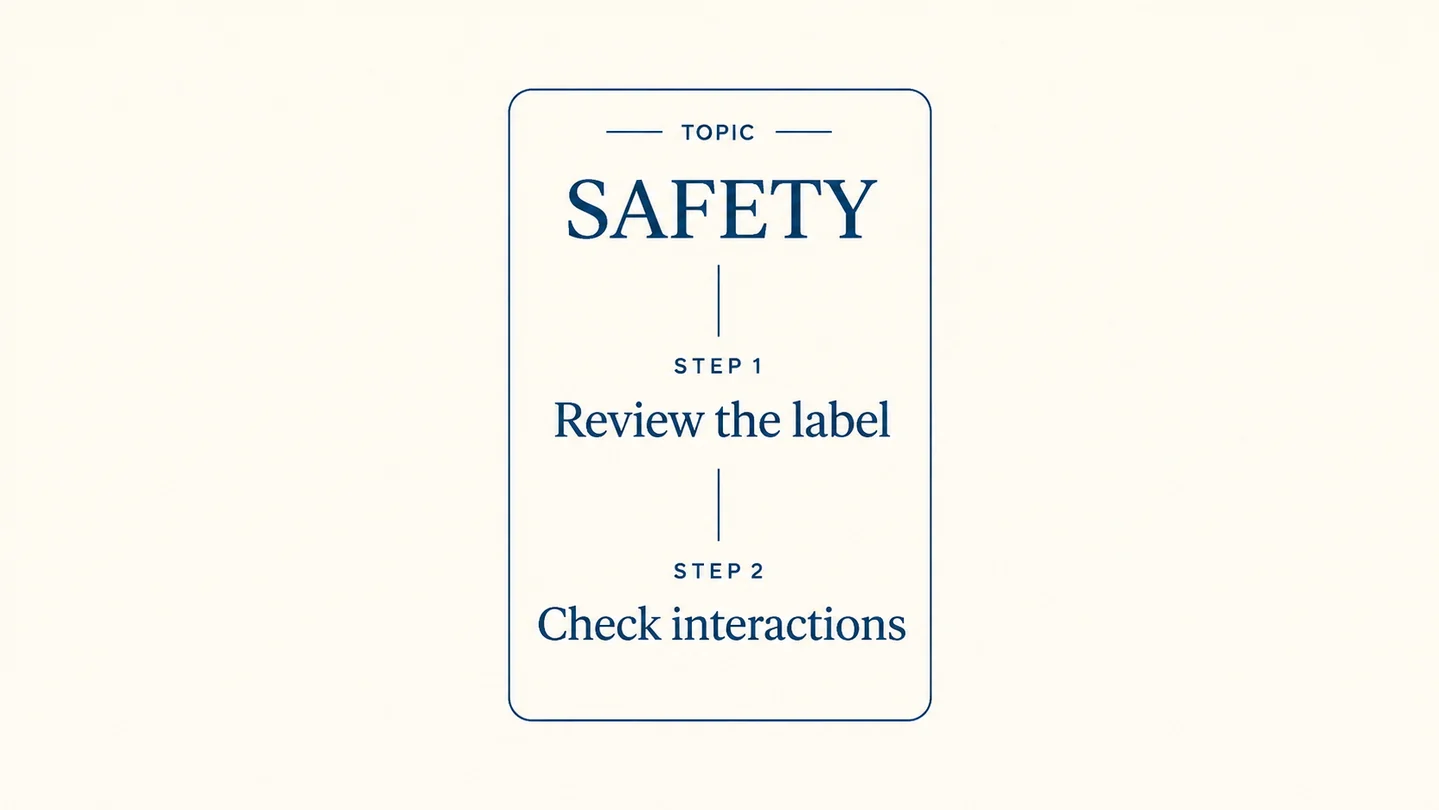
Interactions with medicines are not well studied for any of these mushrooms. If you take prescription drugs, such as blood thinners, diabetes or blood pressure medicines, or antidepressants, check with a doctor or pharmacist first. Safety in pregnancy and breastfeeding has not been established. Stop and see a doctor if you notice yellowing skin or eyes, or dark urine. And never forage wild mushrooms to make your own supplements; misidentification can be fatal. The full picture is in our mushroom supplement safety guide.
The bottom line
None of the three has strong human evidence, and they are not interchangeable. If you do try one, choose based on the question its studies asked, use a product with clear amounts, and talk with your doctor if you have a health condition or take medication. Start with our functional mushrooms guide for the wider picture.
Frequently asked questions
Is lion’s mane or reishi better for the brain?
Lion’s mane is the only one of the two with cognition trials, and results are mixed. The sources reviewed here contain no human trials of reishi for memory or focus.
Is cordyceps or lion’s mane better for energy?
Neither has been shown to boost everyday energy. Cordyceps has two small exercise trials with some positive results; lion’s mane trials looked at thinking and mood.
Reishi vs. cordyceps: what is the difference?
They are different fungi studied for different things. Reishi research centers on cancer care and is weak; cordyceps research centers on exercise and is small. Reishi also has rare liver injury case reports.
Is it safe to take all three together?
No study in the sources reviewed tested this combination. Safety and interactions are not well studied, so check with a doctor or pharmacist, especially if you take medication.
Has the FDA approved any of these mushrooms?
No. NCI states that the FDA has not approved medicinal mushrooms, including reishi, as a treatment for cancer or any other medical condition.
Sources
- National Cancer Institute. Medicinal mushrooms (PDQ), health professional version.
- U.S. Food and Drug Administration. Dietary supplements.
- Mori, et al. Improving effects of the mushroom Yamabushitake (Hericium erinaceus) on mild cognitive impairment: a double-blind placebo-controlled clinical trial. Phytother Res. 2009.
- Docherty, et al. The acute and chronic effects of lion’s mane mushroom supplementation on cognitive function, stress and mood in young adults: a double-blind, parallel groups, pilot study. Nutrients. 2023.
- Surendran, et al. Acute effects of a standardised extract of Hericium erinaceus (lion’s mane mushroom) on cognition and mood in healthy younger adults: a double-blind randomised placebo-controlled study. Front Nutr. 2025.
- Jin, et al. Ganoderma lucidum (reishi mushroom) for cancer treatment. Cochrane Database Syst Rev. 2016.
- Chen, et al. Effect of Cs-4 (Cordyceps sinensis) on exercise performance in healthy older subjects: a double-blind, placebo-controlled trial. J Altern Complement Med. 2010.
- Hirsch, et al. Cordyceps militaris improves tolerance to high-intensity exercise after acute and chronic supplementation. J Diet Suppl. 2017.
- National Cancer Institute. Medicinal mushrooms (PDQ), patient version.
- Guedikian, et al. Ganoderma lingzhi (reishi mushroom)-induced acute liver injury in the setting of alcohol use: a case report and review of the literature. Cureus. 2023.
- Wanmuang, et al. Fatal fulminant hepatitis associated with Ganoderma lucidum (Lingzhi) mushroom powder. J Med Assoc Thai. 2007.
Last reviewed November 2026. VitaBrief is educational and is not medical advice. Talk with a doctor, registered dietitian or pharmacist before starting a supplement, especially if you are pregnant, take medication or have kidney disease.
Not medical advice. This guide is for general education. Talk to your doctor or pharmacist before taking a supplement, especially if you are pregnant or breastfeeding, take medication or have a health condition. Medical disclaimer