Supplement basics
Biotin and lab tests: how supplements can distort blood test results
Why high-dose biotin can make thyroid, heart and hormone tests read falsely high or low, which tests are affected, and what to tell your doctor and the lab.
VitaBrief editorial · Last reviewed November 2026 · Sources listed below
Reader-supported. This page may contain affiliate links. If you buy through one, we may earn a commission at no extra cost to you. It never changes what we write. Affiliate disclosure
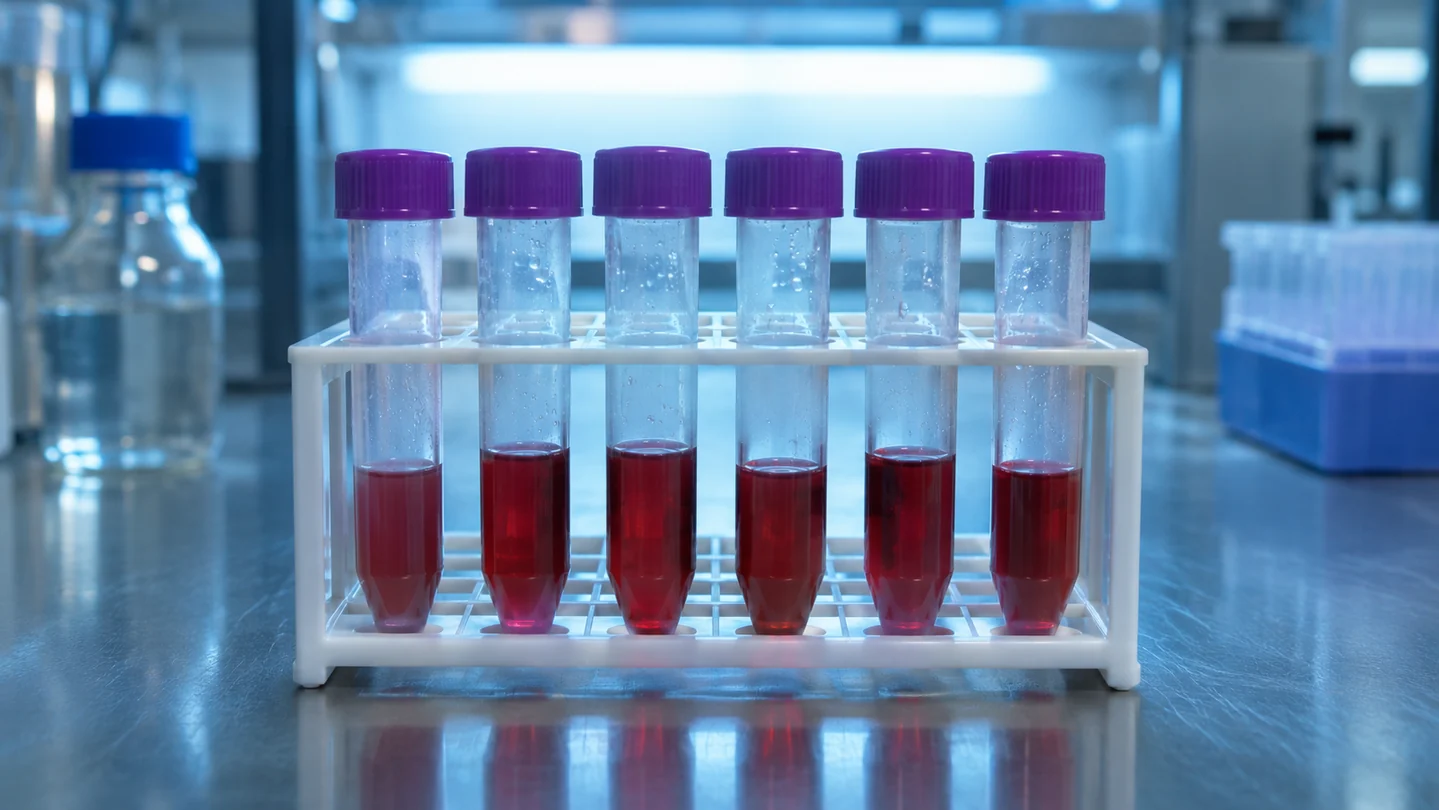
Most supplement safety questions are about what a product does to your body. Biotin’s most important risk is different: it can change what a blood test says about your body. High doses of biotin, the kind found in many hair, skin and nail products, can make some lab tests read falsely high or falsely low. That can lead to a missed diagnosis, an unnecessary one, or the wrong treatment. This is the single most useful thing to know about biotin, and it applies even if you feel perfectly well. This article explains how the interference happens, which tests are affected, and what to do. It draws on the NIH Office of Dietary Supplements (ODS) and published laboratory research.
How biotin interferes with tests
Many modern blood tests, called immunoassays, use antibodies to detect a hormone or other substance. A large number of them use biotin and a protein called streptavidin as a kind of molecular glue: biotin is attached to part of the test, and streptavidin grabs onto it to hold everything in place so the result can be measured. ODS describes this biotin-streptavidin technology as commonly used for measuring hormones and other substances.
When there is a lot of free biotin in a blood sample, it competes for those streptavidin binding sites and jams the system. Depending on how a particular test is designed, this can push the result falsely low or falsely high (Dasgupta 2022). In “sandwich” tests, often used for larger molecules such as TSH and troponin, results tend to be falsely low. In “competitive” tests, often used for smaller molecules such as free thyroid hormones, results tend to be falsely high.
Biotin from food is far too little to cause this. The problem comes from supplements that provide many times the adult Adequate Intake of 30 mcg a day. ODS notes that high intakes, and potentially even intakes greater than the Adequate Intake, may pose this risk.
What the research shows
A study published in JAMA tested this directly. Healthy adults took 10 mg (10,000 mcg) of biotin a day for a week, and their blood was run on a range of common tests. Biotin interfered with a number of them, producing results that could have led to misdiagnosis (Li 2017). ODS summarizes that this study found falsely decreased TSH, which could suggest an overactive thyroid, and falsely decreased NT-proBNP, a heart failure marker, which could cause heart failure to be missed.
ODS also notes that even a single 10 mg dose has interfered with thyroid function tests done within 24 hours. Case reports describe test results falsely indicating Graves’ disease and severe hyperthyroidism in people taking 10 to 300 mg a day.
Test manufacturers have worked to make newer tests more resistant to biotin. A laboratory study of new-generation high-sensitivity troponin T and TSH tests examined how they respond to biotin (Mzougui 2020). But labs use many different test systems, and you usually cannot tell which one will be used on your sample, so it is safest to assume interference is possible.
Why does this keep happening? Biotin use has grown, and products have moved toward ever-larger doses, often marketed for hair and nails. Many people do not think of a beauty supplement as something worth mentioning to a doctor, and many clinicians do not routinely ask. ODS notes that FDA advises healthcare providers to ask patients about biotin and to consider interference when results do not match a patient’s condition. You can close that gap yourself by raising it first.
Which tests can be affected
Not every test uses biotin-based technology, and the same test from different manufacturers may behave differently. The table below lists examples mentioned in the sources.
| Test | What it is used for | Possible effect of biotin |
|---|---|---|
| TSH (thyroid stimulating hormone) | Screening and monitoring thyroid function | Falsely low, which can mimic an overactive thyroid |
| Free T4 and T3 | Thyroid function | Falsely high on some tests |
| Troponin | Helping diagnose a heart attack | Falsely low, which can miss a heart attack |
| NT-proBNP | Heart failure | Falsely low, which can miss heart failure |
| 25-hydroxyvitamin D | Vitamin D status | Falsely normal or abnormal |
| Other hormone tests | Fertility, pregnancy and other hormone conditions | Falsely high or low, depending on design |
The troponin warning
Troponin is a protein released into the blood when heart muscle is damaged, and it is one of the main tests used in emergency departments to help diagnose a heart attack. A falsely low troponin result could mean a heart attack is missed.
This is not just theoretical. ODS reports that, according to FDA, a patient taking high-dose biotin died after a troponin test gave a falsely low result because the test was subject to biotin interference. FDA advises healthcare providers to ask patients about supplements containing biotin and to consider biotin interference when test results do not match a patient’s symptoms.
If you ever have chest pain, shortness of breath or other possible heart attack symptoms, call emergency services. Do not delay care because of biotin. When you arrive, tell the team that you take biotin and how much.
What to do before a blood test
- Check your labels. Biotin appears in single-ingredient products, B-complex vitamins, multivitamins and most hair, skin and nail blends. It may be listed as vitamin B7 or vitamin H.
- Tell your doctor and the lab. Mention the product and dose when a test is ordered and again when your blood is drawn.
- Ask how long to stop. Your doctor or the lab can advise whether to pause biotin and for how long, based on your dose and the tests planned. Do not guess.
- Do not stop prescribed medicines without advice. This guidance is about supplements.
- Speak up if results seem odd. If a result does not fit how you feel, ask whether biotin could be a factor.
It also helps to write down when you last took biotin and how much, so you can answer accurately if a nurse or lab technician asks. If you only remember after your blood has been drawn, call your doctor’s office and let them know; they may decide to interpret the results with care or repeat the test.
If you take biotin to manage a diagnosed medical condition, never stop it without talking to the doctor who prescribed it.
Who is most at risk of misleading results
Anyone taking high-dose biotin can be affected, but some situations carry more risk because the stakes of a wrong result are higher or because tests are done often.
- People with thyroid conditions. Regular TSH and thyroid hormone tests guide medication doses, so a distorted result can lead to the wrong change in treatment. See biotin and thyroid.
- People with heart disease or heart risk factors. Troponin and NT-proBNP tests are central to diagnosing heart attacks and heart failure.
- People going through fertility treatment or pregnancy testing. Many reproductive hormone tests are immunoassays.
- People taking very high doses for a medical condition. ODS notes that case reports include children given high doses to treat inherited metabolic diseases.
- Anyone going to an emergency department. Emergency tests are done quickly, often before staff have a full list of your supplements.
A simple safeguard is to keep a written or phone list of every supplement you take, with doses, and to share it at every appointment and hospital visit. Family members or caregivers of older adults should know about it too.
Do you need high-dose biotin?
For most people, the simplest way to avoid this problem is not to take high-dose biotin in the first place. ODS states that deficiency is rare and that most people get enough from food. Evidence that extra biotin improves hair or nails in healthy people is limited; see biotin for hair and biotin for nails and skin. If you still choose a supplement, a modest dose lowers blood biotin levels compared with very high-dose products, though no dose is guaranteed to be interference-free. See biotin dosage and how to choose a biotin supplement.
Frequently asked questions
Can biotin affect blood test results?
Yes. High-dose biotin can cause falsely high or falsely low results on tests that use biotin-streptavidin technology, including some thyroid, heart and hormone tests.
How long should I stop biotin before a blood test?
Ask your doctor or the lab. The right timing depends on your dose and the tests. ODS notes that a single 10 mg dose interfered with thyroid tests done within 24 hours.
Does the biotin in my multivitamin matter?
Multivitamins usually contain less biotin than hair products, but doses vary. Tell your doctor and the lab about every product you take.
Does biotin from food affect tests?
No. Food provides far too little biotin to cause interference. The concern is high-dose supplements.
Why is the troponin test a concern?
A falsely low troponin result can cause a heart attack to be missed. FDA has reported a death linked to this interference.
Sources
- NIH Office of Dietary Supplements. Biotin: fact sheet for health professionals.
- Li, et al. Association of biotin ingestion with performance of hormone and nonhormone assays in healthy adults. JAMA. 2017.
- Mzougui, et al. Biotin interference: new-generation immunoassays for high-sensitive troponin T and TSH. Clin Chem Lab Med. 2020.
- Dasgupta, et al. Immunoassay design and biotin interference. Adv Clin Chem. 2022.
- FDA. Dietary supplements.
Last reviewed November 2026. VitaBrief is educational and is not medical advice. Talk with a doctor, registered dietitian or pharmacist before starting a supplement, especially if you are pregnant, take medication or have kidney disease.
Not medical advice. This guide is for general education. Talk to your doctor or pharmacist before taking a supplement, especially if you are pregnant or breastfeeding, take medication or have a health condition. Medical disclaimer