Ingredient guides
Psyllium husk: what it is, how it works and what the evidence shows
This psyllium guide explains psyllium husk: the gel-forming fiber behind many bulk laxatives, why it behaves differently from other fiber supplements, what research shows for cholesterol, digestion and blood sugar, and how to take it safely.
VitaBrief editorial · Last reviewed November 2026 · Sources listed below
Reader-supported. This page may contain affiliate links. If you buy through one, we may earn a commission at no extra cost to you. It never changes what we write. Affiliate disclosure

Psyllium husk has become one of the most searched-for supplements in the United States, but it is not new. It has been sold for decades as a bulk-forming laxative, and it is one of the best-studied fiber supplements available. This guide explains what psyllium is, what the research supports and how to take it safely. It draws on MedlinePlus, the US Food and Drug Administration and published systematic reviews.
Psyllium guide: the short answer
Psyllium guide: what it is, how its gel works in the gut, what studies show for LDL cholesterol, constipation, IBS and blood sugar, side effects, medicine timing and how to take it safely.
What psyllium husk is
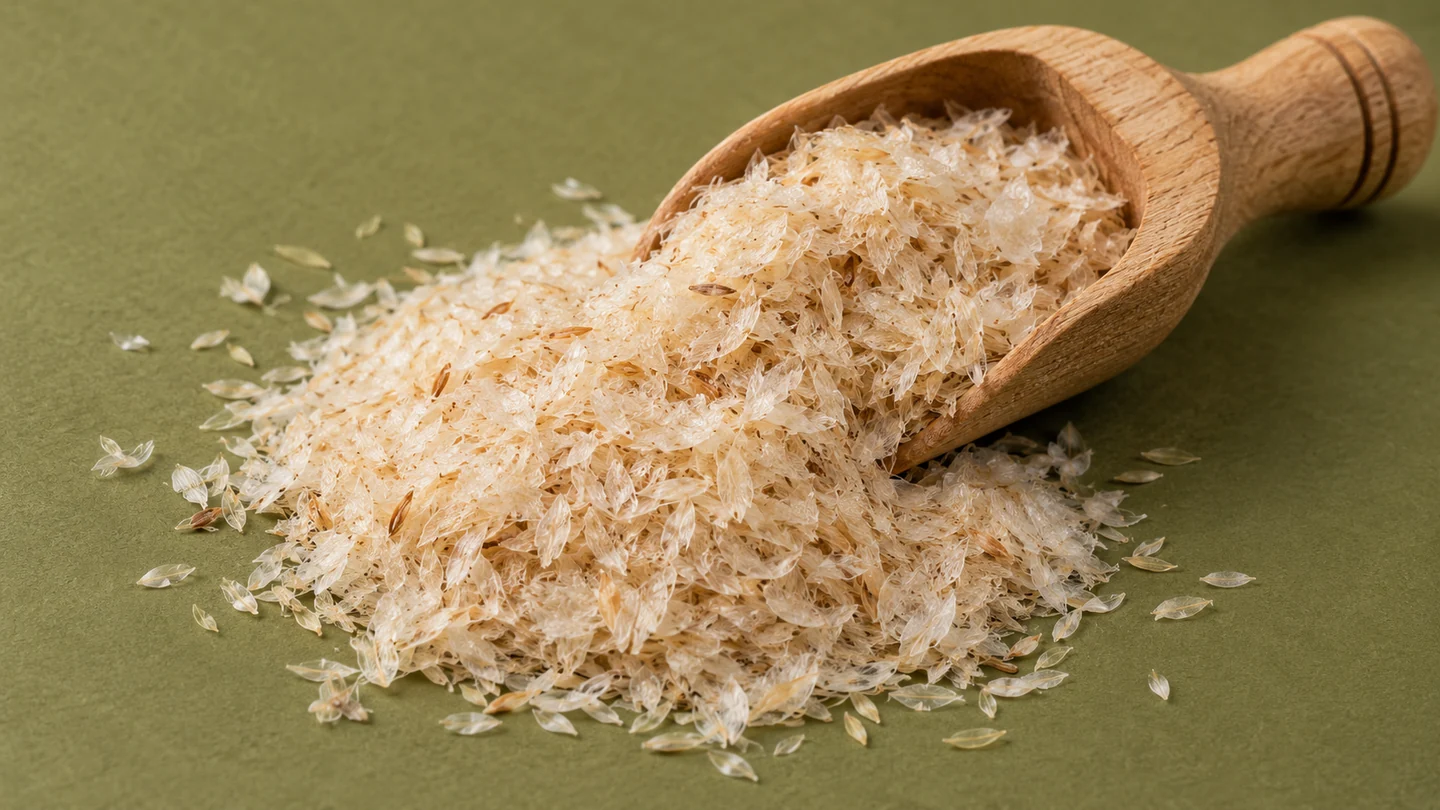
Psyllium comes from Plantago ovata, a plant often called blond psyllium. The part used in most supplements is the husk, the thin outer coating of the seed. According to MedlinePlus, the seed husk is used as a laxative and stool softener and to help reduce cholesterol. It is sold as powder, capsules and wafers.
What makes psyllium unusual is what happens when it meets water. It is a predominantly soluble fiber that forms a thick, viscous gel, and it is not digested or fermented (Gibb 2023). Those two properties, gel formation and resistance to fermentation, explain most of what psyllium can and cannot do. If you want to see how it compares with other products on the shelf, see types of fiber supplements.
Food first: the fiber gap
The Dietary Guidelines for Americans identify dietary fiber as a nutrient that most people in the US do not get enough of. One review put typical intake at about 15 grams a day, compared with recommended levels of about 25 grams for adult women and 38 grams for adult men, and estimated that around 90 percent of the population falls short (McRorie 2015).
That gap matters. A large series of reviews in The Lancet found that people with the highest fiber intakes had a 15 to 30 percent lower risk of dying from any cause and from cardiovascular disease, and lower rates of heart disease, stroke, type 2 diabetes and colorectal cancer, than people with the lowest intakes. The greatest risk reductions were seen at about 25 to 29 grams a day (Reynolds 2019). Those findings came from fiber in food, not supplements.
The practical lesson is that beans, lentils, whole grains, vegetables, fruit, nuts and seeds come first. A supplement such as psyllium can help fill the gap, but supplements cannot be presumed to deliver the benefits linked to fiber from whole foods (McRorie 2015). For daily targets, see how much fiber per day.
How psyllium works in the gut
A review of the physics of functional fibers explained that the cholesterol-lowering and blood sugar benefits of soluble fiber are closely tied to viscosity. Highly viscous, gel-forming fibers such as psyllium, beta-glucan and raw guar gum show these effects, while non-viscous soluble fibers such as inulin and wheat dextrin, and insoluble fibers such as wheat bran, do not (McRorie 2017).
In the small intestine, the gel thickens the contents of the gut and slows how quickly nutrients are broken down and absorbed (Gibb 2023). In the large bowel, the same gel holds on to water and resists drying out, which helps produce softer, bulkier stools that are easier to pass. (McRorie 2017). MedlinePlus adds that in people with diarrhea, psyllium can slow the bowel and reduce bowel movements.
What the evidence shows
| Use | What reviews found | Strength of evidence |
|---|---|---|
| LDL cholesterol | 28 trials; about 10 g a day lowered LDL and non-HDL cholesterol and apoB | Moderate to high; FDA allows a heart health claim |
| Chronic constipation | Psyllium among the fibers with significant effects on response and stool frequency | Moderate; results varied between trials |
| Irritable bowel syndrome | Soluble fiber helped; bran did not | Moderate |
| Blood sugar | Benefit greatest in type 2 diabetes, no significant lowering in people with normal glucose | Moderate |
| Body weight | About 2.1 kg more loss than control in six studies (354 people) | Limited; effect modest |
Cholesterol. A meta-analysis of 28 randomized trials with 1,924 participants found that a median dose of about 10.2 grams of psyllium a day lowered LDL cholesterol, non-HDL cholesterol and apolipoprotein B (Jovanovski 2018). The FDA allows foods that meet set conditions to carry a health claim linking soluble fiber from psyllium husk, as part of a diet low in saturated fat and cholesterol, to a lower risk of heart disease (21 CFR 101.81). More detail is in psyllium for cholesterol.
Constipation and IBS. In an updated review of 16 trials in adults with chronic constipation, fiber supplements helped more people respond to treatment than control, and psyllium was one of the fibers with significant effects. Doses above 10 grams a day and at least four weeks of use looked most effective (van der Schoot 2022). For IBS, a review of 14 trials found benefit only from soluble fiber, with no effect from bran (Moayyedi 2014). See psyllium for constipation and IBS.
Blood sugar and weight. A meta-analysis of 35 trials found that psyllium taken before meals improved fasting glucose and HbA1c in people with type 2 diabetes, with a modest improvement in prediabetes and no significant lowering in people with normal blood sugar (Gibb 2015). Weight effects are modest; see psyllium for weight loss. For an overview of all the claimed benefits, read psyllium husk benefits.
Psyllium and GLP-1
Fiber may influence the body’s own GLP-1, a gut hormone involved in appetite and blood sugar. But a fiber supplement is not a GLP-1 medicine, and claims that psyllium works like a “natural” version of these drugs go well beyond the evidence. If you take a GLP-1 medicine, ask your prescriber before adding fiber. Constipation is common on these drugs, and added fiber can worsen fullness, nausea and bloating. Read more in fiber and GLP-1 and, for a related comparison, berberine vs GLP-1.
Safety: water matters most
According to MedlinePlus, blond psyllium is likely safe for most people when taken with plenty of fluids, and it advises at least 8 ounces of fluid for every 3 to 5 grams of husk. It can cause gas, stomach pain, diarrhea, constipation and nausea, and starting with a low dose and increasing slowly can reduce those effects. MedlinePlus describes psyllium as likely unsafe when taken without enough fluid, because it might cause choking or block the digestive tract.
Case reports show what that looks like. A 76-year-old man with Parkinson’s disease developed a blockage near the lower esophagus after taking psyllium powder (Shin 2022), and a 21-year-old developed a partial intestinal obstruction after taking psyllium husks without enough fluid (Hefny 2018). People with swallowing problems or narrowing of the digestive tract should not use psyllium unless a doctor advises it.
Fiber can also change how some medicines are absorbed. MedlinePlus suggests taking psyllium 30 to 60 minutes after oral medicines. A pharmacist can tell you how to space your own medicines. Full details are in psyllium side effects and when to take psyllium.
How to take psyllium
MedlinePlus says adults have most often used 3 to 24 grams a day, and the cholesterol and weight meta-analyses above used a median or mean of roughly 10 to 11 grams a day. MedlinePlus notes that at least 7 grams of psyllium husk daily is needed for a heart disease benefit.
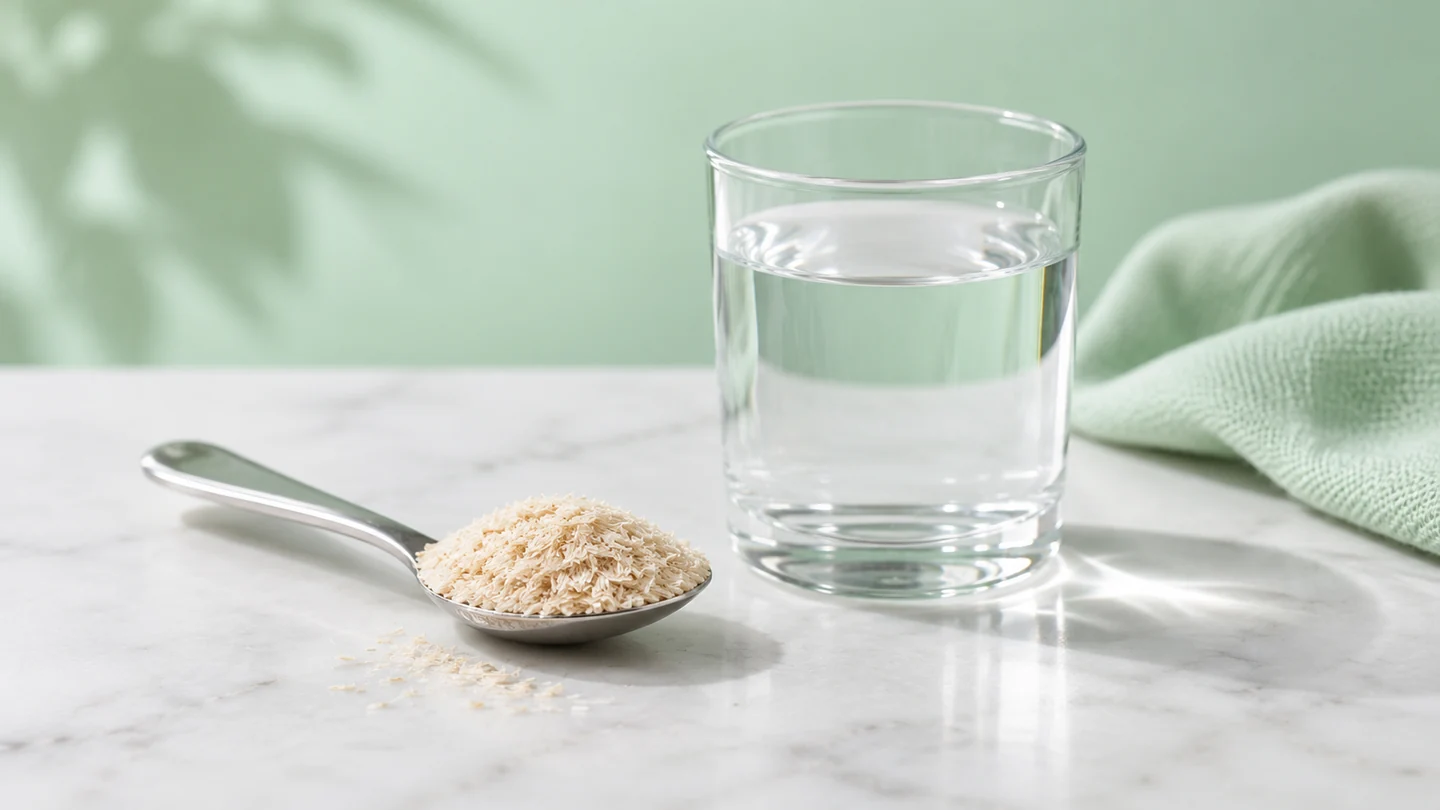
A sensible approach is to start well below your target, such as a single small dose a day, and increase over one to two weeks as your gut adjusts. Stir powder into a full glass of water or other liquid and drink it right away, before it thickens, then follow it with more fluid. Capsules also need a full glass of water.
Check the label for grams of psyllium husk per serving. Our psyllium dosage guide and how to choose a fiber supplement cover forms and amounts in more detail. See a doctor promptly for a sudden change in bowel habits, blood in the stool, severe abdominal pain or unexplained weight loss, rather than treating these yourself with fiber.
Frequently asked questions
Is psyllium a soluble or insoluble fiber?
Mostly soluble. It absorbs water and forms a thick gel. MedlinePlus lists psyllium as a common source of soluble fiber.
Can I take psyllium every day?
Many trials gave psyllium daily for weeks or months. Take it with plenty of fluid and talk with a doctor if you need it long term for bowel symptoms.
Does psyllium cause gas?
It can, especially at first. Starting with a small dose and increasing slowly usually helps.
Who should avoid psyllium?
People with swallowing problems or narrowing of the digestive tract, and anyone with a bowel blockage. People on regular medicines or GLP-1 drugs should check with a pharmacist or prescriber first.
Sources
- MedlinePlus. Blond psyllium.
- MedlinePlus. Soluble vs. insoluble fiber.
- US Department of Agriculture and US Department of Health and Human Services. Dietary Guidelines for Americans.
- Electronic Code of Federal Regulations. 21 CFR 101.81: Soluble fiber from certain foods and risk of coronary heart disease.
- Jovanovski, et al. Effect of psyllium fiber on LDL cholesterol, non-HDL cholesterol and apolipoprotein B. Am J Clin Nutr. 2018.
- Gibb, et al. Psyllium fiber improves glycemic control proportional to loss of glycemic control. Am J Clin Nutr. 2015.
- Gibb, et al. Psyllium is a natural nonfermented gel-forming fiber that is effective for weight loss. J Am Assoc Nurse Pract. 2023.
- Reynolds, et al. Carbohydrate quality and human health. Lancet. 2019.
- van der Schoot, et al. Effect of fiber supplementation on chronic constipation in adults. Am J Clin Nutr. 2022.
- Moayyedi, et al. Effect of fiber supplementation on irritable bowel syndrome. Am J Gastroenterol. 2014.
- McRorie, et al. Understanding the physics of functional fibers in the gastrointestinal tract. J Acad Nutr Diet. 2017.
- McRorie. Evidence-based approach to fiber supplements and clinically meaningful health benefits, part 2. Nutr Today. 2015.
- Shin, et al. Acute esophageal obstruction after ingestion of psyllium seed husk powder. World J Clin Cases. 2022.
- Hefny, et al. Intestinal obstruction caused by a laxative drug (psyllium). Int J Surg Case Rep. 2018.
Last reviewed November 2026. VitaBrief is educational and is not medical advice. Talk with a doctor, registered dietitian or pharmacist before starting a supplement, especially if you are pregnant, take medication or have kidney disease.
Not medical advice. This guide is for general education. Talk to your doctor or pharmacist before taking a supplement, especially if you are pregnant or breastfeeding, take medication or have a health condition. Medical disclaimer