Ingredient guides
Spirulina: a practical guide to the blue-green algae supplement
This spirulina guide covers what spirulina is, what the research shows for blood pressure, cholesterol and weight, the B12 myth, and how to use it safely.
VitaBrief editorial · Last reviewed November 2026 · Sources listed below
Reader-supported. This page may contain affiliate links. If you buy through one, we may earn a commission at no extra cost to you. It never changes what we write. Affiliate disclosure

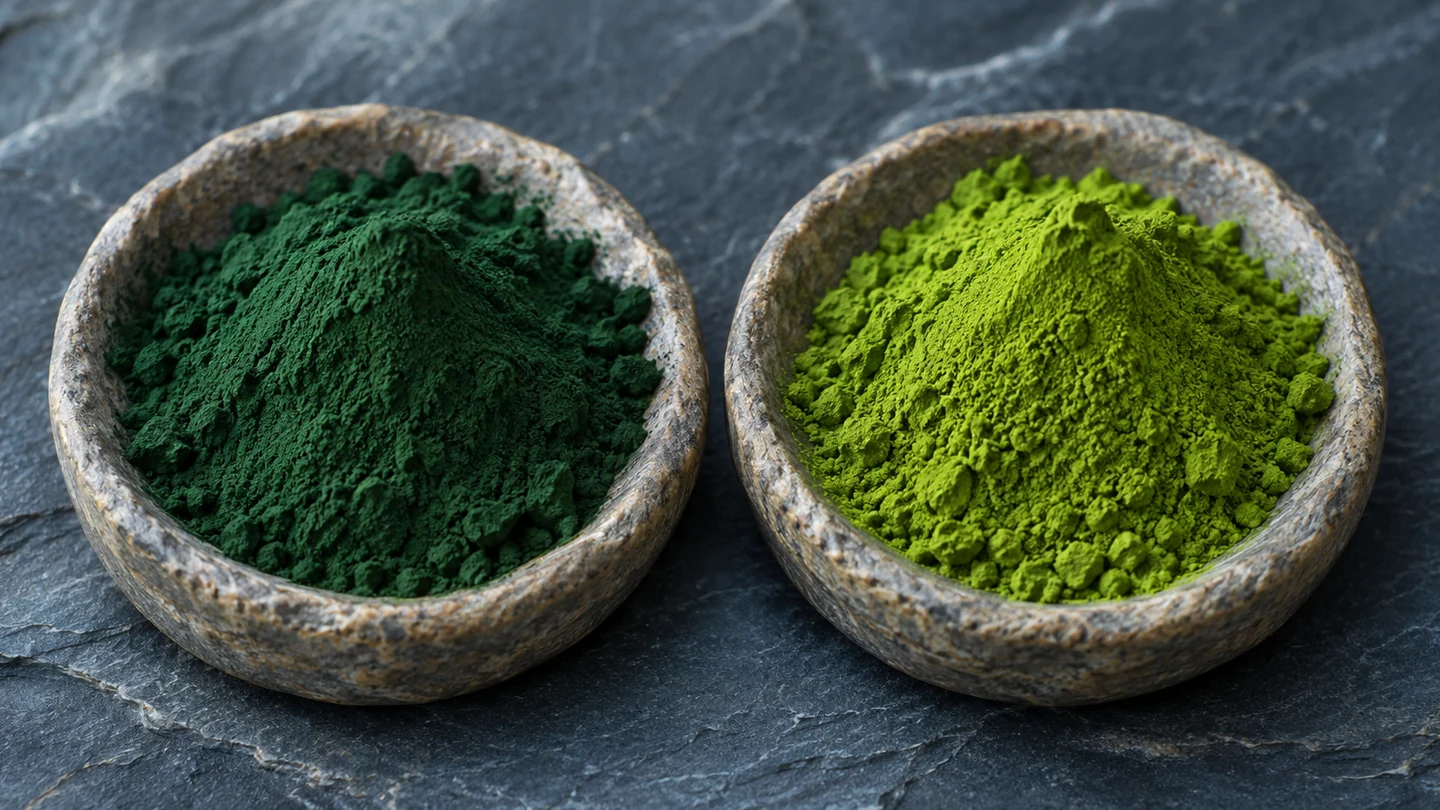
Spirulina is one of the best-known “green superfood” supplements. It is sold as a deep blue-green powder, as tablets and as capsules, and it is often added to smoothies and greens blends. The research is narrower than the marketing, and safety depends heavily on product quality.
This guide explains what spirulina is, what the studies found and what to check before you buy. It draws on the MedlinePlus monograph on blue-green algae, the US Food and Drug Administration (FDA) and published meta-analyses. It is general information, not medical advice.
Spirulina guide: the short answer
A practical spirulina guide: what blue-green algae are, what meta-analyses show for blood pressure, cholesterol and weight, the vitamin B12 myth, contamination risks, safety, interactions and how chlorella differs.
Spirulina at a glance
| Question | Short answer |
|---|---|
| What is it? | A blue-green alga; blue-green algae are a group of bacteria |
| Nutrition | High in protein, iron and other minerals, but no more protein than meat or milk |
| Best-supported use | Rated “possibly effective” for high blood pressure by MedlinePlus |
| Cholesterol and weight | Some meta-analyses show small improvements; MedlinePlus says there is no good evidence for these uses |
| Vitamin B12 | Mostly pseudovitamin B12 in lab analyses; not a reliable B12 source |
| Main risk | Contamination with microcystins, heavy metals or harmful bacteria |
| Amounts studied | Most often 1 to 10 g daily for up to 6 months in adults |
What spirulina is
MedlinePlus covers spirulina under its blue-green algae monograph, which lists Arthrospira platensis and Arthrospira maxima (also called Spirulina platensis and Spirulina maxima) among its other names. Despite the word “algae”, MedlinePlus explains that blue-green algae are a group of bacteria. They produce blue-green pigments and are high in protein, iron and other minerals.
Blue-green algae grow in saltwater and some large freshwater lakes. They have been sold as US supplements since the late 1970s.
An important detail is how spirulina is grown. MedlinePlus notes that some blue-green algae products are grown under controlled conditions, while others are grown in natural settings, where they are more likely to be contaminated.
Nutrition and protein
Spirulina is often promoted as a protein powerhouse. MedlinePlus agrees that blue-green algae can be used as a source of protein, but adds a useful reality check: they contain no more protein than meat or milk.
The high iron content sounds appealing, but MedlinePlus also warns that blue-green algae can decrease the amount of iron the body absorbs from food and supplements. For a closer look at protein claims and how spirulina compares with other options, see spirulina protein and our protein powder guide.
What the research shows
MedlinePlus rates blue-green algae as “possibly effective” for only one use: high blood pressure. Taken by mouth, it seems to reduce blood pressure in some people with high blood pressure. For high cholesterol, diabetes, obesity and many other conditions, MedlinePlus says there is no good scientific evidence to support use.
Meta-analyses of randomized trials (more in spirulina benefits):
- Blood pressure. A 2025 meta-analysis found that spirulina lowered systolic blood pressure by 4.41 mmHg and diastolic by 2.84 mmHg on average, with moderate certainty of evidence by GRADE; in subgroup analyses, readings were still lower in people with hypertension, overweight adults, those over 50 and in trials lasting more than 8 weeks (Shiri 2025). An earlier analysis of 5 trials (230 participants, 1 to 8 g a day for 2 to 12 weeks) also found lower readings, particularly in people with hypertension (Machowiec 2021).
- Cholesterol. Pooling 20 studies with 1,076 participants, one meta-analysis found lower LDL cholesterol, total cholesterol and triglycerides, and higher HDL cholesterol (Rahnama 2023). Another meta-analysis found no significant effect on blood lipids, only a trend toward lower total cholesterol (Pinto-Leite 2025).
- Weight. A meta-analysis of 5 studies found greater weight loss with spirulina (pooled mean difference -1.56 kg, about 1.6 kg rounded), with a larger change in people with obesity than in overweight people (Moradi 2019). Another found benefits on weight and waist size, with BMI changing only in trials of at least 12 weeks (Zarezadeh 2021).
These effects are small and results did not always agree. Pinto-Leite and colleagues described spirulina’s effect on diastolic blood pressure as “small and of uncertain clinical significance”. Two of its co-authors are employed by a company, as disclosed in the paper. Spirulina is not a substitute for blood pressure or cholesterol medication. See spirulina for blood pressure and cholesterol and spirulina for weight loss for the full numbers.
The vitamin B12 myth
Spirulina is often promoted to vegans as a B12 source. When researchers analyzed spirulina tablets, most of the “B12” detected by the standard microbiological test came from substitute or inactive compounds. Of the two intrinsic-factor-active forms they purified, the major one (83%) was pseudovitamin B12 and the minor one (17%) was true vitamin B12 (Watanabe 1999).
A follow-up study concluded that pseudovitamin B12 predominated in spirulina tablets, which are “not suitable for use as a vitamin B12 source, especially for vegetarians” (Watanabe 2002). These were laboratory and rat data, not human trials. If you eat a plant-based diet, rely on the B12 sources discussed in our vitamin B12 guide and your doctor’s advice. More detail is in spirulina and vitamin B12.
Safety, contamination and who should avoid it
According to MedlinePlus, blue-green algae products that are free of contaminants are possibly safe for most people when used short-term. Doses up to 19 g daily have been used safely for up to 2 months, and 10 g daily for up to 6 months. Side effects are usually mild and may include nausea, vomiting, diarrhea, headache and dizziness.
Contaminated products are a different matter. MedlinePlus calls them possibly unsafe and says contaminated blue-green algae can cause liver damage, vomiting, weakness, rapid heartbeat, shock and death. Its advice is to use only products that have been tested and found free of contaminants such as heavy metals, liver toxins called microcystins and harmful bacteria. Read spirulina contamination for more.
MedlinePlus advises caution for:
- Children: possibly unsafe, because children are more sensitive to contaminants.
- Pregnancy and breastfeeding: not enough is known; toxins in contaminated products might pass to the infant, so avoid use.
- Autoimmune diseases such as multiple sclerosis, lupus, rheumatoid arthritis and pemphigus vulgaris: blue-green algae might make the immune system more active, so it is best to avoid them.
- Surgery: stop at least 2 weeks before a scheduled operation, because it might affect blood sugar control.
People with phenylketonuria (PKU) must track protein and phenylalanine from all sources, including protein-rich algae powders; ask your doctor or dietitian. The full list is in spirulina side effects.
Medication interactions
MedlinePlus lists these interactions:
- Diabetes medications: blue-green algae might lower blood sugar, so combining them could drop blood sugar too low. Monitor blood sugar closely.
- Immunosuppressants: might reduce their effect.
- Anticoagulant and antiplatelet drugs: might slow clotting, raising bruising and bleeding risk.
- Other supplements: similar cautions apply to supplements that lower blood sugar or slow clotting, and spirulina may reduce absorption of iron supplements.
If you take blood pressure medication, talk with your doctor before adding spirulina.
Spirulina vs. chlorella in brief
Chlorella is often sold alongside spirulina, but it is a green alga, not a blue-green one, and the MedlinePlus blue-green algae monograph does not cover it. In one meta-analysis of randomized trials, chlorella had a neutral effect on blood pressure and blood lipids, while spirulina modestly lowered diastolic blood pressure (Pinto-Leite 2025). In laboratory analyses, chlorella tablets contained mainly true vitamin B12, unlike spirulina tablets (Watanabe 2002). See spirulina vs. chlorella for the full comparison, or spirulina vs. moringa if you are weighing another greens supplement.
How to use it and what to buy
There is no established dose. MedlinePlus says adults have most often used 1 to 10 g by mouth daily for up to 6 months. Those are amounts used in studies, not a recommendation. Our spirulina dosage page covers this in more depth.
Quality is the deciding factor. The FDA explains that manufacturers and distributors are responsible for evaluating the safety and labeling of their products before marketing, and that the FDA can take action against an adulterated or misbranded product after it reaches the market. Choose a product that documents testing for microcystins, heavy metals and harmful bacteria. Our guide on how to choose a spirulina supplement walks through the label.
Frequently asked questions
Is spirulina safe to take every day?
Uncontaminated products are possibly safe short-term for most adults; 10 g daily has been used for up to 6 months.
Does spirulina lower blood pressure?
It seems to lower blood pressure modestly in some people with high blood pressure. It does not replace medication, so talk with your doctor if you are treated for hypertension.
Can vegans get vitamin B12 from spirulina?
Laboratory studies found mostly pseudovitamin B12 in spirulina tablets. Use reliable B12 sources instead.
Does spirulina detox heavy metals?
The sources reviewed here do not support that claim. In fact, poorly made spirulina can itself be contaminated with heavy metals, which is why testing matters.
Sources
- MedlinePlus. Blue-green algae.
- US Food and Drug Administration. Dietary supplements.
- Watanabe, et al. Pseudovitamin B12 is the predominant cobamide of an algal health food, spirulina tablets. J Agric Food Chem. 1999.
- Shiri, et al. The effect of Spirulina supplementation on blood pressure in adults: a GRADE-assessed systematic review and meta-analysis of randomized clinical trials. Phytother Res. 2025.
- Machowiec, et al. Effect of Spirulina supplementation on systolic and diastolic blood pressure: systematic review and meta-analysis of randomized controlled trials. Nutrients. 2021.
- Rahnama, et al. The effect of Spirulina supplementation on lipid profile: GRADE-assessed systematic review and dose-response meta-analysis of data from randomized controlled trials. Pharmacol Res. 2023.
- Pinto-Leite, et al. The role of Chlorella and Spirulina as adjuvants of cardiovascular risk factor control: a systematic review and meta-analysis of randomised controlled trials. Nutrients. 2025.
- Moradi, et al. Effects of Spirulina supplementation on obesity: a systematic review and meta-analysis of randomized clinical trials. Complement Ther Med. 2019.
- Zarezadeh, et al. Spirulina supplementation and anthropometric indices: a systematic review and meta-analysis of controlled clinical trials. Phytother Res. 2021.
- Watanabe, et al. Characterization and bioavailability of vitamin B12-compounds from edible algae. J Nutr Sci Vitaminol (Tokyo). 2002.
Last reviewed November 2026. VitaBrief is educational and is not medical advice. Talk with a doctor, registered dietitian or pharmacist before starting a supplement, especially if you are pregnant, take medication or have kidney disease.
Not medical advice. This guide is for general education. Talk to your doctor or pharmacist before taking a supplement, especially if you are pregnant or breastfeeding, take medication or have a health condition. Medical disclaimer