Comparisons
Whey vs. plant protein: which is better?
How whey compares with pea, soy, rice and blended plant proteins for muscle, digestion, cost and the environment.
VitaBrief editorial · Last reviewed November 2026 · Sources listed below
Reader-supported. This page may contain affiliate links. If you buy through one, we may earn a commission at no extra cost to you. It never changes what we write. Affiliate disclosure
Whey vs Plant Protein: the short answer
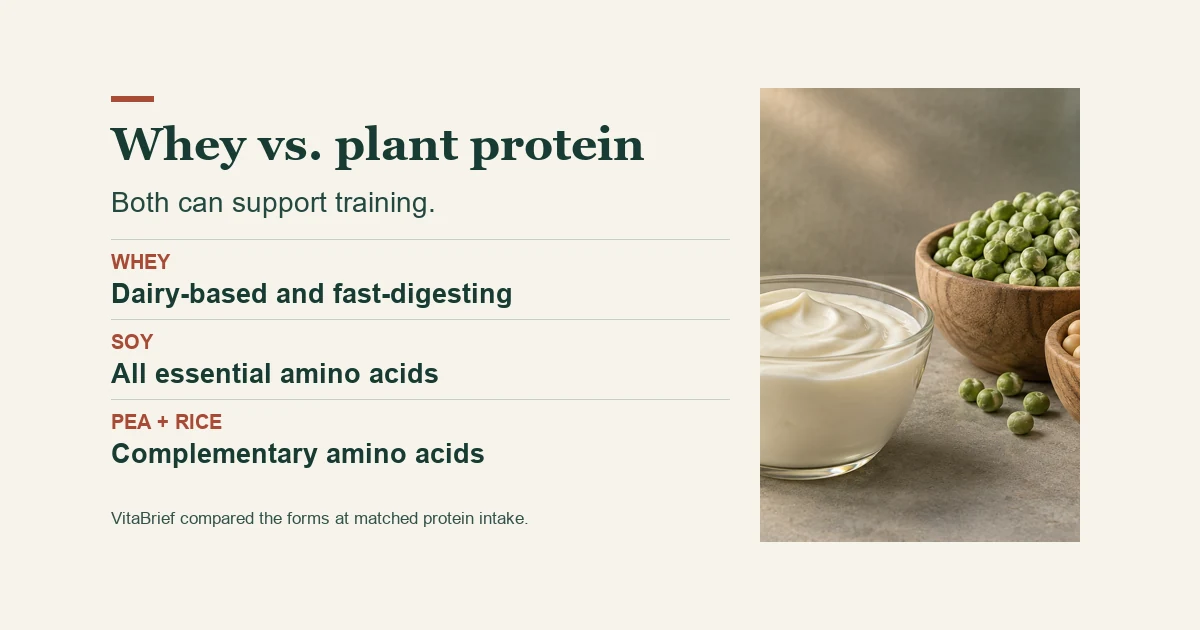
Whey is fast digesting, rich in leucine and has the most research behind it. Plant proteins, especially soy and pea-rice blends, produce similar training results when you eat enough total protein. Choose whey if you tolerate dairy and want value; choose a plant blend if you avoid dairy, and pick a third-party tested brand either way.
Whey protein vs. plant protein is one of the most common protein comparisons in Google’s autocomplete, along with whey vs. pea and whey vs. soy. Whey has long been the gold standard in sports nutrition, but plant proteins have improved, and many people want a dairy-free option for digestion, ethical or environmental reasons. The good news is that both can support muscle well when you get enough. This guide compares them on the measures that matter, based on the International Society of Sports Nutrition (ISSN) (Jäger 2017), a review of plant protein and muscle (Pinckaers 2021) and head-to-head trials.
At a glance
| Whey | Soy | Pea | Pea-rice and other blends | |
|---|---|---|---|---|
| Complete protein (all essential amino acids) | Yes | Yes | Low in methionine | Yes, when combined |
| Leucine content | High (about 10–11%) | Moderate (about 8%) | Moderate (about 8%) | Moderate |
| Digestion speed | Fast | Moderate | Moderate | Moderate |
| Muscle gain in training studies | Strong evidence | Similar to animal protein | Fewer studies; promising | Fewer studies |
| Dairy-free | No | Yes | Yes | Yes |
| Common allergen | Milk | Soy | Rare | Depends on blend |
| Texture and taste | Smooth, mild | Smooth, slight bean taste | Earthy, can be gritty | Varies |
Why protein quality matters
Proteins differ in their amino acid makeup and how well they are digested. Animal proteins like whey generally contain more essential amino acids and more leucine, the amino acid that triggers muscle protein building. Plant proteins tend to be lower in leucine and sometimes low in specific essential amino acids, such as methionine in pea or lysine in rice. They can also be slightly less digestible (Pinckaers 2021).
These differences are real but manageable. Blending plant proteins (pea with rice, for example) fills in amino acid gaps, and taking a slightly larger serving makes up the leucine difference.
What muscle studies show
In short-term lab studies, whey stimulated muscle protein building more than soy or casein both at rest and after resistance exercise (Tang 2009). But short-term responses do not always translate into long-term results.
When researchers looked at actual gains over weeks of training, the picture evened out. A meta-analysis found no difference between soy protein and animal protein supplements in gains in muscle mass and strength with resistance training (Messina 2018). A broader meta-analysis of animal vs. plant protein found a small advantage for animal protein for lean mass in some analyses, particularly in younger adults, but no clear difference in strength (Lim 2021).
| Study type | Finding |
|---|---|
| Short-term muscle protein synthesis (hours) | Whey > soy > casein after exercise |
| Training trials, soy vs. animal protein | No difference in muscle or strength gains |
| Meta-analysis, animal vs. plant protein | Small lean mass edge for animal protein in some groups; strength similar |
The bottom line on muscle: if you hit your daily protein target, the source matters less than people think.
Soy protein
Soy is a complete protein and the best-studied plant protein for muscle. Concerns that soy lowers testosterone or harms men have not been supported by clinical research at normal intakes. It is a common allergen, though, and some people prefer to avoid it.
Pea protein
Pea protein is popular because it is dairy-free, soy-free and rarely causes allergies. It is relatively high in leucine for a plant protein but low in methionine, which is why it is often blended with rice protein. Fewer long-term training studies exist for pea alone, but early results are encouraging.
Digestion and tolerance
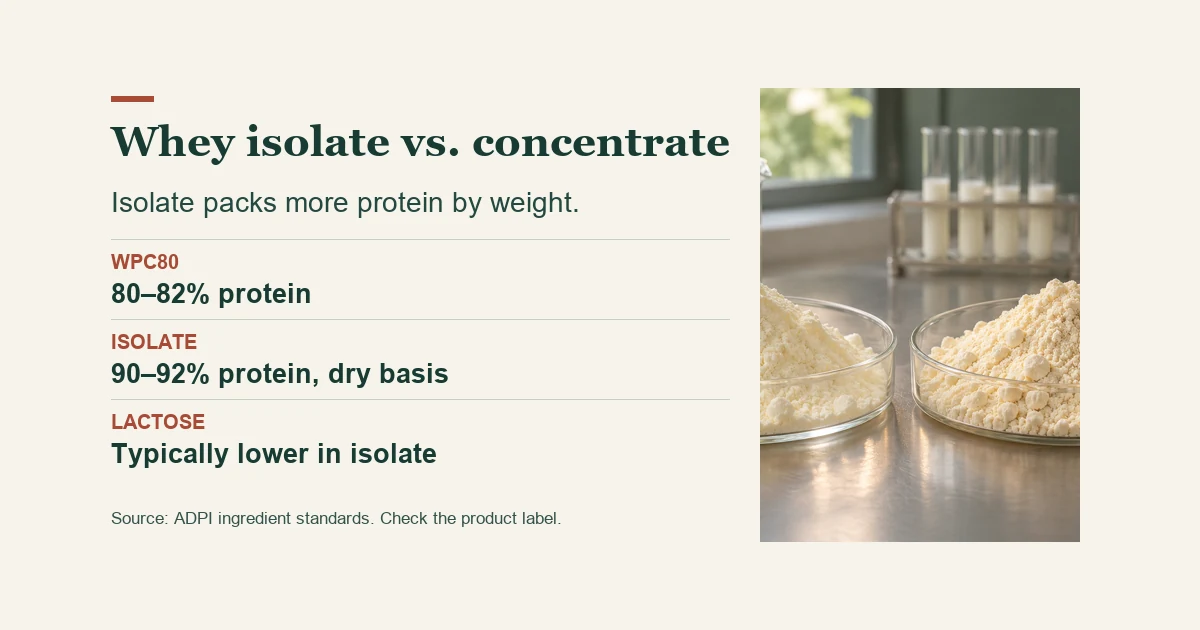
Whey concentrate contains some lactose, which can cause bloating or gas in people with lactose intolerance (MedlinePlus). Whey isolate contains much less and is often tolerated. Plant proteins are lactose-free but can cause gas in some people, especially products with added fibers or gums. See protein powder side effects and isolate vs. concentrate.
Heavy metals and quality
Plants absorb minerals, including heavy metals, from soil. Independent testing reported by consumer groups has found higher levels of lead in some plant-based protein powders than in whey products on average, though results vary widely by brand. Supplements are not approved by the FDA before sale (NCCIH), so third-party certification matters, especially for plant powders. See how to choose a protein powder.
Cost and environment
Whey concentrate is usually the least expensive protein per gram. Plant blends and whey isolate cost more. Plant proteins generally have a lower environmental footprint than dairy, which matters to many buyers.
Which should you choose?
| If you… | Consider |
|---|---|
| Tolerate dairy and want the most research and value | Whey concentrate |
| Are lactose sensitive but eat dairy | Whey isolate |
| Are vegan or avoid dairy | Soy or a pea-rice blend |
| Avoid soy | Pea or pea-rice blend |
| Have multiple allergies | Pea protein; check the label for shared facilities |
If you choose plant protein, aim for a slightly larger serving, roughly 25 to 35 grams, to match the leucine in 20 to 25 grams of whey.
Comparing servings
| Protein | Serving for about 2.5 g leucine | Approximate protein |
|---|---|---|
| Whey | About 23–25 g | 23–25 g |
| Soy isolate | About 30 g | 30 g |
| Pea | About 30 g | 30 g |
| Pea-rice blend | About 30–32 g | 30–32 g |
Around 2 to 3 grams of leucine per meal is often cited as enough to strongly stimulate muscle protein building in younger adults. Plant proteins reach this with a slightly larger scoop. Older adults may benefit from the upper end of these servings.
Taste, texture and recipes
Whey mixes smoothly in water or milk and has a mild flavor that suits shakes and baking. Plant proteins are thicker and can taste earthy, so they often work better in smoothies with fruit, nut butter or cocoa. Pea protein can be gritty in water but blends well in oatmeal and pancakes. Soy protein has a smooth texture and works in both shakes and baking.
If you are switching from whey to plant protein, try a blended product first, use a blender rather than a shaker bottle, and add a frozen banana or ice for a creamier texture. Many people need a week or two to get used to the taste.
The bottom line
Whey is fast digesting, rich in leucine and has the most research behind it. Plant proteins, especially soy and pea-rice blends, produce similar training results when you eat enough total protein. Choose whey if you tolerate dairy and want value; choose a plant blend if you avoid dairy, and pick a third-party tested brand either way.
Frequently asked questions
Is plant protein as good as whey for building muscle?
For long-term gains, soy and well-designed blends perform similarly when total protein intake is adequate. Whey has a short-term edge in muscle protein building.
Does soy protein affect hormones?
Clinical studies have not shown meaningful effects on testosterone or estrogen in men at typical intakes.
Is pea protein a complete protein?
It contains all essential amino acids but is low in methionine. Blending with rice protein improves balance.
Which is easier on the stomach?
It depends on the person. Whey isolate and plant proteins avoid most lactose; added fibers and sugar alcohols cause many complaints.
Is whey vs. collagen a fair comparison?
Not for muscle. Collagen lacks tryptophan and is low in leucine, so it is not a substitute for whey or plant blends for muscle building.
Is hemp or rice protein good on its own?
They are lower in some essential amino acids. Blends with pea or soy are a better choice for muscle.
Do plant proteins cause less bloating?
They avoid lactose, but some contain fibers that cause gas. Tolerance varies by person and product.
Is plant protein good for weight loss?
Yes. Protein from any source supports fullness and muscle preservation. Choose a low-sugar product.
Can I mix whey and plant protein?
Yes. Blending can improve taste, texture and amino acid balance.
Sources
- Pinckaers PJM, et al. The anabolic response to plant-based protein ingestion. Sports Med. 2021;51(Suppl 1):59-74.
- Jäger R, et al. International Society of Sports Nutrition position stand: protein and exercise. J Int Soc Sports Nutr. 2017;14:20.
- Tang JE, et al. Ingestion of whey hydrolysate, casein, or soy protein isolate: effects on mixed muscle protein synthesis at rest and following resistance exercise in young men. J Appl Physiol. 2009;107(3):987-92.
- Messina M, et al. No difference between the effects of supplementing with soy protein versus animal protein on gains in muscle mass and strength in response to resistance exercise. Int J Sport Nutr Exerc Metab. 2018;28(6):674-85.
- Lim MT, et al. Animal protein versus plant protein in supporting lean mass and muscle strength: a systematic review and meta-analysis of randomized controlled trials. Nutrients. 2021;13(2).
- MedlinePlus. Lactose Intolerance.
- NCCIH. Using Dietary Supplements Wisely.
Last reviewed November 2026. VitaBrief is educational and is not medical advice. Talk with a doctor, registered dietitian or pharmacist before starting a supplement, especially if you are pregnant, take medication or have kidney disease.
Not medical advice. This guide is for general education. Talk to your doctor or pharmacist before taking a supplement, especially if you are pregnant or breastfeeding, take medication or have a health condition. Medical disclaimer