Comparisons
Oregano oil capsules vs essential oil: which is which, and which is safe to swallow?
They share a name but not a purpose. Here is how diluted supplements differ from concentrated essential oil.
VitaBrief editorial · Last reviewed November 2026 · Sources listed below
Reader-supported. This page may contain affiliate links. If you buy through one, we may earn a commission at no extra cost to you. It never changes what we write. Affiliate disclosure
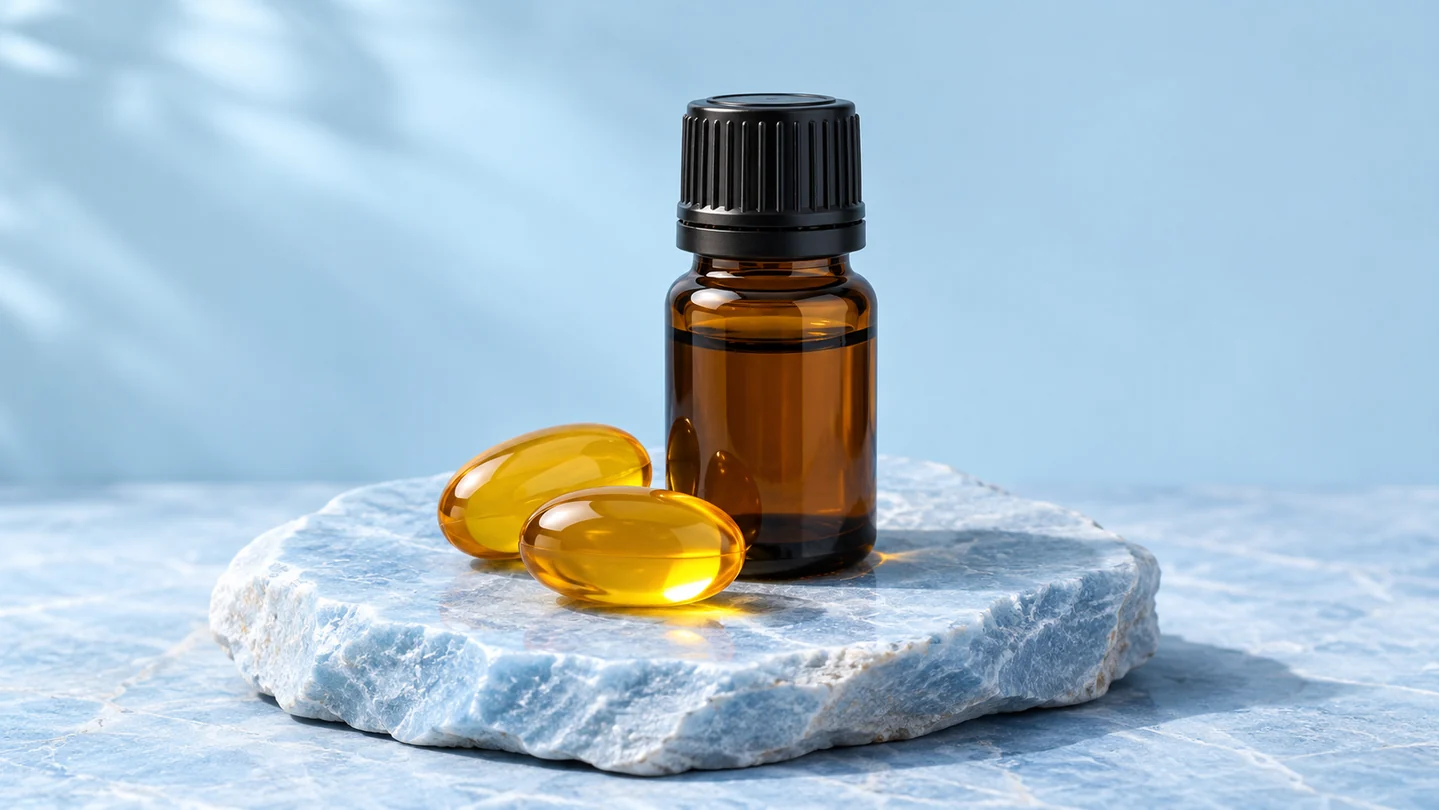
Search for oregano oil and you will see two very different kinds of products side by side: softgels and capsules sold as dietary supplements, and small dropper bottles sold as essential oil. Both are called “oregano oil,” both smell strongly of the herb, and both are marketed with similar claims. They are not interchangeable, and confusing them can be risky.
Before comparing them, it helps to be clear about the evidence. MedlinePlus says there is interest in using oregano for a number of purposes, but there isn’t enough reliable information to say whether it might be helpful, and that there is no good scientific evidence for uses such as wound healing or parasite infections. So the question here is not which form works better. It is what each form is, how it is meant to be used, and how to avoid harm. This is general information, not medical advice.
At a glance
| Feature | Capsules or softgels | Essential oil (dropper bottle) |
|---|---|---|
| Usual form | Oregano oil diluted in a carrier oil, in a measured dose | Concentrated distilled oil |
| Main intended use | Swallowed as a dietary supplement, per label | Most often inhaled or applied diluted to skin (NCCIH) |
| Swallowing undiluted | Not applicable | Not recommended |
| Skin use | Not designed for it | Only diluted; may irritate above 1% (MedlinePlus) |
| Dose control | Fixed amount per capsule | Drops vary in size; easy to overdo |
| Regulation | Sold as a dietary supplement | Often sold for aromatherapy or cosmetic use |
| Established effective dose | None (MedlinePlus) | |
What each product is
Oregano (Origanum vulgare) is a culinary herb in the mint family. Its aromatic compounds, including carvacrol, are concentrated in the oil that can be distilled from the plant. That distilled oil is what is sold as oregano essential oil. It is highly concentrated and pungent.
Oregano oil capsules and softgels generally take a small amount of that oil and dilute it in a carrier such as olive oil or another vegetable oil. The capsule delivers a measured dose to swallow, much like a fish oil softgel. Some liquid “oil of oregano” supplements are also pre-diluted for use by mouth, which is different from an undiluted essential oil, even if the bottles look similar.
The simplest way to tell them apart is the label. A dietary supplement has a Supplement Facts panel with a serving size and directions for use by mouth. An essential oil is often labeled for aromatherapy or external use and may carry a warning against ingestion.
How each one is meant to be used
According to NCCIH, essential oils are most often used by inhaling them or by applying a diluted form to the skin. That is very different from swallowing a supplement.
Capsules, by contrast, are designed to be swallowed with water, following the directions on the label. Our guide on how to take oregano oil covers practical points such as timing, food and how long to use them.
As general safety guidance, concentrated oregano essential oil should not be swallowed undiluted and should not be applied undiluted to skin. Undiluted oil may irritate the mouth and throat, and on the skin MedlinePlus says oregano oil may cause irritation at concentrations greater than 1%. Popular tips to put drops under the tongue or straight onto a toenail ignore that warning. If you are curious about nail use, see oregano oil for nail fungus, which explains why there is no verified human trial for it.
Safety: what applies to both
Whichever form you use, the same safety information applies, because it concerns oregano itself. MedlinePlus says oregano leaf and oil are likely safe when eaten in foods, but there isn’t enough reliable information to know whether larger amounts are safe. Mild side effects include stomach upset. Other cautions from the same monograph:
- People allergic to Lamiaceae plants, such as basil, hyssop, lavender, marjoram, mint and sage, can react to oregano.
- Large doses might increase bleeding risk; stop two weeks before surgery.
- Oregano might lower blood sugar, so be cautious with diabetes medicines.
- Oregano might slow blood clotting, so be cautious with anticoagulant and antiplatelet drugs.
- It might decrease copper absorption, though it isn’t clear whether this is a big concern.
During pregnancy, MedlinePlus rates oregano as possibly unsafe by mouth in medicinal amounts, and it advises food amounts while breastfeeding. No source VitaBrief reviewed supports giving oregano oil to children; talk to a pediatrician, and never give essential oil to a child by mouth. See oregano oil safety in pregnancy and children and oregano oil side effects for detail.
What the studies used
Human research on oregano oil is thin, and none of it compares capsules with essential oil. The most cited oregano oil study, Force 2000, gave 14 adults with intestinal parasites 600 mg of emulsified oil of oregano daily for six weeks. Some parasites disappeared in some participants, but there was no control group, so the study cannot show that the oil caused the change.
Ghitea 2021 set out to compare the essential oil of Origanum vulgare with antibiotic treatment in 106 people with metabolic syndrome, divided into infection subgroups and an uninfected, untreated control group. The authors report that intestinal side effects were absent after a 10-day treatment and suggest that the oil may have an antibacterial effect similar to antibiotics. The abstract does not make the design clear or describe randomization or blinding, so the findings are preliminary.
Three small trials tested carvacrol, a single compound found in oregano, including a one-month phase I safety study in healthy subjects (Ghorani 2021). Those tell us about carvacrol, not about oregano oil in either form.
Dose control and labeling
One practical advantage of capsules is predictability. Each capsule should contain a stated amount, so you know what you are taking. With a dropper bottle, drop size varies, dilution is up to you, and it is easy to take far more than intended.
That said, there is no established dose for either. MedlinePlus says there isn’t enough reliable information to know what an appropriate dose of oregano might be, and advises following product label directions and consulting a healthcare professional. The 600 mg a day in Force 2000 is simply what that small study used. Our oregano oil dosage article explains this further.
Quality is a separate issue. The FDA explains that supplement firms are responsible for evaluating the safety and labeling of their products before marketing, and FDA can act against adulterated or misbranded products after they reach the market. MedlinePlus notes that supplements do not have to go through the testing that drugs do. Essential oils sold for aromatherapy may not be labeled for oral use at all. Our guide on how to choose an oregano oil supplement covers what to look for on a label.
Which one makes sense for you?
If you have decided, with your clinician, to try oregano oil by mouth, a capsule or softgel designed as a dietary supplement is the form built for that purpose. If you want oregano’s aroma, an essential oil used in a diffuser or properly diluted fits the way NCCIH describes essential oils being used.
Neither form has strong evidence behind it for colds, gut problems or fungal infections in people. Lab studies showing oregano oil affects microbes in a dish do not show it works in the body. For colds, our pages on zinc, vitamin C and elderberry explain what is known about other common options. For gut health, see the probiotics guide and oregano oil for SIBO. For a comparison with another popular herbal oil, read black seed oil vs oregano oil.
Whatever you choose, MedlinePlus recommends telling your health care provider about any supplements you use and not taking more than the label recommends.
Frequently asked questions
Can I swallow oregano essential oil?
Concentrated essential oil should not be swallowed undiluted. If you want to take oregano oil by mouth, a supplement made for that purpose, used as labeled and discussed with a clinician, is the safer route.
Can I open a capsule and put it on my skin?
Capsules are designed to be swallowed. MedlinePlus says safety on the skin is not well established and that oregano oil may irritate at concentrations above 1%.
Are capsules weaker than essential oil?
Usually, yes, per serving. Capsules typically contain oregano oil diluted in a carrier oil, while essential oil is concentrated. Check the label for the amount per serving.
Is one form more effective?
No study compares them. There isn’t enough reliable information to say whether oregano oil is helpful in either form.
Can I put essential oil drops under my tongue?
This is not recommended. Undiluted essential oil is highly concentrated and may irritate the mouth and throat.
Sources
- MedlinePlus. Oregano.
- National Center for Complementary and Integrative Health. Aromatherapy.
- Force, et al. Inhibition of enteric parasites by emulsified oil of oregano in vivo. Phytother Res. 2000.
- Ghitea, et al. The antimicrobial activity of Origanum vulgare L. correlated with the gastrointestinal perturbation in patients with metabolic syndrome. Molecules. 2021.
- Ghorani, et al. Safety and tolerability of carvacrol in healthy subjects: a phase I clinical study. Drug Chem Toxicol. 2021.
- U.S. Food and Drug Administration. Dietary supplements.
- MedlinePlus. Dietary supplements.
Last reviewed November 2026. VitaBrief is educational and is not medical advice. Talk with a doctor, registered dietitian or pharmacist before starting a supplement, especially if you are pregnant, take medication or have kidney disease.
Not medical advice. This guide is for general education. Talk to your doctor or pharmacist before taking a supplement, especially if you are pregnant or breastfeeding, take medication or have a health condition. Medical disclaimer