Ingredient guides
Collagen for women: 40s, 50s and menopause
Most collagen research was done in women. Here is what it shows for skin, bones, joints, cellulite and strength training, and what matters more after menopause.
VitaBrief editorial · Last reviewed November 2026 · Sources listed below
Reader-supported. This page may contain affiliate links. If you buy through one, we may earn a commission at no extra cost to you. It never changes what we write. Affiliate disclosure

Collagen for Women: the short answer
Most collagen research was done in women, but much of it is small and industry funded. Bone density after menopause has the most interesting women-specific evidence; skin evidence is contested. For muscle, complete protein beats collagen; collagen can be added on top. Strength training, protein, calcium, vitamin D, sun protection and screening matter more than any collagen product.
“Collagen for women,” “collagen for women over 50” and “best collagen for women” are among the most common collagen searches. That makes sense: collagen is marketed heavily to women, and most collagen trials have enrolled women, especially for skin and bone. This guide pulls together what that research shows across life stages, with honest notes on its limits, using trials indexed in PubMed and guidance from NIAMS and MedlinePlus.
Collagen, aging and menopause
Everyone makes less collagen with age, but estrogen influences collagen in skin and bone, so the drop in estrogen around menopause speeds changes in women. Skin becomes thinner and drier, and bone loss accelerates for several years after the final period. According to NIAMS, women are at higher risk of osteoporosis than men, partly because of this rapid postmenopausal bone loss.
| Life stage | Collagen-related changes | Biggest priorities |
|---|---|---|
| 20s–30s | Peak bone mass reached; skin collagen gradually declines | Sun protection, protein, calcium, exercise |
| 40s (perimenopause) | Skin dryness, early bone loss may begin | Strength training, protein, sun protection |
| Early postmenopause | Faster bone loss; skin thinning | Bone density screening as advised, calcium, vitamin D, exercise |
| 60s and older | Muscle and bone loss; joint pain more common | Protein per meal, resistance training, fall prevention |
What the research shows for women
| Goal | Key study in women | Our read |
|---|---|---|
| Skin elasticity, wrinkles | Trials in women 35–65; meta-analyses 95% women | Uncertain; no effect in independent trials (Myung 2025) |
| Bone density after menopause | 131 women, 5 g for 12 months (König 2018) | Early, promising |
| Body composition with training | 77 premenopausal women, 15 g for 12 weeks (Jendricke 2019) | Better than no protein; not proven better than complete protein |
| Cellulite | 105 women, 2.5 g for 6 months (Schunck 2015) | Small effect, mainly in normal-weight women |
| Brittle nails | 25 women, open-label (Hexsel 2017) | Weak |
| Joint pain, physical function | Active adults; some benefits only in women at 20 g (Kviatkovsky 2023) | Modest |
Skin after 40
Skin trials mostly enrolled women aged 35 to 65 and found small improvements in elasticity and hydration after 8 to 12 weeks. However, a 2025 meta-analysis of 23 trials found the benefits disappeared when only trials without industry funding or only high-quality trials were analyzed (Myung 2025). For menopausal skin, daily sunscreen, moisturizers and, where appropriate, prescription retinoids or menopausal hormone therapy discussed with a clinician have stronger evidence. See collagen for skin.
Bones after menopause
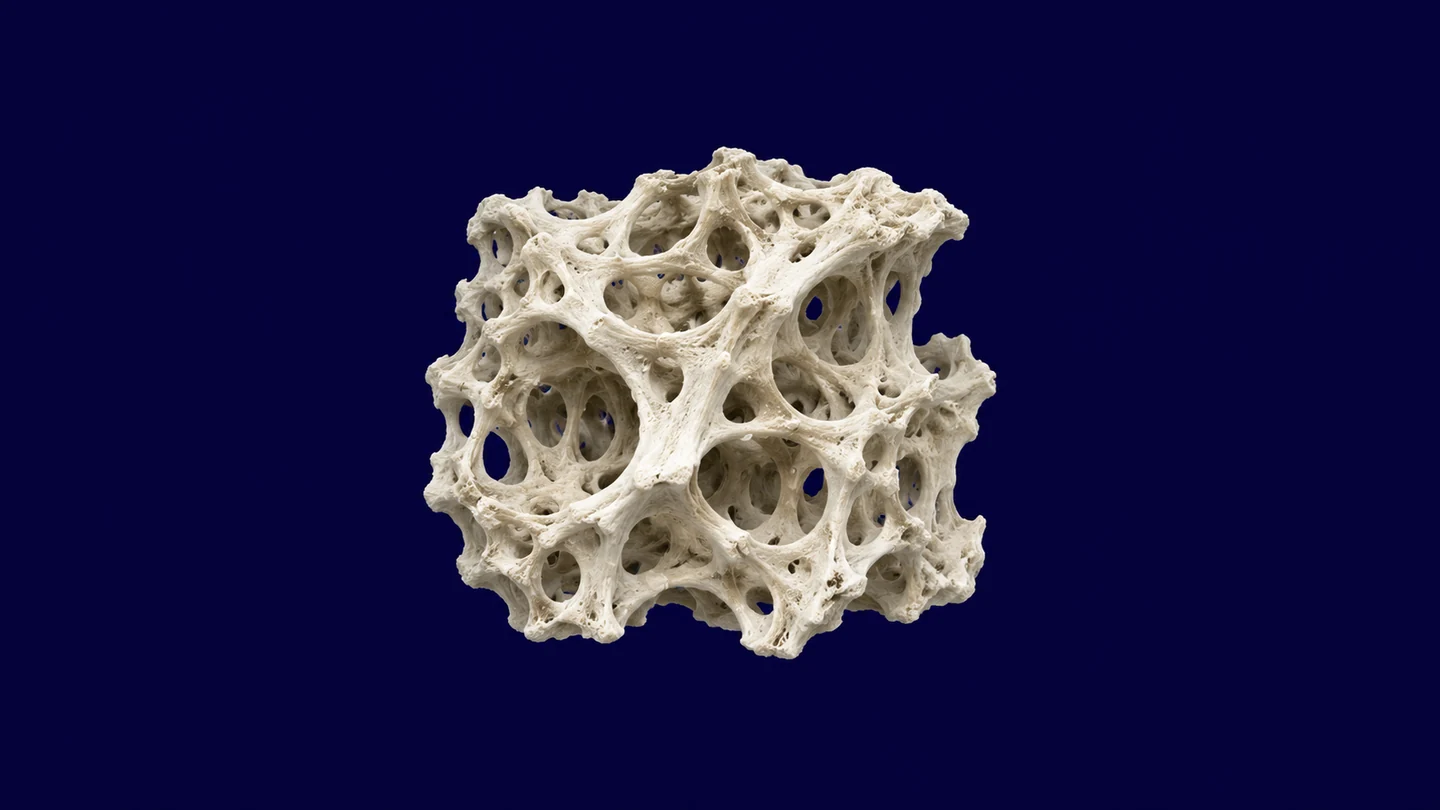
The most important women-specific collagen trial enrolled 131 postmenopausal women with low bone density. Taking 5 grams of specific collagen peptides daily for a year modestly increased bone density in the spine and hip compared with placebo, and shifted bone markers toward formation (König 2018). A smaller trial using a calcium-collagen product also found less bone loss (Elam 2015). No study has shown fewer fractures. Collagen may be a reasonable add-on, never a replacement for osteoporosis treatment. See collagen for bones.
Cellulite
In a six-month trial in 105 women aged 24 to 50 with moderate cellulite, 2.5 grams of collagen peptides daily reduced cellulite scores and skin waviness on the thighs compared with placebo in normal-weight women. The effect was smaller in overweight women (Schunck 2015). A 2026 trial of a different low-molecular-weight peptide also reported cellulite improvements (Hwang 2026). Both were tests of specific branded ingredients, and cellulite is largely determined by genetics and fat structure, so expectations should stay modest.
Strength training and muscle
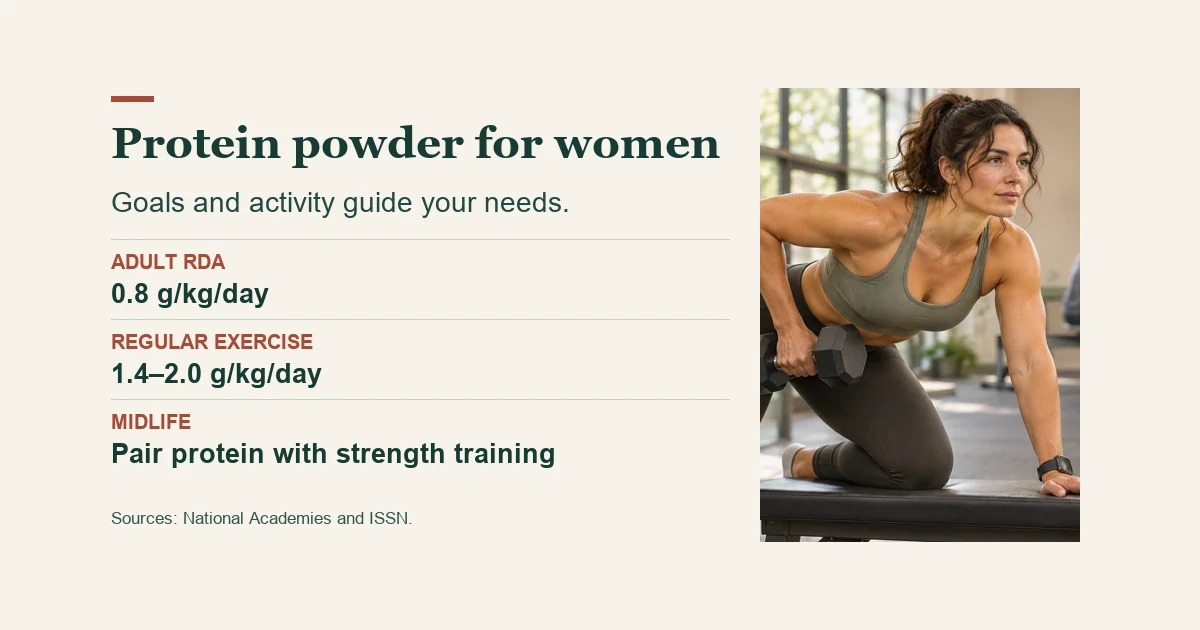
Muscle loss accelerates after menopause, and strength training is one of the best things women can do for bones, muscle and metabolism. In premenopausal women doing 12 weeks of resistance training, 15 grams of collagen peptides daily increased fat-free mass more than a non-protein placebo (Jendricke 2019). But in older women, whey stimulated muscle protein synthesis far more than collagen did (Oikawa 2020). For muscle, prioritize complete protein, such as dairy, eggs, fish, poultry, soy or a whey or plant protein powder. See protein powder for women and collagen vs. whey protein.
Pregnancy and breastfeeding
Collagen supplements have not been studied in pregnancy or breastfeeding. Collagen is a food protein, and gelatin is common in foods, but supplements can contain added vitamins (especially vitamin A), herbs or contaminants. Protein needs rise in pregnancy, and food sources are the best way to meet them. Ask your obstetric clinician before using any collagen product, and check that added vitamins do not duplicate your prenatal vitamin.
Joints and activity
Knee osteoarthritis is more common in women than men, especially after 50. Collagen has its most consistent evidence for joint pain, with meta-analyses showing reduced pain and stiffness scores, though the evidence quality is low (García-Coronado 2019). In a nine-month study of active middle-aged adults, some physical health scores improved with 20 grams of collagen daily only in women (Kviatkovsky 2023). If joint pain is limiting your activity, collagen is a reasonable low-risk trial alongside strengthening exercise and weight management. See collagen for joints.
Pain that wakes you at night, swelling or a joint that gives way deserves a medical check before any supplement trial.
Choosing a collagen for women
There is no special “women’s collagen.” Products marketed to women often add biotin, hyaluronic acid or vitamin C and cost more. Look instead for:
- A dose that matches research: 2.5–10 g of hydrolyzed collagen, or 5 g for bone.
- Third-party testing for contaminants (NSF, USP or independent testing such as ConsumerLab).
- A source that fits your diet and allergies (bovine, marine, porcine).
- Few added ingredients; be cautious with biotin before blood tests and with vitamin A.
See how to choose a collagen supplement.
Better-proven steps for women over 50
| Step | Why |
|---|---|
| Resistance training 2+ days a week | Builds muscle and bone; improves balance |
| Protein spread across meals (about 25–30 g each) | Supports muscle; see protein for older adults |
| Calcium 1,200 mg/day (food first) and adequate vitamin D | Bone mineral; see vitamin D and calcium |
| Bone density screening as recommended | Finds osteoporosis before fractures |
| Daily sun protection, no smoking | Protects skin collagen |
| Discuss menopause symptoms and treatment options with a clinician | Hormone therapy affects bone and skin for some women |
The bottom line
- Most collagen research was done in women, but much of it is small and industry funded.
- Bone density after menopause has the most interesting women-specific evidence; skin evidence is contested.
- For muscle, complete protein beats collagen; collagen can be added on top.
- Strength training, protein, calcium, vitamin D, sun protection and screening matter more than any collagen product.
Frequently asked questions
What is the best collagen for women over 50?
A third-party tested hydrolyzed collagen at 5–10 g a day. No women-specific formula has been shown to work better.
Does collagen help menopause symptoms?
It has not been shown to help hot flashes, sleep or mood. Talk to a clinician about proven treatments.
Can collagen help with weight gain in menopause?
Evidence is limited. See collagen for weight loss.
Should I take collagen or creatine?
They do different things. Creatine has stronger evidence for strength; see our creatine for women guide.
Is collagen safe while breastfeeding?
It has not been studied. Ask your clinician and focus on food protein.
Is collagen worth it for women in their 30s?
There is little evidence that starting collagen early prevents aging. Sun protection, strength training, enough protein and not smoking matter much more at this stage.
Sources
- König D, et al. Specific collagen peptides improve bone mineral density and bone markers in postmenopausal women. Nutrients. 2018;10(1):97.
- Elam ML, et al. A calcium-collagen chelate dietary supplement attenuates bone loss in postmenopausal women with osteopenia. J Med Food. 2015;18(3):324-331.
- Myung SK, Park Y. Effects of collagen supplements on skin aging: a systematic review and meta-analysis of randomized controlled trials. Am J Med. 2025;138(9):1264-1277.
- Jendricke P, et al. Specific collagen peptides in combination with resistance training improve body composition and regional muscle strength in premenopausal women. Nutrients. 2019;11(4):892.
- Schunck M, et al. Dietary supplementation with specific collagen peptides has a body mass index-dependent beneficial effect on cellulite morphology. J Med Food. 2015;18(12):1340-1348.
- Hwang S, et al. Low-molecular-weight collagen peptide supplementation improves cellulite severity, skin elasticity, and hair shaft diameter. J Med Food. 2026.
- Hexsel D, et al. Oral supplementation with specific bioactive collagen peptides improves nail growth and reduces symptoms of brittle nails. J Cosmet Dermatol. 2017;16(4):520-526.
- Kviatkovsky SA, et al. Collagen peptides supplementation improves function, pain, and physical and mental outcomes in active adults. J Int Soc Sports Nutr. 2023;20(1):2243252.
- Oikawa SY, et al. Whey protein but not collagen peptides stimulate acute and longer-term muscle protein synthesis in healthy older women. Am J Clin Nutr. 2020;111(3):708-718.
- NIAMS. Osteoporosis.
- MedlinePlus. Skin aging; Osteoporosis.
Last reviewed November 2026. VitaBrief is educational and is not medical advice. Talk with a doctor, registered dietitian or pharmacist before starting a supplement, especially if you are pregnant, take medication or have kidney disease.
Not medical advice. This guide is for general education. Talk to your doctor or pharmacist before taking a supplement, especially if you are pregnant or breastfeeding, take medication or have a health condition. Medical disclaimer