Supplement basics
Collagen side effects and safety
Collagen is one of the better-tolerated supplements, but there are real cautions: allergens, kidney stones and kidney disease, digestive upset, contaminants and added ingredients.
VitaBrief editorial · Last reviewed November 2026 · Sources listed below
Reader-supported. This page may contain affiliate links. If you buy through one, we may earn a commission at no extra cost to you. It never changes what we write. Affiliate disclosure

Collagen Side Effects: the short answer
Collagen peptides are generally well tolerated; trials report side effects similar to placebo. Mild digestive upset is the most common complaint, mainly with large doses. Check the animal source for allergies and religious or dietary restrictions. People with kidney disease or kidney stones should talk to their clinician first. Choose third-party tested products and scrutinize added biotin, vitamin A, calcium and sugar.
Autocomplete shows people worry about collagen side effects on the kidneys, liver, heart and skin, and whether collagen causes constipation. The reassuring news is that collagen is a food protein, and in randomized trials lasting up to a year, side effects were generally similar to placebo. There are still sensible cautions, mostly about allergens, people with kidney disease, digestive comfort, product quality and extra ingredients in blends. This guide covers them using trials indexed in PubMed, guidance from the FDA and NCCIH.
What clinical trials report
Across skin, joint and bone trials, collagen peptides were well tolerated. In a 180-day osteoarthritis trial, safety outcomes did not differ between undenatured type II collagen, glucosamine-chondroitin and placebo (Lugo 2016). An eight-week skin trial reported no side effects (Proksch 2014), and a 2025 study in active women found no difference in digestive symptoms between collagen and placebo (Reynolds 2025).
| Reported effect | How common | What to do |
|---|---|---|
| Fullness, bloating | Occasional, mostly with large doses | Lower the dose; take with food |
| Heartburn | Occasional | Avoid large doses before lying down |
| Unpleasant taste (especially marine) | Common complaint | Mix into flavored drinks |
| Constipation or loose stools | Occasional reports; not shown in trials | Drink fluids; check for added fibers or sugar alcohols |
| Allergic reaction | Rare; depends on source | Stop and seek care for hives, swelling or breathing trouble |
Collagen and the kidneys
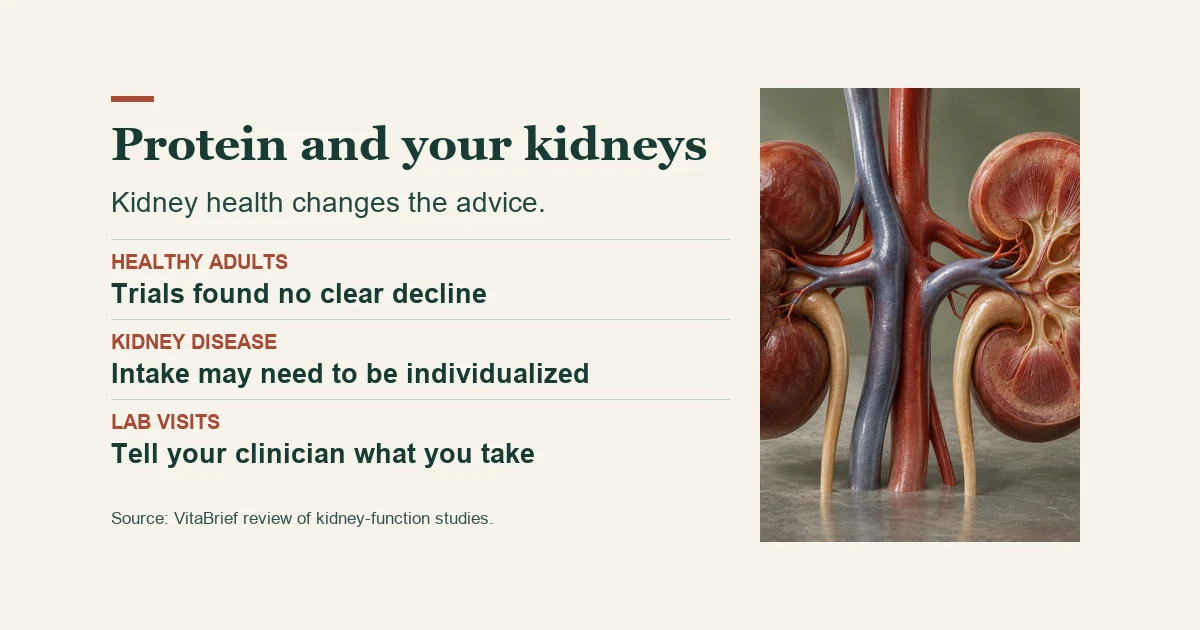
For people with healthy kidneys, there is no evidence that normal collagen doses harm kidney function. Two specific issues are worth knowing:
- Kidney disease. Collagen adds protein. People with chronic kidney disease are often advised to limit total protein, so collagen should be counted and discussed with a nephrologist or renal dietitian. See protein and kidneys.
- Kidney stones. Collagen is rich in hydroxyproline, which the body converts partly to oxalate. Oxalate is a component of the most common type of kidney stone. Whether ordinary collagen doses raise stone risk in people has not been well studied, but people with a history of calcium oxalate stones may want to keep doses modest and ask their clinician.
Also check collagen blends for added calcium or vitamin C. High doses of supplemental calcium and vitamin C have both been linked to kidney stones in susceptible people, according to the Linus Pauling Institute.
Collagen and the liver
We found no evidence that collagen peptides harm the liver at studied doses. Liver injury from supplements is usually linked to herbal extracts and bodybuilding products, not to food proteins. If you have advanced liver disease, protein needs are individual, so check with your care team. Multi-ingredient beauty blends sometimes add herbs, so read the full label.
Allergens and dietary restrictions
Collagen comes from animals, so the source matters.
| Source | Avoid if |
|---|---|
| Marine (fish skin, scales) | Fish allergy; some products are processed alongside shellfish |
| Eggshell membrane | Egg allergy |
| Bovine | Beef allergy (including alpha-gal syndrome after tick bites); some religious diets |
| Porcine | Pork allergy; kosher or halal diets |
| Chicken | Poultry allergy |
Collagen is not vegetarian or vegan. Products labeled “vegan collagen” do not contain collagen.
Contaminants and product quality
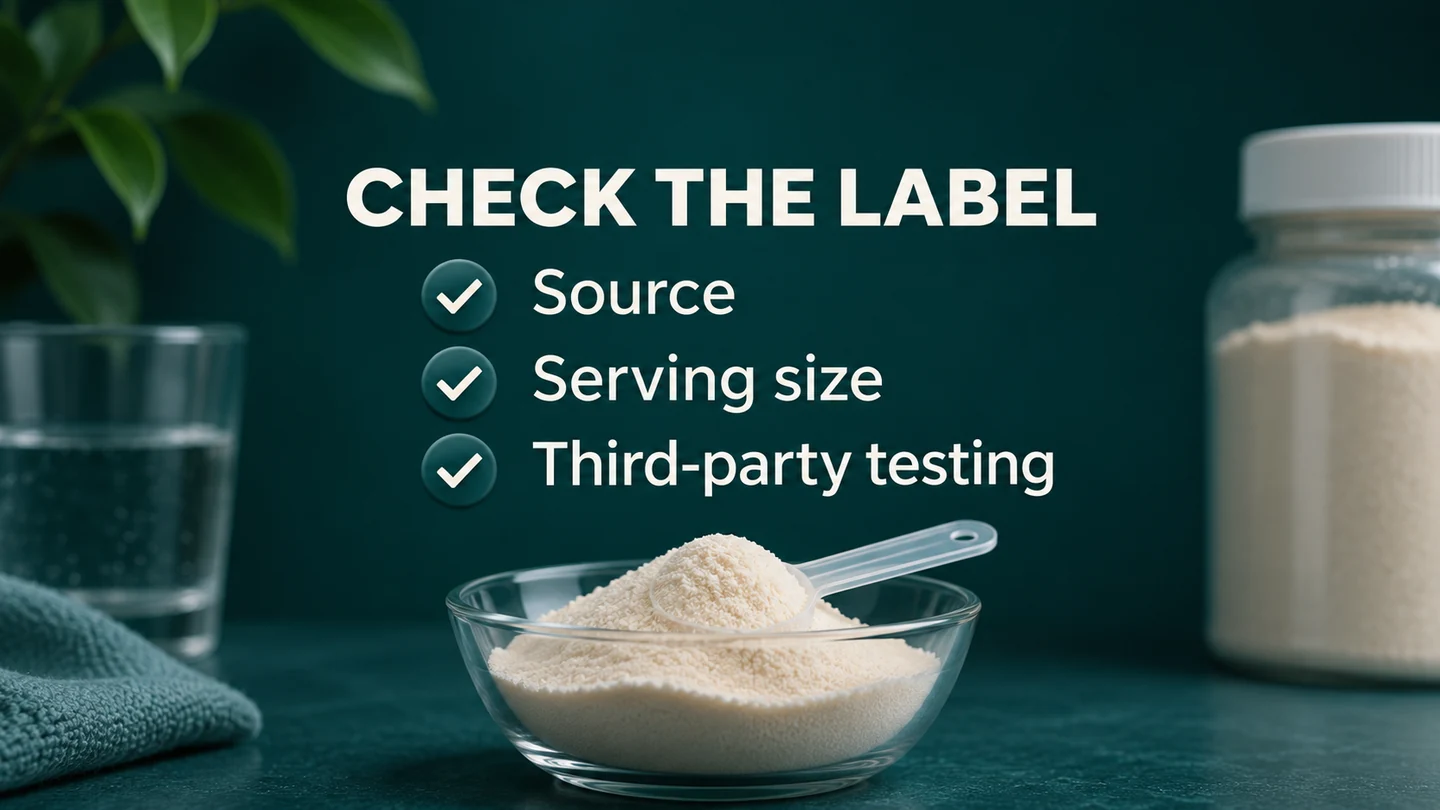
Collagen is made from animal hides, bones and fish skin, which can accumulate heavy metals from the environment. Independent testing organizations such as ConsumerLab test collagen products for contaminants and for whether they contain what the label claims. Because the FDA does not approve supplements before sale, third-party certification from programs such as NSF or USP is the best way to reduce risk. Bovine collagen made in the U.S. or from regulated sources is subject to rules meant to prevent prion contamination; buy from reputable brands. See how to choose a collagen supplement.
Watch the added ingredients
Many collagen products are blends, and the extras carry more risk than collagen itself.
| Added ingredient | Concern |
|---|---|
| Biotin (often 2,500–10,000 mcg) | Interferes with many lab tests, per the FDA |
| Vitamin A | Excess can cause liver problems, birth defects and hair loss |
| Calcium | Adds to total; excess linked to kidney stones |
| High-dose vitamin C | Stomach upset; stones in susceptible people |
| Sugar or sugar alcohols (gummies) | Added sugar; sugar alcohols can cause diarrhea |
| Caffeine (collagen coffee creamers) | Adds to daily caffeine |
| Herbal extracts | Possible interactions |
Managing digestive side effects
If collagen upsets your stomach, the fix is usually simple. Start with a smaller dose, such as 2.5 to 5 grams, and build up over a week or two. Take it with a meal rather than on an empty stomach, and spread larger amounts across the day. Mix powder fully into at least 8 ounces of liquid, since a concentrated drink can feel heavy. If symptoms began with a flavored product, try an unflavored version: sweeteners such as sugar alcohols, added fibers like inulin, and caffeine in collagen creamers are more common culprits than collagen itself.
Collagen has been marketed for “leaky gut” and gut healing. We found no good human trials supporting those claims. If you have ongoing digestive symptoms such as pain, diarrhea, blood in the stool or unexplained weight loss, see a clinician rather than trying supplements.
A quick safety checklist before you start
- Confirm the animal source and any allergen statements on the label.
- Look up the full ingredient list in the NIH Dietary Supplement Label Database if the package is unclear.
- Add up biotin, vitamin A, vitamin C and calcium across every product you take.
- Start at a modest dose and increase only if you tolerate it.
- Tell your clinician and pharmacist, especially before blood tests or surgery.
Most people who follow these steps take collagen without any trouble at all.
Reporting a problem
If you think a supplement caused a serious reaction, stop taking it, seek care, and report it to the FDA’s Safety Reporting Portal or MedWatch program, as the FDA recommends. Keep the container so the lot number can be checked. Reports help the agency spot problems with specific products, which matters because supplements are not reviewed for safety before they reach store shelves.
Who should be careful
- Pregnant or breastfeeding people: not studied; ask your clinician and favor food protein.
- People with kidney disease or kidney stones: discuss with your care team.
- People with fish, egg, shellfish or meat allergies: check the source.
- Anyone with phenylketonuria (PKU): some flavored products contain aspartame.
- Children: no need to supplement.
Heart, skin and diabetes questions
We found no evidence that collagen peptides harm the heart. Skin reactions are rare and usually point to an allergy or an added ingredient. For people with diabetes, plain collagen has almost no carbohydrate, but flavored powders and gummies may contain sugar, so check the label. Collagen protein may modestly raise insulin after a dose, as other proteins do (Reynolds 2025).
The bottom line
- Collagen peptides are generally well tolerated; trials report side effects similar to placebo.
- Mild digestive upset is the most common complaint, mainly with large doses.
- Check the animal source for allergies and religious or dietary restrictions.
- People with kidney disease or kidney stones should talk to their clinician first.
- Choose third-party tested products and scrutinize added biotin, vitamin A, calcium and sugar.
Frequently asked questions
Does collagen cause constipation?
Trials did not find it does, but some people report it. Drink enough water and check for added ingredients.
Can collagen cause weight gain?
A 10 g serving has about 35–40 calories. It is unlikely to cause weight gain unless it adds to excess calories.
Can collagen cause acne?
There is no good evidence it does. Added biotin or whey in blends has been anecdotally linked to breakouts.
Is collagen safe long term?
Trials up to 12 months showed no safety problems. Longer data are limited.
Does collagen interact with medicines?
No well-documented interactions are known. Tell your clinician and pharmacist about all supplements you take.
Can collagen raise blood sugar?
Plain collagen has almost no carbohydrate. Like other proteins, it can raise insulin modestly. Flavored products may contain sugar, so check labels if you have diabetes.
Sources
- Lugo JP, et al. Efficacy and tolerability of an undenatured type II collagen supplement in modulating knee osteoarthritis symptoms. Nutr J. 2016;15:14.
- Proksch E, et al. Oral supplementation of specific collagen peptides has beneficial effects on human skin physiology. Skin Pharmacol Physiol. 2014;27(1):47-55.
- Reynolds KM, et al. The effects of collagen peptide supplementation on appetite and post-exercise energy intake in females: a randomised controlled trial. Br J Nutr. 2025.
- U.S. Food and Drug Administration. Questions and answers on dietary supplements.
- NCCIH. Using dietary supplements wisely.
- Linus Pauling Institute. Vitamin C.
- ConsumerLab. Collagen supplements review.
- NSF. NSF Certified for Sport.
- MedlinePlus. Food allergy.
- NIH Office of Dietary Supplements. Dietary Supplement Label Database.
Last reviewed November 2026. VitaBrief is educational and is not medical advice. Talk with a doctor, registered dietitian or pharmacist before starting a supplement, especially if you are pregnant, take medication or have kidney disease.
Not medical advice. This guide is for general education. Talk to your doctor or pharmacist before taking a supplement, especially if you are pregnant or breastfeeding, take medication or have a health condition. Medical disclaimer