Ingredient guides
Colostrum: a practical guide to bovine colostrum supplements
What bovine colostrum is, what the research on adults actually shows, who should avoid it and how to shop for it carefully.
VitaBrief editorial · Last reviewed November 2026 · Sources listed below
Reader-supported. This page may contain affiliate links. If you buy through one, we may earn a commission at no extra cost to you. It never changes what we write. Affiliate disclosure

Colostrum has moved from farm and hospital vocabulary into the wellness aisle. Powders, capsules and drink mixes promise support for the gut, the immune system and recovery from exercise. If you have wondered whether colostrum is good for adults, the honest answer is that the research is interesting but limited, and much of it was done in small groups of athletes.
This guide explains what colostrum supplements are, what the published studies found, where the evidence stops, who should avoid these products and how to shop for one carefully. It draws on systematic reviews and trials indexed in PubMed and on general supplement guidance from MedlinePlus and the US Food and Drug Administration (FDA). Neither of those government pages discusses colostrum specifically, and there is no NIH fact sheet on it. This is general information, not medical advice.
What colostrum is
Colostrum is the first milk a mammal produces after giving birth. The supplements sold for adults are bovine colostrum: the first milk collected from cows after calving, then processed, usually dried into a powder and sold loose or in capsules.
This guide is about those adult supplements. Many searches for “colostrum” are about human breast milk and feeding newborns, which is a different subject entirely. Nothing here applies to breastfeeding, and a colostrum supplement is never a substitute for breast milk or infant formula.
Researchers are interested in bovine colostrum because it contains bioactive components. A review of studies in preterm infants describes it as rich in immunoglobulins (antibodies), lactoferrin and growth factors (Yao 2025).
The evidence at a glance
The table below summarizes the key studies used across VitaBrief’s colostrum articles. Most are reviews that pooled small trials, and their own authors call for more research.
| Topic | Study | What it found |
|---|---|---|
| Immune markers in athletes | Meta-analysis of 10 trials, 239 participants | No or fairly low effect on blood and saliva immune markers |
| Immune response after exercise | Crossover trial, 28 endurance-trained men, 25 g/day for 12 weeks | Higher salivary SIgA after exercise; no change in blood antibodies |
| Intestinal permeability | Meta-analysis of 10 trials in athletes and patients | Reduced permeability on some urine tests; more trials needed |
| Upper GI symptoms | Trial of targeted colostrum protein fractions, 90 adults | Higher dose improved symptom scores; well tolerated |
| Body fat and blood lipids | Systematic review of 13 studies | Small, inconsistent effects; studies too varied to conclude |
| Children’s gut health | Systematic review of 8 studies | No conclusion possible |
| Preterm infants | Meta-analysis of 4 trials, 670 infants | Cannot be recommended; no proven benefit for NEC |
Immune health: mixed and modest
Immune support is the most common claim on colostrum labels. A 2020 meta-analysis pooled 10 randomized controlled trials with 239 athletes and physically active adults (Główka 2020). It found that colostrum had no or a fairly low impact on blood antibodies (IgA and IgG), lymphocytes and neutrophils, and on IgA in saliva. The authors noted that earlier research had shown colostrum to reduce upper respiratory tract infections, but said there is a gap in knowledge about the mechanisms behind those effects.
A later crossover trial gave 28 endurance-trained men 25 g of colostrum a day for 12 weeks (Durkalec-Michalski 2024). After colostrum, secretory IgA in saliva was higher after exercise and during recovery than at rest. Colostrum did not change blood levels of IgA, IgE, IgD, IgG or IgM.
Put plainly, no study here shows that colostrum prevents colds or flu. For a closer look, see colostrum for immune health and colostrum for athletes.
Gut health: promising but early
The gut is the second big claim. A 2024 meta-analysis of 10 randomized trials in healthy athletes and patients looked at intestinal permeability, sometimes called gut barrier function (Hajihashemi 2024). Colostrum significantly reduced two urine sugar-ratio measures of permeability, but found no difference in a blood marker called plasma intestinal fatty acid-binding protein (I-FABP). The authors concluded that more trials of different quality, dose and duration are needed to confirm the results.
A 2026 trial tested targeted colostrum protein fractions, not ordinary whole colostrum powder, in healthy adults with moderate upper digestive discomfort (90 allocated, 83 analysed) (Rao 2026). After a 4-week run-in and an 8-week intervention, the high-dose (500 mg/day) group improved on a GI symptom score and a digestive quality-of-life score compared with placebo (the abstract reports these gains for the high dose, not the 250 mg/day group), and the product was well tolerated. Results from a specific, concentrated ingredient may not apply to every colostrum product.
Colostrum is not a proven “leaky gut” cure or a treatment for inflammatory bowel disease. If you have ongoing digestive symptoms, see a doctor first. More detail is in colostrum for gut health, and if you are comparing gut supplements, our probiotics guide covers a different category.
Weight, hair, skin and other claims
Colostrum is also searched for weight loss, hair growth and skin. A 2026 systematic review of 13 clinical trials looked at body fat and blood lipids (Goluch 2026). A few studies reported small changes. One study in older adults found body fat percentage fell by 0.4% with 60 g/day for 8 weeks, and two studies reported lower cholesterol. The authors described substantial methodological heterogeneity and inconsistent findings, and called for larger and longer trials. That is not evidence that colostrum helps with weight loss.
The sources reviewed for this guide do not address hair, skin or acne, so there is no evidence here to support those claims. The broader picture is covered in colostrum benefits.
Safety and who should avoid it
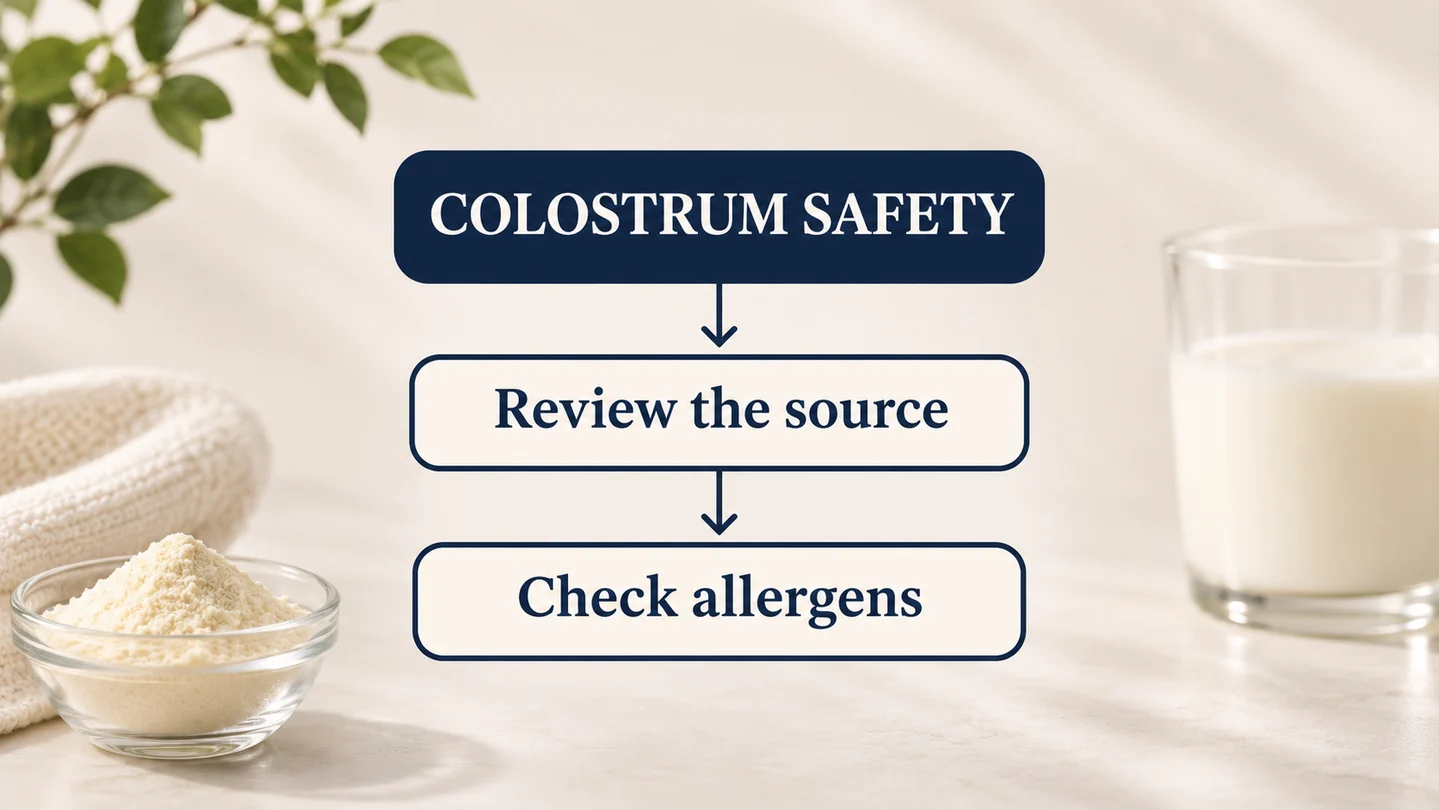
Colostrum supplements are made from cow’s milk, so a few cautions follow directly from that:
- Cow’s milk allergy: people with a milk allergy should avoid colostrum.
- Lactose intolerance: as a dairy product, colostrum may contain lactose, so some people may notice bloating, gas or loose stools.
- Pregnancy and breastfeeding: safety has not been established. Talk with your doctor before using it.
- Infants and children: do not give colostrum supplements to infants or children without a pediatrician’s advice. A 2025 meta-analysis concluded that bovine colostrum cannot be recommended for preterm infants and found no proven benefit for necrotizing enterocolitis (NEC) (Yao 2025). A review in children found that no conclusion could be drawn on gut benefits (Oswal 2025).
In the trials above, colostrum was generally reported as tolerated, but they were small and short, so rare or long-term effects would be hard to detect. MedlinePlus advises telling your health care provider about any supplements you use, not taking more than the label recommends and checking with your provider before any surgery. See is colostrum safe? and colostrum side effects for more.
How much colostrum did studies use?
There is no official recommended dose and no established upper limit for colostrum. Studies have used very different amounts:
- 25 g/day for 12 weeks in endurance-trained men (Durkalec-Michalski 2024).
- 10 g, 30 g and 60 g/day in trials included in the body fat and lipids review, which suggested future studies use 20 to 25 g/day (Goluch 2026).
- 250 or 500 mg/day of a targeted protein fraction product (Rao 2026).
Follow the label and ask your doctor. Our colostrum dosage article goes into more detail, and colostrum powder vs. capsules explains how form affects the amount you get.
How to choose a colostrum supplement
According to the FDA, manufacturers and distributors are responsible for evaluating the safety and labeling of their supplements before marketing, and the FDA can take action against adulterated or misbranded products after they reach the market. In other words, the FDA does not approve supplements before they are sold. MedlinePlus also notes that supplements do not have to go through the testing that drugs do.
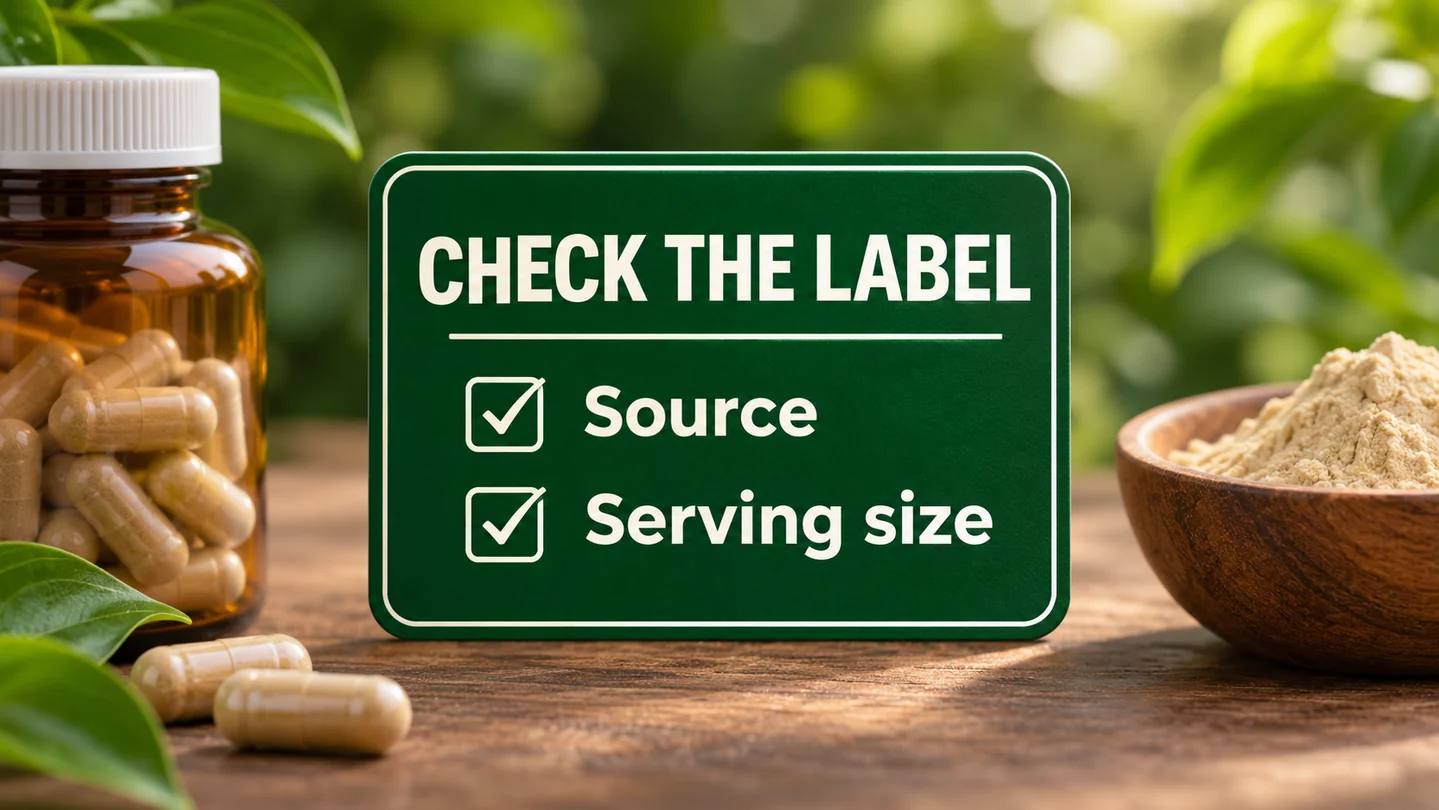
That puts more of the checking on you. Look for a label that states grams of colostrum per serving, a clear ingredient list, and independent third-party testing. Our how to choose a colostrum supplement guide walks through labels step by step.
If you are weighing colostrum against other popular powders, see colostrum vs. collagen and colostrum vs. whey, plus our collagen guide and protein powder guide.
Frequently asked questions
Is colostrum good for adults?
It may be reasonable for some healthy adults, but the evidence is limited. Most trials are small, many involve athletes, and results for immune and gut outcomes are mixed or early.
What is bovine colostrum?
It is the first milk produced by cows after calving. Supplements dry and process it into powders or capsules for adults.
Is colostrum the same as breast milk?
No. Supplements are made from cow colostrum and are not a substitute for breast milk or infant formula. Do not give them to infants or children without a pediatrician.
Does colostrum help you lose weight?
The evidence does not show that. A 2026 review found only small, inconsistent effects on body fat and blood lipids across very different studies.
Is colostrum approved by the FDA?
The FDA does not approve dietary supplements before sale. Manufacturers are responsible for safety and labeling, and the FDA can act after products reach the market.
Sources
- MedlinePlus. Dietary supplements.
- U.S. Food and Drug Administration. Dietary supplements.
- Yao, et al. The role of bovine colostrum in feeding intolerance in preterm neonates: a systematic review and meta-analysis of randomized controlled trials. Front Nutr. 2025.
- Główka, et al. Immunological outcomes of bovine colostrum supplementation in trained and physically active people: a systematic review and meta-analysis. Nutrients. 2020.
- Durkalec-Michalski, et al. The effect of 12-week high-dose Colostrum Bovinum supplementation on immunological, hematological and biochemical markers in endurance athletes: a randomized crossover placebo-controlled study. Front Immunol. 2024.
- Hajihashemi, et al. Bovine colostrum in increased intestinal permeability in healthy athletes and patients: a meta-analysis of randomized clinical trials. Dig Dis Sci. 2024.
- Rao, et al. Targeted colostrum bioactive proteins improve gastrointestinal symptoms and modulate the gut microbiome: a randomised double-blind placebo-controlled trial. Nutrients. 2026.
- Goluch, et al. The effects of Colostrum Bovinum supplementation on human body fat content and/or blood lipid profile: a systematic review of clinical trials. Nutrients. 2026.
- Oswal, et al. Effect of bovine colostrum supplementation on gut health of children: a systematic review. J Pediatr Gastroenterol Nutr. 2025.
Last reviewed November 2026. VitaBrief is educational and is not medical advice. Talk with a doctor, registered dietitian or pharmacist before starting a supplement, especially if you are pregnant, take medication or have kidney disease.
Not medical advice. This guide is for general education. Talk to your doctor or pharmacist before taking a supplement, especially if you are pregnant or breastfeeding, take medication or have a health condition. Medical disclaimer