Ingredient guides
Iron overload: how much iron is too much?
Iron is essential, but the body has no good way to get rid of extra. Here is how much is too much, who is at risk and how overload is treated.
VitaBrief editorial · Last reviewed November 2026 · Sources listed below
Reader-supported. This page may contain affiliate links. If you buy through one, we may earn a commission at no extra cost to you. It never changes what we write. Affiliate disclosure
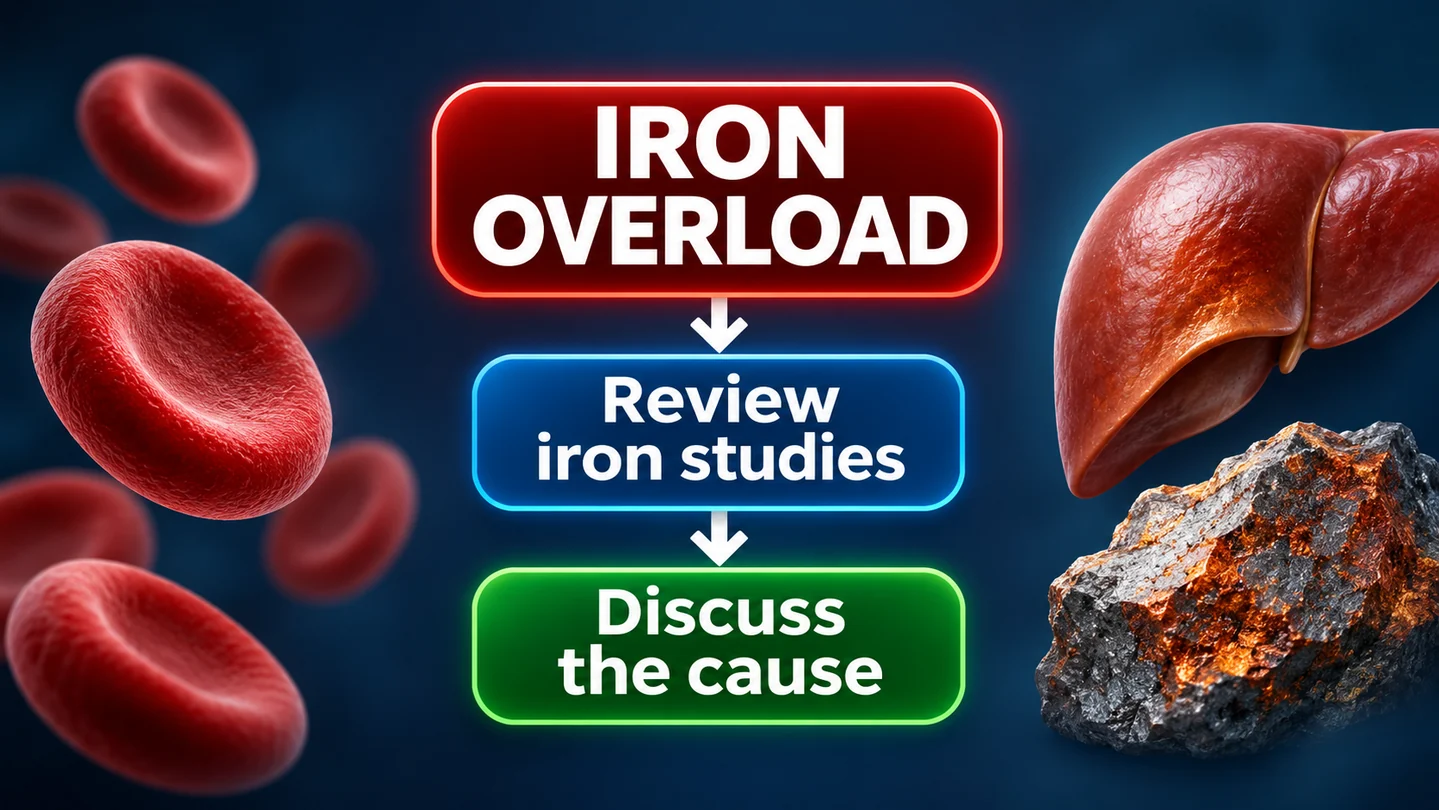
Most iron articles are about having too little. This one is about having too much. Unlike many nutrients, iron has no regular exit route: the body controls iron mainly by limiting how much it absorbs, and it loses only small amounts through shed cells and bleeding. When intake overwhelms that control, or when a genetic condition switches it off, iron builds up and can damage the liver, heart, pancreas and joints. A single large dose can also be dangerous, especially for young children.
This guide draws on the NIH Office of Dietary Supplements (ODS), MedlinePlus, the National Institute of Diabetes and Digestive and Kidney Diseases (NIDDK), a 2022 JAMA review of hereditary hemochromatosis and the 2022 European Association for the Study of the Liver (EASL) guidelines. It is general information, not a diagnosis.
Iron overload: the short answer
Iron overload explained: the upper limit for iron, accidental iron poisoning in children, hereditary hemochromatosis, what high ferritin means, why men and postmenopausal women should not take iron without a reason, symptoms, testing and treatment.
How much iron is too much?
ODS sets a Tolerable Upper Intake Level (UL), the most you can take daily without a likely risk of harm, for healthy people. The UL is based mainly on digestive side effects such as constipation, nausea and stomach pain, which become more common at higher supplemental doses.
| Age | Upper limit (UL) for iron |
|---|---|
| Birth to 13 years | 40 mg/day |
| 14 years and older, including pregnancy and breastfeeding | 45 mg/day |
Two caveats matter. First, clinicians sometimes prescribe doses above the UL to treat diagnosed iron deficiency, for a limited time and with follow-up blood tests. That is different from taking high doses on your own. Second, the UL does not apply to people with hemochromatosis or other conditions that raise iron absorption, who should avoid iron supplements entirely. See iron supplement dosage for treatment doses.
Accidental iron overdose in children
Iron is a leading cause of fatal poisoning in young children. Adult iron tablets, prenatal vitamins and multivitamins with iron often look like candy, and a few tablets can be dangerous for a toddler. MedlinePlus describes iron overdose symptoms that may include vomiting, diarrhea (sometimes bloody), stomach pain, drowsiness, rapid breathing and, in severe cases, shock and liver failure. Symptoms can seem to improve before more serious problems develop, so a child who seems better still needs medical assessment.
Prevention works. Tenenbein (2005) reported that after U.S. rules required unit-dose packaging (individual blister packs) for higher-dose iron products, iron poisoning deaths in young children fell. Keep all iron products in child-resistant containers, locked and out of sight, and never call vitamins “candy”.
If a child may have swallowed iron, call Poison Control at 1-800-222-1222 right away, even if they seem fine. Call 911 if they are vomiting repeatedly, drowsy, having trouble breathing or collapsing. For safe iron use in children, see iron for kids and babies.
Hereditary hemochromatosis
Hereditary hemochromatosis is a genetic condition in which the body absorbs more iron from food than it needs, year after year. According to NIDDK, the most common form is linked to variants in the HFE gene and is most common in people of Northern European descent. Many people who inherit two copies of the main variant never develop serious iron overload, which is why diagnosis relies on blood tests as well as genetics.
Iron builds up slowly, so symptoms often appear in midlife. Men tend to be affected earlier and more severely than women, because menstruation and pregnancy remove iron from the body. The JAMA review and the EASL guidelines describe untreated overload as raising the risk of liver scarring (cirrhosis), liver cancer, diabetes, heart problems and arthritis. Found early and treated, the outlook is generally good.
People with hemochromatosis should not take iron supplements or multivitamins with iron, and should ask their doctor about vitamin C supplements, which can increase iron absorption. See iron and vitamin C. Close relatives of someone with hemochromatosis may be offered testing.
High ferritin: what it does and does not mean
Ferritin is the protein that stores iron, and its blood level is the usual measure of iron stores. A high ferritin can be a sign of iron overload, but it is often raised for other reasons. MedlinePlus notes that ferritin can rise with inflammation, infection, liver disease, heavy alcohol use and some other conditions. The EASL guidelines similarly note that high ferritin on its own does not prove iron overload.
That is why doctors usually pair ferritin with transferrin saturation, which shows how much iron is circulating in the blood. A high ferritin with high transferrin saturation points more toward true iron overload; a high ferritin with normal saturation often points elsewhere. Our ferritin levels guide explains the numbers in more detail.
Why men and postmenopausal women should not take iron without a reason
Adult men and women after menopause have low iron needs and no regular monthly blood loss. ODS lists the Recommended Dietary Allowance for these groups at 8 mg per day, an amount most people get easily from food. Taking iron “just in case” adds to stores that the body cannot easily reduce, and it may hide or delay discovery of undiagnosed hemochromatosis.
There is a second reason. When men or postmenopausal women do have iron deficiency, the cause is often blood loss, sometimes from the digestive tract. That needs a medical work-up, not just a supplement. Many general multivitamins for men and older adults are made without iron for this reason. If you are choosing one, see our notes on multivitamins with iron.
Symptoms and testing
Chronic iron overload is often silent for years. When symptoms occur, MedlinePlus and NIDDK list problems such as:
- Tiredness and weakness
- Joint pain, often in the knuckles of the hands
- Abdominal pain and an enlarged or tender liver
- Loss of sex drive, erectile problems or missed periods
- Darkening or bronze-gray skin
- Later signs such as diabetes, heart rhythm problems or heart failure
Because these overlap with many other conditions, testing is the only way to know. Typical steps include ferritin and transferrin saturation, repeated if abnormal, then genetic testing for HFE variants. Doctors may assess the liver with blood tests, imaging such as MRI, or occasionally a biopsy. Ask about testing if you have a family history of hemochromatosis, unexplained liver abnormalities, or a high ferritin on routine blood work.
Other causes of iron overload
Not all iron overload is hereditary. People who need many blood transfusions, for example for some inherited anemias such as thalassemia or for certain bone marrow conditions, gradually take in large amounts of iron, because each unit of blood carries iron the body cannot excrete. Some chronic liver diseases can also disturb iron balance. Long-term high-dose supplement use without medical supervision is another, less common route, particularly in people who also carry a hemochromatosis gene variant without knowing it. These situations are managed by specialists, and the approach differs from hereditary hemochromatosis, so the cause should always be confirmed before treatment starts.
Treatment
The main treatment for hereditary hemochromatosis is therapeutic phlebotomy: removing blood at regular intervals, much like donating blood. Each session removes iron carried in red blood cells, and the body draws on its stores to replace them. Sessions are usually frequent at first and then spaced out to a maintenance schedule once ferritin falls to a target range, guided by regular blood tests. People who cannot have phlebotomy may be treated with medicines called iron chelators, which bind iron so it can be removed.
Day to day, people with iron overload are usually advised to avoid iron supplements and iron-fortified products where practical, limit alcohol, ask about vitamin C supplements, and avoid raw shellfish because of infection risk. Iron overload from repeated blood transfusions is a separate situation managed by specialists.
See a doctor if you have symptoms above, a family history, or high ferritin. Seek care urgently for black or bloody stools, chest pain or shortness of breath, and call Poison Control at 1-800-222-1222 or 911 for any suspected overdose.
Frequently asked questions
Can you get too much iron from food?
It is very unlikely for healthy people. Overload usually involves supplements, a genetic condition such as hemochromatosis, or repeated transfusions.
Is 65 mg of iron a day too much?
It is above the adult UL of 45 mg, so it should only be taken when a clinician has diagnosed deficiency and is monitoring treatment.
What ferritin level is too high?
Reference ranges vary by lab and sex, and a high result needs interpreting with transferrin saturation and your health history. Ask your doctor what your result means.
Should men take iron supplements?
Not without a diagnosed need. Men rarely need extra iron, and iron deficiency in men needs a search for blood loss.
How many iron pills are dangerous for a child?
Even a small number of adult tablets can be dangerous. Treat any swallowed iron as an emergency and call Poison Control at 1-800-222-1222.
Sources
- NIH Office of Dietary Supplements. Iron: Fact Sheet for Health Professionals.
- MedlinePlus. Iron overdose.
- MedlinePlus. Hemochromatosis.
- MedlinePlus. Ferritin blood test.
- NIDDK. Hemochromatosis.
- Diagnosis and management of hereditary hemochromatosis. JAMA. 2022.
- European Association for the Study of the Liver. EASL clinical practice guidelines on haemochromatosis. J Hepatol. 2022.
- Tenenbein M. Unit-dose packaging of iron supplements and reduction of iron poisoning in young children. Arch Pediatr Adolesc Med. 2005.
Last reviewed November 2026. VitaBrief is educational and is not medical advice. Talk with a doctor, registered dietitian or pharmacist before starting a supplement, especially if you are pregnant, take medication or have kidney disease.
Not medical advice. This guide is for general education. Talk to your doctor or pharmacist before taking a supplement, especially if you are pregnant or breastfeeding, take medication or have a health condition. Medical disclaimer