Ingredient guides
Iron: what it does, how much you need and when supplements make sense
This iron guide covers why your body needs iron, how heme and non-heme iron differ, who runs low, why testing comes before supplements, and why too much iron is harmful.
VitaBrief editorial · Last reviewed November 2026 · Sources listed below
Reader-supported. This page may contain affiliate links. If you buy through one, we may earn a commission at no extra cost to you. It never changes what we write. Affiliate disclosure
Iron guide: the short answer
An evidence-based guide to iron: what it does, heme vs. non-heme iron, NIH recommended intakes by age and sex, who is at risk of deficiency, testing before supplementing, food first, supplements, and the safe upper limit.
Iron is one of the few nutrients where both too little and too much cause real harm. Iron deficiency is the most common nutrient deficiency in the world, and it can leave you tired, short of breath and less able to concentrate. Yet iron supplements are also a leading cause of fatal poisoning in young children, and people with certain genetic conditions build up dangerous amounts of iron in their organs.
That is why iron is not a supplement to take “just in case.” This guide explains what iron does, how much you need, who is most likely to run low, and why a blood test should come before a bottle of pills. It draws on the NIH Office of Dietary Supplements (ODS), MedlinePlus and published reviews.
What iron does in the body
Most of the body’s iron sits in hemoglobin, the protein in red blood cells that carries oxygen from the lungs to every tissue. Iron is also part of myoglobin, which holds oxygen in muscle, and of many enzymes involved in energy production, DNA synthesis and hormone production. It is needed for growth and brain development in children (ODS).
The body has no active way to get rid of extra iron. Instead, it controls how much it absorbs from the gut, mainly through a hormone made by the liver called hepcidin. When iron stores are full, hepcidin rises and absorption falls. When stores are low, absorption increases. Some iron is stored, mostly as ferritin in the liver, spleen and bone marrow, which is why a blood ferritin test is a useful window into your reserves (Pasricha 2021).
Heme vs. non-heme iron
Food contains two forms of iron. Heme iron comes from hemoglobin and myoglobin in animal foods such as red meat, poultry and seafood. Non-heme iron is found in plant foods such as beans, lentils, tofu, spinach and nuts, and it is the form added to fortified cereals and breads. Animal foods contain both forms.
Heme iron is absorbed more efficiently, and its absorption is less affected by the rest of the meal. Non-heme iron absorption varies a lot. Vitamin C and meat, fish or poultry in the same meal can increase it, while phytates in whole grains and legumes, polyphenols in tea and coffee, and calcium can reduce it (ODS; Hurrell 1999). For practical pairings, see iron and vitamin C and our list of iron-rich foods.
How much iron you need
The Recommended Dietary Allowance (RDA) is the daily intake that meets the needs of nearly all healthy people. Needs are highest for women of reproductive age, because of menstrual losses, and much higher in pregnancy. The table shows the ODS values.
| Age | Male | Female | Pregnancy | Lactation |
|---|---|---|---|---|
| Birth to 6 months* | 0.27 mg | 0.27 mg | ||
| 7 to 12 months | 11 mg | 11 mg | ||
| 1 to 3 years | 7 mg | 7 mg | ||
| 4 to 8 years | 10 mg | 10 mg | ||
| 9 to 13 years | 8 mg | 8 mg | ||
| 14 to 18 years | 11 mg | 15 mg | 27 mg | 10 mg |
| 19 to 50 years | 8 mg | 18 mg | 27 mg | 9 mg |
| 51+ years | 8 mg | 8 mg |
ODS notes that people who follow vegetarian diets may need more iron than these values, because non-heme iron is less well absorbed. These figures are for intake from all sources. They are not a dose to add on top of your diet; for how supplement doses are chosen, see iron supplement dosage.
Who is at risk of low iron
Iron deficiency develops slowly. Stores fall first, then iron available for new red blood cells runs short, and finally hemoglobin drops and iron deficiency anemia appears. The groups most likely to run low include (ODS; Pasricha 2021):
- People who menstruate, especially with heavy periods. See iron for women.
- Pregnant people, whose needs rise sharply. See iron during pregnancy.
- Infants and young children, especially those born early or with low birth weight. See iron for kids and babies.
- Frequent blood donors.
- Some vegetarians and vegans, depending on food choices.
- People with conditions that cause blood loss or poor absorption, such as celiac disease, inflammatory bowel disease, gastrointestinal bleeding, or after some types of stomach surgery.
Iron deficiency in men and in women after menopause is less expected and needs a medical work-up, because the most important cause to rule out is hidden bleeding from the gut (BSG guideline 2021).
Test before you supplement
Low-iron symptoms such as tiredness and headaches have many possible causes, and taking iron blindly can mask a problem or cause iron to build up. Read more in iron deficiency symptoms.
A doctor will usually order a complete blood count (CBC), which measures hemoglobin and red cell size, and a ferritin test, which reflects iron stores (MedlinePlus). Other iron studies are sometimes added, because ferritin can read falsely normal or high during inflammation or infection. Our guide to ferritin levels explains what the numbers mean. Just as important, a doctor should look for the reason you are low. Treating the number without finding the cause can delay the diagnosis of conditions such as celiac disease, heavy menstrual bleeding or bowel cancer.
Food first
For most healthy people, a varied diet supplies enough iron. The Dietary Guidelines for Americans emphasize meeting nutrient needs mainly from foods. Good sources include lean red meat, poultry, fish and shellfish, beans and lentils, tofu, dark leafy greens, and iron-fortified breakfast cereals and breads. A few habits help with non-heme iron:
- Pair plant sources of iron with foods rich in vitamin C, such as citrus, peppers, tomatoes or strawberries. See vitamin C and iron.
- Drink tea and coffee between meals rather than with them.
Iron supplements
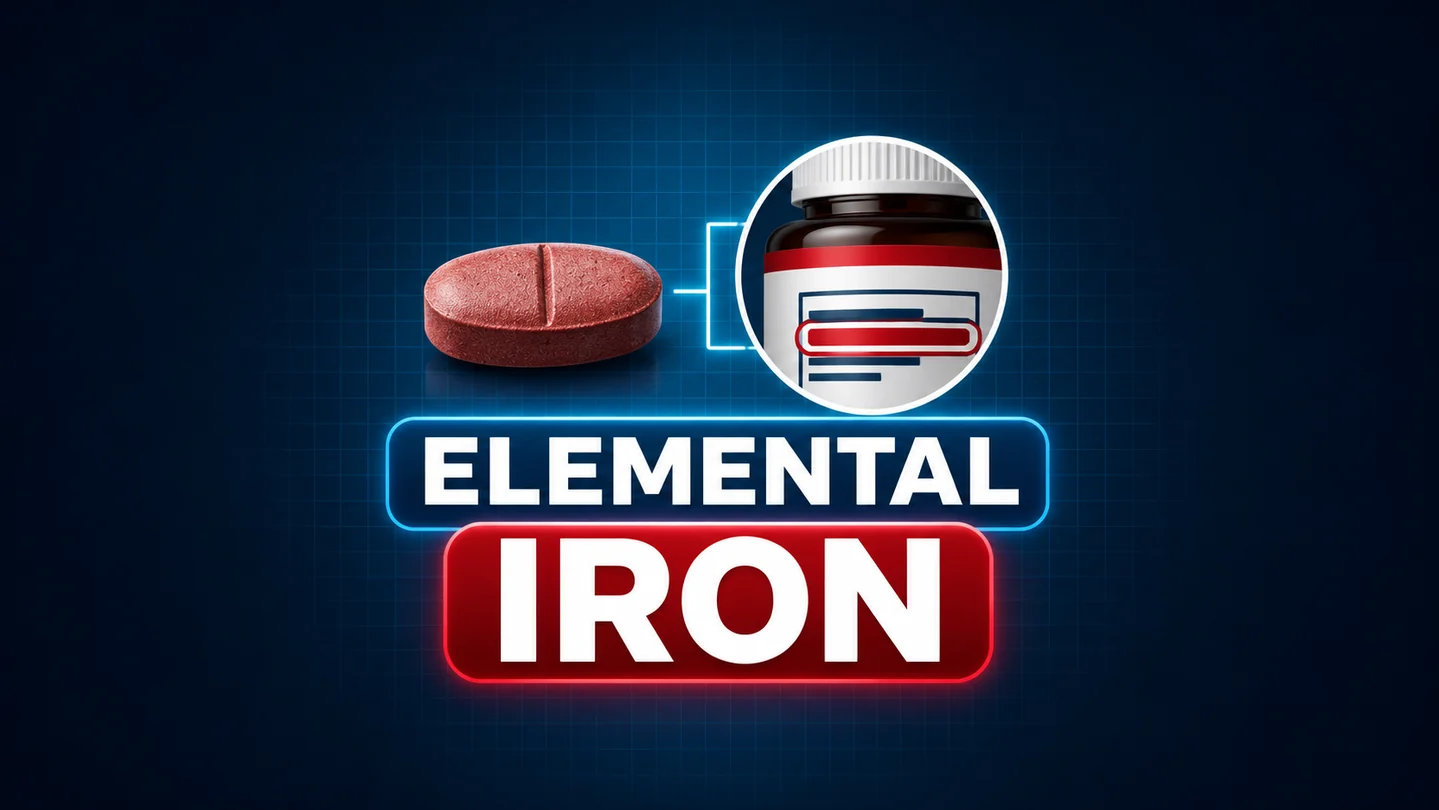
When testing confirms iron deficiency, oral iron is usually the first treatment. In the US, over-the-counter iron products are dietary supplements; prescription iron and intravenous (IV) iron are separate products used under medical care. Common forms include ferrous sulfate, ferrous gluconate, ferrous fumarate and iron bisglycinate. Compare products by “elemental iron.” Our guide to types of iron supplements compares them.
Research in iron-depleted women found that a dose of oral iron raises hepcidin for about a day, which can reduce absorption from the next dose. Giving iron on alternate days led to higher fractional absorption than consecutive-day dosing in these studies (Moretti 2015; Stoffel 2017). Your clinician can advise on a schedule; see when to take iron.
Gastrointestinal side effects are the main drawback. A meta-analysis found ferrous sulfate significantly increased problems such as constipation and nausea compared with placebo (Tolkien 2015). Dark stools are expected. See iron supplement side effects. If oral iron does not work or is not tolerated, IV iron may be an option; see iron supplements vs. iron infusion. Many multivitamins also contain iron, which counts toward your total; see multivitamin with iron. If you use an FSA or HSA, check with your plan administrator about eligibility.
Safety and the upper limit
ODS sets a Tolerable Upper Intake Level (UL) of 40 mg per day for infants and children through age 13, and 45 mg per day for teens and adults. The UL is based on gastrointestinal side effects and applies to healthy people; doctors sometimes prescribe higher doses for a limited time to treat deficiency (ODS).
Accidental iron overdose is dangerous for young children and has been a leading cause of fatal poisoning in that age group. Packaging changes were followed by a drop in pediatric iron poisonings (Tenenbein 2005). Keep all iron-containing products, including adult multivitamins and prenatal vitamins, locked away from children. If a child swallows iron pills, call Poison Control at 1-800-222-1222 right away, or 911 if they are vomiting, drowsy or having trouble breathing (MedlinePlus).
People with hereditary hemochromatosis absorb too much iron and should not take iron supplements or vitamin C supplements unless their doctor says otherwise (NIDDK; MedlinePlus). See iron overload. Iron can also reduce the absorption of some medicines, including levothyroxine and certain antibiotics, so ask a pharmacist about timing.
See a doctor promptly if you have black or bloody stools, very heavy periods, shortness of breath, chest pain, or a fast heartbeat, and before giving iron to a child or starting iron in pregnancy.
Frequently asked questions
Should I take iron if I feel tired?
Not without a blood test. Fatigue has many causes. Ask for a CBC and ferritin first, and take iron only if a deficiency is confirmed.
Is heme iron better than non-heme iron?
Heme iron from animal foods is absorbed more efficiently, but non-heme iron from plants and fortified foods still contributes a lot, especially when eaten with vitamin C.
Do men need iron supplements?
Rarely. Adult men need 8 mg a day and usually get it from food. Low iron in a man needs medical investigation for the cause.
Can you take too much iron?
Yes. The adult upper limit is 45 mg a day from all sources unless a doctor advises more. Overdose is especially dangerous for children.
Sources
- NIH Office of Dietary Supplements. Iron: fact sheet for health professionals.
- MedlinePlus. Iron.
- MedlinePlus. Ferritin blood test.
- MedlinePlus. Iron overdose.
- MedlinePlus. Hemochromatosis.
- NIDDK. Hemochromatosis.
- US Departments of Agriculture and Health and Human Services. Dietary Guidelines for Americans.
- Pasricha SR, et al. Iron deficiency. Lancet. 2021.
- British Society of Gastroenterology. British Society of Gastroenterology guidelines for the management of iron deficiency anaemia in adults. Gut. 2021.
- Hurrell RF, et al. Inhibition of non-haem iron absorption in man by polyphenolic-containing beverages. Br J Nutr. 1999.
- Moretti D, et al. Oral iron supplements increase hepcidin and decrease iron absorption from daily or twice-daily doses in iron-depleted young women. Blood. 2015.
- Stoffel NU, et al. Iron absorption from oral iron supplements given on consecutive versus alternate days and as single morning doses versus twice-daily split dosing in iron-depleted women. Lancet Haematol. 2017.
- Tolkien Z, et al. Ferrous sulfate supplementation causes significant gastrointestinal side-effects in adults. PLoS One. 2015.
- Tenenbein M. Unit-dose packaging of iron supplements and reduction of iron poisoning in young children. Arch Pediatr Adolesc Med. 2005.
Last reviewed November 2026. VitaBrief is educational and is not medical advice. Talk with a doctor, registered dietitian or pharmacist before starting a supplement, especially if you are pregnant, take medication or have kidney disease.
Not medical advice. This guide is for general education. Talk to your doctor or pharmacist before taking a supplement, especially if you are pregnant or breastfeeding, take medication or have a health condition. Medical disclaimer