Supplement basics
When to take iron: timing for better absorption
Morning or night, empty stomach or with food, what to pair iron with and what to keep apart, how to space it from medicines, and why every other day may help.
VitaBrief editorial · Last reviewed November 2026 · Sources listed below
Reader-supported. This page may contain affiliate links. If you buy through one, we may earn a commission at no extra cost to you. It never changes what we write. Affiliate disclosure

If you have been prescribed iron or advised to take it for a confirmed deficiency, timing can make a real difference. Iron is one of the harder minerals for the body to absorb, and what you eat and drink around a dose, along with some medicines, can raise or lower how much gets in. At the same time, the “best” timing for absorption is not always the easiest to stick with, and a schedule you can follow beats a perfect one you abandon. This guide covers morning vs night, food, vitamin C, calcium, tea and coffee, medicines, alternate-day dosing and pregnancy. It draws on the NIH Office of Dietary Supplements (ODS), MedlinePlus and published studies. It assumes you have already been tested; iron should not be taken “just in case”.
When to take iron: the short answer
An evidence-based guide to when to take iron supplements: morning vs night, empty stomach vs with food, vitamin C, calcium, tea and coffee, spacing from levothyroxine and antibiotics, alternate-day dosing and pregnancy.
Quick guide
| Factor | Effect on absorption | Practical tip |
|---|---|---|
| Empty stomach | Generally better absorption | Take with a small snack if your stomach is upset |
| Vitamin C | Enhances non-heme iron absorption | Pair with vitamin C-rich food or drink |
| Calcium (supplements, dairy) | Can reduce absorption | Take at a different time of day |
| Tea and coffee | Polyphenols reduce absorption | Leave a gap around your dose |
| Levothyroxine, some antibiotics | Iron reduces absorption of these medicines | Space doses as your pharmacist advises |
| Alternate days | Higher share of each dose absorbed in studies | Ask your clinician before switching |
Morning or night
There is no strict rule, but much of the absorption research has used morning doses. In the trials comparing consecutive with alternate-day iron, women took single doses in the morning, and a single morning dose was compared with twice-daily split dosing (Stoffel 2017). Hepcidin, the hormone that limits iron absorption, follows a daily rhythm and rises after an iron dose (Moretti 2015), which is part of why a single morning dose is a common choice.
That said, a morning dose on an empty stomach does not suit everyone. If you take thyroid medicine first thing, drink coffee with breakfast, or feel sick when you take iron in the morning, another time may work better. The most important thing is to pick a time that lets you keep iron apart from the things that block it, and to be consistent.
Empty stomach vs with food
Iron is generally absorbed best on an empty stomach, because many foods contain compounds that bind it. ODS notes, though, that taking iron on an empty stomach often makes digestive side effects such as nausea and stomach pain worse, and that taking it with food can improve tolerance at the cost of some absorption (ODS).
This is a real trade-off. Digestive side effects are common with oral iron, especially ferrous sulfate (Tolkien 2015), and they are a leading reason people stop treatment. If an empty-stomach dose makes you feel unwell, taking it with a light meal that is low in calcium and not accompanied by tea or coffee is a reasonable compromise. Other options include a lower dose, a different form or alternate days, which your clinician can discuss. See iron supplement side effects and types of iron supplements.
With vitamin C
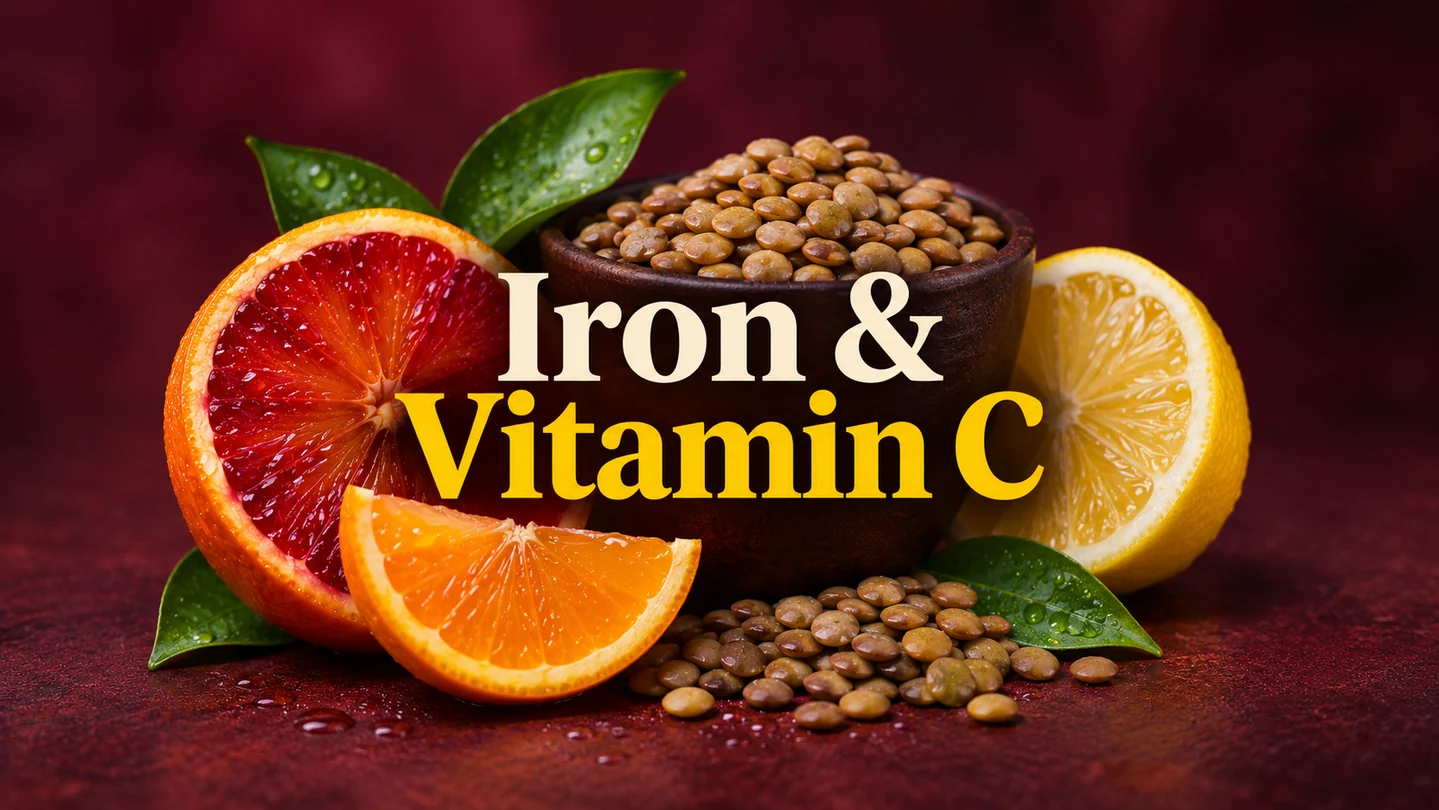
Vitamin C (ascorbic acid) helps the body absorb non-heme iron, the form found in plants and in most supplements. In a study of nonheme iron absorption from a complete diet, adding ascorbic acid to meals increased absorption, though the effect within a full diet was more modest than in single-meal studies (Cook 2001). ODS also lists vitamin C as an enhancer of non-heme iron absorption (ODS vitamin C).
A simple approach is to take iron with a glass of orange juice or a piece of fruit. Whether a separate vitamin C tablet adds much for people taking iron supplements is less certain. For more detail, see iron and vitamin C and vitamin C and iron.
Away from calcium
Calcium can interfere with iron absorption when the two are taken together. A review of the evidence found that calcium reduces iron absorption in single-meal studies, though longer-term studies showed less effect on iron status (Am J Clin Nutr 1998 review). To be safe, many clinicians advise taking iron and calcium supplements at different times of day, and not taking iron with milk, yogurt or a calcium-fortified drink. Some antacids also contain calcium and can reduce iron absorption.
This matters especially if you take both, as many pregnant people and older adults do. A common pattern is iron in the morning and calcium with the evening meal, or the reverse.
Tea and coffee
Tea, coffee and cocoa contain polyphenols that bind non-heme iron in the gut. In studies of iron absorption from a test meal, polyphenol-containing drinks, including black tea, herbal teas, coffee and cocoa, reduced iron absorption, and the more polyphenols a drink contained, the greater the effect (Hurrell 1999).
You do not need to give up tea or coffee. Just avoid drinking them with your iron dose and leave a gap of an hour or two either side if you can. Some people find it easiest to take iron in the afternoon or before bed, well away from morning coffee.
Spacing from medicines
Iron can reduce the absorption of some medicines, and some medicines reduce the absorption of iron. ODS lists several important interactions (ODS):
- Levothyroxine (thyroid hormone): iron can lower its absorption, so the two are usually taken several hours apart.
- Some antibiotics, including quinolones and tetracyclines: iron can bind them and make them less effective, so timing needs to be spaced.
- Levodopa (for Parkinson’s disease): iron may reduce its absorption.
- Proton pump inhibitors and other acid-reducing drugs: lower stomach acid can reduce non-heme iron absorption.
The exact spacing depends on the medicine, so ask your pharmacist or prescriber for a schedule that works with everything you take.
Alternate days
An iron dose raises hepcidin for about a day, which reduces absorption from a dose taken the next day (Moretti 2015). In iron-depleted women, taking iron on alternate days led to a larger share of each dose being absorbed than taking it on consecutive days (Stoffel 2017). These were short absorption studies, so it is not yet certain that alternate-day schedules work as well or better over months, especially in people with more severe anemia. Ask your clinician before switching. See iron supplement dosage.
Pregnancy timing
Iron needs rise in pregnancy, and many prenatal vitamins contain iron. The same timing tips apply, but nausea in early pregnancy can make an empty-stomach dose hard, so taking iron with food or at bedtime may be more realistic. Prenatal vitamins often contain calcium too, which can reduce iron absorption. Follow your prenatal care provider’s advice on testing and dosing (USPSTF 2024). See iron during pregnancy.
When to see a doctor
Get a CBC and ferritin before starting iron, and find the cause of any deficiency; men and postmenopausal women need a check for blood loss. Seek prompt care for black or bloody stools, very heavy periods, shortness of breath, chest pain or fainting. Iron is a leading cause of fatal poisoning in young children, so store it out of reach. For a suspected overdose, call Poison Control at 1-800-222-1222, or 911 (MedlinePlus).
Frequently asked questions
Is it better to take iron in the morning or at night?
Morning doses are the ones most studied, but a consistent time away from calcium, tea and coffee matters more.
Can I take iron with food?
Yes, if an empty stomach upsets you. Absorption may be a little lower, but it is better than stopping.
Can I take iron with my multivitamin?
Many multivitamins contain calcium, which can reduce iron absorption. Ask your pharmacist about spacing.
How long after coffee can I take iron?
There is no single agreed gap, but leaving an hour or two either side is a common practical approach.
Should I take iron with orange juice?
It is a reasonable choice, since vitamin C enhances non-heme iron absorption. See iron and vitamin C.
Sources
- NIH Office of Dietary Supplements. Iron: Fact Sheet for Health Professionals.
- NIH Office of Dietary Supplements. Vitamin C: Fact Sheet for Health Professionals.
- MedlinePlus. Iron.
- MedlinePlus. Iron overdose.
- Stoffel, et al. Iron absorption from oral iron supplements given on consecutive versus alternate days and as single morning doses versus twice-daily split dosing in iron-depleted women. Lancet Haematol. 2017.
- Moretti, et al. Oral iron supplements increase hepcidin and decrease iron absorption from daily or twice-daily doses in iron-depleted young women. Blood. 2015.
- Tolkien, et al. Ferrous sulfate supplementation causes significant gastrointestinal side-effects in adults: a systematic review and meta-analysis. PLoS One. 2015.
- Cook, et al. Effect of ascorbic acid intake on nonheme-iron absorption from a complete diet. Am J Clin Nutr. 2001.
- Does calcium interfere with iron absorption? Am J Clin Nutr. 1998.
- Hurrell, et al. Inhibition of non-haem iron absorption in man by polyphenolic-containing beverages. Br J Nutr. 1999.
- US Preventive Services Task Force. Screening and supplementation for iron deficiency and iron deficiency anemia during pregnancy. JAMA. 2024.
Last reviewed November 2026. VitaBrief is educational and is not medical advice. Talk with a doctor, registered dietitian or pharmacist before starting a supplement, especially if you are pregnant, take medication or have kidney disease.
Not medical advice. This guide is for general education. Talk to your doctor or pharmacist before taking a supplement, especially if you are pregnant or breastfeeding, take medication or have a health condition. Medical disclaimer