Comparisons
Types of iron supplements: ferrous sulfate, bisglycinate and more compared
Ferrous sulfate, gluconate, fumarate, bisglycinate, heme iron and more. What differs between forms, what the evidence shows, and how to read a label.
VitaBrief editorial · Last reviewed November 2026 · Sources listed below
Reader-supported. This page may contain affiliate links. If you buy through one, we may earn a commission at no extra cost to you. It never changes what we write. Affiliate disclosure
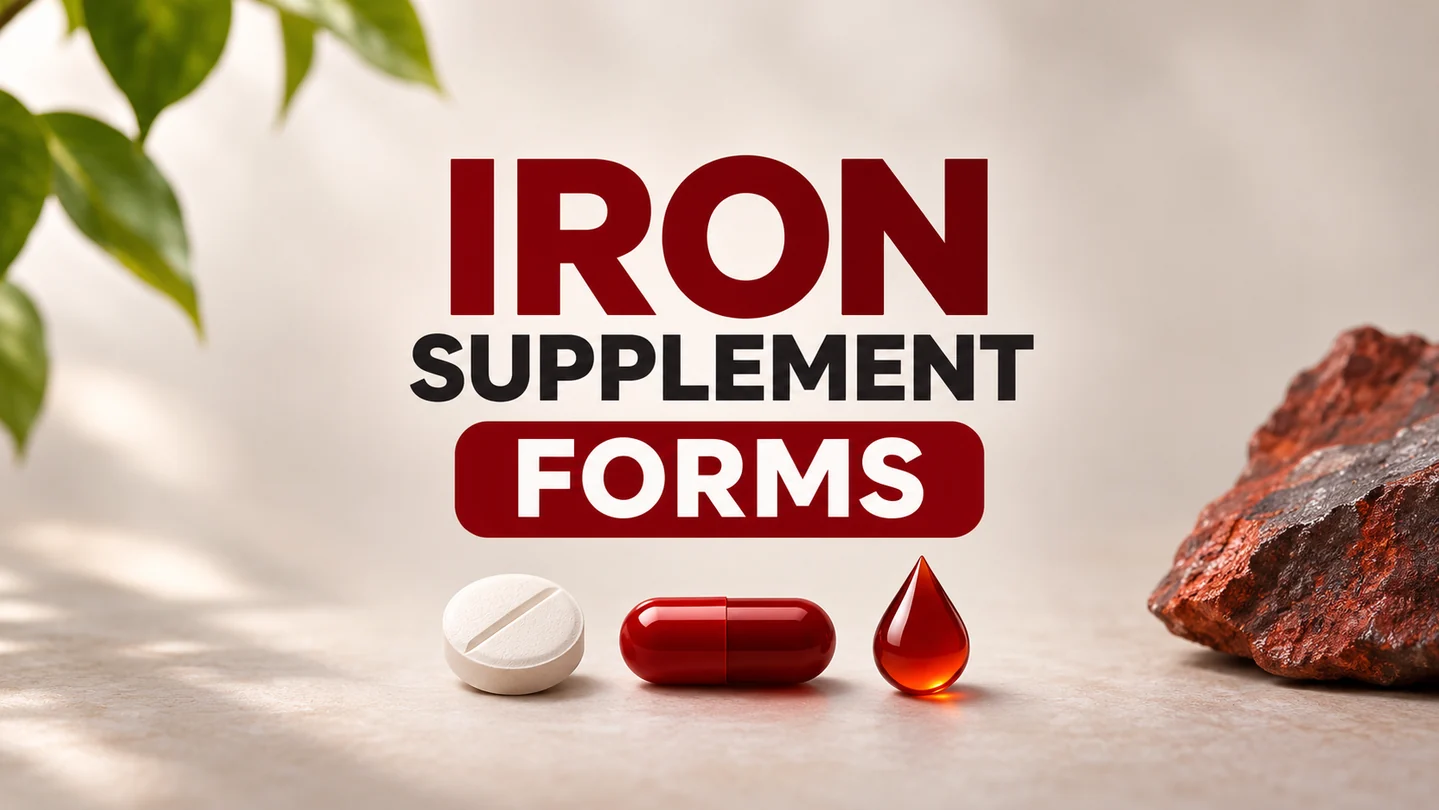
Walk down a supplement aisle and you will find iron labeled as ferrous sulfate, ferrous gluconate, ferrous fumarate, iron bisglycinate, heme iron, “gentle” iron and slow-release iron, plus organ-based products such as beef liver capsules. The choice can be confusing, and marketing often promises that a particular form is better absorbed or “won’t cause constipation”.
This comparison explains what each form is, how much usable iron it contains, and what the evidence does and does not show. It relies mainly on the NIH Office of Dietary Supplements (ODS), clinical guidelines and trial evidence. It is general information. Whatever the form, iron should be taken only when a blood test (a complete blood count and ferritin) shows you need it, and the cause of deficiency should be found.
Types of iron supplements: the short answer
Types of iron supplements compared: ferrous sulfate vs. gluconate vs. fumarate, iron bisglycinate, heme iron polypeptide, polysaccharide and carbonyl iron, slow-release iron, liquids for kids and beef liver supplements.
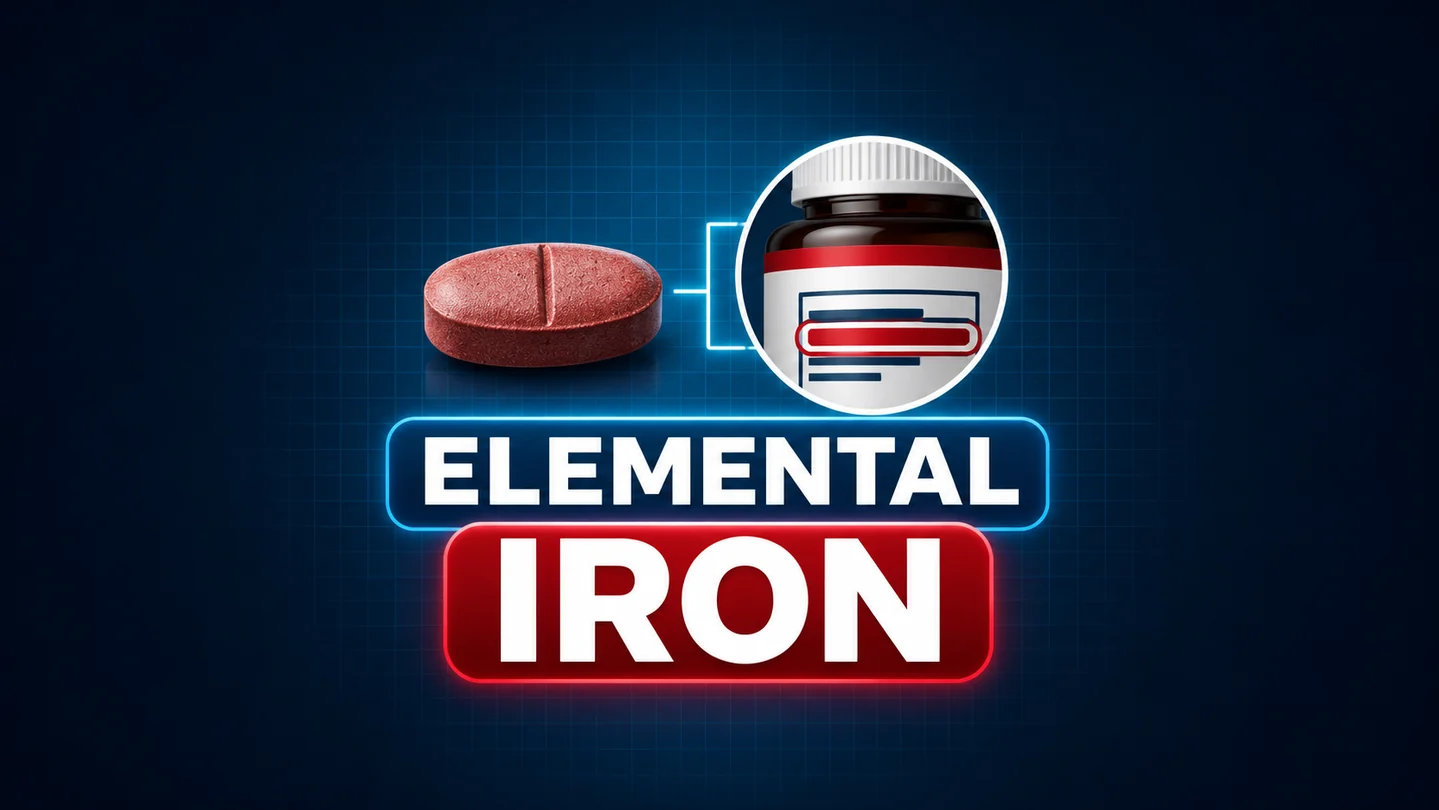
First, understand elemental iron
Iron in supplements is bound to another compound, such as a sulfate or an amino acid. Only part of the weight of that compound is actual iron, called elemental iron. A tablet labeled “325 mg ferrous sulfate” contains far less than 325 mg of iron. The ODS explains that the different ferrous salts contain different percentages of elemental iron, with ferrous fumarate highest, ferrous sulfate in the middle and ferrous gluconate lowest. In the United States, the Supplement Facts panel lists the amount of elemental iron, which is the number that matters for dosing. See iron supplement dosage for how much is typically used.
Iron supplement forms compared
| Form | What it is | Elemental iron | Evidence and notes |
|---|---|---|---|
| Ferrous sulfate | Iron salt, the most common form | About 20% (ODS) | Most studied and inexpensive; raises GI side effects vs. placebo |
| Ferrous fumarate | Iron salt | About 33% (ODS) | Similar to sulfate; more iron per mg of compound |
| Ferrous gluconate | Iron salt | About 12% (ODS) | Less iron per tablet; not clearly better tolerated per mg of iron |
| Iron bisglycinate | Iron bound to glycine (chelated) | Varies by product | Often marketed as gentler; evidence on tolerability is limited and mixed |
| Heme iron polypeptide | Iron from animal hemoglobin | Varies | Absorbed by a different pathway; limited comparative data |
| Polysaccharide iron complex | Iron bound to a carbohydrate | Varies | Marketed as gentle; limited evidence |
| Carbonyl iron | Very small particles of pure iron | High | Released slowly; limited comparative data |
| Slow-release iron | Coated or extended-release tablets | Varies | May cause less nausea, but some iron may pass the main absorption site |
| Beef liver or organ supplements | Dried animal organ | Variable, often low | Not standardized for iron; not a treatment for deficiency |
Ferrous sulfate, gluconate and fumarate
These three iron salts are the traditional workhorses of iron treatment. They are inexpensive, widely available and have the longest track record. Ferrous iron (the “ferrous” part) is the form the gut absorbs more readily, which is why these salts are standard. The British Society of Gastroenterology guidelines recommend oral iron salts as first-line treatment for iron deficiency anemia in adults, and many clinicians in the United States start with ferrous sulfate.
The main drawback is side effects. A meta-analysis of randomized trials found that ferrous sulfate significantly increased gastrointestinal side effects compared with placebo (Tolkien 2015). Because the salts differ mainly in how much iron each tablet holds, switching from one to another at the same amount of elemental iron may not change side effects much. Our guide to iron supplement side effects covers practical ways to cope.
Iron bisglycinate (chelated iron)
Iron bisglycinate is iron bound to two molecules of the amino acid glycine. It is often called “chelated” iron and is widely marketed as gentle on the stomach and well absorbed.
The honest summary is that the evidence on its tolerability is limited and mixed. Some studies have suggested fewer digestive complaints, but trials are generally small, differ in design and dose, and do not settle whether bisglycinate is consistently better tolerated than a lower dose of a standard iron salt. Products also vary in how much elemental iron they contain, which makes comparisons harder. It is a reasonable option to discuss with your clinician if standard iron is not working for you, but it is not proven to be superior.
Heme, polysaccharide and carbonyl iron
Heme iron polypeptide is made from animal hemoglobin. Heme iron from food (meat, poultry and fish) is absorbed through a different pathway from non-heme iron and is less affected by other foods, as the ODS explains. Whether heme iron supplements offer a clear practical advantage over iron salts is less certain, because comparative studies are limited.
Polysaccharide iron complex binds iron to a carbohydrate and is often sold as a gentler option. Carbonyl iron consists of very fine particles of elemental iron that dissolve gradually in stomach acid. The ODS mentions a range of iron forms used in supplements, but it does not rank these newer forms as better. Evidence comparing them directly with iron salts for effectiveness and tolerability is limited, so claims of superiority should be treated with caution.
Slow-release iron and liquid iron
Slow-release or extended-release tablets let iron out gradually. Some people find they cause less nausea. The trade-off is that iron is absorbed mainly in the upper part of the small intestine, so a tablet that releases iron further down may deliver less usable iron. Do not crush or split extended-release tablets unless the label says you can.
Liquid iron drops and syrups are commonly used for infants and young children, and by adults who cannot swallow pills. Liquids make it easier to give small, precise doses, but they can temporarily stain teeth. Children should receive iron only on the advice of a pediatrician, at the dose measured with the device provided. Accidental iron overdose has been a leading cause of fatal poisoning in young children, so every iron product, including children’s chewables and gummies, must be kept locked away. See iron for kids and babies.
Is there iron that doesn’t cause constipation?
Many products are sold as “non-constipating” or “gentle”. No form of iron is guaranteed to avoid constipation, and much of the benefit of so-called gentle products may come from simply containing less iron per dose. The approaches with better support are about how you take iron rather than which brand you buy:
- Lower or alternate-day doses. In iron-depleted women, alternate-day dosing led to greater total absorption than consecutive daily doses (Stoffel 2017), and a dose of iron raises hepcidin, which lowers absorption from the next dose given soon after (Moretti 2015).
- Taking iron with a little food if empty-stomach dosing is not tolerated.
- Fluids, fiber and activity to support regular bowel movements.
- Trying another form with your clinician if one is not working.
If oral iron cannot be tolerated or does not work, intravenous iron is an option your doctor can consider. See iron supplements vs. iron infusion.
Beef liver and organ supplements
Desiccated beef liver and blended organ supplements are popular as a “whole food” source of iron. Liver is a nutrient-dense food, but in capsule form the amount of iron per serving varies and is often modest compared with a standard iron supplement. These products are not standardized for iron content, so they are not a reliable way to treat diagnosed deficiency. Liver is also very high in vitamin A, so large amounts are not advisable, especially in pregnancy. If you want more iron from food, see iron-rich foods.
How to choose, and when to see a doctor
For most adults with confirmed iron deficiency, a standard iron salt is a sensible, low-cost starting point, with a different form considered if side effects get in the way. A few general rules apply to every form:
- Test first. Symptoms of low iron are non-specific. Get a CBC and ferritin before supplementing, and do not take iron “just in case”.
- Find the cause. Iron deficiency in men and postmenopausal women needs a medical work-up for blood loss.
- Avoid iron if you have hemochromatosis unless your doctor advises it. See iron overload.
- Check all sources. A multivitamin with iron adds to your total.
- Get help for red flags: black or bloody stools, heavy periods, shortness of breath or chest pain. If you are pregnant, see iron during pregnancy.
- Overdose is an emergency. Call Poison Control at 1-800-222-1222, or 911 for severe symptoms.
Prescription iron and intravenous iron are regulated differently from the dietary supplements discussed here. For timing and food interactions, see when to take iron and iron and vitamin C, and for the bigger picture, our iron guide.
Frequently asked questions
What is the best form of iron supplement?
There is no single best form. Iron salts such as ferrous sulfate are well studied and inexpensive. Other forms may suit people who struggle with side effects, but evidence that they are superior is limited.
Is iron bisglycinate better than ferrous sulfate?
It is often marketed as gentler, but the evidence on tolerability is limited and mixed. It may be worth trying with your clinician’s input if ferrous sulfate is not tolerated.
Why does 325 mg ferrous sulfate not mean 325 mg of iron?
The 325 mg refers to the whole compound. Only a fraction is elemental iron. Check the Supplement Facts panel for the elemental iron amount.
Can beef liver capsules treat iron deficiency?
They are not a reliable treatment. Iron content varies and is not standardized. Diagnosed deficiency should be treated as your clinician advises.
Sources
- NIH Office of Dietary Supplements. Iron: Fact Sheet for Health Professionals.
- NIH Office of Dietary Supplements. Iron: Fact Sheet for Consumers.
- MedlinePlus. Iron overdose.
- Tolkien, et al. Ferrous sulfate supplementation causes significant gastrointestinal side-effects in adults: a systematic review and meta-analysis. PLoS One. 2015.
- British Society of Gastroenterology guidelines for the management of iron deficiency anaemia in adults. Gut. 2021.
- Stoffel, et al. Iron absorption from oral iron supplements given on consecutive versus alternate days and as single morning doses versus twice-daily split dosing in iron-depleted women. Lancet Haematol. 2017.
- Moretti, et al. Oral iron supplements increase hepcidin and decrease iron absorption from daily or twice-daily doses in iron-depleted young women. Blood. 2015.
Last reviewed November 2026. VitaBrief is educational and is not medical advice. Talk with a doctor, registered dietitian or pharmacist before starting a supplement, especially if you are pregnant, take medication or have kidney disease.
Not medical advice. This guide is for general education. Talk to your doctor or pharmacist before taking a supplement, especially if you are pregnant or breastfeeding, take medication or have a health condition. Medical disclaimer