Ingredient guides
Multivitamins for kids: does your child need them?
Why most children who eat a varied diet do not need a multivitamin, which children might, what to know about toddlers, teens and gummies, and why iron-containing vitamins must be stored out of reach.
VitaBrief editorial · Last reviewed November 2026 · Sources listed below
Reader-supported. This page may contain affiliate links. If you buy through one, we may earn a commission at no extra cost to you. It never changes what we write. Affiliate disclosure
Children’s vitamins line a whole aisle, often in bright colors, cartoon shapes and fruit flavors. Many parents give one daily as a kind of insurance, especially when a child seems to live on crackers and pasta. The reassuring news is that most children who eat a reasonably varied diet get the nutrients they need from food.
A multivitamin can help in specific situations, but it is not a requirement, and it comes with one real risk that many families underestimate: children can treat sweet, chewy vitamins like candy, and products that contain iron can be dangerous in an overdose. This guide covers what the evidence and US guidance say, which children might benefit, and how to keep vitamins safe at home, drawing on the NIH Office of Dietary Supplements (ODS), the Dietary Guidelines for Americans and MedlinePlus. This article does not give doses; your child’s pediatrician is the right person for that.
Multivitamins for kids: the short answer
Multivitamins for kids: what the Dietary Guidelines and NIH say, picky eaters and restricted diets, toddlers and teens, gummy vitamins that look like candy, iron poisoning risk, safe storage and when to ask a pediatrician.
Do most kids need a multivitamin?
For most healthy children, the answer is no. The Dietary Guidelines for Americans take a food-first approach at every age: nutrient needs should be met mainly through foods and drinks, with fortified foods and supplements used when a need cannot be met otherwise. Many common children’s foods, such as breakfast cereals, breads and milk, are already fortified with vitamins and minerals.
The ODS notes that multivitamin users, children included, often already have better diets than non-users, and that supplements can push intakes of some nutrients above upper limits when added to fortified foods (ODS MVMS). In other words, the children most likely to take a multivitamin are often the ones who need it least. That does not make a standard children’s multivitamin harmful when used as directed, but it does mean it is optional for most families.
Like adult products, children’s multivitamins are sold in the US as dietary supplements. The FDA does not approve them for safety or effectiveness before they reach store shelves.
Which children might benefit
Some children have a real gap that food is not covering. A pediatrician may suggest a multivitamin or a single nutrient in situations such as these:
| Situation | Possible gap | What to do |
|---|---|---|
| Very picky eating over a long period | Several vitamins and minerals | Ask the pediatrician; a dietitian can help widen the diet |
| Vegan or other restricted diet | Vitamin B12, iron, zinc, vitamin D, calcium | Plan the diet with a professional; B12 usually needs a fortified or supplement source |
| Food allergies (for example, milk) | Calcium, vitamin D | Ask about fortified alternatives or a supplement |
| Medical conditions affecting absorption | Depends on the condition | Follow the specialist’s plan |
| Heavy menstrual periods in teens | Iron | Ask for a blood test before adding iron |
| Healthy child eating a varied diet | Usually none | A multivitamin is optional |
Even in these cases, a multivitamin may not be the best tool. A child who needs only vitamin D or B12 may do better with that single nutrient, chosen and dosed by a clinician. Picky eating is very common and often improves with time; a general multivitamin may cover some gaps, but it does not replace the fiber, protein and other parts of whole foods. See multivitamin vs individual vitamins for how to weigh the two approaches.
Toddlers
Toddlers are famously selective eaters, and searches for a “multivitamin for 1 year old” or “for toddlers” are common. Toddlers also face the highest risk from accidental overdose, because they explore with their mouths and cannot judge how many vitamins are safe. Their small body size means that an amount harmless to an adult can be dangerous for them.
Before starting any supplement for a baby or toddler, talk with the pediatrician. Some infants and young children are advised to take a specific nutrient, such as vitamin D or iron, in particular circumstances, and the pediatrician will choose the right product and amount. Adult vitamins should never be given to young children, and products for older children are not interchangeable with those for toddlers. Do not guess at amounts or split adult tablets.
Teens
Adolescence is a period of fast growth, and a few nutrients deserve attention. Teens who menstruate, especially with heavy periods, may be at higher risk of low iron, and the ODS iron fact sheet lists teenage girls among groups more likely to fall short. Calcium and vitamin D matter for building peak bone mass, and many teens drink less milk than younger children. Teens who follow vegetarian or vegan diets, athletes in weight-class sports, and teens who restrict food are other groups to watch.
A pediatrician can check iron status with a blood test and recommend whether a teen needs a supplement at all. Taking iron “just in case” is not ideal, because the right answer depends on the test. Teens who could become pregnant should know that folic acid is recommended before and during early pregnancy to help prevent neural tube defects (USPSTF 2023); see multivitamin vs prenatal vitamin. Teens should also be cautious with products marketed for “energy,” weight loss or muscle building, which are not multivitamins and may contain other ingredients.
Gummies look like candy
Gummy vitamins are by far the most popular form for children, because they are easy to chew and taste good. That same appeal is the problem. Children may see them as treats and eat several, or find the bottle and eat many at once. Gummies also tend to contain added sugar and often leave out minerals such as iron, which is helpful for overdose safety but means they are less complete than they look.
A few habits reduce the risk. Never call vitamins “candy” or offer them as a reward. Give them yourself rather than letting a child serve themselves. Keep track of how many are left, and treat any missing gummies as a possible ingestion. Older children with braces or dental concerns may also want to avoid sticky gummies. Our multivitamin gummies guide covers the trade-offs in more detail, and multivitamin side effects explains what symptoms too much of a vitamin can cause.
Iron poisoning and safe storage
Iron is the most important safety issue with vitamins in homes with young children. An iron overdose can cause vomiting, diarrhea and stomach pain, and in serious cases can damage the liver and lead to shock and death (MedlinePlus Iron overdose). Symptoms can seem to improve for a while before serious problems appear, so a child who may have swallowed iron needs medical advice even if they look fine.
Accidental iron overdose was once a leading cause of poisoning deaths in young children in the US. After rules required single-dose packaging (such as blister packs) for some higher-dose iron products, a study found that reported deaths from iron poisoning in young children dropped sharply (Tenenbein 2005). The risk has not disappeared: adult iron pills and prenatal vitamins in a parent’s bag or on a counter are still within reach of curious toddlers.
Practical storage steps:
- Keep all vitamins and supplements, adult and child, up high and out of sight, ideally in a locked cabinet.
- Close child-resistant caps fully every time, remembering that child-resistant does not mean childproof.
- Do not leave pills in purses, bags, pill organizers or on nightstands where children can reach them.
- Remind visitors, including grandparents, to keep their medicines and vitamins secured.
If you think a child has swallowed vitamins or iron, call Poison Control at 1-800-222-1222 right away, even if there are no symptoms. If the child is having trouble breathing, has collapsed or is having a seizure, call 911. Have the bottle with you so you can describe the product. For more on iron, see multivitamin with iron.
When to ask a pediatrician
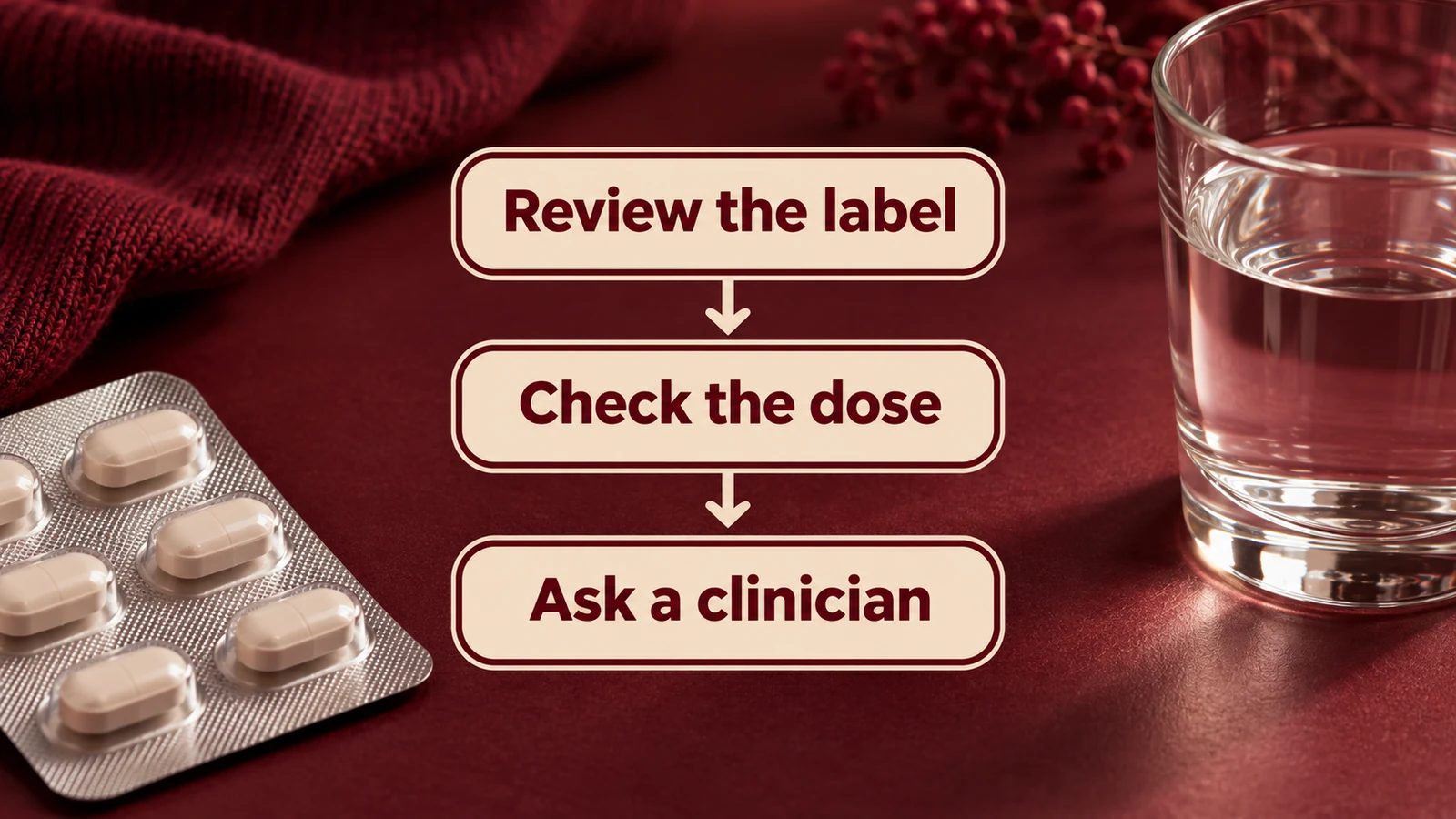
A pediatrician or registered dietitian is the best guide for any child supplement. Ask before starting one if your child:
- is a baby or toddler;
- eats a very limited range of foods, is losing weight or is not growing as expected;
- follows a vegan or other restricted diet, or has food allergies;
- has a chronic illness, kidney disease or a condition affecting digestion;
- takes any prescription medicine;
- is a teen with heavy periods, fatigue or signs of low iron.
Bring the actual product to the visit. Check the total intake from all sources, including fortified cereals and drinks, because stacking products can push some nutrients, such as vitamin A, iron and zinc, too high. For tips on reading labels, see how to choose a multivitamin and what is in a multivitamin.
Frequently asked questions
Should I give my child a multivitamin every day?
Most healthy children who eat a varied diet do not need one. If you are worried about gaps, ask your pediatrician whether a multivitamin or a single nutrient makes more sense.
Are gummy vitamins safe for kids?
They can be when given as directed by an adult, but they look and taste like candy, so children may eat too many. Store them out of reach and never call them candy.
What should I do if my child ate a bottle of vitamins?
Call Poison Control at 1-800-222-1222 right away, even if your child seems fine, and keep the bottle handy. Call 911 for severe symptoms. Products with iron are the biggest concern.
Can my child take my adult multivitamin?
No. Adult products contain amounts meant for adults, and many contain iron. Ask a pediatrician to recommend a product suited to your child’s age.
Do picky eaters need a multivitamin?
Not necessarily. Many picky eaters still get enough nutrients, partly from fortified foods. A pediatrician can check growth and decide whether a supplement would help.
Sources
- NIH Office of Dietary Supplements. Multivitamin/mineral Supplements: Fact Sheet for Health Professionals.
- NIH Office of Dietary Supplements. Multivitamin/mineral Supplements: Fact Sheet for Consumers.
- NIH Office of Dietary Supplements. Iron: Fact Sheet for Health Professionals.
- NIH Office of Dietary Supplements. Vitamin B12: Fact Sheet for Health Professionals.
- US Department of Agriculture and HHS. Dietary Guidelines for Americans.
- MedlinePlus. Iron overdose.
- MedlinePlus. Vitamins.
- FDA. Dietary Supplements.
- Tenenbein M. Unit-dose packaging of iron supplements and reduction of iron poisoning in young children. Arch Pediatr Adolesc Med. 2005.
- US Preventive Services Task Force. Folic acid supplementation to prevent neural tube defects: reaffirmation recommendation statement. JAMA. 2023.
Last reviewed November 2026. VitaBrief is educational and is not medical advice. Talk with a doctor, registered dietitian or pharmacist before starting a supplement, especially if you are pregnant, take medication or have kidney disease.
Not medical advice. This guide is for general education. Talk to your doctor or pharmacist before taking a supplement, especially if you are pregnant or breastfeeding, take medication or have a health condition. Medical disclaimer