Supplement basics
Vitamin C side effects and safety
Stomach upset, kidney stones, iron overload, lab test interference and drug interactions: what high-dose vitamin C can do and who should be careful.
VitaBrief editorial · Last reviewed November 2026 · Sources listed below
Reader-supported. This page may contain affiliate links. If you buy through one, we may earn a commission at no extra cost to you. It never changes what we write. Affiliate disclosure
Vitamin C Side Effects: the short answer
Vitamin C from food is very safe. Supplements are generally safe up to 2,000 mg a day for adults, but high doses can cause diarrhea and stomach upset, and long-term supplement use has been linked to kidney stones in men.
Vitamin C has a reputation as harmless, and from food it is. Supplements are a different story at high doses. Autocomplete shows people asking whether vitamin C makes you poop, whether it is good or bad for the kidneys and how much is too much. The main problems are digestive upset and, with long-term high doses, kidney stones in some people. A few groups need particular caution. This guide covers what is known, drawing on the NIH Office of Dietary Supplements (ODS), MedlinePlus and a large study of vitamin C and kidney stones (Thomas 2013).
Side effects at a glance
| Effect | When it occurs | What to do |
|---|---|---|
| Diarrhea, nausea, cramps, bloating | High doses, often above 2,000 mg a day; sometimes lower in sensitive people | Lower or split the dose; take with food |
| Heartburn | Ascorbic acid on an empty stomach | Try a buffered form; take with meals |
| Kidney stones | Long-term supplement use, especially in men and people prone to stones | Avoid high doses if at risk |
| Excess iron absorption | People with hemochromatosis | Avoid vitamin C supplements with meals unless advised |
| Hemolysis (red cell breakdown) | Very high doses, especially IV, in G6PD deficiency | Medical supervision for high doses |
| Lab test interference | High doses before tests | Tell your doctor; some glucose meters affected |
| Tooth enamel erosion | Frequent chewable tablets | Swallow tablets; rinse after chewables |
The upper limit
The tolerable upper intake level for adults is 2,000 mg a day from food and supplements combined. It was set mainly to prevent diarrhea and stomach upset, which happen because unabsorbed vitamin C draws water into the intestine (ODS). Upper limits for children are lower: 400 mg at ages 1 to 3, 650 mg at 4 to 8, 1,200 mg at 9 to 13 and 1,800 mg at 14 to 18. Because absorption drops at high doses (Levine 1996), large single doses are both less effective and more likely to cause gut symptoms. See how much vitamin C per day.
Does vitamin C make you poop?
At high doses, yes. Loose stools are the most common sign that you are taking more than your gut can absorb. Some people deliberately take large doses until loose stools appear, sometimes called “bowel tolerance,” but this is not a recommended practice. If vitamin C upsets your stomach, take less, split it across meals or try a buffered form. See types of vitamin C.
Kidney stones
The body converts some vitamin C to oxalate, which is excreted in urine. Calcium oxalate is the most common type of kidney stone. In a large prospective study of Swedish men, those who took vitamin C supplements had about twice the risk of developing kidney stones as men who did not, and risk appeared higher with more frequent use (Thomas 2013). Dietary vitamin C from fruits and vegetables has not been linked to the same risk.
People who have had kidney stones, especially calcium oxalate stones, should avoid high-dose vitamin C supplements unless their doctor advises otherwise.
Kidney disease
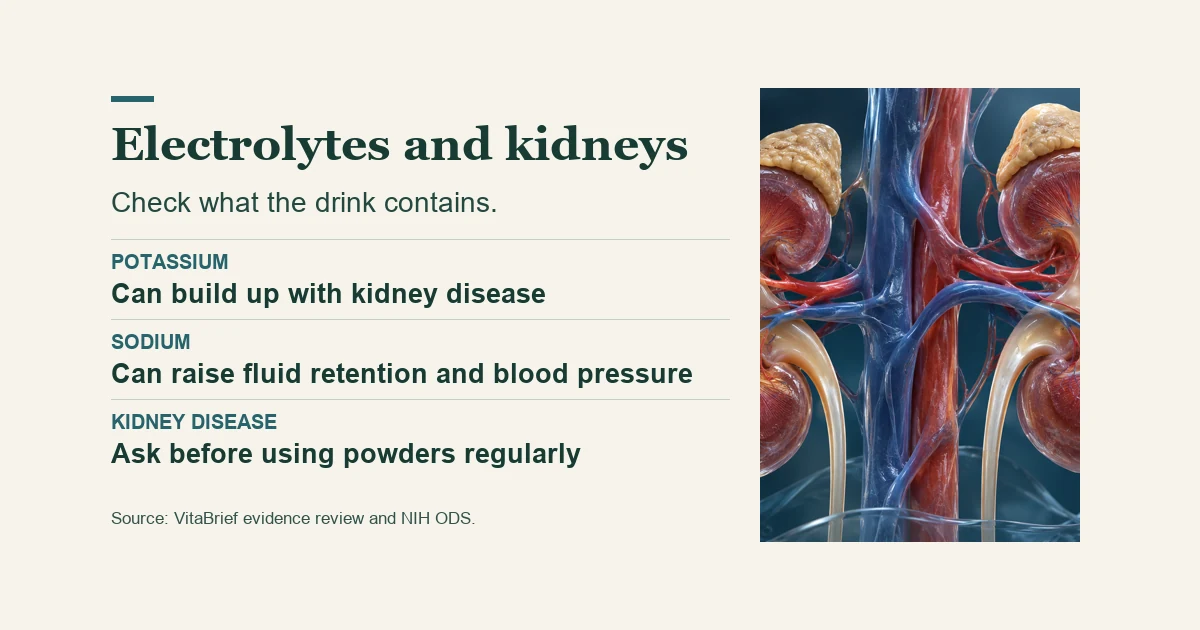
People with chronic kidney disease, especially on dialysis, may have low vitamin C but are also at risk of oxalate buildup from high doses. The ODS advises that they get medical guidance on supplement doses (ODS). See also electrolytes and kidneys.
Iron overload
Vitamin C increases non-heme iron absorption, which is helpful for most people but not for people with hereditary hemochromatosis or other iron overload conditions. The ODS advises caution with vitamin C supplements in these conditions (ODS). See vitamin C and iron.
Interactions
| Medicine or treatment | Possible interaction |
|---|---|
| Some chemotherapy and radiation | Antioxidants might reduce effectiveness; discuss with oncology team |
| Statins with niacin | Antioxidant combinations reduced the HDL-raising effect of niacin in one study |
Lab test interference
High-dose vitamin C can interfere with some laboratory tests, including certain urine and stool tests, and with some blood glucose meters, giving falsely high or low readings. This matters most with very high or intravenous doses. Tell your clinician and lab if you take high-dose vitamin C, and people with diabetes should check whether their glucose meter is affected.
G6PD deficiency
People with glucose-6-phosphate dehydrogenase (G6PD) deficiency can have red blood cell breakdown with very high doses of vitamin C, mainly reported with intravenous use. Normal dietary amounts and modest supplements are not a concern, but high doses should be avoided without medical advice.
Pregnancy and breastfeeding
Needs rise slightly in pregnancy (85 mg) and more during breastfeeding (120 mg). The upper limit is the same as for other adults. A Cochrane review found no clear benefit of routine vitamin C supplements for major pregnancy outcomes (Rumbold 2015). Prenatal vitamins plus food are usually enough. See vitamin C for kids and pregnancy.
Common vitamin C myths
| Myth | What the evidence shows |
|---|---|
| Megadoses prevent colds | Regular use does not reduce how often most people catch colds |
| More vitamin C is always better | Body levels plateau around 200 mg a day; excess is excreted |
| Natural vitamin C is better than synthetic | They are the same molecule and equally bioavailable |
| Vitamin C gives you energy | It contains no calories; only correcting a deficiency helps fatigue |
| Vitamin C supplements are completely harmless | High doses can cause diarrhea and, long term, kidney stones in some people |
Teeth and chewables
Vitamin C is an acid. Frequent chewable tablets, gummies or effervescent drinks can contribute to tooth enamel erosion, especially if sipped slowly over time. Swallowing tablets, rinsing with water after chewables and avoiding brushing immediately after acidic drinks help protect teeth.
Reading a vitamin C label
Supplement labels list vitamin C in milligrams and as a percentage of the Daily Value, which is 90 mg for adults. A 500 mg tablet therefore shows 556% DV. That large percentage is not a sign of danger, since the upper limit is 2,000 mg, but it does show how far above daily needs many products are. Check the form of vitamin C listed (ascorbic acid, sodium ascorbate, calcium ascorbate), the serving size (some gummies require two or three pieces), other ingredients such as zinc or herbs, and any certification seal from USP or NSF. “Immune support” claims are structure-function claims, not evidence that the product prevents illness (ODS).
Older adults
Older adults can be at higher risk of low vitamin C because of reduced appetite, dental problems, limited access to fresh food or living alone. Needs are the same as for younger adults, but meeting them may take more planning: canned or frozen fruit, juice, soups and soft-cooked vegetables are easy options, and a daily multivitamin can fill gaps. Older adults are also more likely to take multiple medicines and to have kidney conditions, so they should check with a clinician before using high-dose supplements (ODS).
The bottom line
Vitamin C from food is very safe. Supplements are generally safe up to 2,000 mg a day for adults, but high doses can cause diarrhea and stomach upset, and long-term supplement use has been linked to kidney stones in men. People with a history of kidney stones, kidney disease, hemochromatosis or G6PD deficiency, and those undergoing cancer treatment, should get medical advice before taking high doses.
Frequently asked questions
Is vitamin C bad for your kidneys?
Food vitamin C is not. Long-term high-dose supplements may increase kidney stone risk, especially in men and people prone to stones.
Can you overdose on vitamin C?
Serious toxicity is rare because excess is excreted, but very high doses cause digestive symptoms and other risks in certain groups.
Does vitamin C interact with other medicines?
Normal doses rarely cause problems. Tell your clinician and pharmacist about high-dose vitamin C, especially during cancer treatment.
Can vitamin C cause headaches?
This is uncommon. Check for other ingredients, such as caffeine in effervescent products.
Is it safe to take vitamin C every day long term?
Modest daily doses are safe for most people. Avoid routinely exceeding 1,000 mg unless advised.
Can vitamin C cause heartburn?
Ascorbic acid can, especially on an empty stomach. Buffered forms or taking it with food help.
Does vitamin C affect blood sugar tests?
High doses can interfere with some glucose meters. Check with your diabetes team.
Sources
- NIH Office of Dietary Supplements. Vitamin C: Fact Sheet for Health Professionals.
- MedlinePlus. Vitamin C.
- Thomas LD, et al. Ascorbic acid supplements and kidney stone incidence among men: a prospective study. JAMA Intern Med. 2013;173(5):386-8.
- Levine M, et al. Vitamin C pharmacokinetics in healthy volunteers: evidence for a recommended dietary allowance. Proc Natl Acad Sci U S A. 1996;93(8):3704-9.
- Rumbold A, et al. Vitamin C supplementation in pregnancy. Cochrane Database Syst Rev. 2015;(9):CD004072.
Last reviewed November 2026. VitaBrief is educational and is not medical advice. Talk with a doctor, registered dietitian or pharmacist before starting a supplement, especially if you are pregnant, take medication or have kidney disease.
Not medical advice. This guide is for general education. Talk to your doctor or pharmacist before taking a supplement, especially if you are pregnant or breastfeeding, take medication or have a health condition. Medical disclaimer