Ingredient guides
Electrolytes and hydration for older adults
Why older adults dehydrate more easily, how medicines affect sodium and potassium, when electrolyte drinks help and tips for caregivers.
VitaBrief editorial · Last reviewed November 2026 · Sources listed below
Reader-supported. This page may contain affiliate links. If you buy through one, we may earn a commission at no extra cost to you. It never changes what we write. Affiliate disclosure
Electrolytes for Older Adults: the short answer
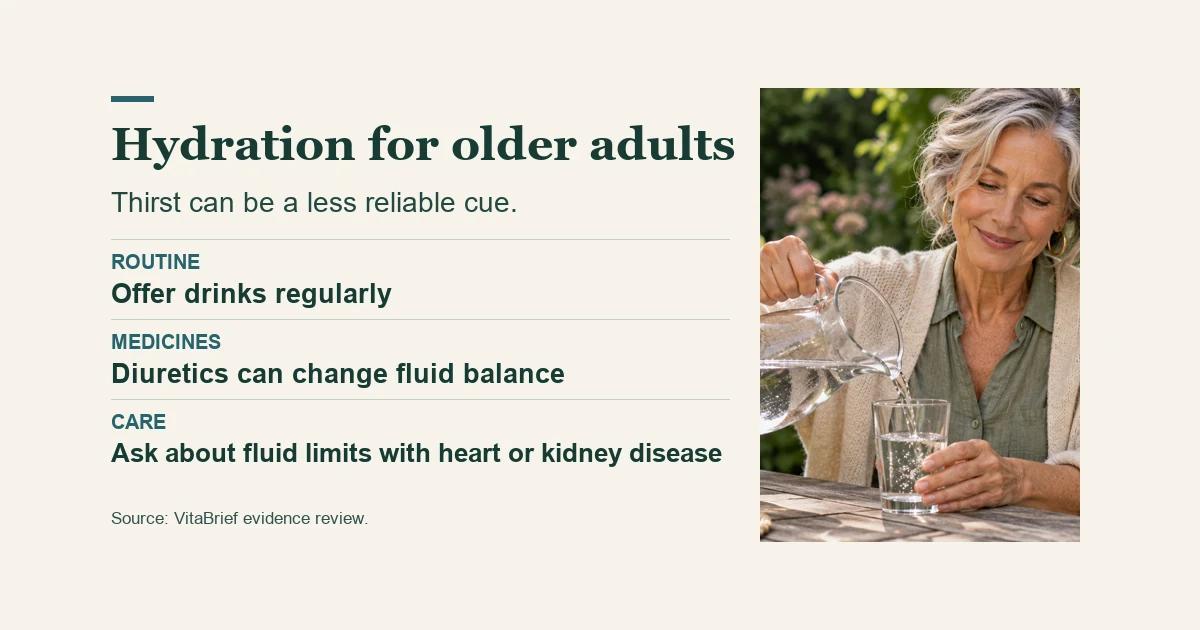
Older adults dehydrate more easily because thirst weakens, kidney function changes and many medicines affect electrolytes. Offer fluids regularly, watch for confusion, dizziness and falls, and use oral rehydration solutions during vomiting or diarrhea. Avoid daily high-sodium or high-potassium products unless a clinician recommends them, especially with diuretics, blood pressure medicines, heart failure or kidney disease.
Dehydration and electrolyte problems are among the most common reasons older adults end up in the hospital, and they are often missed until they cause confusion, falls or kidney problems. Aging changes thirst, kidney function and body water, and many common medicines affect sodium and potassium. Electrolyte drinks can help in some situations, but in others they can cause harm. This guide explains what changes with age and how to stay safely hydrated, drawing on research on dehydration in older people (Hooper 2014, Hooper 2015), MedlinePlus and the NIH Office of Dietary Supplements (ODS).
Why older adults are at higher risk
- Weaker thirst. The sense of thirst becomes less reliable with age, so people may not feel thirsty until they are already dehydrated (Hooper 2014).
- Less body water. Older adults have less muscle and therefore less total body water, so small losses matter more.
- Kidney changes. Kidneys become less able to concentrate urine and conserve water and sodium.
- Medicines. Diuretics, laxatives and some blood pressure and psychiatric medicines affect fluid and electrolytes.
- Practical barriers. Mobility problems, incontinence worries, memory problems and dependence on others for drinks.
Signs of dehydration are less obvious
A Cochrane review found that many classic signs, such as dry mouth, skin turgor and how thirsty someone feels, are not reliable for detecting dehydration in older people (Hooper 2015). Caregivers should watch for changes such as:
- New confusion, drowsiness or irritability
- Dizziness when standing, or falls
- Less urine, or dark urine
- Constipation
- Drinking or eating less than usual
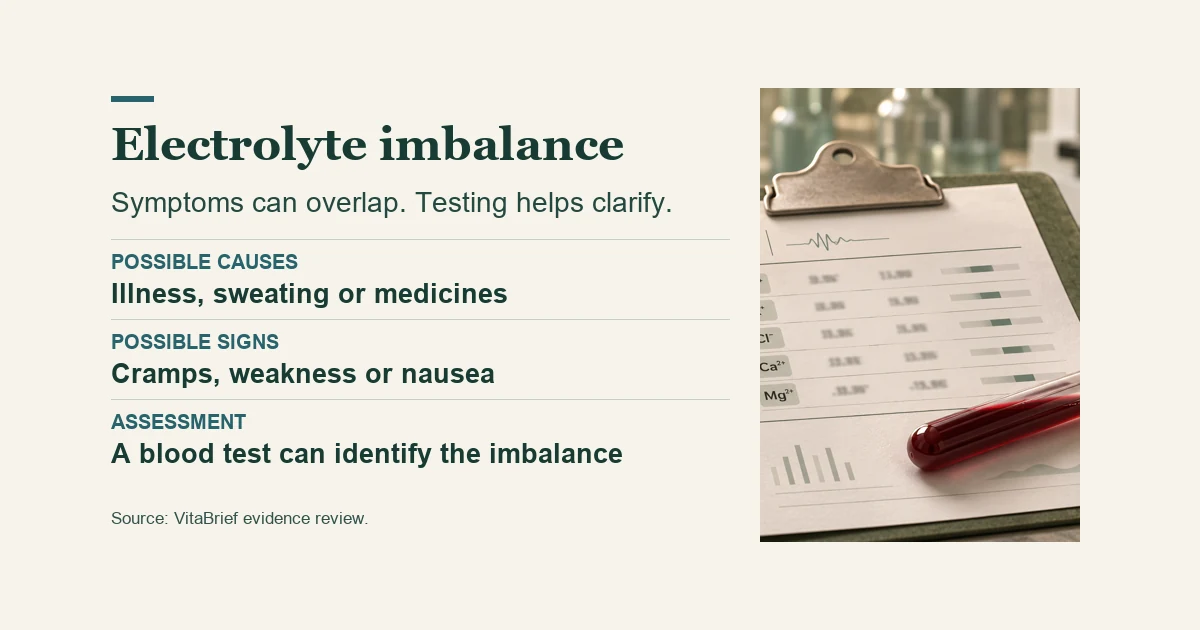
A blood test is the most reliable way to check. See electrolyte imbalance symptoms.
Medicines that affect electrolytes
| Medicine type | Possible effect | What to know |
|---|---|---|
| Thiazide diuretics (such as hydrochlorothiazide) | Low sodium, low potassium | Regular blood tests; caution with large water intake |
| Loop diuretics (such as furosemide) | Low potassium and magnesium, dehydration | Follow fluid guidance |
| ACE inhibitors, ARBs, spironolactone | High potassium | Avoid potassium supplements and potassium salt substitutes unless approved |
| SSRIs and some anti-seizure drugs | Low sodium | Report confusion or headaches |
| Laxatives (frequent use) | Low potassium, dehydration | Discuss alternatives |
| Long-term acid reducers (PPIs) | Low magnesium | Ask about testing |
Low sodium is common
Low blood sodium (hyponatremia) is especially common in older adults, often linked to medicines or illness, and can cause unsteadiness, falls and confusion that may be mistaken for dementia (MedlinePlus). It can be worsened by drinking large amounts of plain water, especially in people taking thiazide diuretics. Do not respond to low sodium by forcing water or adding salt without medical guidance; treatment depends on the cause.
When electrolyte drinks help
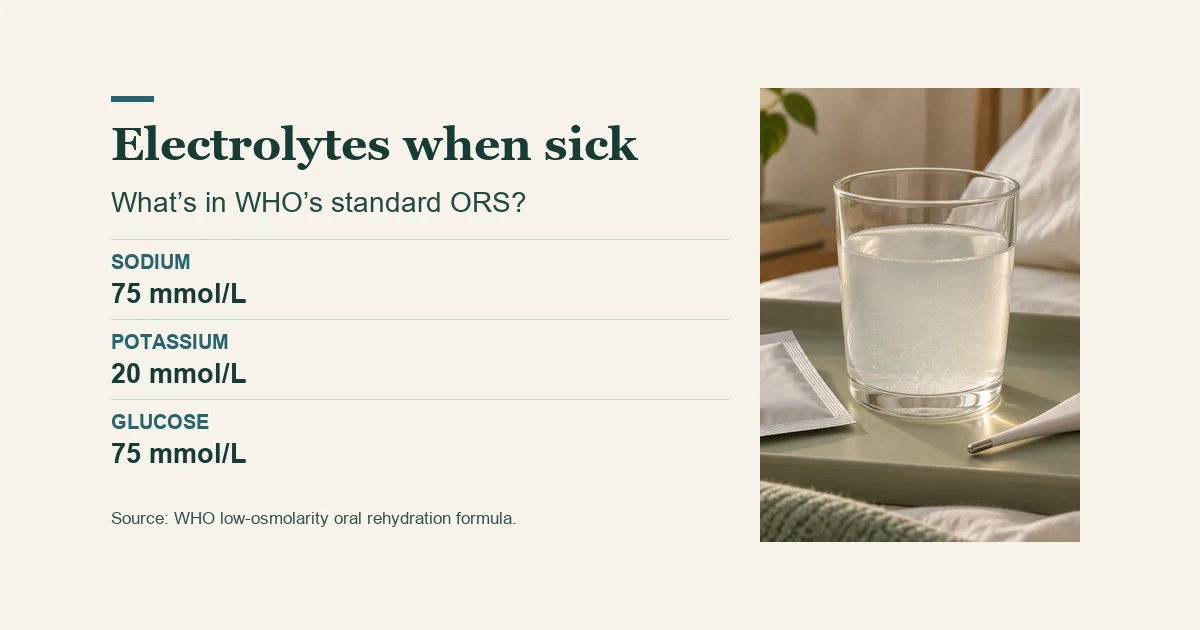
- Vomiting or diarrhea: an oral rehydration solution, started early, with a call to the doctor if the person cannot keep fluids down. See electrolytes when sick.
- Heat waves: regular fluids, cool environments and, if sweating heavily, a drink with some sodium.
- Exercise in warm conditions: water usually; electrolyte drinks for long, sweaty activity.
For everyday use, plain water, milk, tea, soup and water-rich foods are usually better than daily high-sodium packets, which can raise blood pressure (He 2013).
Heart failure and kidney disease
People with heart failure may be told to limit fluid and sodium, and people with kidney disease may need to limit potassium, sodium and sometimes fluid. In these cases, electrolyte products should be used only as directed by the care team. See electrolytes and kidneys.
Tips for caregivers
| Tip | Why it helps |
|---|---|
| Offer drinks regularly, not just when asked | Thirst is unreliable |
| Keep a favorite drink within reach | Makes drinking easier |
| Serve water-rich foods: soup, fruit, yogurt, jello | Food provides fluid too |
| Use cups with handles or straws if needed | Reduces spills and effort |
| Track intake on hot days or during illness | Spots problems early |
| Keep an up-to-date medication list | Helps clinicians spot electrolyte risks |
Heat waves
Older adults are among those most at risk during heat waves. Spend the hottest hours in air conditioning when possible, drink regularly, check on older relatives and neighbors, and watch for heat illness: confusion, very high body temperature, fainting or hot, dry skin require emergency care.
Nutrition connections
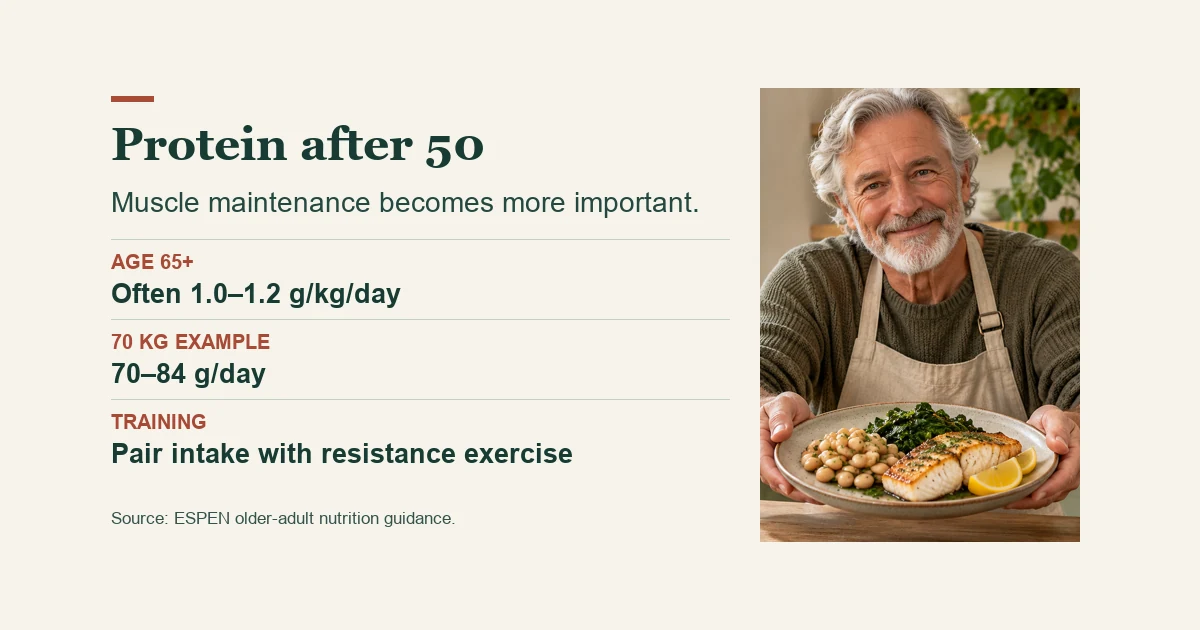
Poor appetite often affects both fluid and nutrient intake. Adequate protein helps preserve muscle, which also holds body water. See protein after 50. Vitamin B12 deficiency can also cause fatigue and confusion in older adults; see B12 after 50.
A daily hydration routine
| Time | Idea |
|---|---|
| Waking | A glass of water or milk with morning medicines |
| Breakfast | Tea or coffee plus fruit or yogurt |
| Mid-morning | A drink offered with a snack |
| Lunch | Soup or a glass of water with the meal |
| Afternoon | A favorite drink; fruit such as melon or oranges |
| Dinner | Water or milk with the meal |
| Evening | A small drink earlier rather than late to reduce night-time bathroom trips |
Spreading drinks across the day avoids large amounts at once and fits around concerns about getting up at night. People with fluid restrictions should follow their doctor’s targets instead.
Planning for illness
Ask the doctor in advance for a “sick day” plan: which medicines to pause if vomiting or diarrhea occurs (some diuretics and blood pressure drugs are commonly held), when to use an oral rehydration solution, and when to call. Keeping a few ORS packets at home makes it easier to start early.
In care homes and hospitals
Older adults in care homes and hospitals are at particular risk because they often depend on staff for drinks. Research has found low-intake dehydration to be common in these settings (Hooper 2014). Families can help by asking how fluid intake is tracked, bringing preferred drinks, encouraging drinks during visits and alerting staff to changes in alertness or behavior.
If a loved one becomes newly confused, sleepy or falls, ask whether dehydration or an electrolyte problem has been checked.
Hydrating foods for older adults
Food can provide a meaningful share of daily fluid. Soups, stews, yogurt, custards, jelly, smoothies and water-rich fruits and vegetables such as melon, oranges, berries, cucumber and tomatoes all help. These foods also provide potassium and other nutrients. For people who dislike drinking water, offering a range of drinks, including milk, tea, diluted juice and flavored water, increases total intake.
People on thickened fluids because of swallowing difficulties are at particular risk of low intake and benefit from extra attention to hydrating foods.
The bottom line
Older adults dehydrate more easily because thirst weakens, kidney function changes and many medicines affect electrolytes. Offer fluids regularly, watch for confusion, dizziness and falls, and use oral rehydration solutions during vomiting or diarrhea. Avoid daily high-sodium or high-potassium products unless a clinician recommends them, especially with diuretics, blood pressure medicines, heart failure or kidney disease.
Frequently asked questions
Should seniors drink electrolyte drinks every day?
Usually not. Water and food are enough most days. Electrolyte drinks help during illness or heavy sweating.
How much water should an older adult drink?
Needs vary. Unless fluid is restricted, aim for regular drinks through the day and pale urine. Ask the doctor for a target if heart or kidney disease is present.
Can dehydration cause confusion in the elderly?
Yes. Dehydration and low sodium can both cause confusion. New confusion needs prompt medical attention.
Are salt substitutes safe for seniors?
Many contain potassium chloride, which can be dangerous with kidney disease or certain blood pressure drugs. Ask a doctor.
Do electrolytes help leg cramps at night?
Night cramps usually have other causes. Ask your doctor to review medicines and check electrolytes if cramps are frequent.
Is coffee dehydrating for older adults?
In moderate amounts, coffee and tea count toward fluid intake.
Can dehydration cause falls?
Yes. Dehydration can cause dizziness on standing, which raises fall risk.
Are electrolyte popsicles good for seniors?
They can help people who do not drink much, especially when unwell. Check sugar and sodium if diabetes or heart failure is present.
Can older adults drink sports drinks?
Occasionally during heat or illness. Their sugar and sodium make them a poor everyday choice, especially with diabetes or heart failure.
Should a caregiver measure fluid intake?
During illness or heat waves, simple tracking helps spot problems early.
Sources
- Hooper L, et al. Water-loss dehydration and aging. Mech Ageing Dev. 2014;136-137:50-8.
- Hooper L, et al. Clinical symptoms, signs and tests for identification of impending and current water-loss dehydration in older people. Cochrane Database Syst Rev. 2015;(4):CD009647.
- MedlinePlus. Dehydration.
- MedlinePlus. Low blood sodium.
- NIH Office of Dietary Supplements. Potassium: Fact Sheet for Health Professionals.
- NIH Office of Dietary Supplements. Magnesium: Fact Sheet for Health Professionals.
- He FJ, et al. Effect of longer term modest salt reduction on blood pressure: Cochrane systematic review and meta-analysis of randomised trials. BMJ. 2013;346:f1325.
Last reviewed November 2026. VitaBrief is educational and is not medical advice. Talk with a doctor, registered dietitian or pharmacist before starting a supplement, especially if you are pregnant, take medication or have kidney disease.
Not medical advice. This guide is for general education. Talk to your doctor or pharmacist before taking a supplement, especially if you are pregnant or breastfeeding, take medication or have a health condition. Medical disclaimer