Ingredient guides
Calcium: what it does, how much you need and when supplements help
This calcium guide covers why your body needs calcium, how much is recommended at each age, why food comes first, and what the research shows on bones, the heart and kidney stones.
VitaBrief editorial · Last reviewed November 2026 · Sources listed below
Reader-supported. This page may contain affiliate links. If you buy through one, we may earn a commission at no extra cost to you. It never changes what we write. Affiliate disclosure
Calcium is the most plentiful mineral in the human body, and most people know it as the “bone mineral.” The research over the past two decades has made the picture more careful: getting enough calcium matters, food is the best way to get it, and supplements are a tool for filling a gap rather than a way to build stronger bones by taking more. It draws mainly on the NIH Office of Dietary Supplements (ODS) and the published studies listed at the end.
Calcium guide: the short answer
Calcium guide: what it does, RDA and upper limit by age from NIH ODS, food sources, who may fall short, supplement forms, fracture evidence, the heart debate and kidney stone risk.
What calcium does in the body
Almost all of the body’s calcium is stored in bones and teeth, where it gives them structure and hardness. The small remainder circulates in blood and other fluids, and it is busy. Calcium helps muscles contract, helps nerves send signals, helps blood vessels tighten and relax, and plays a part in blood clotting and the release of hormones (ODS).
Bone works like a bank account: when intake runs low, the body withdraws calcium from the skeleton to keep blood levels steady.
Bone is built fastest in childhood and the teen years, and most people reach their peak bone mass by early adulthood. Adequate calcium, along with physical activity and other nutrients, helps people reach a higher peak (Weaver 2016, NOF position statement).
How much calcium you need
The ODS lists a Recommended Dietary Allowance (RDA) for each age group, plus a Tolerable Upper Intake Level (UL), the most you can take in daily from all sources without likely harm. The figures below are total intake from food, drinks and supplements combined.
| Age | RDA (mg/day) | Upper limit (mg/day) |
|---|---|---|
| 0 to 6 months | 200 (adequate intake) | 1,000 |
| 7 to 12 months | 260 (adequate intake) | 1,500 |
| 1 to 3 years | 700 | 2,500 |
| 4 to 8 years | 1,000 | 2,500 |
| 9 to 18 years | 1,300 | 3,000 |
| 19 to 50 years | 1,000 | 2,500 |
| Men 51 to 70 years | 1,000 | 2,000 |
| Women 51 to 70 years | 1,200 | 2,000 |
| 71 years and over | 1,200 | 2,000 |
The upper limit is not a target. The aim is to land near your RDA. For a closer look at counting intake and choosing a dose, see calcium dosage.
Food first
Dairy foods such as milk, yogurt and cheese are the richest and most familiar sources in the US diet. Many other foods add up too: canned sardines and salmon with soft bones, tofu made with calcium sulfate, fortified plant milks and juices, fortified cereals, and some leafy greens such as kale and bok choy (ODS consumer fact sheet, MedlinePlus).
Dietary calcium has not been linked to the kidney stone and heart concerns raised about supplements. The Dietary Guidelines for Americans also favor meeting nutrient needs mainly through food. For practical ideas, see calcium-rich foods.
Who may fall short
Many people get enough calcium from their usual diet, but some groups are more likely to come up short, according to the ODS:
- Postmenopausal women, because bone loss speeds up as estrogen falls and needs rise to 1,200 mg after age 50. See calcium for women.
- People who avoid dairy, including those with lactose intolerance, milk allergy or a vegan diet, unless they choose fortified foods and other sources.
- Teenagers, whose needs are high while bones grow and whose diets often fall short. See calcium for kids.
A low intake over many years usually causes no symptoms at first; it quietly drains bone. Low blood calcium is different, and it usually has a medical cause. Read more in calcium deficiency symptoms.
Supplement forms
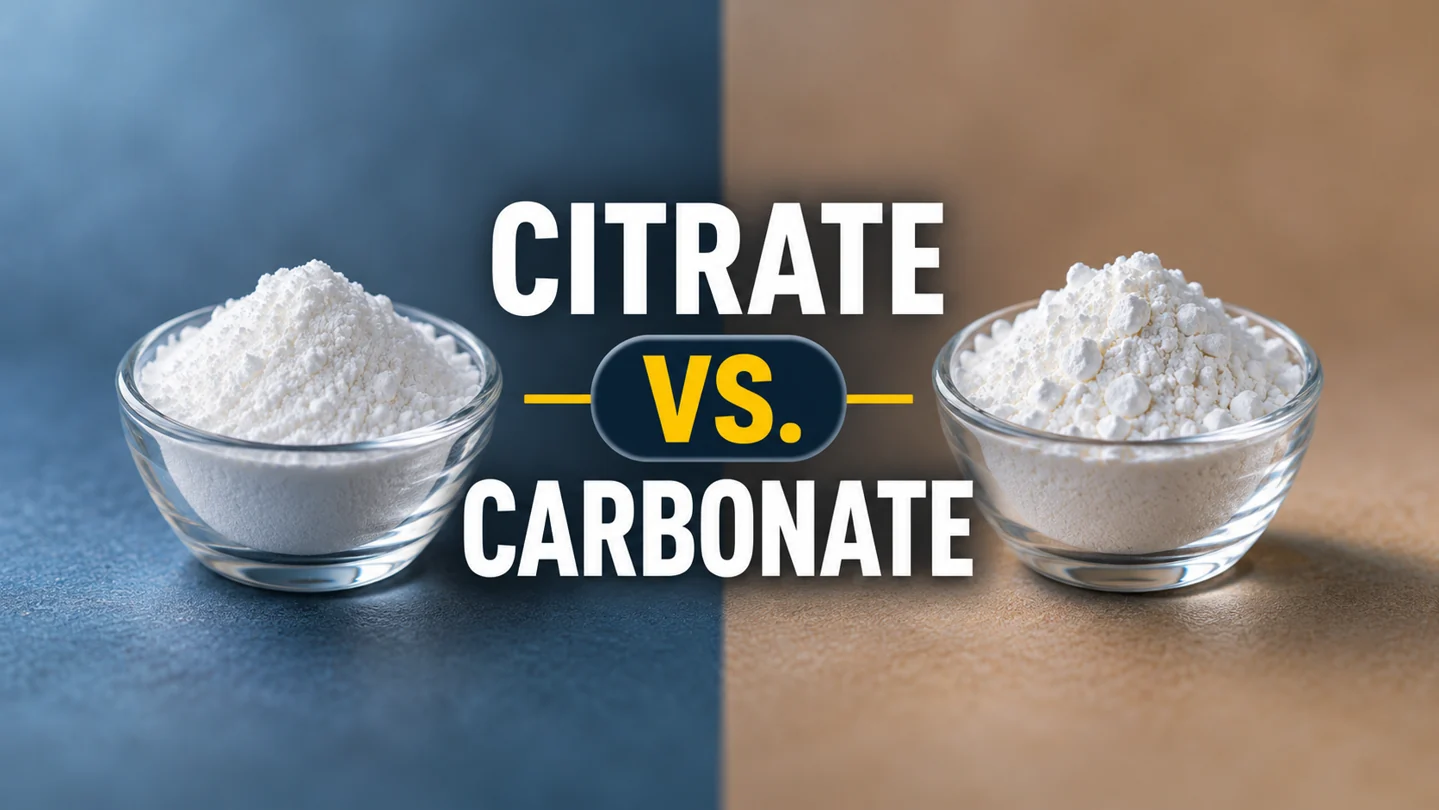
The two main forms are calcium carbonate and calcium citrate. Carbonate contains more calcium by weight and is generally best absorbed with food, because it needs stomach acid. Citrate can be taken with or without food and may suit people with low stomach acid, including some older adults and those taking acid-reducing medicine (ODS, Heaney 1999). We compare the two in detail in calcium citrate vs. calcium carbonate, and cover timing in when to take calcium.
For the vitamin D link, see calcium and vitamin D and our vitamin D guide.
What the evidence shows for bones and fractures
In 2018 the US Preventive Services Task Force reviewed vitamin D, calcium and combined supplements for preventing fractures in adults living in the community, not in nursing homes. It found the evidence insufficient to judge benefit for men and for women before menopause, and it recommended against low-dose combined supplements for preventing fractures in postmenopausal women living in the community (USPSTF 2018).
Two 2015 reviews in the BMJ pointed the same way. One found that higher dietary calcium was not clearly linked to fewer fractures and that the evidence for supplements was weak and inconsistent (Bolland 2015). The other found that increasing calcium from food or supplements raised bone density only slightly, an effect the authors judged unlikely to reduce fractures meaningfully (Tai 2015).
Not every analysis agrees. A meta-analysis from the National Osteoporosis Foundation concluded that calcium plus vitamin D reduced the risk of fractures, including hip fractures (Weaver 2016). The large Women’s Health Initiative trial found a small gain in hip bone density but no significant drop in hip fractures overall (Jackson 2006).
If you have osteoporosis or have broken a bone from a minor fall, calcium is part of the plan, but it is not the treatment on its own. Talk with your doctor about prescription options and how much calcium fits with them (NIAMS). See calcium for osteoporosis.
The heart debate
In 2010 a meta-analysis reported that calcium supplements taken without vitamin D were linked to a higher risk of heart attack (Bolland 2010).
Later work came to a calmer conclusion. An updated systematic review found no consistent link between calcium intake, from food or supplements, and cardiovascular disease within the ranges studied (Chung 2016). A guideline from the National Osteoporosis Foundation and the American Society for Preventive Cardiology said that calcium with or without vitamin D, at intakes that do not exceed the upper limit, should be considered safe for the heart in generally healthy adults (Kopecky 2016). The debate is not fully closed. See calcium supplements and heart health.
Kidney stones and other safety points
Here food and pills part ways most clearly. In a large study of women, higher dietary calcium was linked to a lower risk of kidney stones, while calcium supplements were linked to a modestly higher risk (Curhan 1997). In the Women’s Health Initiative, women taking calcium plus vitamin D had more kidney stones than those on placebo (Jackson 2006).
Other common issues are constipation and bloating, and interactions with medicines such as thyroid hormone, some antibiotics and bisphosphonates. Very high intakes can raise blood calcium. A high blood calcium result is a medical finding, often due to an overactive parathyroid gland, and needs a doctor’s evaluation rather than a diet change (MedlinePlus). See calcium supplement side effects and high calcium levels.
Check with a doctor before taking calcium supplements if you have had kidney stones, have kidney disease or a parathyroid disorder, are pregnant (see calcium during pregnancy), or take regular medicines. Ask a pediatrician before giving supplements to a child.
Frequently asked questions
Do I need a calcium supplement?
Not necessarily. Many people meet their needs from food. A supplement makes sense when your diet regularly falls short of the RDA, and only for the gap.
Can calcium supplements prevent fractures?
For healthy adults living in the community, the evidence is modest or uncertain. The USPSTF does not recommend low-dose calcium and vitamin D to prevent fractures in postmenopausal women.
Is calcium from food better than calcium from pills?
For most people, yes. Dietary calcium has not been linked to kidney stones or heart concerns the way supplements have.
Should I take calcium with vitamin D?
You need enough vitamin D to absorb calcium, but it can come from sun, food or a separate supplement. See calcium and vitamin D.
Is calcium or magnesium more important?
Both are needed and do different jobs. See calcium vs. magnesium and our magnesium guide.
Sources
- NIH Office of Dietary Supplements. Calcium: Fact Sheet for Health Professionals.
- NIH Office of Dietary Supplements. Calcium: Fact Sheet for Consumers.
- MedlinePlus. Calcium in diet.
- MedlinePlus. Hypercalcemia.
- NIAMS. Osteoporosis.
- US Departments of Agriculture and Health and Human Services. Dietary Guidelines for Americans.
- US Preventive Services Task Force. Vitamin D, calcium, or combined supplementation for primary prevention of fractures in community-dwelling adults. JAMA. 2018.
- Bolland MJ, et al. Calcium intake and risk of fracture: systematic review. BMJ. 2015.
- Tai V, et al. Calcium intake and bone mineral density: systematic review and meta-analysis. BMJ. 2015.
- Weaver CM, et al. Calcium plus vitamin D supplementation and risk of fractures: an updated meta-analysis from the National Osteoporosis Foundation. Osteoporos Int. 2016.
- Weaver CM, et al. The National Osteoporosis Foundation’s position statement on peak bone mass development and lifestyle factors. Osteoporos Int. 2016.
- Jackson RD, et al. Calcium plus vitamin D supplementation and the risk of fractures. N Engl J Med. 2006.
- Bolland MJ, et al. Effect of calcium supplements on risk of myocardial infarction and cardiovascular events: meta-analysis. BMJ. 2010.
- Chung M, et al. Calcium intake and cardiovascular disease risk: an updated systematic review and meta-analysis. Ann Intern Med. 2016.
- Kopecky SL, et al. Lack of evidence linking calcium with or without vitamin D to cardiovascular disease in generally healthy adults. Ann Intern Med. 2016.
- Curhan GC, et al. Comparison of dietary calcium with supplemental calcium and other nutrients as factors affecting the risk for kidney stones in women. Ann Intern Med. 1997.
- Heaney RP, et al. Absorption of calcium as the carbonate and citrate salts, with some observations on method. Osteoporos Int. 1999.
Last reviewed November 2026. VitaBrief is educational and is not medical advice. Talk with a doctor, registered dietitian or pharmacist before starting a supplement, especially if you are pregnant, take medication or have kidney disease.
Not medical advice. This guide is for general education. Talk to your doctor or pharmacist before taking a supplement, especially if you are pregnant or breastfeeding, take medication or have a health condition. Medical disclaimer