Supplement basics
Iodine deficiency: symptoms, causes, testing and who is at risk
What happens when you do not get enough iodine, from goiter and hypothyroidism to effects on pregnancy and children, who is most likely to fall short, and why a single test cannot easily confirm it.
VitaBrief editorial · Last reviewed November 2026 · Sources listed below
Reader-supported. This page may contain affiliate links. If you buy through one, we may earn a commission at no extra cost to you. It never changes what we write. Affiliate disclosure

Iodine deficiency was once common in parts of the United States, especially around the Great Lakes, an area once called the goiter belt. Iodized salt changed that, and today the NIH Office of Dietary Supplements (ODS) says deficiency is uncommon in the United States and Canada. Worldwide, though, it remains a public health problem, and some groups in wealthy countries can still fall short. This article explains what deficiency does, who is at risk, how it is assessed and how to prevent it.
Iodine deficiency: the short answer
An evidence-based guide to iodine deficiency: symptoms such as goiter and hypothyroidism, effects in pregnancy and childhood, causes and risk groups including vegans and people who avoid iodized salt, how iodine status is tested, and how to prevent it.
What happens when iodine runs low
The thyroid needs iodine to make its hormones, thyroxine (T4) and triiodothyronine (T3). The ODS explains that when iodine intake falls below about 100 mcg a day, the pituitary gland usually releases more thyroid-stimulating hormone (TSH). TSH drives the thyroid to pull in more iodine and make more hormone. This can keep hormone levels normal for a while, but very low intakes can reduce hormone production even when TSH is high (ODS).
Persistently high TSH can make the thyroid enlarge into a goiter. If intake drops below roughly 10 to 20 mcg a day, hypothyroidism occurs, often with goiter. For more on this loop, see iodine and the thyroid.
Symptoms and effects by life stage
Iodine deficiency does not always cause obvious symptoms, and the effects depend on how severe it is and when in life it happens. The table summarizes what the ODS describes.
| Group | Possible effects of iodine deficiency |
|---|---|
| Adults | Goiter; hypothyroidism; with mild to moderate deficiency, impaired mental function and work productivity |
| Pregnancy | Severe deficiency can cause major neurodevelopmental deficits and growth retardation in the fetus, miscarriage and stillbirth |
| Fetus (chronic, severe) | Cretinism: intellectual disability, deaf mutism, motor spasticity, stunted growth, delayed sexual maturation |
| Infants and children | Less severe deficiency can cause somewhat lower than average IQ |
Goiter is usually the earliest clinical sign. The ODS consumer fact sheet describes it as often the first visible sign of deficiency. A goiter may show as swelling at the front of the neck.
Hypothyroidism, an underactive thyroid, can follow. An underactive thyroid can cause a range of symptoms, but none of them is specific to iodine deficiency, and they have many other possible causes. Because iodine deficiency is uncommon in the United States, get a proper diagnosis rather than reaching for an iodine supplement.
Effects on the brain and development are the most serious. The ODS calls iodine deficiency the most common cause of preventable intellectual disability in the world, and notes that during pregnancy and early infancy it can cause irreversible effects. It also mentions that chronic iodine deficiency may be associated with a higher risk of the follicular form of thyroid cancer (ODS).
People often ask whether low iodine causes hair loss. The sources we reviewed do not address this directly, so we cannot say it does.
Causes and risk groups
The ODS names the groups most likely to have inadequate iodine status:
- People who do not use iodized salt. Iodized salt is the most widely used strategy to control deficiency, and about 88% of households worldwide use it.
- Pregnant women. Needs rise from 150 to 220 mcg a day. Surveys suggest many pregnant women in the United States might consume too little, although the impact on fetal development, if any, is not known.
- Vegans and people who eat few or no dairy products, seafood and eggs. This includes some people with food allergies or lactose intolerance.
- People in regions with iodine-deficient soils, such as mountainous areas like the Himalayas, Alps and Andes, and flood-prone river valleys in South and Southeast Asia, unless they eat iodized salt or foods from elsewhere.
- People with marginal intake who eat goitrogens, substances in foods such as soy, cassava and cruciferous vegetables that interfere with iodine uptake. Iron or vitamin A deficiency may also be goitrogenic. For most people with adequate intake, reasonable amounts of these foods are not a concern.
Two more details from the ODS stand out. Pregnant women who ate no dairy in the previous 24 hours had a median urinary iodine of only 100 mcg/L compared with 163 mcg/L in dairy consumers, and women who restrict salt also tend to have lower urinary iodine (ODS). Switching entirely to sea salt or other specialty salts, which are not usually iodized, can also remove a key source; see iodized salt vs sea salt.
How iodine deficiency is tested
This is where iodine differs from many nutrients. The ODS explains that iodine status is typically assessed with urinary iodine, because more than 90% of dietary iodine is excreted in urine. But spot urine samples are a useful indicator for populations, not individuals. They cannot be used to diagnose individual cases of iodine deficiency. Multiple 24-hour or multiple spot urine collections are more accurate for one person (ODS).
For populations, the ODS lists these median urinary iodine benchmarks for adequate intake: 100 to 199 mcg/L in children and adults, 150 to 249 mcg/L in pregnant women, and above 100 mcg/L in breastfeeding women. Deficiency is not classed as severe until levels fall below 20 mcg/L. A 2024 review lists other population measures too, including blood thyroglobulin, elevated newborn TSH and thyroid volume (Sohn 2024).
TSH is also not a reliable marker of iodine deficiency, because the ODS notes it may stay in the normal range when intake is low. If you are worried about your thyroid or iodine intake, a doctor can decide which assessments make sense for you.
How common is it in the United States?
According to the ODS, national surveys since 1971 have shown that the general U.S. population is iodine sufficient. Urinary iodine fell by more than half between the early 1970s and early 1990s, partly because less iodine was used in dairy farming and commercial baking, but levels have since stabilized. The median for people aged 6 and older was 164 mcg/L in 2007 to 2008 (ODS).
Pregnant women are the exception. Their median urinary iodine was 144 mcg/L in 2007 to 2014, just under the 150 mcg/L cutoff the WHO uses for adequacy in pregnancy, and the ODS says NHANES analyses indicate that a substantial portion of pregnant women in the United States are iodine insufficient.
Preventing iodine deficiency
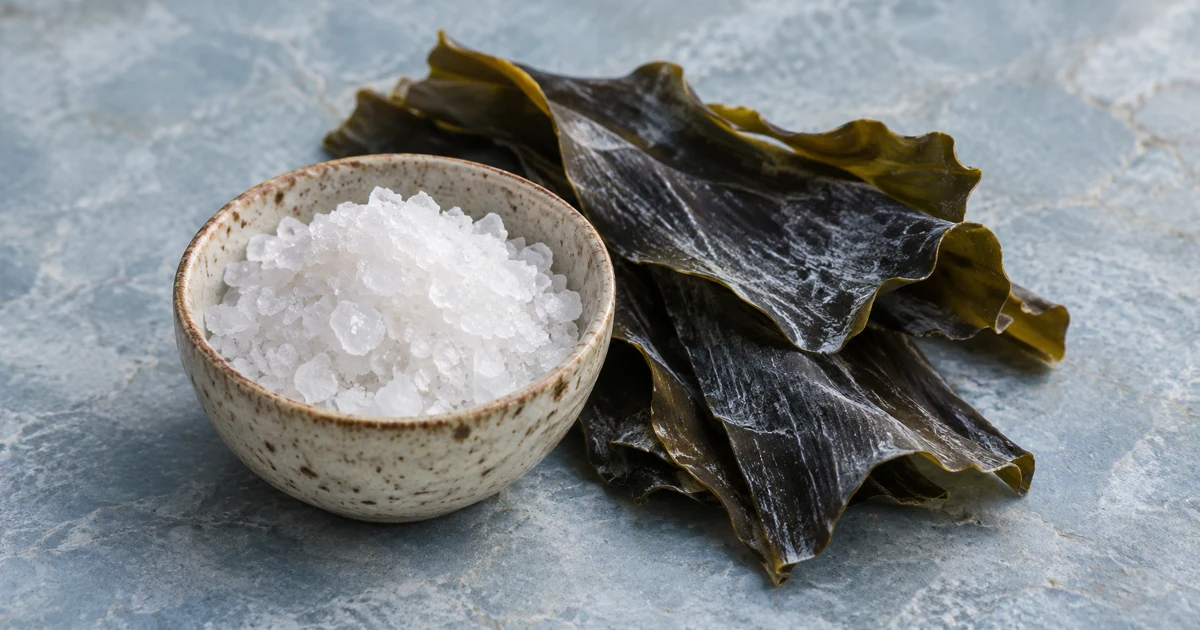
For most people, food is enough. The ODS lists seaweed, fish and other seafood, dairy, eggs and iodized salt as good sources. A quarter teaspoon of iodized table salt provides about 78 mcg, a cup of nonfat milk about 84 mcg and a large egg about 31 mcg, against an adult RDA of 150 mcg. See iodine food sources for more.
If your diet lacks these foods, a supplement may help. Many multivitamins contain about 150 mcg of iodine (multivitamins guide). During pregnancy and breastfeeding, the ODS reports that the American Thyroid Association recommends a daily 150 mcg potassium iodide supplement, yet not all prenatal vitamins contain iodine. Trials of routine supplementation in pregnancy have not shown clear benefits for infants: a Cochrane review found insufficient data for meaningful conclusions (Harding 2017), and a meta-analysis found better iodine status but no improvement in infant growth or neurodevelopment (Nazeri 2021). See iodine in pregnancy.
Do not overcorrect
Fixing a shortfall does not mean taking as much as possible. The ODS says too much iodine can cause goiter, hypothyroidism, hyperthyroidism or thyroiditis, and a review found that people with underlying thyroid disease or other risk factors may be susceptible to iodine-induced thyroid dysfunction (Leung 2012). The adult upper limit is 1,100 mcg a day from all sources. The ODS warns that many iodine-only supplements contain high doses, sometimes above the upper limit, and kelp products can vary widely. If you have a thyroid condition, talk to your doctor before any iodine supplement. See iodine dosage and iodine side effects.
Frequently asked questions
What is the first sign of iodine deficiency?
Goiter, an enlarged thyroid gland, is usually the earliest clinical sign, according to the ODS.
Can iodine deficiency cause hypothyroidism?
Yes. Very low intakes cause hypothyroidism, often with goiter. In the United States, though, iodine deficiency is uncommon, so a proper diagnosis matters.
Is there a test for iodine deficiency?
Urine tests measure iodine, but the ODS says a single spot sample is not a suitable indicator of one person’s iodine status. Multiple collections are more accurate. Talk with your doctor.
Are vegans at risk of iodine deficiency?
They can be, because dairy, seafood and eggs are major sources. Using iodized salt or a supplement with iodine can help close the gap.
Should I take iodine if I feel tired?
Not without a diagnosis. Tiredness has many causes, and unneeded iodine can disturb the thyroid.
Sources
- NIH Office of Dietary Supplements. Iodine: fact sheet for consumers.
- NIH Office of Dietary Supplements. Iodine: fact sheet for health professionals.
- Sohn, et al. Risks of iodine excess. Endocr Rev. 2024.
- Harding, et al. Iodine supplementation for women during the preconception, pregnancy and postpartum period. Cochrane Database Syst Rev. 2017.
- Nazeri, et al. Effects of iodine supplementation during pregnancy on pregnant women and their offspring: a systematic review and meta-analysis. Eur J Endocrinol. 2021.
- Leung, et al. Iodine-induced thyroid dysfunction. Curr Opin Endocrinol Diabetes Obes. 2012.
Last reviewed November 2026. VitaBrief is educational and is not medical advice. Talk with a doctor, registered dietitian or pharmacist before starting a supplement, especially if you are pregnant, take medication or have kidney disease.
Not medical advice. This guide is for general education. Talk to your doctor or pharmacist before taking a supplement, especially if you are pregnant or breastfeeding, take medication or have a health condition. Medical disclaimer