Ingredient guides
Iodine: what it does, how much you need and when supplements make sense
This iodine guide covers why your thyroid needs iodine, how much adults, pregnant and breastfeeding women need, the best food sources, who may fall short, and why more is not better.
VitaBrief editorial · Last reviewed November 2026 · Sources listed below
Reader-supported. This page may contain affiliate links. If you buy through one, we may earn a commission at no extra cost to you. It never changes what we write. Affiliate disclosure
Iodine is a mineral most people never think about, yet the thyroid gland cannot work without it. Unlike many nutrients sold as supplements, iodine has a narrow sweet spot: too little causes problems, and so does too much. This guide explains what iodine does, how much you need, where it comes from in food, who might fall short and what to know before taking a supplement. It draws mainly on the NIH Office of Dietary Supplements (ODS) and published systematic reviews.
Iodine guide: the short answer
Iodine guide: its role in thyroid hormones, the RDA and upper limit, food sources such as dairy, fish, eggs and iodized salt, who is at risk of deficiency, pregnancy advice, side effects and interactions.
What iodine is and what it does
Iodine is a trace element found naturally in some foods, added to some types of salt and sold as a dietary supplement. According to the ODS, it is an essential component of the two thyroid hormones, thyroxine (T4) and triiodothyronine (T3). These hormones regulate many important biochemical reactions, including protein synthesis and enzyme activity, and they are critical determinants of metabolic activity. They are also needed for proper skeletal and central nervous system development in fetuses and infants (ODS).
The ODS notes that 70% to 80% of the body’s iodine is held in the thyroid. When iodine is short, thyroid-stimulating hormone (TSH) stays high, and the thyroid can enlarge into a goiter as it tries to trap more iodine. See iodine and the thyroid.
How much iodine you need
The Recommended Dietary Allowance (RDA) for adults is 150 mcg a day. Needs rise during pregnancy and breastfeeding, because the baby depends on the mother’s supply. The ODS consumer fact sheet says pregnant women need about 50% more iodine than other women.
| Life stage | Recommended amount (mcg/day) | Upper limit (mcg/day) |
|---|---|---|
| Birth to 6 months | 110 (AI) | Not possible to establish |
| 7 to 12 months | 130 (AI) | Not possible to establish |
| 1 to 3 years | 90 | 200 |
| 4 to 8 years | 90 | 300 |
| 9 to 13 years | 120 | 600 |
| 14 to 18 years | 150 | 900 |
| Adults 19+ | 150 | 1,100 |
| Pregnancy | 220 | 900 (14 to 18), 1,100 (19+) |
| Breastfeeding | 290 | 900 (14 to 18), 1,100 (19+) |
The Daily Value used on food and supplement labels is 150 mcg for adults and children aged 4 and older. The upper limits cover iodine from all sources combined, including food, drinks and supplements, and do not apply to people taking iodine for medical reasons under a doctor’s care (ODS consumer). Our iodine dosage guide covers these numbers in more detail.
Where iodine comes from
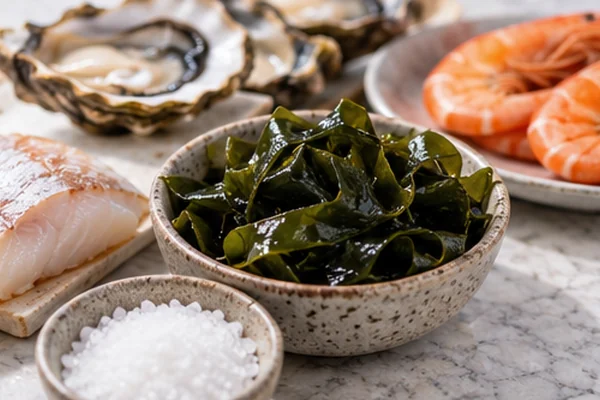
The ODS lists seaweed (such as kelp, nori, kombu and wakame) as one of the best food sources of iodine, with fish, other seafood and eggs also good sources. Dairy products contain iodine too, although the amount varies with farming and processing practices. In one ODS-cited analysis, nonfat milk ranged from 38 to 160 mcg per cup.
Some example values from the ODS food table: 3 ounces of baked cod provides 146 mcg, ¾ cup of plain nonfat Greek yogurt 87 mcg, 1 cup of nonfat milk 84 mcg, ¼ teaspoon of iodized table salt 78 mcg and one large hard-boiled egg 31 mcg. Most fruits and vegetables are poor sources. Seaweed varies enormously: the ODS reports that commercially available seaweeds range from 16 mcg/g to 2,984 mcg/g (ODS).
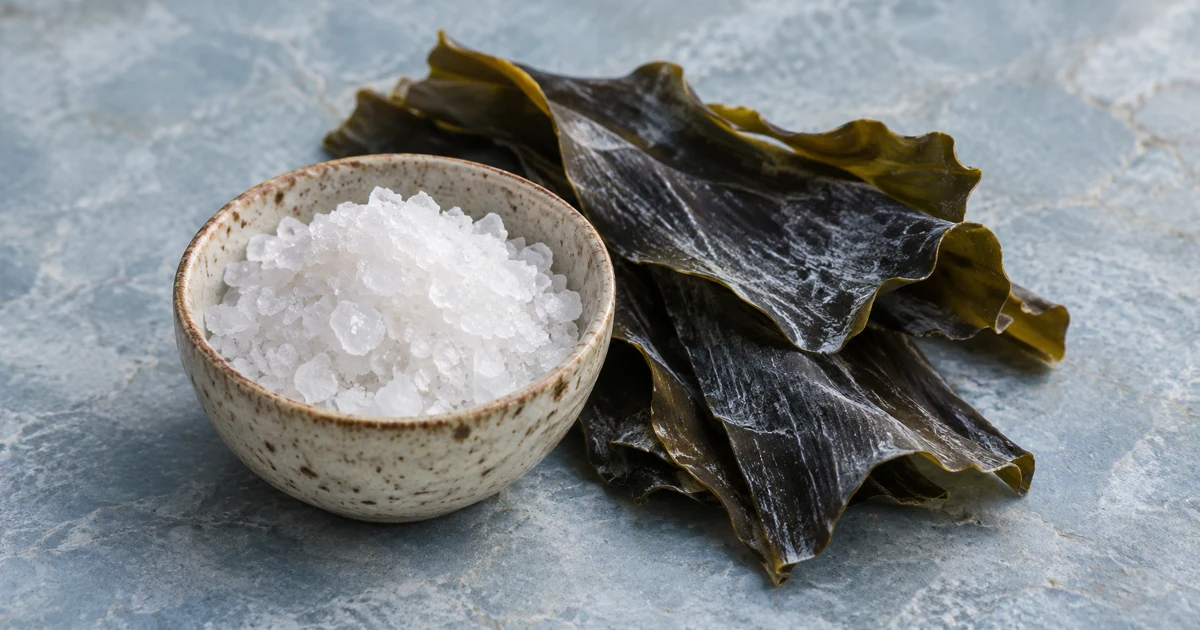
Salt matters more than many people realize. In the United States, iodized salt is voluntary, most salt in processed foods is not iodized, and specialty salts such as sea salt, kosher salt and Himalayan salt are not usually iodized. See iodine food sources and iodized salt vs sea salt.
Who may not get enough
The ODS consumer fact sheet states that most people in the United States get enough iodine from foods and beverages. It names several groups who may have more trouble:
- People who do not use iodized salt.
- Pregnant women, many of whom in the United States may not get quite enough, although experts do not know whether this affects their babies.
- People who follow a vegan diet or eat few or no dairy products, seafood and eggs.
- People in regions with iodine-poor soils who mostly eat local foods.
- People with marginal iodine intake who also eat foods containing goitrogens, such as soy and cruciferous vegetables. For most people with adequate intake, reasonable amounts of these foods are not a concern.
Deficiency can cause goiter and hypothyroidism, and severe deficiency during pregnancy can permanently harm the developing baby (ODS consumer). Our iodine deficiency article explains signs, causes and testing.
Iodine in pregnancy and breastfeeding
The ODS reports that the American Thyroid Association recommends that women who are planning a pregnancy, pregnant or breastfeeding take a daily supplement with 150 mcg of iodine as potassium iodide. It also notes that not all prenatal supplements contain iodine: of 59 best-selling prenatal multivitamins in 2016 to 2017, only 34 did (ODS).
Trial evidence on routine supplementation is less clear-cut than the guidance might suggest. A Cochrane review concluded there were insufficient data to reach any meaningful conclusions on the benefits and harms of routine iodine supplementation before, during or after pregnancy, and almost all its evidence came from mild to moderately deficient settings (Harding 2017). A later meta-analysis found that supplementation improved iodine status in mothers and offspring, but found no evidence of improved infant growth or neurodevelopment (Nazeri 2021). If you are pregnant or planning to be, check your prenatal label and talk with your clinician. More in iodine in pregnancy.
Too much iodine: side effects and who should be careful
More iodine is not better. The ODS explains that high intakes can cause some of the same problems as deficiency, including goiter, raised TSH and hypothyroidism, and can also cause hyperthyroidism and thyroiditis. Very large doses of several grams can cause acute poisoning, with burning of the mouth, throat and stomach, nausea, vomiting and other symptoms.
A review of iodine-induced thyroid dysfunction found that excess iodine is generally well tolerated, but people with underlying thyroid disease or other risk factors may develop thyroid problems after acute or chronic exposure. Sources it named include iodinated contrast for scans, the heart drug amiodarone and excess seaweed (Leung 2012).
A 2024 review reached similar conclusions and called for more data to define safe upper limits, especially in high-risk groups (Sohn 2024). In a meta-analysis of cross-sectional studies, adults in populations with excess iodine intake had higher odds of overt and subclinical hypothyroidism than those with adequate intake, though the authors rated the evidence low quality (Katagiri 2017).
If you have a thyroid condition such as Hashimoto’s disease, Graves’ disease or thyroid nodules, talk with your doctor before taking any iodine supplement, including kelp. See iodine side effects.
Medication interactions
The ODS gives these examples of interactions (ODS):
- Antithyroid medicines such as methimazole: high doses of iodine taken with them can have an additive effect and could cause hypothyroidism.
- ACE inhibitors such as lisinopril: taking potassium iodide with them can increase the risk of high blood potassium (hyperkalemia).
- Potassium-sparing diuretics such as spironolactone: potassium iodide with these can also raise the risk of hyperkalemia.
Tell your doctor or pharmacist about every supplement you take.
Do you need a supplement?
For most adults who use iodized salt and eat some dairy, seafood or eggs, a separate iodine supplement is probably unnecessary. Supplements may matter more if your diet lacks those foods, or during pregnancy and breastfeeding. Many multivitamin/mineral products already contain iodine, often 150 mcg, so check the label before adding anything (multivitamins guide).
In supplements, iodine usually appears as potassium iodide or sodium iodide, and kelp-based products are also sold (see iodine vs iodide). The ODS warns that many iodine-only supplements contain high doses, sometimes above the UL. Iodine also works alongside other nutrients in the thyroid; our iodine and selenium article and the selenium guide cover that link. Supplement makers are responsible for the safety and labeling of their products, and the FDA can act against adulterated or misbranded products after they reach the market (FDA). Our guide on how to choose an iodine supplement walks through forms and doses.
Two important limits: iodine supplements do not treat thyroid disease, and everyday supplements do not protect against radiation. Potassium iodide for radiation emergencies should be taken only when public health officials instruct. Antiseptic iodine solutions are for skin use and should never be swallowed.
Frequently asked questions
Is iodine a mineral?
Yes. Iodine is a trace mineral. The body cannot make it, so it must come from food, iodized salt or supplements.
How much iodine do adults need each day?
The RDA is 150 mcg a day for adults, 220 mcg during pregnancy and 290 mcg while breastfeeding. The adult upper limit is 1,100 mcg a day from all sources.
Is iodine good for the thyroid?
The thyroid needs enough iodine to make hormones, but extra iodine does not improve a thyroid that is already supplied, and too much can trigger thyroid problems. It is not a treatment for thyroid disease.
Does my multivitamin have iodine?
Many do, often at 150 mcg, but not all. Some prenatal vitamins contain none. Check the Supplement Facts label.
Should I take iodine to protect against radiation?
No. Potassium iodide is used in radiation emergencies only when public health officials tell people to take it. Routine supplements are not a form of protection.
Sources
- NIH Office of Dietary Supplements. Iodine: fact sheet for health professionals.
- NIH Office of Dietary Supplements. Iodine: fact sheet for consumers.
- Harding, et al. Iodine supplementation for women during the preconception, pregnancy and postpartum period. Cochrane Database Syst Rev. 2017.
- Nazeri, et al. Effects of iodine supplementation during pregnancy on pregnant women and their offspring: a systematic review and meta-analysis. Eur J Endocrinol. 2021.
- Leung, et al. Iodine-induced thyroid dysfunction. Curr Opin Endocrinol Diabetes Obes. 2012.
- Sohn, et al. Risks of iodine excess. Endocr Rev. 2024.
- Katagiri, et al. Effect of excess iodine intake on thyroid diseases in different populations: a systematic review and meta-analyses. PLoS One. 2017.
- U.S. Food and Drug Administration. Dietary supplements.
Last reviewed November 2026. VitaBrief is educational and is not medical advice. Talk with a doctor, registered dietitian or pharmacist before starting a supplement, especially if you are pregnant, take medication or have kidney disease.
Not medical advice. This guide is for general education. Talk to your doctor or pharmacist before taking a supplement, especially if you are pregnant or breastfeeding, take medication or have a health condition. Medical disclaimer