Supplement basics
Moringa tea: benefits, caffeine and what the evidence shows
What moringa tea is, how to brew it, whether it has caffeine, and why the research on moringa leaves does not translate neatly to a cup of tea.
VitaBrief editorial · Last reviewed November 2026 · Sources listed below
Reader-supported. This page may contain affiliate links. If you buy through one, we may earn a commission at no extra cost to you. It never changes what we write. Affiliate disclosure
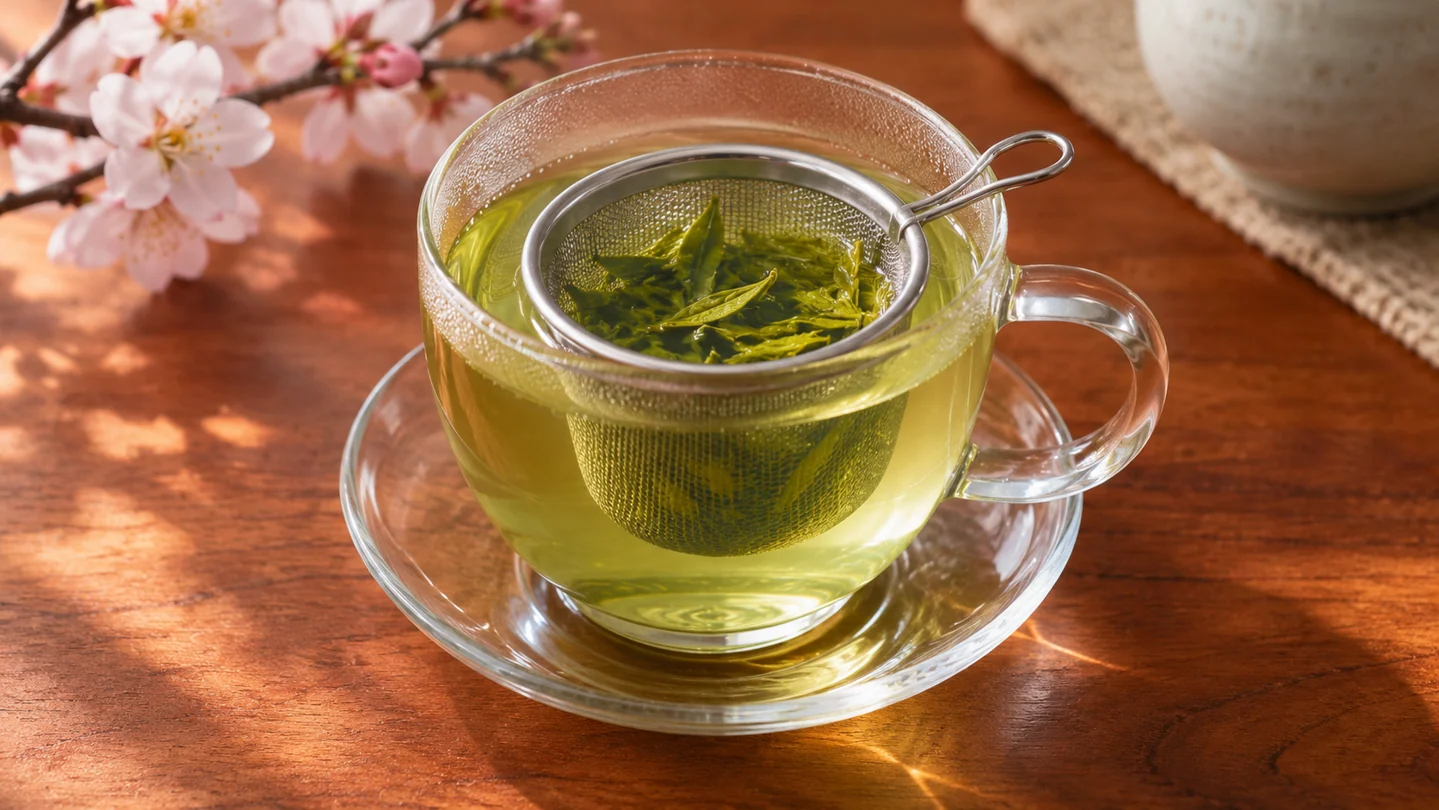
Moringa tea is made by steeping dried leaves of Moringa oleifera in hot water. It is sold in tea bags, as loose leaf and in herbal blends, and it is often promoted as a gentle, nutrient-rich alternative to green tea.
This article explains what moringa tea is, how to make it, and what the research on moringa leaves can and cannot tell you about a daily cup. It draws on published human trials and general supplement guidance from MedlinePlus and the FDA. It is general information, not medical advice.
What moringa tea is
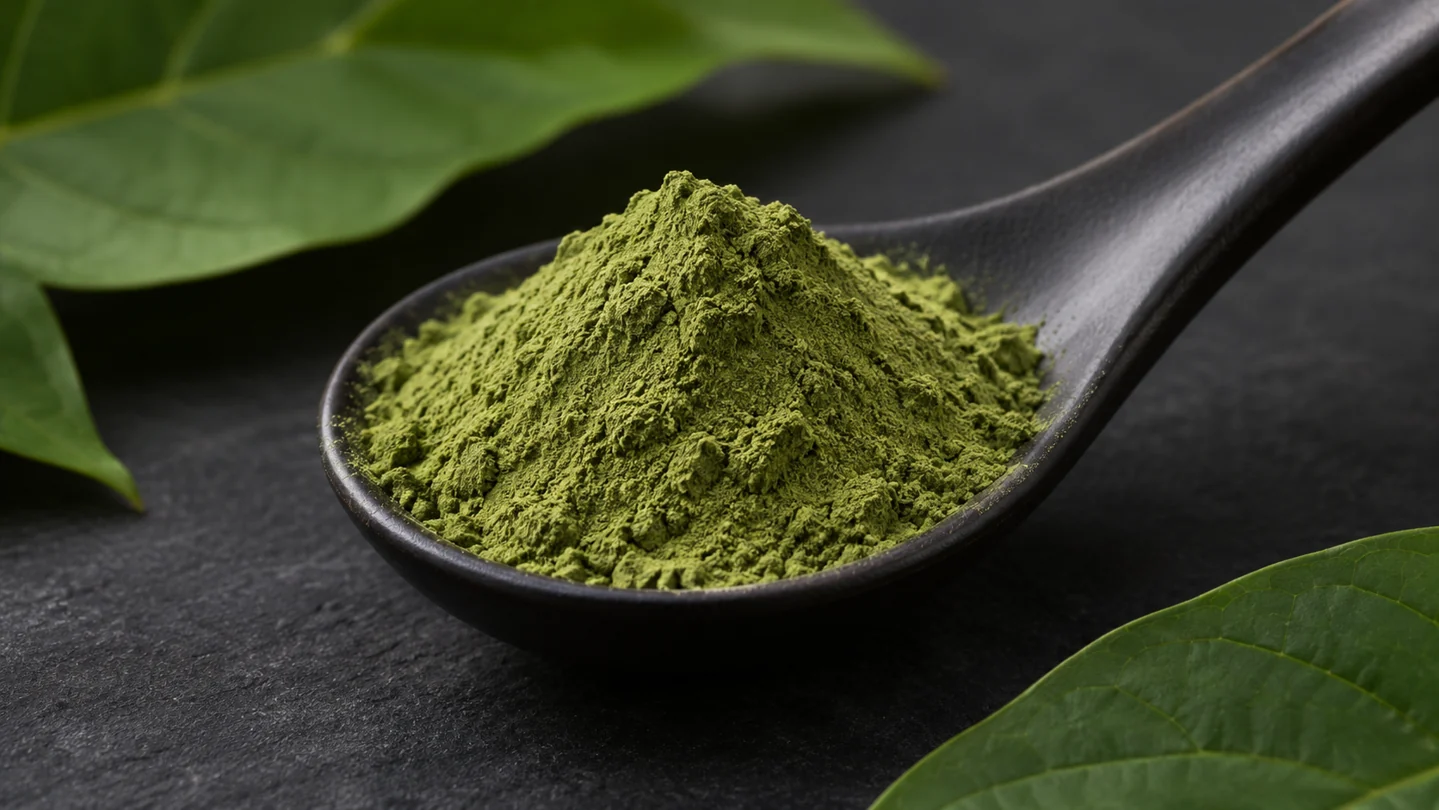
Moringa leaves are eaten as a vegetable in many countries and sold dried as powder, capsules and tea. Researchers describe the plant as rich in polyphenols, vitamins and minerals (Crișan 2025). Moringa tea is an herbal infusion, sometimes called a tisane, rather than a “true” tea from the Camellia sinensis plant that gives us green, black and matcha tea.
There is no official National Institutes of Health or MedlinePlus monograph on moringa. Human evidence for moringa in general is limited and comes mostly from small, short trials, and none of the trials reviewed here tested moringa tea itself. For a fuller introduction, see our moringa guide.
Tea vs the forms used in studies
This is the most important point about moringa tea benefits. When you steep leaves and discard them, you drink only what dissolves into the water. Studies that reported effects gave people the leaves themselves, as capsules of powder, as powder in food or as cooked leaves, often in amounts far larger than a tea bag holds.
| Study | Form and amount | Main finding |
|---|---|---|
| Gómez-Martínez 2021 (65 adults with prediabetes, 12 weeks) | 2,400 mg/day leaf powder in capsules | Favorable changes in fasting glucose and HbA1c vs placebo |
| Afiaenyi 2025 (40 adults with type 2 diabetes, 14 days) | 20, 40 or 60 g/day leaves with meals | No significant differences after adjustment |
| Chan Sun 2020 (41 healthy adults, one meal) | 120 g cooked leaves | Diastolic pressure significantly lower 2 hours after the meal than at baseline |
| Crișan 2025 (meta-analysis, 9 trials, 649 people) | Various leaf supplements | No significant effect on most cardiometabolic outcomes; very low certainty |
| Moringa tea | Steeped dried leaf | Not tested in these sources |
So any claim that moringa tea lowers blood sugar or blood pressure is an extrapolation from different forms and doses. It may be a pleasant drink, but it should not be treated as a therapy.
What the research on moringa leaves shows
Overall heart and metabolic health. A 2025 meta-analysis pooled nine randomized trials with 649 participants (Crișan 2025). Moringa showed no significant effect on most outcomes, including weight, cholesterol and blood sugar measures. A modest drop in diastolic blood pressure was seen but was not robust in sensitivity analyses, and certainty was very low for all outcomes. The authors say the evidence does not support consistent cardiometabolic benefits.
Blood sugar. In adults with prediabetes, 12 weeks of leaf powder capsules produced favorable changes in fasting glucose and HbA1c compared with placebo (Gómez-Martínez 2021). In adults with type 2 diabetes, 14 days of leaves with meals produced no significant differences after adjustment (Afiaenyi 2025). In the prediabetes trial, 31 people took moringa and 34 took placebo, and the researchers found no differences between groups in gut bacteria, appetite hormones, or liver and kidney function markers. The diabetes trial split 40 adults into a control group and three groups eating 20, 40 or 60 g of leaves a day, and the authors called the improvements marginal and not dose-dependent. More detail is in moringa for blood sugar.
Blood pressure. In 41 healthy people, diastolic pressure two hours after one meal of 120 g of cooked leaves was significantly lower than before the meal (Chan Sun 2020). That is a single meal in a small group, not evidence of a lasting effect. See moringa for blood pressure.
Moringa tea does not replace medication for diabetes or high blood pressure. If you take glucose-lowering or blood pressure drugs, talk with your clinician before adding any moringa product, since combining treatments that act on the same measures deserves monitoring.
Does moringa tea have caffeine?
Moringa is not a Camellia sinensis tea, and pure moringa leaf tea is generally sold as caffeine-free. That is a general point: the sources reviewed here did not measure caffeine, so check the label, since many moringa products are blends that include green tea, matcha or other ingredients that do contain caffeine. If caffeine matters to you, choose a product that lists moringa leaf as its only ingredient.
Drinking it at night. No research among our sources looked at moringa tea and sleep, either for or against. For a side-by-side look at caffeine and other differences, see moringa vs matcha.
How to make moringa tea
The steps below are general herbal-tea habits, not methods tested in studies:
- Use one tea bag, or about one teaspoon of loose dried leaf, per cup, or follow the package directions.
- Pour hot water that is just off the boil over the leaves.
- Steep for a few minutes, then strain.
Some people whisk a small amount of moringa powder into hot water instead, which means drinking the leaf rather than just an infusion. That is closer to the forms used in studies, but the amounts are still usually far smaller.
Moringa tea vs green tea and other drinks
People often weigh moringa tea against green tea, matcha or other herbal infusions. No study in the sources reviewed here compared them directly, so claims that moringa tea is “more nutritious” or “better” than green tea are not supported by this evidence. The practical differences people usually weigh are taste and caffeine.
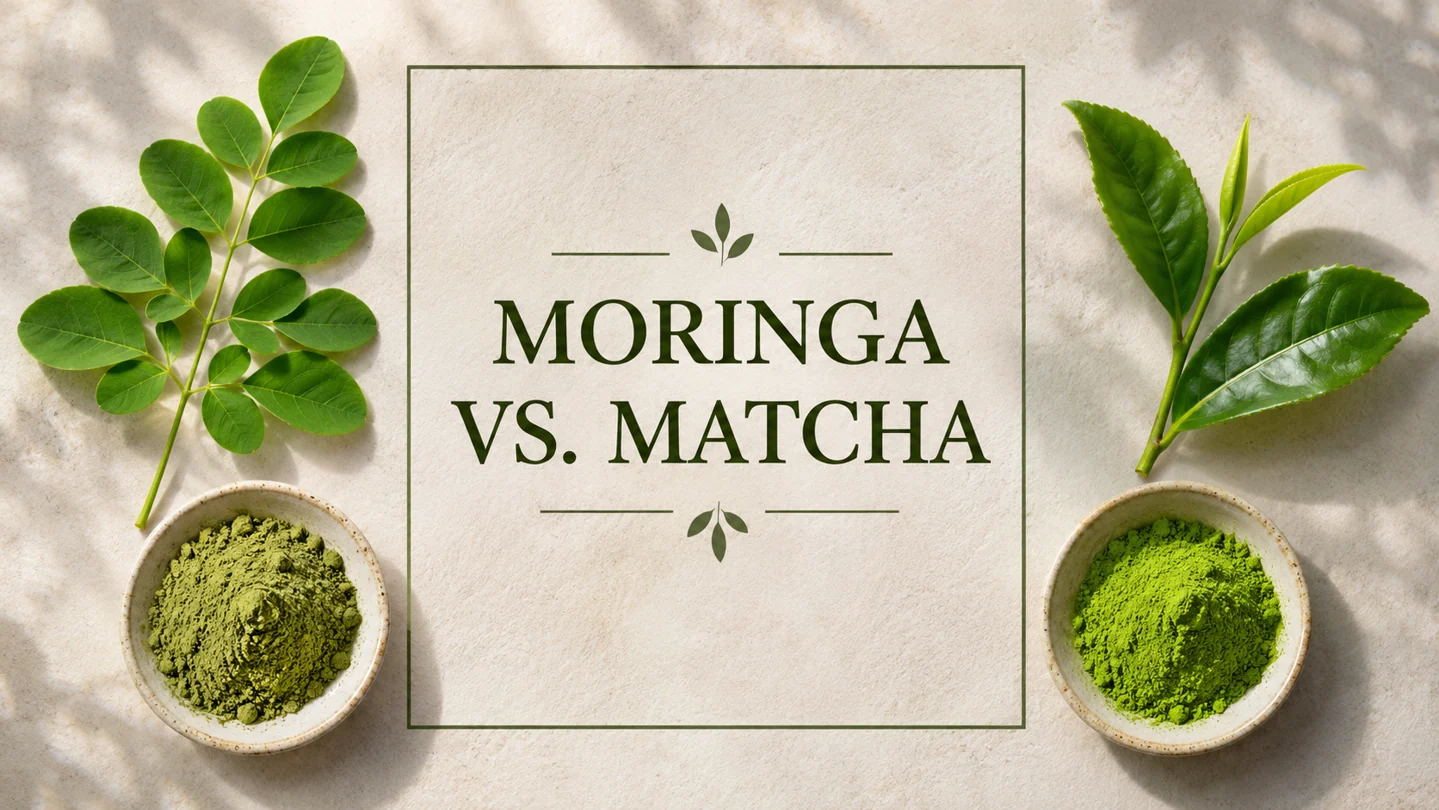
- Green tea and matcha come from Camellia sinensis and contain caffeine. Matcha is powdered whole leaf, so you drink the leaf itself.
- Pure moringa tea is an herbal infusion, generally sold as caffeine-free.
- Herbal blends may mix moringa with other herbs or teas, which changes both caffeine content and the safety picture.
If you simply want a warm, caffeine-free drink, moringa tea is one option among many. If you want a specific health effect, the evidence for any of these drinks should be judged on its own studies rather than on marketing. Our comparison of moringa vs matcha goes into more detail, and moringa benefits reviews the broader research.
Breastfeeding, pregnancy and other cautions
Moringa tea is often marketed for breastfeeding. Small, short trials of moringa leaf reported more milk volume, but the evidence is limited and infant safety data are sparse; see moringa for breastfeeding and talk with your clinician or a lactation consultant first. In pregnancy, the safety of moringa supplements has not been established, so ask your clinician before using moringa tea; see moringa in pregnancy.
Safety data on long-term moringa use are limited, including for people with kidney, liver or thyroid conditions. Our moringa side effects page covers what is known. General advice from MedlinePlus applies: tell your health care provider about supplements you use, do not take more than the label recommends, and check with your provider before surgery. MedlinePlus also notes that supplements do not have to go through the testing that drugs do.
The FDA explains that manufacturers and distributors are responsible for evaluating the safety and labeling of their products before marketing, and that the FDA can take action against adulterated or misbranded products after they reach the market. Tea quality and labeling are therefore up to the seller. Our guide on how to choose a moringa supplement covers what to check.
FAQ
What are the benefits of moringa tea?
No study in these sources tested moringa tea. Trials of moringa leaves had mixed results, and a 2025 meta-analysis found no consistent heart or metabolic benefit.
Does moringa tea have caffeine?
Pure moringa leaf tea is generally sold as caffeine-free (our sources did not measure it), but blends may include green tea or matcha. Check the ingredient list.
Can I drink moringa tea at night?
No research among our sources tested moringa tea and sleep. Check that your tea has no added caffeine.
Is moringa tea good for diabetes?
It has not been tested. Leaf studies were mixed, and moringa does not replace diabetes medication. Talk with your clinician if you take glucose-lowering drugs.
How much moringa tea can I drink a day?
There is no established amount. Follow the package directions and do not exceed the label’s recommendation.
Sources
- MedlinePlus. Dietary supplements.
- US Food and Drug Administration. Dietary supplements.
- Crișan, et al. Effects of Moringa oleifera Lam. supplementation on cardiometabolic outcomes: a meta-analysis of randomized controlled trials with GRADE assessment. Nutrients. 2025.
- Gómez-Martínez, et al. Moringa oleifera leaf supplementation as a glycemic control strategy in subjects with prediabetes. Nutrients. 2021.
- Afiaenyi, et al. Effects of Moringa oleifera leaves on the blood glucose, blood pressure, and lipid profile of type 2 diabetic subjects: a parallel group randomized clinical trial of efficacy. Nutr Health. 2025.
- Chan Sun, et al. Consumption of Moringa oleifera Lam leaves lowers postprandial blood pressure. J Am Coll Nutr. 2020.
Last reviewed November 2026. VitaBrief is educational and is not medical advice. Talk with a doctor, registered dietitian or pharmacist before starting a supplement, especially if you are pregnant, take medication or have kidney disease.
Not medical advice. This guide is for general education. Talk to your doctor or pharmacist before taking a supplement, especially if you are pregnant or breastfeeding, take medication or have a health condition. Medical disclaimer