Supplement basics
Prebiotic foods: a practical list for gut health
Which foods supply fiber that gut microbes can use, what the evidence says, and how to add more without the gas and bloating.
VitaBrief editorial · Last reviewed November 2026 · Sources listed below
Reader-supported. This page may contain affiliate links. If you buy through one, we may earn a commission at no extra cost to you. It never changes what we write. Affiliate disclosure
Search for “prebiotic foods” and you will find long lists that promise a healthier gut from a single ingredient. The reality is simpler and less dramatic. Prebiotics are a kind of fiber or carbohydrate that your own body does not digest but that some gut bacteria can use. Many everyday plant foods contain fiber, and some contain the specific carbohydrates studied as prebiotics. Eating a varied, fiber-rich diet is the most practical way to get them.
This article explains what makes a food “prebiotic,” lists fiber-rich foods as described by government health sources, notes which other foods are commonly called prebiotic, and covers how to add more fiber without uncomfortable side effects. It draws on the National Center for Complementary and Integrative Health (NCCIH), the NIH Office of Dietary Supplements (ODS), MedlinePlus and published reviews. It is general information, not medical advice.
What makes a food prebiotic?
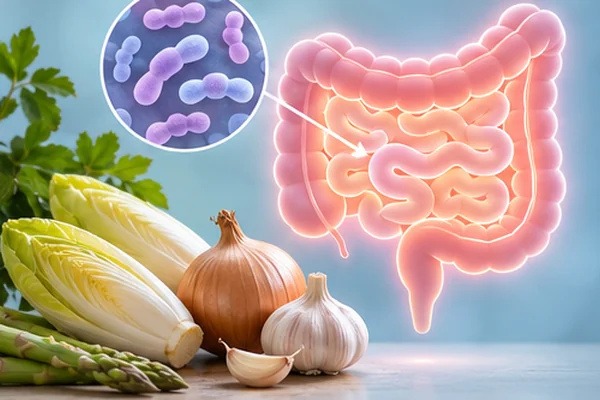
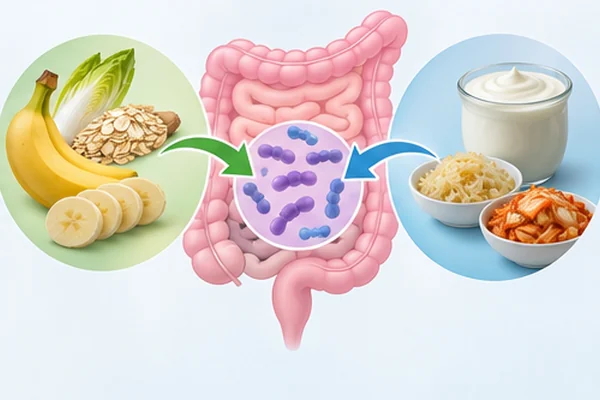
NCCIH describes prebiotics as nondigestible food components that selectively stimulate the growth or activity of desirable microorganisms. They are not the same as probiotics, which are live microorganisms. The ODS fact sheet adds that prebiotics are typically complex carbohydrates, such as inulin and other fructo-oligosaccharides (FOS), that microorganisms in the gut use as metabolic fuel.
That definition matters for food lists. Not every fiber behaves the same way, and not every high-fiber food has been tested for a prebiotic effect. When a website labels a food “prebiotic,” it usually means the food contains carbohydrates that reach the large intestine undigested and can be fermented by bacteria there. The amount in a typical serving varies and is rarely measured.
For a fuller explanation of the term, see our prebiotics guide. If you want to understand how prebiotics differ from live cultures, see prebiotic vs. probiotic.
Fiber-rich foods: the government list
No NIH fact sheet ranks foods by prebiotic content. The clearest government food guidance comes from MedlinePlus, which separates fiber into two types. Its page on soluble vs. insoluble fiber says both are important for health and digestion.
| Fiber type | What it does (per MedlinePlus) | Food sources listed by MedlinePlus |
|---|---|---|
| Soluble fiber | Attracts water and turns to gel during digestion, which slows digestion; research has shown it helps lower cholesterol | Oat bran, barley, nuts, seeds, beans, lentils, peas, some fruits and vegetables; also psyllium, a common fiber supplement |
| Insoluble fiber | Adds bulk to the stool and appears to help food pass more quickly through the stomach and intestines | Wheat bran, vegetables, whole grains |
| Dietary fiber overall | Adds bulk, helps you feel full, helps digestion and helps prevent constipation | Whole grains, nuts and seeds, fruit and vegetables |
MedlinePlus also notes that most Americans do not eat enough dietary fiber. That is a useful starting point: before worrying about which food is the “most prebiotic,” most people can benefit from simply eating more of the foods in this table.
Psyllium appears on the soluble fiber list. It is usually discussed as a bulk-forming fiber supplement rather than as a classic prebiotic, and we cover it separately in our psyllium guide.
Foods often called prebiotic
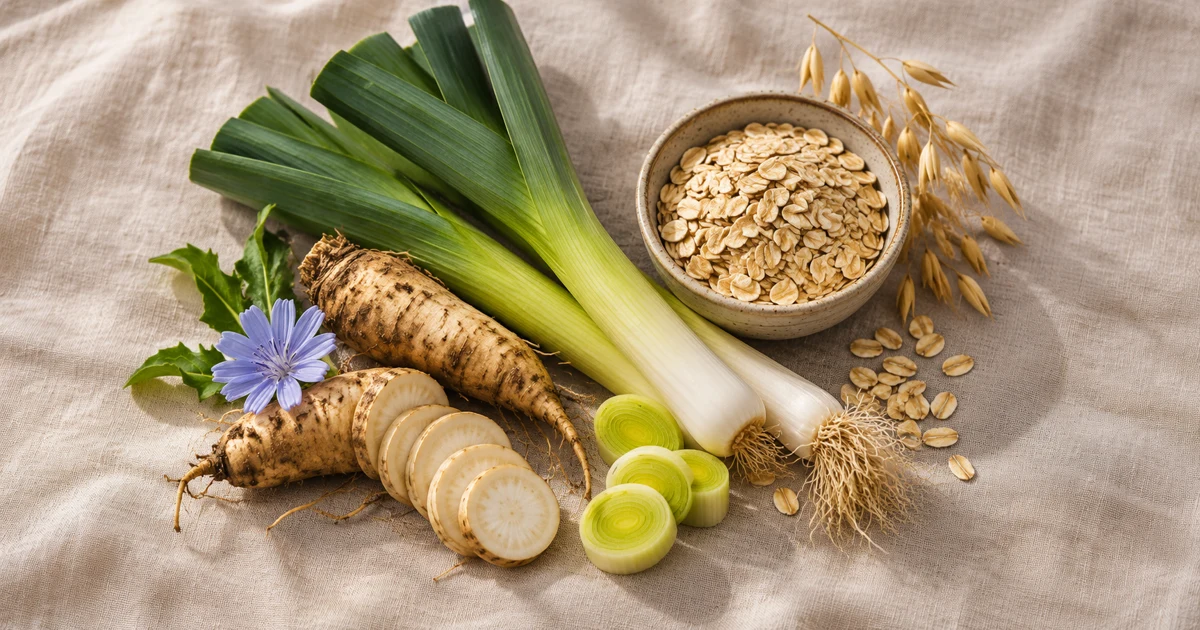
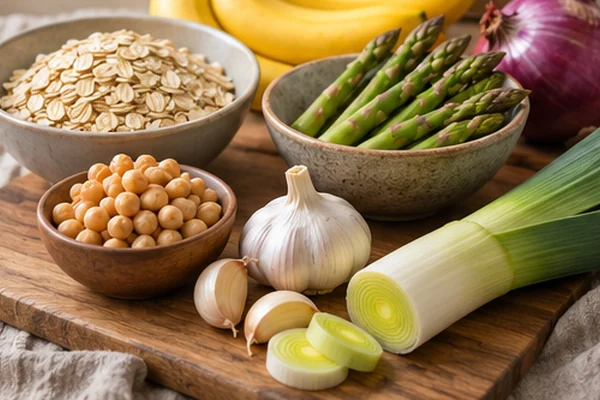
Popular lists of prebiotic foods often name certain vegetables, such as onions, garlic, leeks and asparagus, along with chicory root, slightly green bananas, whole grains and legumes. These foods are commonly described as natural sources of inulin, FOS or other fermentable carbohydrates. The government sources used for this article do not provide a ranked list of these foods, so treat such lists as general guidance rather than precise measurements.
A few cautious points help here:
- The amount of prebiotic carbohydrate in a food can differ with variety, ripeness, storage and cooking.
- Chicory root is a common commercial source of inulin used in foods and supplements. Most of the research on inulin-type fructans described below used chicory-derived ingredients, not whole vegetables.
Whole foods bring other nutrients along with their fiber, so there is little downside to including a range of them if you tolerate them well. For more on the ingredient itself, see our page on inulin.
What research shows about prebiotic fibers
Most prebiotic research tests specific, measured ingredients rather than foods. That makes it easier to know the dose, but it means the findings do not translate neatly to a plate of vegetables.
A systematic review by Nagy 2023 looked at chicory-derived inulin-type fructans given in foods or as supplements. Across 50 studies with 2,525 participants, amounts of 3 to 20 g per day significantly increased Bifidobacterium, a group of bacteria generally regarded as beneficial. The review also found beneficial effects on bowel function parameters in healthy people. The bifidogenic effect was seen in healthy people and in several groups with health problems, but not in people with gastrointestinal disorders.
A separate review of fructo-oligosaccharides by Dou 2022 pooled eight trials. FOS increased Bifidobacterium counts, with larger effects at doses above 5 g and with interventions longer than four weeks. The authors reported no difference from comparators in adverse gastrointestinal symptoms and described FOS as well tolerated.
Two cautions apply. First, a rise in a bacterial group is not proof of a health benefit on its own. Second, these were studies of measured ingredients, not of whole foods. Our prebiotics benefits article covers the evidence in more detail.
How to add prebiotic foods without discomfort
The most common problem with eating more fiber is not a lack of benefit but too much gas. MedlinePlus advises adding fiber to your diet slowly, because increasing it too quickly can lead to gas, bloating and cramps. Fermentable carbohydrates such as inulin and FOS can produce gas as bacteria break them down.
- Change one thing at a time. Add one new food, such as oats at breakfast or beans at lunch, and give it a week or two before adding another.
- Use smaller portions at first. A spoonful of lentils in a soup is easier to tolerate than a large bowl of bean chili on day one.
- Spread fiber through the day. Several modest servings tend to be gentler than one large one.
- Pay attention to your own response. Some foods may bother you more than others, and that is useful information.
If you notice ongoing discomfort, see our article on prebiotics side effects.
A note on IBS and FODMAPs
Some foods on popular prebiotic lists are also high in FODMAPs, a group of fermentable carbohydrates. Inulin and FOS are themselves fermentable carbohydrates. For some people with irritable bowel syndrome (IBS), these foods may worsen symptoms such as bloating, gas and abdominal pain.
The research on prebiotic supplements in IBS is not encouraging. A meta-analysis by Ford 2018 found that data for prebiotics and synbiotics in IBS were sparse, and a network meta-analysis by Wu 2024 found prebiotics and synbiotics did not show significant improvement in IBS symptoms. If you have IBS, it is wise to work with a clinician or registered dietitian before deliberately loading up on high-prebiotic foods. Our page on prebiotics for bloating and IBS explains more.
Any gut symptoms that are new, severe or persistent, such as blood in the stool, unexplained weight loss or ongoing changes in bowel habits, need medical review rather than diet experiments.
Foods vs. supplements
Prebiotic supplements, usually inulin or FOS powders, deliver a known amount of one type of fiber. Foods deliver smaller, variable amounts of many fibers along with vitamins, minerals and other plant compounds. For most people, food comes first. A supplement may be a convenient way to add a measured amount of a specific fiber, but it does not replace a varied diet.
There is no established recommended dose of prebiotics. Studies have used a range of amounts, which we summarize on our prebiotics dosage page. Drinks marketed as prebiotic sodas are another option some people try; our prebiotic soda article explains how to read their labels.
Keep in mind that supplements are regulated differently from medicines. According to the FDA, manufacturers and distributors are responsible for evaluating the safety and labeling of their products before marketing, and FDA can take action against adulterated or misbranded products after they reach the market. If you decide to try one, our guide on how to choose a prebiotic supplement can help.
Frequently asked questions
What foods are highest in prebiotics?
Chicory root and vegetables such as onions, garlic and leeks are often named. Exact amounts vary and government sources do not rank them, so a varied, fiber-rich diet is the safer goal.
Are bananas prebiotic?
Slightly green bananas are often listed as a prebiotic food. Fruit in general is a source of fiber, according to MedlinePlus, but the specific prebiotic content of bananas has not been measured in the sources reviewed here.
Is oatmeal a prebiotic food?
Oat bran is a source of soluble fiber, according to MedlinePlus. Oats are commonly included on prebiotic lists, and they are a practical way to add fiber to breakfast.
Do I need a supplement if I eat prebiotic foods?
Most people do not need one. Food comes first, and no official dose for prebiotics exists. A supplement is optional, not essential.
Why do prebiotic foods make me gassy?
Gut bacteria ferment these carbohydrates and produce gas. MedlinePlus advises adding fiber slowly, since increasing it too quickly can cause gas, bloating and cramps.
Sources
- National Center for Complementary and Integrative Health. Probiotics: what you need to know.
- NIH Office of Dietary Supplements. Probiotics: fact sheet for health professionals.
- MedlinePlus. Dietary fiber.
- MedlinePlus. Soluble vs. insoluble fiber.
- Nagy, et al. Effect of chicory-derived inulin-type fructans on abundance of Bifidobacterium and on bowel function: a systematic review with meta-analyses. Crit Rev Food Sci Nutr. 2023.
- Dou, et al. Effect of fructooligosaccharides supplementation on the gut microbiota in human: a systematic review and meta-analysis. Nutrients. 2022.
- Ford, et al. Systematic review with meta-analysis: the efficacy of prebiotics, probiotics, synbiotics and antibiotics in irritable bowel syndrome. Aliment Pharmacol Ther. 2018.
- Wu, et al. The efficacy of probiotics, prebiotics, synbiotics, and fecal microbiota transplantation in irritable bowel syndrome: a systematic review and network meta-analysis. Nutrients. 2024.
- US Food and Drug Administration. Dietary supplements.
Last reviewed November 2026. VitaBrief is educational and is not medical advice. Talk with a doctor, registered dietitian or pharmacist before starting a supplement, especially if you are pregnant, take medication or have kidney disease.
Not medical advice. This guide is for general education. Talk to your doctor or pharmacist before taking a supplement, especially if you are pregnant or breastfeeding, take medication or have a health condition. Medical disclaimer