Comparisons
Selenomethionine vs. sodium selenite: which selenium form is better?
Supplements use organic and inorganic forms of selenium. Here is what the evidence says about absorption, research use and safety.
VitaBrief editorial · Last reviewed November 2026 · Sources listed below
Reader-supported. This page may contain affiliate links. If you buy through one, we may earn a commission at no extra cost to you. It never changes what we write. Affiliate disclosure
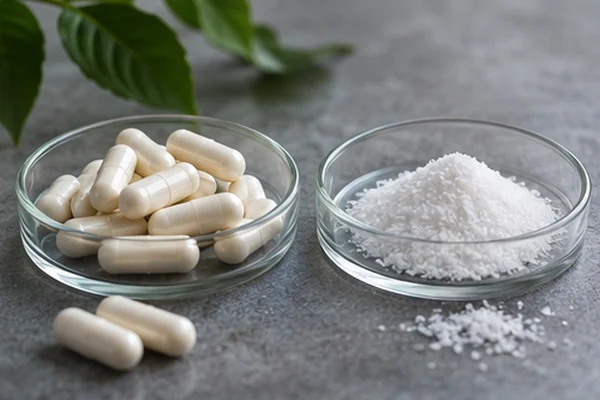
Read the label on a selenium supplement and you will usually find one of a few names: selenomethionine, selenium-enriched yeast, sodium selenite or sodium selenate. Some marketing claims that one form, often selenomethionine or “organic” selenium, is far better than the rest. Others promote selenite as the “pure” mineral form. The reality is less dramatic than either claim.
This comparison explains what each form is, what the NIH Office of Dietary Supplements (ODS) says about absorption, which forms major trials used, and why the dose on the label matters more than the form for most people. It is general information, not medical advice.
Selenomethionine vs. sodium selenite: the short answer
Selenomethionine vs. sodium selenite, selenium yeast and sodium selenate compared: what each form is, how well it is absorbed, which forms major trials used, safety and how to choose.
At a glance
| Feature | Selenomethionine | Selenium-enriched yeast | Sodium selenite / selenate |
|---|---|---|---|
| Type | Organic | Organic (yeast grown in a high-selenium medium) | Inorganic |
| Found in food? | Yes, the main form in foods | Mostly selenomethionine | In soil and ground water; plants convert it to organic forms |
| Absorption (ODS) | The body absorbs up to about 90% of selenium from all of these forms | ||
| Used in major trials | SELECT (200 mcg/day as L-selenomethionine) | Nutritional Prevention of Cancer Trial (200 mcg/day) | Selenite used in Keshan disease intervention trials |
| Effects of chronic excess (ODS) | Organic and inorganic forms have similar effects | ||
What each form is
Selenium comes in two broad chemical families. ODS explains that soil and ground water contain inorganic forms, such as selenites and selenates. Plants take these up and convert them to organic forms, mostly selenomethionine and selenocysteine. That is why selenium in food is present mainly as selenomethionine, along with selenocysteine.
Selenomethionine is an organic form of selenium. It is the main form you already eat in protein foods such as seafood, meat, poultry and grains.
Selenium-enriched yeast is yeast grown in a high-selenium medium. ODS says the selenium in it is predominantly selenomethionine, so in practice it is close to selenomethionine, delivered inside a yeast matrix.
Sodium selenite and sodium selenate are inorganic salts, the same kinds of selenium compounds found in soil. The consumer fact sheet from ODS lists all four as forms commonly found in supplements, and says every supplement’s Supplement Facts label shows how much selenium it contains.
Absorption: closer than marketing suggests
The biggest marketing argument for selenomethionine is absorption. But ODS states that the human body absorbs up to about 90% of the selenium from selenomethionine, selenium-enriched yeast, selenite and selenate. All four are well absorbed.
ODS also explains what happens next. Once selenomethionine and inorganic selenium are absorbed, they are rapidly converted to a common intermediate that the body uses to make selenocysteine. Selenocysteine is the form of selenium found in all 25 human selenoproteins, the proteins that do selenium’s work in thyroid hormone metabolism, DNA synthesis and antioxidant defense. In other words, the different forms take different routes but feed the same pathway.
ODS also notes that dietary selenium is readily absorbed and that absorption is largely not affected by selenium status. And research summarized by ODS suggests that supplementation does not raise selenoprotein P or glutathione peroxidase activity unless a person is selenium deficient. More selenium in the blood does not necessarily mean more selenium at work.
Which forms the major trials used
Knowing which form a study used helps you interpret its results. The largest selenium trial, SELECT, gave 35,533 men 200 mcg per day from L-selenomethionine and found it did not prevent prostate cancer (Lippman 2009). The 2018 Cochrane review, as summarized by ODS, found that 200 to 500 mcg per day, primarily as selenomethionine, had little to no effect on cancer incidence or mortality. The review’s authors called for more research on whether different forms of selenium have different effects (Vinceti 2018).
The earlier Nutritional Prevention of Cancer Trial used 200 mcg per day as selenium yeast. Several trials ODS describes on thyroid function, heart disease and male fertility also used selenium yeast or selenomethionine. Inorganic selenite has a different track record: ODS reports that Keshan disease, a heart condition tied to very low selenium intakes in parts of China, fell dramatically after large intervention trials provided selenite supplements. More on that in our selenium deficiency article.
So no single form owns the evidence. The large cancer trials described here used organic forms, while the drop in Keshan disease followed selenite supplementation in a deficient population.
This also means you cannot assume that a study result for one form applies to another. If a product cites research, check which form and dose the study used. A finding from selenite given to people with very low intakes says little about selenomethionine taken by someone who already eats plenty of selenium, and the reverse is also true.
The thyroid exception
One place where form may matter is Hashimoto’s thyroiditis. ODS describes a meta-analysis of 16 trials in people with autoimmune thyroiditis who took 80 to 200 mcg per day as selenomethionine or sodium selenite. In people treated with levothyroxine, selenium lowered thyroid peroxidase antibody (TPOAb) levels, and selenomethionine was more effective than sodium selenite, possibly because of higher absorption.
A 2024 meta-analysis found that in people with Hashimoto’s not on thyroid hormone replacement, selenium lowered TSH, TPO antibodies and malondialdehyde, a marker of oxidative stress, with adverse effects comparable to control groups (Huwiler 2024). These are lab markers, not proof that symptoms improve, and selenium does not replace thyroid treatment. If you have thyroid disease, choose any supplement with your doctor. See selenium for thyroid and iodine and selenium for more.
Safety is about the dose, not the form
Some people assume organic selenium is gentler or that inorganic selenium is more toxic. ODS says chronically high intakes of the organic and inorganic forms have similar effects. The early signs of excess are garlic breath and a metallic taste in the mouth. The most common signs of selenosis are hair loss and nail brittleness or loss, and others include skin rash, nausea, diarrhea, fatigue, irritability and nervous system abnormalities.
The adult RDA is 55 mcg per day, and the tolerable upper intake level (UL) is 400 mcg per day from food and supplements combined. ODS adds that acute toxicity has occurred from misformulated products, including a liquid supplement in 2008 that contained 200 times the labeled amount of selenium. Read more in selenium toxicity and selenium side effects.
Interactions do not depend on form either. ODS notes that the chemotherapy drug cisplatin can lower selenium levels, though the clinical impact is unknown. Tell your doctor or pharmacist about any selenium product you take.
How to choose between them
For most healthy adults, the form is a secondary question. Most people in the United States already get enough selenium from food, according to ODS, and deficiency is very rare. If you do decide to supplement, these points matter more than the form:
- Dose. ODS says many multivitamins contain 55 mcg, while selenium-only products typically contain 100 to 400 mcg. A lower dose keeps you further from the UL.
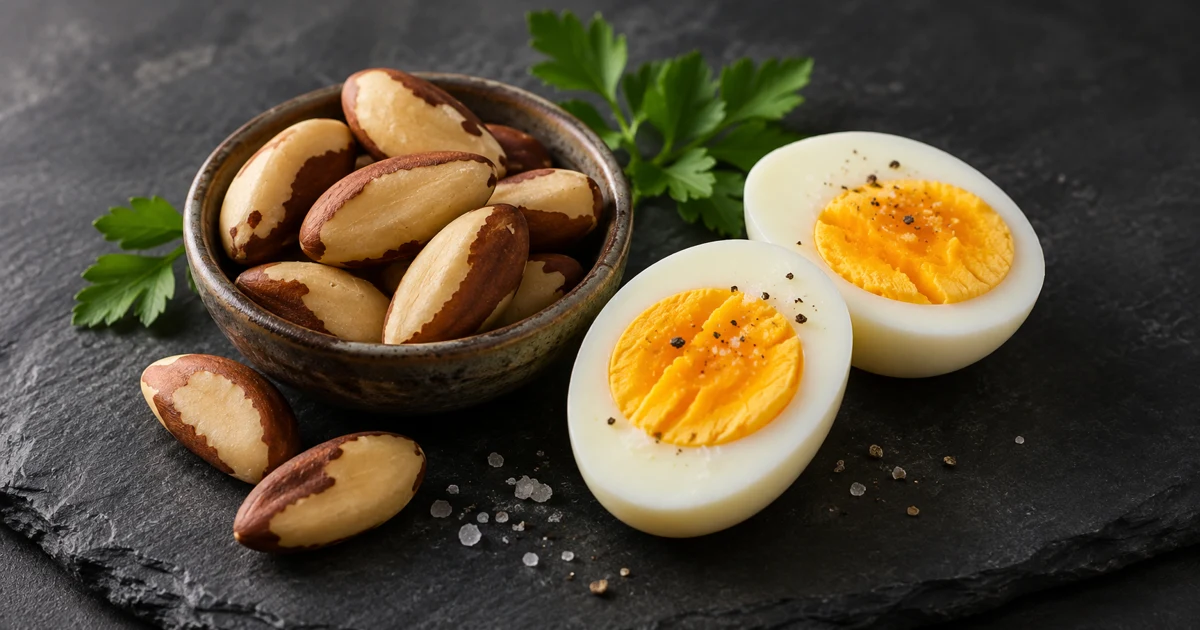
- Overlap. Count selenium from your multivitamin, any combination products, and Brazil nuts, which ODS gives as 68 to 91 mcg per nut.
- Your reason. If you are taking selenium for a thyroid condition, the form your doctor recommends may differ from a general choice.
If you prefer the form that matches food and most recent research, selenomethionine or selenium yeast is a reasonable pick. Selenite or selenate is also well absorbed, according to ODS, so there is no need to avoid a multivitamin just because it uses an inorganic form. Whatever you choose, look for a clear amount in mcg per serving on the Supplement Facts label. Under federal law, FDA says manufacturers are responsible for evaluating the safety and labeling of their products before marketing, and FDA can act against adulterated or misbranded products after they reach the market. Our guide to choosing a selenium supplement covers labels and quality in more detail.
Frequently asked questions
Is selenomethionine better than sodium selenite?
Both are well absorbed, up to about 90% according to ODS. One meta-analysis found selenomethionine lowered thyroid antibodies more than selenite in treated Hashimoto’s patients, but no form has been shown to prevent disease.
What is selenium yeast?
It is yeast grown in a high-selenium medium. ODS says its selenium is predominantly selenomethionine.
Is organic selenium safer?
Not in terms of overdose. ODS says chronically high intakes of organic and inorganic forms have similar effects. Keep total intake at or below 400 mcg per day.
What is the difference between selenite and selenate?
Both are inorganic forms found in soil and used in supplements. ODS groups them with the organic forms as well absorbed and does not rank one over the other.
Which form did the SELECT trial use?
SELECT used 200 mcg per day from L-selenomethionine. It did not prevent prostate cancer.
Sources
- NIH Office of Dietary Supplements. Selenium: fact sheet for health professionals.
- Lippman, et al. Effect of selenium and vitamin E on risk of prostate cancer and other cancers: the Selenium and Vitamin E Cancer Prevention Trial (SELECT). JAMA. 2009.
- NIH Office of Dietary Supplements. Selenium: fact sheet for consumers.
- Vinceti, et al. Selenium for preventing cancer. Cochrane Database Syst Rev. 2018.
- Huwiler, et al. Selenium supplementation in patients with Hashimoto thyroiditis: a systematic review and meta-analysis of randomized clinical trials. Thyroid. 2024.
- U.S. Food and Drug Administration. Dietary supplements.
Last reviewed November 2026. VitaBrief is educational and is not medical advice. Talk with a doctor, registered dietitian or pharmacist before starting a supplement, especially if you are pregnant, take medication or have kidney disease.
Not medical advice. This guide is for general education. Talk to your doctor or pharmacist before taking a supplement, especially if you are pregnant or breastfeeding, take medication or have a health condition. Medical disclaimer