Supplement basics
Selenium deficiency: symptoms, causes and who is at risk
Why selenium deficiency is rare in the United States, which conditions low selenium is linked to, who has a higher risk of low intake and what to do if you are worried about your levels.
VitaBrief editorial · Last reviewed November 2026 · Sources listed below
Reader-supported. This page may contain affiliate links. If you buy through one, we may earn a commission at no extra cost to you. It never changes what we write. Affiliate disclosure

Selenium is an essential trace mineral, but most people in the United States get plenty of it from food. Searches for “selenium deficiency symptoms” are common, yet true deficiency is very rare in North America. This article explains what selenium does, what happens when intake is truly too low, who is most likely to fall short and why taking a supplement “just in case” is not automatically safe. It is based mainly on the NIH Office of Dietary Supplements (ODS) health professional fact sheet and the ODS consumer fact sheet.
Selenium deficiency: the short answer
An evidence-based look at selenium deficiency: why it is rare in the US, Keshan and Kashin-Beck disease, the link with iodine and the thyroid, who is at risk (low-selenium regions, dialysis, HIV), how status is measured and how to get enough safely.
What selenium does in the body
According to the ODS, selenium is a part of 25 selenoproteins. These proteins play critical roles in thyroid hormone metabolism, DNA synthesis, reproduction and protection from oxidative damage and infection (ODS). The consumer fact sheet adds that the thyroid gland needs selenium to produce hormones and function properly, and that selenium levels are higher in the thyroid than in any other organ (ODS Consumer).
Plants take up inorganic selenium from soil and water and convert it into organic forms, mostly selenomethionine and selenocysteine. That is why the selenium content of plant foods, and of animals that eat them, depends heavily on where they were grown. For a broader overview, see our selenium guide.
How common is selenium deficiency?
The ODS describes selenium deficiency as very rare in the United States and Canada. Most people in the US consume adequate amounts. National survey data cited by the ODS put average daily intake from foods and beverages at 108 mcg in people age 2 and older, and 116 mcg when supplements are included. Adult men averaged 132 mcg from food and beverages and adult women 94 mcg, both well above the adult Recommended Dietary Allowance (RDA) of 55 mcg (ODS).
Soil selenium varies across the country. The ODS notes that people living in the Midwestern and Western United States have higher blood selenium concentrations than those in the South and Northeast. However, because food travels long distances in the US, people living in low-selenium areas typically still get enough. Even in low-selenium regions of North America, intakes are well above the RDA (ODS).
| Age or life stage | RDA (mcg/day) |
|---|---|
| 0 to 6 months | 15 (Adequate Intake) |
| 7 to 12 months | 20 (Adequate Intake) |
| 1 to 3 years | 20 |
| 4 to 8 years | 30 |
| 9 to 13 years | 40 |
| 14 years and older | 55 |
| Pregnancy | 60 |
| Lactation | 70 |
What selenium deficiency can cause
Selenium deficiency does not come with a neat list of everyday symptoms the way some nutrient deficiencies do. The ODS states that selenium deficiency on its own rarely causes illness. Instead, it produces biochemical changes that might predispose people who face additional stresses to develop certain conditions (ODS). The conditions most clearly linked to low selenium are described below.
Keshan disease. This is an endemic cardiomyopathy, a disease of the heart muscle, first identified in 1935 in parts of China where the soil is low in selenium. Adults in those areas had average intakes of no more than 10 mcg a day, and the ODS says at least 20 mcg a day is needed to protect adults from the disease. It mainly affects women of childbearing age and preschool children. Its exact cause remains unknown, but cases fell dramatically after several large intervention trials that provided selenium in the 1970s to 1990s. Prevalence is low today, though the disease still exists (ODS).
Kashin-Beck disease. The ODS describes this as a type of osteoarthritis that commonly appears in childhood and puberty. It occurs in certain low-selenium and low-iodine areas of China, Tibet, Siberia and North Korea (ODS).
Thyroid problems linked to iodine. Selenium deficiency could make iodine deficiency worse, potentially raising the risk of congenital hypothyroidism in infants. In regions with very low selenium, such as parts of Central Africa, a condition called endemic myxedematous hypothyroidism occurs, with very low thyroid hormone levels and extremely high thyroid-stimulating hormone (TSH) (ODS). The interplay between these two minerals is covered in iodine and selenium and our iodine guide.
| Condition | What it is | Where it occurs |
|---|---|---|
| Keshan disease | Endemic heart muscle disease (cardiomyopathy) | Low-selenium areas of China |
| Kashin-Beck disease | Type of osteoarthritis starting in childhood or puberty | Low-selenium, low-iodine areas of China, Tibet, Siberia, North Korea |
| Myxedematous hypothyroidism | Severe lack of thyroid hormone | Very low-selenium regions such as Central Africa |
Who is at risk of low selenium?
The ODS names three main groups with a higher risk of inadequate selenium (ODS):
- People living in selenium-deficient regions. People in some countries whose diet consists mainly of vegetables grown in low-selenium soil are at risk. The lowest intakes in the world are in parts of China, and average intakes are also low in some European countries, especially among people following vegan diets.
- People undergoing kidney dialysis. Long-term hemodialysis removes some selenium from the blood, and poor appetite and dietary restrictions can lower intake. Status still varies from person to person, and the ODS notes that more evidence is needed on whether supplements have clinical benefits in this group.
- People living with HIV. Low selenium is common, possibly because of malabsorption or low intake. Observational studies link lower levels with worse outcomes, but randomized trials suggest supplementation has little effect on HIV disease progression or treatment.
The ODS also notes that people following vegetarian or vegan diets may have lower selenium intakes, and that people who smoke tend to have lower selenium status, possibly because smoking increases oxidative stress.
How selenium status is measured
The ODS says plasma and serum selenium concentrations are the most commonly used measures, and that concentrations of 8 mcg/dL or higher are usually considered sufficient in healthy people. Plasma, serum and urine levels reflect recent intake, while whole blood, hair and nails reflect longer-term status. Two plasma selenoproteins can also be used as markers, but factors such as inflammation can affect them, making them potentially unreliable (ODS).
If you belong to a higher-risk group or have unexplained symptoms, a doctor can decide whether a test makes sense and how to interpret the result alongside your overall health.
How to get enough selenium safely
The ODS consumer fact sheet notes that, according to the Dietary Guidelines for Americans, people should get most of their nutrients from food and beverages. Selenium is found especially in protein foods. Examples from the ODS food table include yellowfin tuna (92 mcg per 3 ounces), sardines (45 mcg), shrimp (42 mcg), pork and beef (37 mcg each), turkey, ham, cod, chicken, eggs, cottage cheese, pasta, brown rice, beans and whole-wheat bread (ODS). Values vary with the soil where food was produced.
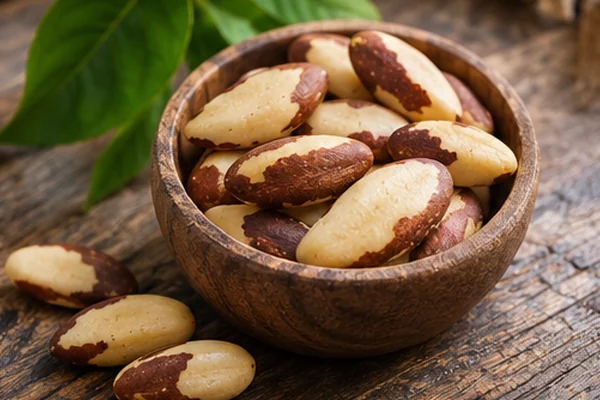
Brazil nuts are in a class of their own. The ODS lists 68 to 91 mcg per nut and warns that they could cause selenium toxicity if eaten regularly. By our arithmetic, one nut can exceed the adult RDA. See selenium in Brazil nuts before making them a daily habit.
Many multivitamin and mineral products already contain selenium, often 55 mcg, while selenium-only supplements typically contain 100 to 400 mcg (ODS). Check labels before adding anything; our multivitamins guide explains how to read them.
Why “more” is not the fix
Selenium has a narrow gap between enough and too much. The adult RDA is 55 mcg a day and the Tolerable Upper Intake Level (UL) is 400 mcg a day from all sources (ODS). A selenium supplement plus a multivitamin plus a few Brazil nuts can push someone past that limit without them noticing.
Too much selenium over time causes selenosis. The ODS lists hair loss and brittle or lost nails as the most common signs, with a garlic odor on the breath and a metallic taste as early indicators. Read more in selenium toxicity and selenium side effects.
Supplements also do not deliver the broad benefits people sometimes expect. Large trials have not shown that selenium supplements protect against cancer, and one trial raised concerns about type 2 diabetes (Vinceti 2018; Stranges 2007). See selenium and cancer and selenium and diabetes.
If you have a thyroid condition and are wondering about selenium, talk with your doctor rather than self-treating. Selenium is not a replacement for thyroid medication; selenium for thyroid explains what the research does and does not show. Supplements are also regulated differently from medicines, as the FDA explains, and manufacturers are responsible for evaluating the safety and labeling of their products before marketing.
Frequently asked questions
What are the symptoms of selenium deficiency?
There is no simple symptom checklist. The ODS says deficiency on its own rarely causes illness, but in some low-selenium regions it is linked to Keshan disease (heart), Kashin-Beck disease (joints) and worsened iodine-related thyroid problems.
Is selenium deficiency common in the US?
No. The ODS calls it very rare in the United States and Canada, and average intake from food is about 108 mcg a day, roughly double the adult RDA of 55 mcg by our arithmetic.
Who should worry about low selenium?
According to the ODS, the main groups are people in selenium-deficient regions eating mostly local plant foods, people on long-term kidney dialysis and people living with HIV. Discuss testing with your doctor if you fall into one of these groups.
Can low selenium affect the thyroid?
The ODS says selenium deficiency could worsen iodine deficiency and increase the risk of congenital hypothyroidism in infants. Anyone with a thyroid condition should follow their doctor’s treatment plan and not rely on selenium.
Should I take a selenium supplement to be safe?
Not without a reason. Most people get enough from food, and extra selenium can add up quickly toward the 400 mcg UL. Check your multivitamin first and ask a health professional.
Sources
- NIH Office of Dietary Supplements. Selenium: fact sheet for health professionals.
- NIH Office of Dietary Supplements. Selenium: fact sheet for consumers.
- Vinceti, et al. Selenium for preventing cancer. Cochrane Database Syst Rev. 2018.
- Stranges, et al. Effects of long-term selenium supplementation on the incidence of type 2 diabetes: a randomized trial. Ann Intern Med. 2007.
- U.S. Food and Drug Administration. Dietary supplements.
Last reviewed November 2026. VitaBrief is educational and is not medical advice. Talk with a doctor, registered dietitian or pharmacist before starting a supplement, especially if you are pregnant, take medication or have kidney disease.
Not medical advice. This guide is for general education. Talk to your doctor or pharmacist before taking a supplement, especially if you are pregnant or breastfeeding, take medication or have a health condition. Medical disclaimer