Ingredient guides
Selenium benefits: what the evidence supports and what it does not
What selenium genuinely does in the body, what research shows for the thyroid, cancer, the heart, fertility and memory, and what it means for women, men and older adults.
VitaBrief editorial · Last reviewed November 2026 · Sources listed below
Reader-supported. This page may contain affiliate links. If you buy through one, we may earn a commission at no extra cost to you. It never changes what we write. Affiliate disclosure

Selenium is often sold with promises of a healthier thyroid, stronger immunity and protection from cancer. The real benefit of selenium is simpler: your body needs a small, steady amount to make proteins that do essential work. Whether taking extra helps is a different question, and the answer from large trials is mostly no. This article separates the roles selenium plays from the claims made for supplements, using the NIH Office of Dietary Supplements (ODS) and published trials and reviews.
Selenium benefits: the short answer
An evidence-based look at selenium benefits: its roles in thyroid hormone metabolism and antioxidant defense, what trials show for Hashimoto’s, cancer, diabetes, heart health and fertility, and who might benefit.
What selenium does in the body
Selenium is an essential mineral built into 25 selenoproteins. According to the ODS, these play critical roles in thyroid hormone metabolism, DNA synthesis, reproduction, and protection from oxidative damage and infection (ODS). The consumer fact sheet puts it plainly: your thyroid gland needs selenium to produce hormones and function properly, and selenium is also needed for reproduction, to make DNA, to help protect cells and to resist infection (ODS consumer fact sheet).
These are the benefits of having enough selenium. Adults need 55 mcg a day (the RDA), and most people in the US already get more than that from food. Average intake from food and beverages is 108 mcg a day for people age 2 and older, according to national survey data cited by the ODS. That matters, because research suggests extra selenium does not keep adding benefit once needs are met. The ODS notes that supplements do not raise selenoprotein P or glutathione peroxidase activity unless a person is deficient.
Selenium benefits at a glance
| Claimed benefit | What the research shows | Verdict |
|---|---|---|
| Thyroid (Hashimoto’s) | Lower TSH in people not on thyroid hormone; lower TPO antibodies | Lab markers improve; symptoms unproven |
| Cancer prevention | No reduction in cancer risk in trials (high-certainty evidence) | Not supported |
| Type 2 diabetes | No prevention; risk may increase | Not supported; possible harm |
| Heart disease | Supplements did not reduce cardiovascular events | Not supported |
| Memory and dementia | Trials found no reduction in Alzheimer’s or dementia | Not supported |
| Male fertility | Conflicting trials on sperm quality | Unclear |
Thyroid health
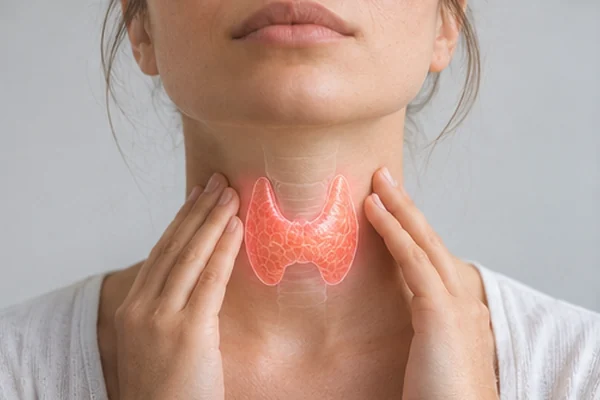
The thyroid is where selenium has the most plausible role. The ODS explains that the thyroid holds more selenium than any other organ, that selenoproteins help convert T4 into the active hormone T3, and that glutathione peroxidase and thioredoxin reductase help protect the gland from hydrogen peroxide made during hormone production.
A 2024 meta-analysis of 35 studies looked at selenium in Hashimoto’s thyroiditis. In people not on thyroid hormone replacement, selenium lowered TSH. TPO antibodies and malondialdehyde, a marker of oxidative stress, also fell, and adverse effects were comparable to control groups. The authors rated the overall certainty of evidence as moderate (Huwiler 2024).
Two cautions. First, these are lab results, not proof that people feel better or need less medicine; no significant changes were seen in free T4 or T3. Second, the ODS describes other reviews that found no effect on thyroid function or quality of life, and notes that in 2017 the American Thyroid Association issued a weak recommendation against selenium for pregnant women with TPO antibodies. Selenium is not a thyroid treatment. Read selenium for thyroid and, for the iodine connection, iodine and thyroid.
Cancer: a benefit that did not hold up
Observational studies and a few early trials raised hopes that selenium might lower cancer risk. Larger trials did not confirm it. SELECT randomly assigned 35,533 men to 200 mcg a day of selenium, vitamin E, both or placebo, and found that selenium did not prevent prostate cancer. There were also no significant differences in other prespecified cancers (Lippman 2009).
A Cochrane review of 10 randomized trials with 27,232 participants concluded that well-conducted trials show no beneficial effect of selenium supplements on cancer risk, with high-certainty evidence. It also reported concerns about higher rates of high-grade prostate cancer and type 2 diabetes with supplementation (Vinceti 2018). More in selenium and cancer.
Blood sugar, heart and brain
Diabetes. Animal studies suggested selenium might improve glucose metabolism. In a randomized trial of 1,202 people without diabetes, those taking 200 mcg a day developed type 2 diabetes more often than those on placebo (hazard ratio 1.55) over an average of 7.7 years. The authors concluded selenium does not seem to prevent type 2 diabetes and may increase risk (Stranges 2007). See selenium and diabetes.
Heart. The ODS states that clinical trial evidence does not support selenium supplements to reduce cardiovascular disease risk, particularly in healthy people who get enough from food. The ODS also describes a Cochrane review of SELECT and 11 smaller trials that found no reduction in fatal or nonfatal cardiovascular events.
Memory. In a trial of 7,540 men age 60 and older, 200 mcg a day of selenium for about 5.4 years made no difference to new cases of Alzheimer’s disease or dementia, according to the ODS (ODS).
Benefits for women, men and older adults
Women. The ODS notes that low selenium status appears to be associated with a higher risk of thyroid disease in women, an association not seen in men. That is an observation from population studies, not evidence that supplements prevent thyroid disease. During pregnancy the RDA rises to 60 mcg, and during breastfeeding to 70 mcg. Pregnant women should not start selenium for thyroid antibodies without their doctor, given the American Thyroid Association position described by the ODS.
Men. Selenium is part of a selenoprotein that is a major structural component of mature sperm. The ODS describes trials of selenium for sperm quality as conflicting and says there is not enough data to know whether supplements affect male fertility. For prostate health, SELECT found no prevention, and the ODS reports that researchers advised men over 55 to avoid selenium supplements above recommended intakes after finding higher high-grade prostate cancer risk in men with high baseline status.
Adults over 50. The RDA stays at 55 mcg. Older adults often take a multivitamin, and many contain 55 mcg of selenium, so a separate selenium pill is usually unnecessary. Products that combine selenium with zinc, vitamin D or magnesium can add more.
Hair, skin and weight claims
Searches for selenium and hair growth are common, but our sources contain no trials showing that selenium supplements grow hair or improve skin in healthy people. The evidence actually points the other way at high intakes. The ODS lists hair loss and brittle or lost nails as the most common signs of selenium excess, and the Cochrane review reported that selenium increased the risk of alopecia and dermatitis in SELECT (Vinceti 2018). We found no evidence in our sources that selenium helps weight loss or raises testosterone.
Who might actually benefit
The people most likely to gain from extra selenium are those who do not get enough. The ODS lists people living in selenium-deficient regions, people on kidney dialysis and people living with HIV as groups at higher risk of inadequate intake, while noting that deficiency is very rare in the US and Canada. For people living with HIV, the ODS reports that supplement trials found little, if any, benefit and that more research is needed. See selenium deficiency.
For everyone else, the safest route to the benefits of selenium is a varied diet with seafood, meat, poultry, eggs, grains or dairy. If you supplement, keep total intake under the adult upper limit of 400 mcg a day, and remember that Brazil nuts can exceed it quickly. Our selenium dosage guide covers the numbers.
Frequently asked questions
What is selenium good for?
Your body uses it to make selenoproteins involved in thyroid hormone metabolism, DNA synthesis, reproduction and protection from oxidative damage. Most people get enough from food.
Does selenium work for Hashimoto’s?
A 2024 meta-analysis found lower TSH and TPO antibodies, but these are lab markers. It is not a treatment and should only be used with your doctor’s input.
Does selenium help hair growth?
There is no good evidence it does in healthy people. Too much selenium can actually cause hair loss.
Does selenium strengthen immunity?
Selenium is needed to resist infection, but taking extra has not been proven to strengthen immunity in people who already get enough. In people living with HIV, the ODS reports that trials found little, if any, effect on immune function measures.
Is selenium good for men?
Men need the same 55 mcg as women. Trials did not show prostate cancer prevention, and fertility evidence is conflicting.
Sources
- NIH Office of Dietary Supplements. Selenium: fact sheet for health professionals.
- NIH Office of Dietary Supplements. Selenium: fact sheet for consumers.
- Huwiler, et al. Selenium supplementation in patients with Hashimoto thyroiditis: a systematic review and meta-analysis of randomized clinical trials. Thyroid. 2024.
- Vinceti, et al. Selenium for preventing cancer. Cochrane Database Syst Rev. 2018.
- Stranges, et al. Effects of long-term selenium supplementation on the incidence of type 2 diabetes: a randomized trial. Ann Intern Med. 2007.
- Lippman, et al. Effect of selenium and vitamin E on risk of prostate cancer and other cancers: the Selenium and Vitamin E Cancer Prevention Trial (SELECT). JAMA. 2009.
Last reviewed November 2026. VitaBrief is educational and is not medical advice. Talk with a doctor, registered dietitian or pharmacist before starting a supplement, especially if you are pregnant, take medication or have kidney disease.
Not medical advice. This guide is for general education. Talk to your doctor or pharmacist before taking a supplement, especially if you are pregnant or breastfeeding, take medication or have a health condition. Medical disclaimer