Ingredient guides
Vitamin E: what it is, how much you need and what the evidence shows
This vitamin E guide covers what vitamin E does in the body, how much adults need, the best food sources, natural versus synthetic forms, what large trials found for the heart and cancer, and the safety points to know before you take a supplement.
VitaBrief editorial · Last reviewed November 2026 · Sources listed below
Reader-supported. This page may contain affiliate links. If you buy through one, we may earn a commission at no extra cost to you. It never changes what we write. Affiliate disclosure
Vitamin E has a reputation as a protective antioxidant, and for years many people took it in the hope of preventing heart disease or cancer. The large randomized trials that followed told a more sobering story. This guide draws mainly on the NIH Office of Dietary Supplements (ODS) Health Professional fact sheet, the ODS Consumer fact sheet and published clinical trials.
Vitamin E guide: the short answer
Vitamin E guide: what it does, the RDA and upper limit, food sources, natural vs synthetic forms and IU conversions, what trials show for heart disease, cancer and eyes, plus side effects and drug interactions.
What vitamin E is
Vitamin E is not a single substance. ODS describes it as the collective name for a group of fat-soluble compounds with distinctive antioxidant activities. Naturally occurring vitamin E exists in eight chemical forms: alpha-, beta-, gamma- and delta-tocopherol, and alpha-, beta-, gamma- and delta-tocotrienol. Of these, alpha-tocopherol is the only form recognized to meet human requirements (ODS).
The reason is the liver, which preferentially sends alpha-tocopherol back into the blood and breaks down the other forms, so their blood levels are lower and they have been studied less (ODS).
What vitamin E does in the body
Vitamin E’s best-known job is as an antioxidant. Free radicals are unstable molecules that can damage cells. ODS explains that vitamin E is a fat-soluble antioxidant that stops the production of reactive oxygen species formed when fat undergoes oxidation (ODS).
It has other roles too. According to ODS, vitamin E is involved in immune function and cell signaling. The Consumer fact sheet adds that it helps widen blood vessels and keep blood from clotting within them (ODS Consumer). That anti-clotting effect is one reason high-dose supplements carry a bleeding risk, covered below.
How much vitamin E you need
The Recommended Dietary Allowance (RDA) for vitamin E is set for alpha-tocopherol and given in milligrams. For everyone aged 14 and over it is 15 mg a day, rising to 19 mg during breastfeeding. The Daily Value (DV) used on food and supplement labels is 15 mg for adults and children aged 4 and older (ODS).
| Age | RDA (mg/day) | Upper limit, supplemental (mg/day) |
|---|---|---|
| 0 to 6 months | 4 (AI) | Not established |
| 7 to 12 months | 5 (AI) | Not established |
| 1 to 3 years | 6 | 200 |
| 4 to 8 years | 7 | 300 |
| 9 to 13 years | 11 | 600 |
| 14 to 18 years | 15 (19 if breastfeeding) | 800 |
| 19+ years | 15 (19 if breastfeeding) | 1,000 |
According to national survey data cited by ODS, average daily intake from food and drinks among people aged 2 and older is 9.8 mg for males and 8.5 mg for females, below the RDA. (ODS). Even so, healthy people rarely show clear signs of not getting enough. For more detail on amounts, see vitamin E dosage.
Natural vs synthetic vitamin E and IU labels
Supplement labels use two main names. Naturally sourced vitamin E is RRR-alpha-tocopherol, commonly labeled d-alpha-tocopherol; the synthetic form is all rac-alpha-tocopherol, commonly labeled dl-alpha-tocopherol. ODS states that the synthetic form is about half as active as the natural form: 1 mg of vitamin E equals 1 mg of the natural form or 2 mg of the synthetic form (ODS).
Current labels list vitamin E in mg, but some older products still use International Units (IU). ODS gives these conversions: 1 mg of alpha-tocopherol equals 1.49 IU of the natural form or 2.22 IU of the synthetic form. Going the other way, 1 IU of the natural form equals 0.67 mg, and 1 IU of the synthetic form equals 0.45 mg. Our natural vs synthetic vitamin E page covers the labels in depth.
Food sources
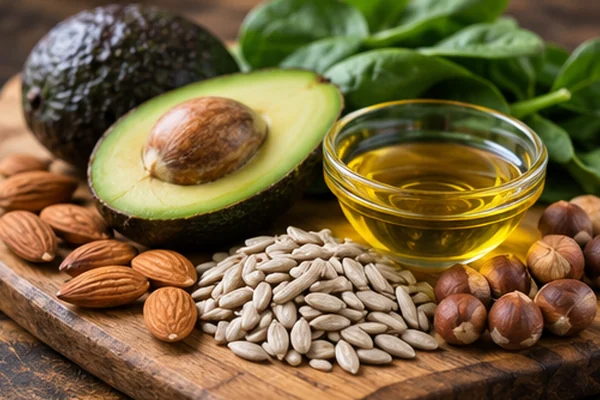
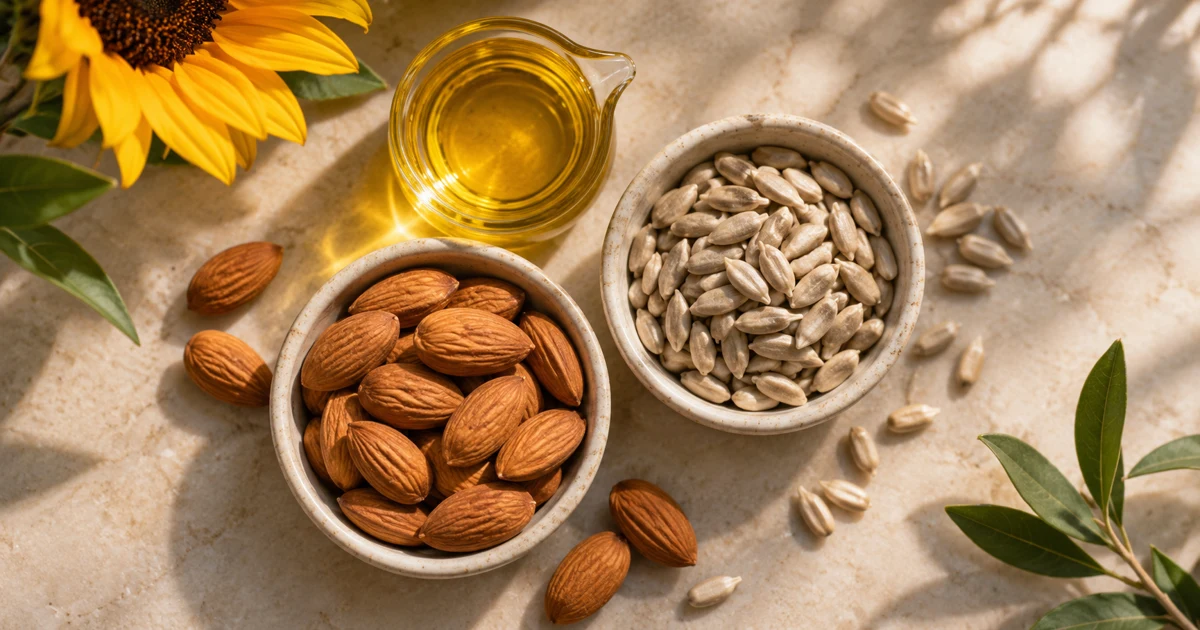
ODS lists nuts, seeds and vegetable oils among the best sources of alpha-tocopherol, with significant amounts in green leafy vegetables and fortified cereals. Wheat germ oil is the richest single item on its list, at 20.3 mg per tablespoon; an ounce of dry-roasted sunflower seeds provides 7.4 mg and an ounce of dry-roasted almonds 6.8 mg (ODS). A handful of nuts or seeds plus some vegetable oil in cooking can cover a large share of the 15 mg RDA. Full lists and serving ideas are in vitamin E foods.
What the evidence shows
Laboratory and observational research once suggested vitamin E might protect the heart and prevent cancer. Randomized trials, which are better at establishing cause and effect, mostly did not confirm this.
Heart disease. In the Physicians’ Health Study II, 14,641 US male physicians aged 50 or older took 400 IU of vitamin E every other day, 500 mg of vitamin C daily, both, or placebo. Over a mean of 8 years, vitamin E had no effect on major cardiovascular events, but it was associated with an increased risk of hemorrhagic stroke (hazard ratio 1.74) (Sesso 2008). ODS concludes that clinical trials have not shown that routine vitamin E supplements prevent cardiovascular disease.
Cancer. The same trial found vitamin E had no effect on prostate or total cancer (Gaziano 2009). The much larger SELECT trial reached a different conclusion: among men given 400 IU/day of synthetic vitamin E, 620 developed prostate cancer versus 529 on placebo (hazard ratio 1.17). Its authors concluded: “Dietary supplementation with vitamin E significantly increased the risk of prostate cancer among healthy men” (Klein 2011). The two trials did not agree on harm, but neither showed a benefit. See vitamin E and prostate cancer.
Eyes. ODS reports that the AREDS and AREDS2 trials found a daily supplement containing vitamin E with other nutrients, including zinc, slowed progression of age-related macular degeneration in people at high risk of the advanced form. It is unclear whether vitamin E alone prevents the condition or cataracts.
A fuller rundown is in vitamin E benefits, and a comparison with another antioxidant is in vitamin E vs vitamin C.
Safety, side effects and interactions
ODS states that no adverse effects have been reported from consuming large amounts of vitamin E from food. The concern is supplements. The Tolerable Upper Intake Level (UL) for adults is 1,000 mg a day of supplemental alpha-tocopherol, which ODS equates to 1,500 IU of the natural form or 1,100 IU of the synthetic form. High doses might increase the risk of bleeding and of hemorrhagic stroke, and ODS adds that some research suggests harm even below the UL (ODS Consumer).
A 2005 meta-analysis concluded that high-dosage vitamin E (400 IU/day or more) may increase all-cause mortality and should be avoided, though the high-dose trials were often small and in people with chronic diseases (Miller 2005). A 2013 JAMA summary concluded that antioxidant supplements are not associated with lower all-cause mortality, and that vitamin E may be associated with higher mortality (Bjelakovic 2013).
ODS lists these interactions:
- Anticoagulants and antiplatelets such as warfarin: large doses of vitamin E can increase the risk of bleeding, especially with low vitamin K intake. See vitamin E and blood thinners.
- Simvastatin and niacin: vitamin E with other antioxidants blunted the rise in HDL cholesterol in people taking this combination.
- Chemotherapy and radiotherapy: antioxidant supplements might reduce the effectiveness of these treatments, so people having them should talk with their oncologist first.
If you take a blood thinner, have surgery planned or are being treated for cancer, speak to your doctor before taking vitamin E. More on symptoms is in vitamin E side effects.
Who might consider a supplement
Deficiency is rare in healthy people. ODS links it almost always to fat-malabsorption conditions such as Crohn’s disease and cystic fibrosis, or rare genetic disorders; very low birth weight preterm infants might also be deficient (see vitamin E deficiency).
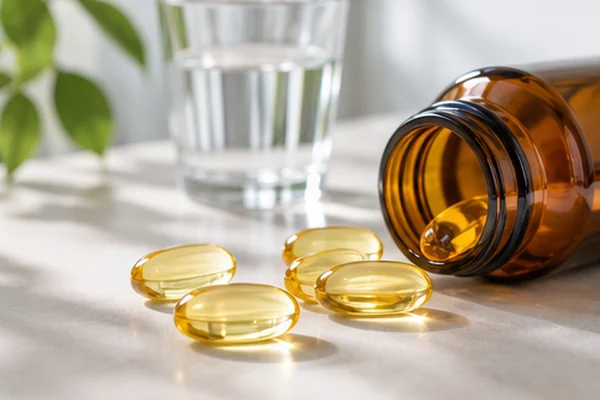
For most healthy adults, food is the sensible route. ODS notes that most once-daily multivitamins provide about 13.5 mg, while vitamin-E-only supplements commonly contain 67 mg or more, much higher than the RDA. If you already take a multivitamin, a separate vitamin E product is often unnecessary. The FDA says manufacturers and distributors are responsible for evaluating product safety and labeling before marketing. Tips on reading labels are in how to choose a vitamin E supplement.
Frequently asked questions
How much vitamin E should an adult take each day?
The RDA for adults is 15 mg a day (19 mg when breastfeeding). The upper limit for supplemental alpha-tocopherol is 1,000 mg a day, but research links lower doses, such as 400 IU a day, to possible harm.
Can you get too much vitamin E from food?
ODS states that no adverse effects have been reported from large amounts of vitamin E from food. The risks relate to high-dose supplements.
Is vitamin E a blood thinner?
It is not a medicine, but ODS says vitamin E can inhibit platelet aggregation, and large doses taken with anticoagulants or antiplatelets such as warfarin can raise bleeding risk. Talk to your doctor first.
Does vitamin E prevent heart disease or cancer?
Large randomized trials did not find that vitamin E supplements prevent major cardiovascular events or cancer, and SELECT found an increased prostate cancer risk in healthy men.
Sources
- NIH Office of Dietary Supplements. Vitamin E: fact sheet for health professionals.
- NIH Office of Dietary Supplements. Vitamin E: fact sheet for consumers.
- Sesso, et al. Vitamins E and C in the prevention of cardiovascular disease in men: the Physicians’ Health Study II randomized controlled trial. JAMA. 2008.
- Gaziano, et al. Vitamins E and C in the prevention of prostate and total cancer in men: the Physicians’ Health Study II randomized controlled trial. JAMA. 2009.
- Klein, et al. Vitamin E and the risk of prostate cancer: the Selenium and Vitamin E Cancer Prevention Trial (SELECT). JAMA. 2011.
- Miller, et al. Meta-analysis: high-dosage vitamin E supplementation may increase all-cause mortality. Ann Intern Med. 2005.
- Bjelakovic, et al. Antioxidant supplements to prevent mortality. JAMA. 2013.
- U.S. Food and Drug Administration. Dietary supplements.
Last reviewed November 2026. VitaBrief is educational and is not medical advice. Talk with a doctor, registered dietitian or pharmacist before starting a supplement, especially if you are pregnant, take medication or have kidney disease.
Not medical advice. This guide is for general education. Talk to your doctor or pharmacist before taking a supplement, especially if you are pregnant or breastfeeding, take medication or have a health condition. Medical disclaimer