Ingredient guides
Folate: a practical guide to vitamin B9
What folate (vitamin B9) does, how it differs from folic acid, how much you need, the best food sources and when supplements make sense.
VitaBrief editorial · Last reviewed November 2026 · Sources listed below
Reader-supported. This page may contain affiliate links. If you buy through one, we may earn a commission at no extra cost to you. It never changes what we write. Affiliate disclosure
Folate is one of the B vitamins, and it is one of the few nutrients with a public health story most people have heard: taking folic acid before and in early pregnancy helps prevent serious birth defects of the brain and spine.
This guide answers those questions using the NIH Office of Dietary Supplements (ODS) fact sheet for health professionals, the ODS consumer fact sheet and a small set of published studies. It is general information, not medical advice. If you are pregnant, trying to conceive or take prescription medication, your own clinician’s advice comes first.
What is folate?
ODS describes folate as a water-soluble B vitamin that is naturally present in some foods, added to others and available as a dietary supplement. It was formerly called folacin and is sometimes called vitamin B9. “Folate” is the generic term that covers the natural forms in food as well as the forms in supplements and fortified foods, including folic acid.
Your body uses folate to make DNA and other genetic material and to help cells divide, according to the ODS consumer fact sheet. ODS explains that folate acts as a coenzyme in “single-carbon transfers,” reactions involved in making DNA and RNA and in metabolizing amino acids. One of the best known of these reactions converts homocysteine to methionine. ODS lists elevated blood homocysteine among the effects of folate deficiency.
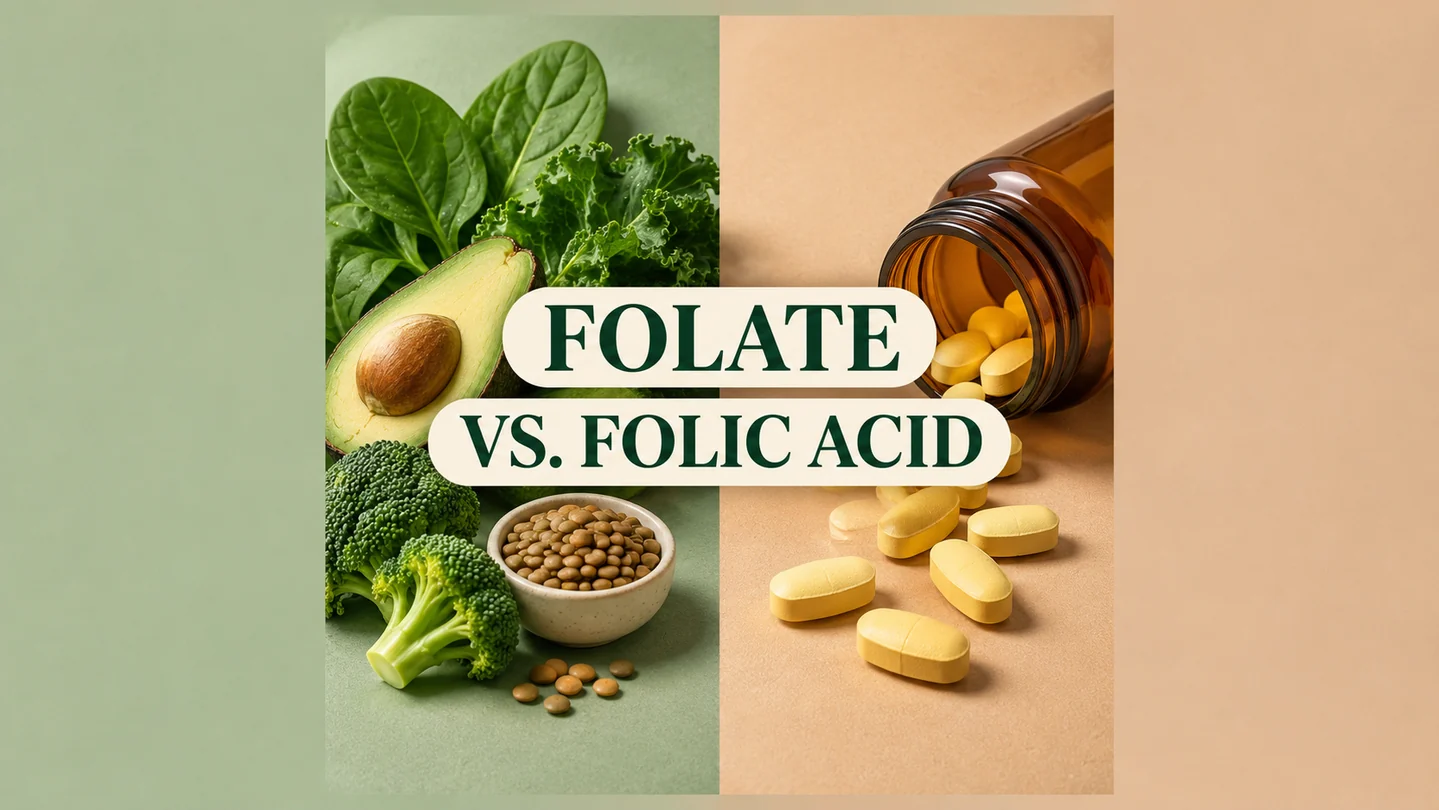
Folate, folic acid and methylfolate
| Form | Where you find it | Key point |
|---|---|---|
| Food folate | Leafy greens, beans, liver, fruit and other foods | Natural form; about 50% is estimated to be bioavailable |
| Folic acid | Enriched grains, fortified cereals, most supplements | Synthetic form; at least 85% bioavailable with food |
| 5-MTHF (methylfolate) | Some supplements | Also sold as L-methylfolate; DFE conversion not formally established |
Folic acid is the fully oxidized form that ODS says is used in fortified foods and most dietary supplements. Some supplements instead contain 5-MTHF, which ODS notes is also called L-5-MTHF, 5-methylfolate, L-methylfolate and methylfolate. The main form of folate circulating in blood is 5-MTHF. For a side-by-side look, see folate vs. folic acid and our guide to methylfolate.
How much folate do you need?
Folate needs are given in micrograms of dietary folate equivalents (mcg DFE). The Food and Nutrition Board created DFEs because folic acid is absorbed better than food folate. ODS gives the definitions:
- 1 mcg DFE = 1 mcg food folate
- 1 mcg DFE = 0.6 mcg folic acid from fortified foods or supplements taken with food
- 1 mcg DFE = 0.5 mcg folic acid from supplements taken on an empty stomach
ODS adds that factors for converting 5-MTHF to mcg DFE have not been formally established. In practice, the consumer fact sheet gives a simple example: 240 mcg of folic acid and 400 mcg of food folate both equal 400 mcg DFE.
| Age | Male | Female | Pregnancy | Lactation |
|---|---|---|---|---|
| Birth to 6 months* | 65 mcg DFE | 65 mcg DFE | ||
| 7 to 12 months* | 80 mcg DFE | 80 mcg DFE | ||
| 1 to 3 years | 150 mcg DFE | 150 mcg DFE | ||
| 4 to 8 years | 200 mcg DFE | 200 mcg DFE | ||
| 9 to 13 years | 300 mcg DFE | 300 mcg DFE | ||
| 14 to 18 years | 400 mcg DFE | 400 mcg DFE | 600 mcg DFE | 500 mcg DFE |
| 19+ years | 400 mcg DFE | 400 mcg DFE | 600 mcg DFE | 500 mcg DFE |
There is also a Tolerable Upper Intake Level (UL) of 1,000 mcg a day for adults. It applies only to folic acid and other synthetic folate from supplements and fortified foods, not to folate naturally present in food. We cover the full UL table and the reasoning behind it in our folate dosage guide.
Food sources and fortification
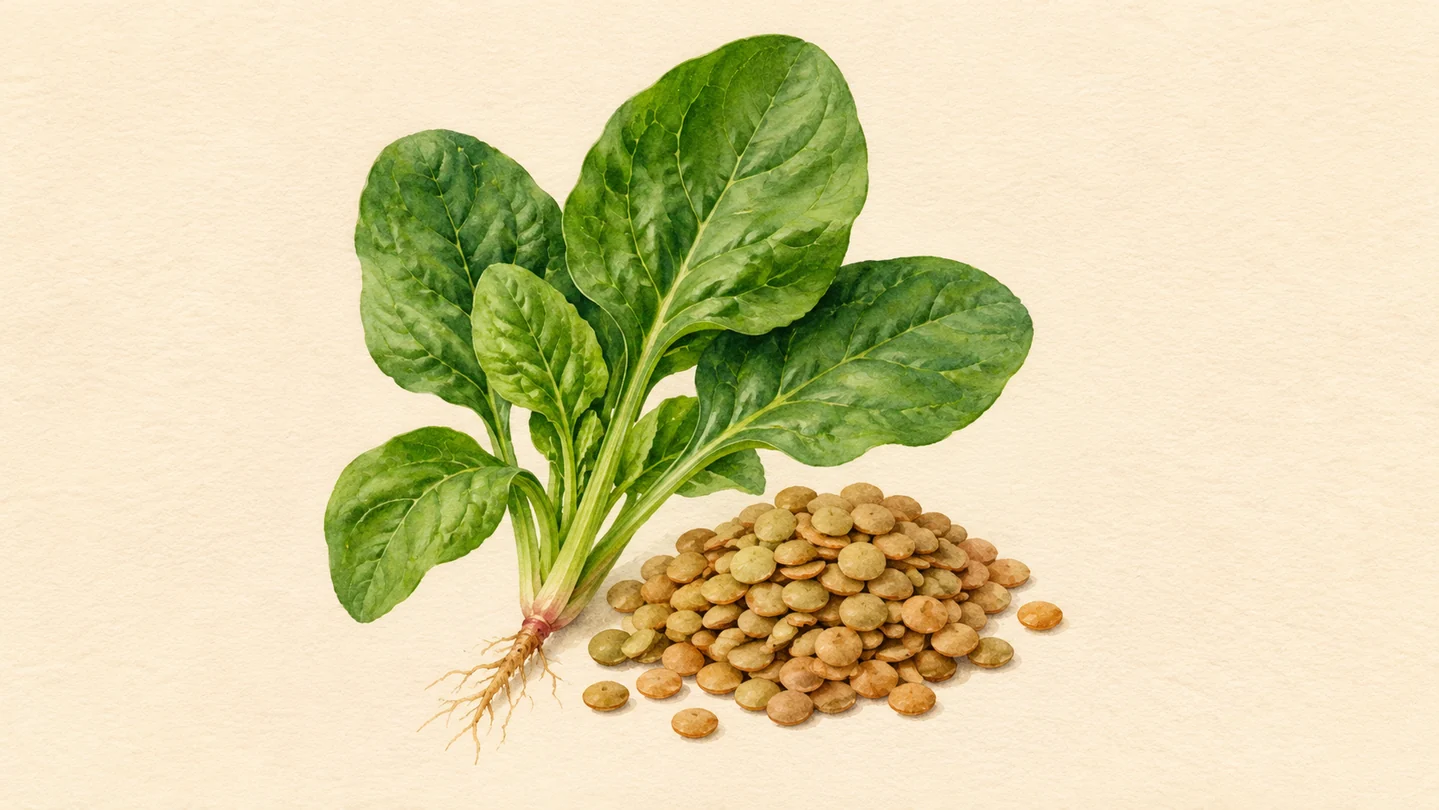
ODS lists folate in vegetables (especially dark green leafy vegetables), fruits and fruit juices, nuts, beans, peas, seafood, eggs, dairy, meat, poultry and grains. Spinach, liver, asparagus and brussels sprouts are among the richest sources. A few values from the ODS food table:
- Beef liver, braised, 3 ounces: 215 mcg DFE
- Spinach, boiled, ½ cup: 131 mcg DFE
- Black-eyed peas (cowpeas), boiled, ½ cup: 105 mcg DFE
- Asparagus, boiled, 4 spears: 89 mcg DFE
- Broccoli, chopped, frozen, cooked, ½ cup: 52 mcg DFE
- Egg, whole, hard boiled, 1 large: 22 mcg DFE
Since January 1998, FDA has required manufacturers to add folic acid to enriched breads, cereals, flours, corn meals, pastas, rice and other grain products, which ODS says increased mean US folic acid intake by about 190 mcg a day. In April 2016, FDA approved the voluntary addition of folic acid to corn masa flour. To see whether a food has added folic acid, ODS suggests checking the Nutrition Facts label. More on this in folate-rich foods.
Who might run low?
ODS says most people in the United States get enough folate, and frank deficiency is rare. Isolated folate deficiency is uncommon; it usually comes alongside other nutrient shortfalls linked to poor diet, alcohol use disorder or malabsorption. Groups ODS flags as more likely to fall short include:
- Teen girls aged 14 to 18, women aged 19 to 30, and non-Hispanic Black women
- People with alcohol use disorder, since alcohol interferes with folate absorption and increases its breakdown and excretion
- People with malabsorptive conditions such as celiac disease and inflammatory bowel disease
- People with the 677C>T MTHFR gene variant, which ODS says reduces the ability to convert folate to 5-MTHF
When deficiency does occur, the main sign is megaloblastic anemia, with symptoms such as weakness, fatigue, trouble concentrating, irritability, headache, heart palpitations and shortness of breath. ODS also lists sores on the tongue and in the mouth and changes in skin, hair or fingernail color. Read more in folate deficiency.
Folate and pregnancy
This is where the evidence for folic acid is strongest. A 2015 Cochrane review by De-Regil and colleagues pooled five trials with 7,391 women and concluded that folic acid, alone or with other vitamins and minerals, prevents neural tube defects but does not have a clear effect on other birth defects.
Because about half of US pregnancies are unplanned, the ODS consumer fact sheet states that all women and teen girls who could become pregnant should consume 400 mcg of folic acid daily from supplements, fortified foods or both, in addition to the folate in a healthy eating pattern. It adds that this applies even to people with an MTHFR C677T gene variant. See folic acid in pregnancy for timing and dose details, and follow the plan your prenatal care team gives you.
Safety, B12 and interactions
Folate naturally present in food is not harmful, according to ODS. The concerns relate to folate from supplements and fortified foods above the UL. The best known is the interaction with vitamin B12: large amounts of folate can correct the anemia caused by B12 deficiency but not the nerve damage, so they might hide the deficiency. ODS says questions remain, but the focus of concern has shifted to the potential for large amounts of folate to precipitate or worsen the anemia and cognitive symptoms of B12 deficiency.
A 2024 review by Miller and colleagues concluded that the evidence that excess folic acid worsens B12 deficiency is primarily correlative or from uncontrolled clinical observations, but sufficiently compelling to warrant extra vigilance for B12 deficiency in at-risk people, such as older adults and others with low B12 intake or B12 malabsorption, who also take in excessive folic acid. If you take high-dose folic acid, ask your clinician whether your B12 status should be checked. Our folate and B12 article and vitamin B12 guide explain more.
ODS also notes that folate supplements can interact with certain medications, including methotrexate, antiepileptic drugs such as phenytoin, carbamazepine and valproate, and sulfasalazine. If you take any of these, talk to your prescriber before starting folate. More detail is in folate side effects.
Should you take a supplement?
ODS says folic acid is available in multivitamins, prenatal vitamins, B-complex products and single-ingredient supplements, with common adult doses of 400 to 800 mcg folic acid (680 to 1,360 mcg DFE). Many people already get some from a multivitamin and from enriched grains, so, in our view, stacking several products can push synthetic intake higher than intended. ODS reports that about 5% of men and women aged 51 to 70, and of men aged 71 and older, have folic acid intakes above the UL, primarily because of supplements.
Keep in mind how supplements are regulated. According to the FDA, under the Dietary Supplement Health and Education Act manufacturers are responsible for evaluating the safety and labeling of their products before marketing, and FDA can act against adulterated or misbranded products after they reach the market. See how to choose a folate supplement for label reading, and our iron guide if anemia is your concern.
FAQ
Is folate the same as folic acid?
Not exactly. Folate is the umbrella term for vitamin B9, including natural food forms. Folic acid is the synthetic form used in fortified foods and most supplements, and it is absorbed better than food folate.
Is folate vitamin B9?
Yes. ODS notes that folate, formerly known as folacin, is sometimes called vitamin B9.
Is folate water soluble?
Yes. ODS describes folate as a water-soluble B vitamin.
Can you get too much folate from food?
ODS says high intakes of folate from food have not been reported to cause adverse effects, which is why the UL applies only to synthetic folate from supplements and fortified foods.
Does folate help with anemia?
Folate deficiency can cause megaloblastic anemia, but so can B12 deficiency, and anemia has other causes such as low iron. A clinician should find the cause before you treat it.
Sources
- NIH Office of Dietary Supplements. Folate: fact sheet for health professionals.
- NIH Office of Dietary Supplements. Folate: fact sheet for consumers.
- De-Regil, et al. Effects and safety of periconceptional oral folate supplementation for preventing birth defects. Cochrane Database Syst Rev. 2015.
- Miller, et al. Excess folic acid and vitamin B12 deficiency: clinical implications? Food Nutr Bull. 2024.
- U.S. Food and Drug Administration. Dietary supplements.
Last reviewed November 2026. VitaBrief is educational and is not medical advice. Talk with a doctor, registered dietitian or pharmacist before starting a supplement, especially if you are pregnant, take medication or have kidney disease.
Not medical advice. This guide is for general education. Talk to your doctor or pharmacist before taking a supplement, especially if you are pregnant or breastfeeding, take medication or have a health condition. Medical disclaimer