Ingredient guides
Vitamin A: what it is, how much you need and what the evidence shows
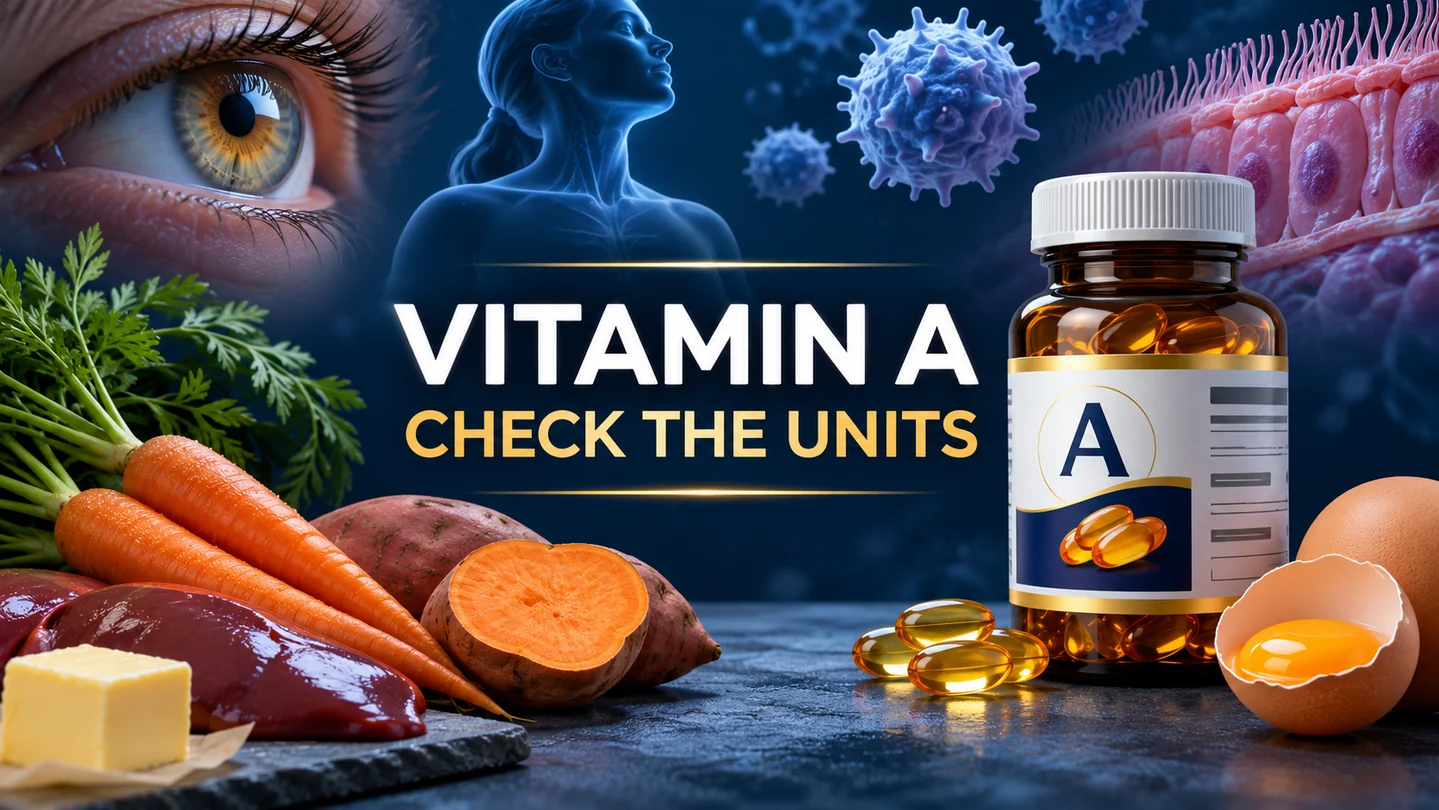
This vitamin A guide explains: the two forms of vitamin A, how much you need each day, the best food sources, what research shows for eyes and immunity, and the safety limits that matter most before you take a supplement.
VitaBrief editorial · Last reviewed November 2026 · Sources listed below
Reader-supported. This page may contain affiliate links. If you buy through one, we may earn a commission at no extra cost to you. It never changes what we write. Affiliate disclosure
Vitamin A is essential for vision, immunity, growth and reproduction, and most people in the United States already get enough of it from food. It is also one of the few vitamins where taking too much from supplements can cause real harm. This guide draws on the NIH Office of Dietary Supplements (ODS), the US Food and Drug Administration (FDA) and published clinical trials and reviews.
Vitamin A guide: the short answer
Vitamin A guide: preformed vitamin A vs beta-carotene, RDAs in mcg RAE, food sources, deficiency, what studies show for eyes and children’s health, the upper limit, pregnancy and smoker warnings, and drug interactions.
What vitamin A is
Vitamin A is the name for a group of fat-soluble compounds called retinoids, mainly retinol and retinyl esters. According to ODS, it is involved in immune function, cell communication, growth and development, and male and female reproduction. It is also critical for vision: it is part of rhodopsin, the light-sensitive protein in the retina, and it supports the normal functioning of the cornea and conjunctival membranes (ODS).
The two forms: preformed vitamin A and carotenoids
ODS describes two sources of vitamin A in the diet (ODS):
- Preformed vitamin A (retinol and retinyl esters such as retinyl palmitate and retinyl acetate). It is found in animal foods such as dairy products, eggs, fish and organ meats, and in many supplements.
- Provitamin A carotenoids, plant pigments including beta-carotene, alpha-carotene and beta-cryptoxanthin. The body converts them into vitamin A in the intestine, and conversion rates may vary between people for genetic reasons.
The distinction between the two forms matters a great deal for safety, because the upper limit applies only to preformed vitamin A. For a side-by-side look, see retinol vs beta-carotene.
How much vitamin A you need
Recommended amounts are given in micrograms of retinol activity equivalents (mcg RAE), which account for the different activity of retinol and carotenoids. ODS explains that 1 mcg RAE equals 1 mcg retinol, 2 mcg supplemental beta-carotene, 12 mcg dietary beta-carotene, or 24 mcg dietary alpha-carotene or beta-cryptoxanthin.
| Age | Male | Female | Pregnancy | Lactation |
|---|---|---|---|---|
| Birth to 6 months* | 400 mcg RAE | 400 mcg RAE | ||
| 7–12 months* | 500 mcg RAE | 500 mcg RAE | ||
| 1–3 years | 300 mcg RAE | 300 mcg RAE | ||
| 4–8 years | 400 mcg RAE | 400 mcg RAE | ||
| 9–13 years | 600 mcg RAE | 600 mcg RAE | ||
| 14–18 years | 900 mcg RAE | 700 mcg RAE | 750 mcg RAE | 1,200 mcg RAE |
| 19–50 years | 900 mcg RAE | 700 mcg RAE | 770 mcg RAE | 1,300 mcg RAE |
| 51+ years | 900 mcg RAE | 700 mcg RAE |
Older labels list vitamin A in International Units (IU). ODS notes that IU can only be converted to mcg RAE if the source is known: 1 IU of retinol or supplemental beta-carotene equals 0.3 mcg RAE, while 1 IU of dietary beta-carotene equals only 0.05 mcg RAE. Our vitamin A dosage guide walks through the conversions.
Food sources and supplements
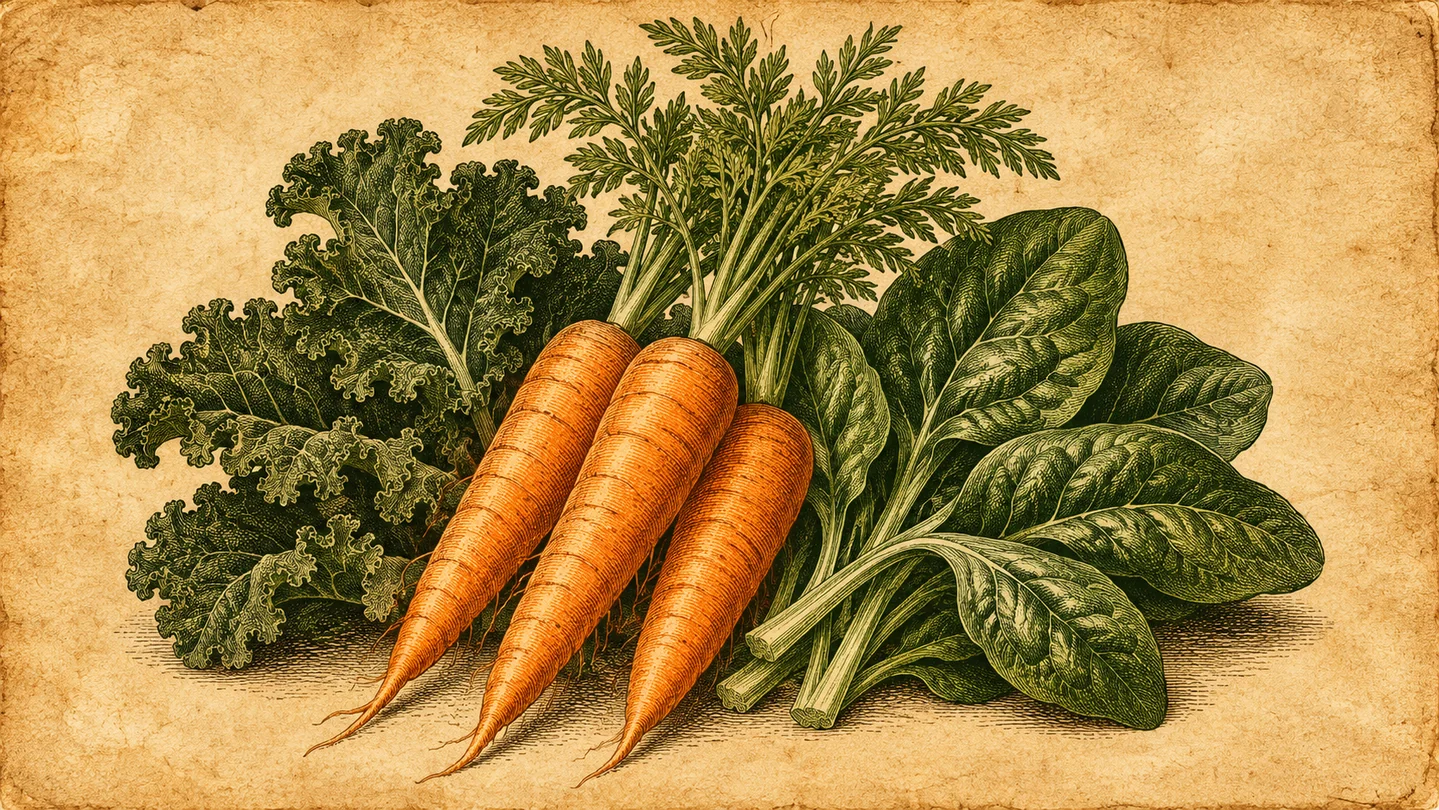
ODS says preformed vitamin A is most concentrated in liver, fish, eggs and dairy, while most provitamin A in the US diet comes from leafy greens, orange and yellow vegetables, tomato products, fruits and some vegetable oils. Milk, margarine and some cereals are fortified (ODS). See vitamin A foods for more.
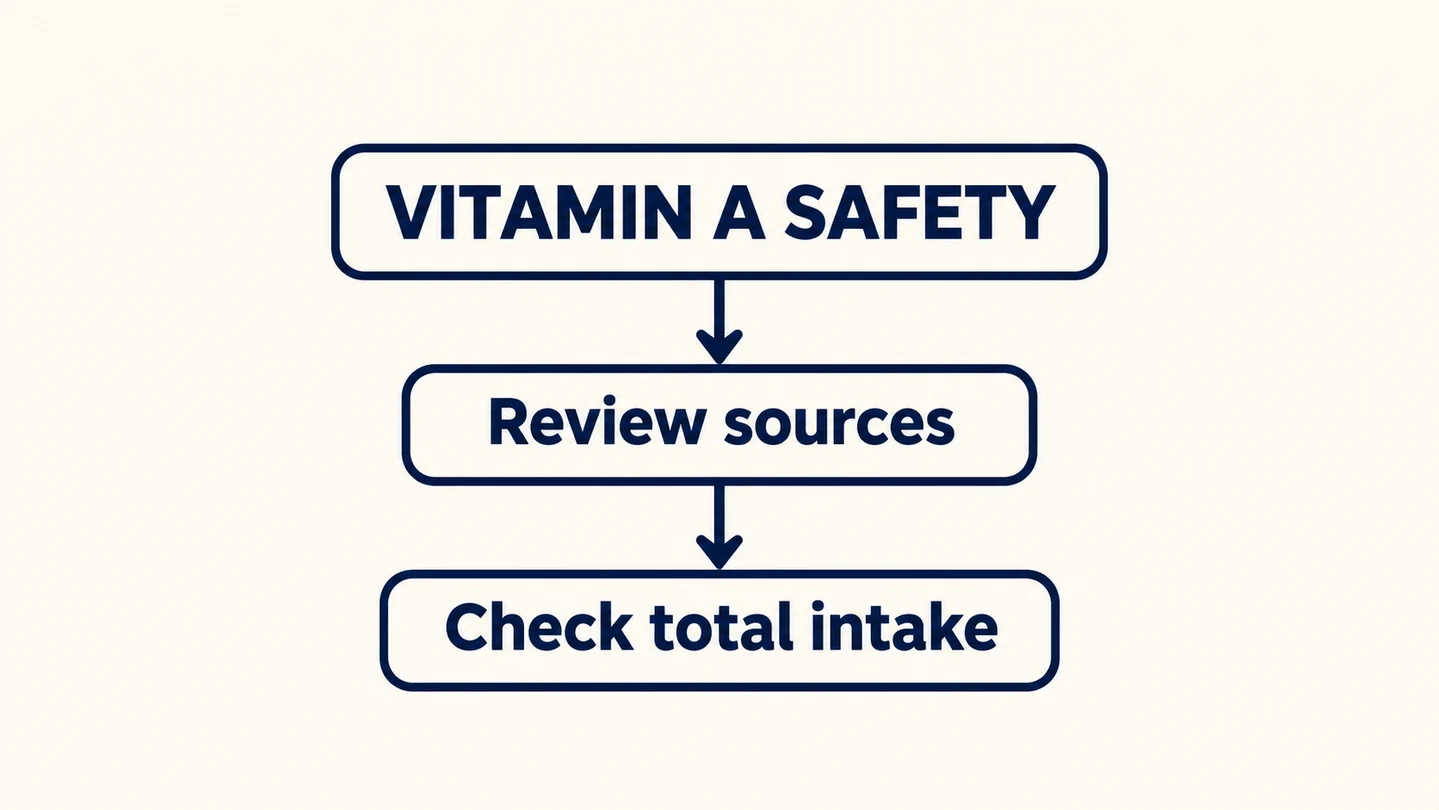
In supplements, vitamin A usually appears as retinyl acetate, retinyl palmitate, beta-carotene or a mix. ODS reports that stand-alone products often contain 3,000 mcg RAE, while multivitamins often provide 750 to 1,050 mcg RAE. If you take a multivitamin, check how much vitamin A it already contains before adding another product. Keep in mind that, according to the FDA, supplement manufacturers are responsible for evaluating the safety and labeling of their products before marketing, and the agency can act against an adulterated or misbranded product after it reaches the market (FDA).
Who might not get enough
ODS states that vitamin A deficiency is rare in the United States because most people get enough from the foods they eat, but it remains common in many developing countries, especially in young children (ODS consumer). Groups ODS lists as more likely to have inadequate intakes include premature infants, people with cystic fibrosis, and people with Crohn’s disease, ulcerative colitis or celiac disease.
The most common sign of deficiency is xerophthalmia. Its first sign is night blindness, and it can lead to permanent blindness; ODS calls vitamin A deficiency one of the top causes of preventable blindness in children. Read more in vitamin A deficiency.
What the research shows
Children in deficient regions. A Cochrane review pooled 47 studies with about 1.2 million children aged 6 months to 5 years, mostly in Asia, Africa and Latin America. Vitamin A supplementation reduced all-cause mortality by 12% (risk ratio 0.88), and also reduced diarrhea, measles cases and night blindness (Imdad 2022). These are public-health programs in places where deficiency is common. They are not a reason for US parents to give children high-dose vitamin A, and measles always needs medical care.
Eyes. In the AREDS trial of 3,640 people aged 55 to 80 with signs of age-related macular degeneration (AMD), a daily mix of vitamin C, vitamin E, beta-carotene and zinc reduced the odds of developing advanced AMD (odds ratio 0.72) compared with placebo (AREDS 2001). ODS reports that the later AREDS2 study found beta-carotene was not a required ingredient and that lutein and zeaxanthin replaced it. This applies to people who already have intermediate or advanced AMD, not to preventing it. See vitamin A for eyes.
Safety: upper limits, pregnancy and smokers
Upper limit. The Tolerable Upper Intake Level (UL) for adults is 3,000 mcg RAE a day of preformed vitamin A from food and supplements combined. For children it is 600 mcg (up to 3 years), 900 mcg (4 to 8), 1,700 mcg (9 to 13) and 2,800 mcg (14 to 18). ODS states that these limits do not apply to beta-carotene; the Food and Nutrition Board has set no UL for beta-carotene but advises against beta-carotene supplements for the general population, except as a vitamin A source to prevent deficiency (ODS).
Toxicity. According to ODS, one or a few very high doses of preformed vitamin A can cause severe headache, blurred vision, nausea, dizziness, muscle aches and coordination problems, and in severe cases coma and death. Regular high intakes can cause dry skin, joint pain, fatigue, depression and abnormal liver test results. Two meta-analyses of observational cohort studies also link higher retinol intake with higher hip fracture risk (Wu 2014; Zhang 2017), though these studies cannot prove cause. See vitamin A toxicity.
Pregnancy. ODS states that total intakes of preformed vitamin A above the UL, and some retinoid medicines such as isotretinoin (used for severe acne), can cause birth defects. People who are or might be pregnant, or are breastfeeding, should not take high-dose preformed vitamin A supplements. ODS adds that beta-carotene is not known to be teratogenic (to cause birth defects). Check any prenatal label with your clinician, and read vitamin A in pregnancy.
Smokers. In the ATBC trial of 29,133 male smokers, beta-carotene (20 mg a day) was linked with an 18% higher incidence of lung cancer (ATBC 1994). In CARET, beta-carotene plus retinyl palmitate in smokers, former smokers and asbestos-exposed workers gave a relative risk of lung cancer of 1.28, and the trial found no benefit and possible harm (Omenn 1996). ODS concludes that large supplemental doses of beta-carotene, with or without retinyl palmitate, have detrimental effects in current or former smokers and asbestos-exposed workers. Our advice at VitaBrief: if you smoke or used to smoke, avoid beta-carotene supplements.
Medication interactions
ODS lists several interactions (ODS consumer):
- Orlistat, a weight-loss drug, can decrease absorption of vitamin A and lead to low blood levels in some people.
- Retinoid drugs such as acitretin (for psoriasis) and bexarotene (for skin effects of T-cell lymphoma) are made from vitamin A. Taking them with a vitamin A supplement could cause dangerously high vitamin A levels. Separately, ODS notes that some retinoid medicines, such as isotretinoin, can cause birth defects.
Do not combine a retinoid medication with a vitamin A supplement unless your doctor tells you to. Vitamin A is one of several fat-soluble vitamins, alongside vitamin D and vitamin E, so check the totals across all your products.
Frequently asked questions
Is vitamin A the same as retinol?
Retinol is one form of preformed vitamin A. Vitamin A also includes retinyl esters and, as a source, provitamin A carotenoids such as beta-carotene. Topical retinol skincare is a different matter; see vitamin A supplements vs retinol skincare.
Do most people need a vitamin A supplement?
Usually not. ODS says most people in the US get enough vitamin A from food. People with absorption problems or other risk factors should ask a clinician.
Is vitamin A safe in pregnancy?
You need some vitamin A in pregnancy (770 mcg RAE a day for adults), but high-dose preformed vitamin A supplements can cause birth defects. Ask your clinician to review your prenatal vitamin.
Does vitamin A improve eyesight?
Getting enough prevents the night blindness caused by deficiency, but none of the sources we reviewed show that extra vitamin A sharpens normal vision.
Sources
- NIH Office of Dietary Supplements. Vitamin A and carotenoids: fact sheet for health professionals.
- US Food and Drug Administration. Dietary supplements.
- NIH Office of Dietary Supplements. Vitamin A and carotenoids: fact sheet for consumers.
- Imdad, et al. Vitamin A supplementation for preventing morbidity and mortality in children from six months to five years of age. Cochrane Database Syst Rev. 2022.
- Age-Related Eye Disease Study Research Group. A randomized, placebo-controlled, clinical trial of high-dose supplementation with vitamins C and E, beta carotene, and zinc for age-related macular degeneration and vision loss: AREDS report no. 8. Arch Ophthalmol. 2001.
- Wu, et al. The relationship between vitamin A and risk of fracture: meta-analysis of prospective studies. J Bone Miner Res. 2014.
- Zhang, et al. The effect of vitamin A on fracture risk: a meta-analysis of cohort studies. Int J Environ Res Public Health. 2017.
- Alpha-Tocopherol, Beta Carotene Cancer Prevention Study Group. The effect of vitamin E and beta carotene on the incidence of lung cancer and other cancers in male smokers. N Engl J Med. 1994.
- Omenn, et al. Effects of a combination of beta carotene and vitamin A on lung cancer and cardiovascular disease. N Engl J Med. 1996.
Last reviewed November 2026. VitaBrief is educational and is not medical advice. Talk with a doctor, registered dietitian or pharmacist before starting a supplement, especially if you are pregnant, take medication or have kidney disease.
Not medical advice. This guide is for general education. Talk to your doctor or pharmacist before taking a supplement, especially if you are pregnant or breastfeeding, take medication or have a health condition. Medical disclaimer